Table of Contents >> Show >> Hide
- Why Zoodles Go Wrong (So You Can Make Them Go Right)
- Step 1: Pick the Right Zucchini (Yes, It Matters)
- Step 2: Make Zucchini Noodles With a Spiralizer (The Classic Zoodle Curl)
- Step 3: Make Zucchini Noodles Without a Spiralizer (No Gadget, No Problem)
- Step 4: De-Water Your Zoodles (Because Nobody Wants Zucchini Soup Pasta)
- Step 5: Cook Zucchini Noodles (Without Overcooking Them Into Sadness)
- Sauce Strategy: Keep Your Zoodles From Turning Into a Marinara Jacuzzi
- Serving Ideas (Because Zoodles Deserve Better Than “Diet Food” Energy)
- Troubleshooting: Common Zoodle Problems (and Fixes)
- Meal Prep and Storage (So Future-You Gets an Easy Win)
- Wrap-Up: The Zoodle Rulebook (Tiny but Mighty)
- Extra: Real-World Zoodle Experiences (500-ish Words of “Been There, Cooked That”)
Zucchini noodles (a.k.a. “zoodles”) are the rare food trend that actually deserves a little hype: they’re fast, fresh, and they trick your dinner brain into thinking it’s having pasta night without requiring you to boil a gallon of water. They’re also the only “noodle” that can go from “I’m a crisp, happy vegetable” to “I have become soup” in about four minutes if you treat them like spaghetti.
This guide shows you how to make zucchini noodles with a spiralizer (the curly, Instagram-famous way) and without one (the “I refuse to buy another kitchen gadget” way). You’ll also learn how to keep zoodles firm, how to cook them without creating a watery puddle, and what to do with that leftover zucchini core that always looks like a tiny green canoe.
Why Zoodles Go Wrong (So You Can Make Them Go Right)
Zucchini is basically a delicious edible water balloon. That’s the magic (light, tender, fast-cooking) and the risk (it releases moisture the second heat shows up like an uninvited relative). The goal is simple: maximize noodle shape, minimize water drama.
The two “modes” of zucchini noodles
- Raw or barely warmed: best with pesto, lemony vinaigrettes, creamy sauces, and cold noodle salads. Crisp, refreshing, and no swampy skillet aftermath.
- Quick-cooked: best when you want “pasta vibes” with hot sauce, shrimp, meatballs, or stir-fry flavors. The rule is: short cook time, high confidence, and absolutely no wandering away to check your phone.
Step 1: Pick the Right Zucchini (Yes, It Matters)
If you’ve ever made zoodles and ended up with something resembling a damp shoelace pile, your zucchini might have been the culprit. For the best texture, aim for small-to-medium zucchini that are firm, with smooth skin and minimal seeds. Larger zucchini tend to be wetter and more seedy, which is great for baking—less great for noodles.
Quick shopping checklist
- Straight-ish shape: makes longer noodles and less wobbling while cutting.
- Firm feel: avoid soft spots (soft spots = future mush spots).
- Smaller seeds: less watery core means sturdier noodles.
Storage tip before you even start
Keep zucchini dry and store it in the fridge until you’re ready to spiralize. Extra moisture now turns into extra moisture later. Translation: don’t pre-wash and then forget it in a wet produce bag unless you’re trying to invent zucchini slime.
Step 2: Make Zucchini Noodles With a Spiralizer (The Classic Zoodle Curl)
A spiralizer is the easiest way to get long, noodle-like strands quickly. Countertop crank models tend to be the most stable, but handheld spiralizers work too if your biceps want to feel included in dinner.
How to spiralize zucchini (without launching it across the kitchen)
- Trim the ends: flat ends help the zucchini grip the blades and the prongs.
- Choose a blade size: thinner strands feel more “spaghetti,” thicker strands hold up better when cooked.
- Center it: align the zucchini so it feeds straight into the blade.
- Use steady pressure: crank smoothly. If you force it, you’ll get broken noodles and a bad attitude.
- Stop at the core: when you hit the seedy center, spiralizing gets messy. Save the core for chopping.
What to do with the leftover core
Don’t toss it. Chop it for scrambled eggs, stir it into pasta sauce, add it to soups, throw it in smoothies, or sauté it with garlic. The core is basically zucchini’s “bonus content.”
Step 3: Make Zucchini Noodles Without a Spiralizer (No Gadget, No Problem)
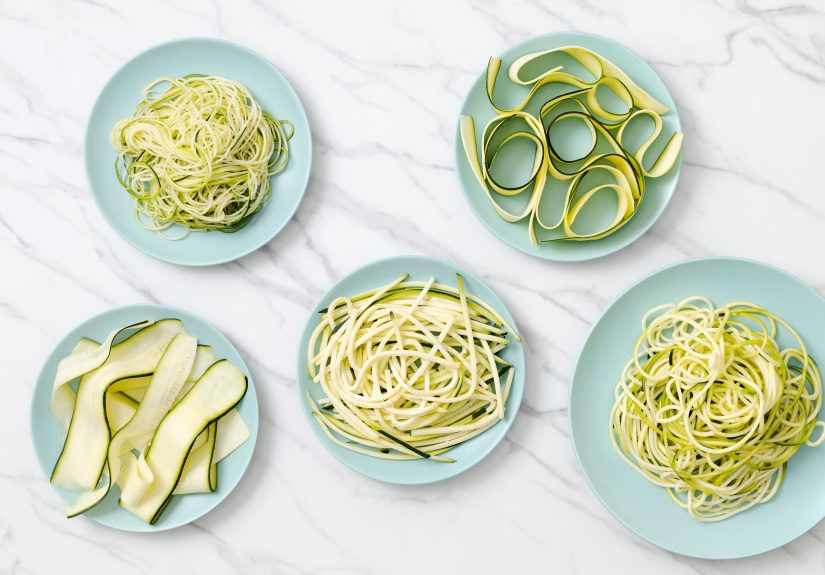
You can absolutely make zoodles with everyday tools. The shape will be different (more ribbons and matchsticks than tight curls), but they’re still delicious and still qualify as “noodles” in the way that matters: they hold sauce and make dinner feel fun.
Option A: Julienne peeler (thin “angel hair” style)
A julienne peeler makes fine strips quickly. Run it down the zucchini lengthwise, rotating as you go. Stop when you reach the seedy core, then rotate again. This method is great for cold sauces and quick tosses. For hot cooking, be gentle—thin strands can turn soft fast.
Option B: Regular vegetable peeler (wide “pappardelle” ribbons)
Use a standard peeler to shave long ribbons. These wide noodles look fancy with almost zero effort (the best kind of fancy). They’re excellent raw, lightly warmed, or quickly tossed in a pan with garlic and olive oil.
Option C: Mandoline with julienne blade (fast, uniform, and slightly terrifying)
A mandoline can produce long, consistent noodles. It can also produce surprise “finger carpaccio” if you ignore the hand guard. Use the guard. Go slow. Keep the zucchini flat and steady. Your dinner will taste better when it’s not seasoned with regret.
Option D: Knife method (the “I watched a cooking show once” approach)
- Slice zucchini lengthwise into thin planks.
- Stack a few planks and slice into matchsticks.
- For longer noodles, keep planks as long as possible and cut evenly.
Knife-cut “zoodles” won’t be curly, but they cook beautifully and are perfect for stir-fries, skillet meals, or anything saucy.
Step 4: De-Water Your Zoodles (Because Nobody Wants Zucchini Soup Pasta)
If you only remember one thing, remember this: zoodles release water. Your job is to decide when and where that water shows up (ideally not in a puddle under your sauce).
Method 1: The quick salt-and-sweat (best all-purpose)
- Put zoodles in a colander over the sink or a bowl.
- Sprinkle lightly with salt and toss.
- Let sit 10–30 minutes (thin noodles need less time, thick noodles can handle more).
- Gently squeeze a handful at a time, then pat dry with paper towels.
You’re not trying to wring them into zucchini jerky. A gentle squeeze removes excess moisture while keeping texture.
Method 2: Paper towel storage (smart for meal prep)
If you’re spiralizing ahead, line a container with paper towels, add the zoodles, and top with another paper towel before sealing. The towels absorb moisture so the noodles stay fresher and less swampy.
Method 3: The “dry-out” chill (great when you want firmer noodles)
Spread zoodles on paper towels on a sheet pan and refrigerate briefly. Cool air + absorbent towels = drier noodles. This is especially helpful when you plan to cook them quickly and want more bite.
Step 5: Cook Zucchini Noodles (Without Overcooking Them Into Sadness)
Cooking zoodles is less like boiling spaghetti and more like warming a salad. You’re aiming for hot, tender-crisp, and still noodle-shaped.
Cooking method 1: Quick sauté (fastest “hot pasta” vibe)
- Heat a wide skillet over medium-high heat.
- Add a small amount of oil (or go “dry sauté” if your sauce is rich).
- Add zoodles and toss constantly with tongs.
- Cook briefly until just warmed and slightly softened.
Pro move: don’t crowd the pan. Crowding traps steam, steam makes water, and water makes you question your life choices. Cook in batches if you’re feeding a crowd.
Cooking method 2: Microwave (shockingly effective)
Put zoodles in a microwave-safe dish and heat in short bursts. Then drain and blot if needed. This is great when you want warm noodles without adding extra oil.
Cooking method 3: Oven bake/roast (hands-off, great for big batches)
- Preheat oven to a moderate temperature.
- Spread zoodles on a large baking sheet in a thin layer.
- Lightly salt, bake until just tender, then blot with paper towels.
Baking works well when you’re making several servings at once and want fewer skillet batches.
Cooking method 4: Boil or blanch (use with caution)
Boiling zoodles can work if you keep it very brief and drain well, but it’s the method most likely to create watery noodles. If you boil, cook quickly, drain immediately, and blot before saucing.
Sauce Strategy: Keep Your Zoodles From Turning Into a Marinara Jacuzzi
Even perfectly dried and quickly cooked zoodles will continue to release moisture after cooking. The simplest way to stay ahead: keep sauce and noodles separate until the last second.
Three sauce tips that change everything
- Thicken your sauce: simmer tomato sauce longer, or use a pesto/cream sauce that’s naturally less watery.
- Toss off-heat: combine sauce and zoodles after removing the pan from heat to prevent extra water release.
- Plate smart: put noodles on the plate first, then spoon sauce on top right before serving. Timing matters.
Serving Ideas (Because Zoodles Deserve Better Than “Diet Food” Energy)
1) Lemon-garlic shrimp zoodles
Sauté garlic and red pepper flakes briefly in olive oil, add shrimp, then toss in zoodles at the very end until warmed. Finish with lemon and parsley. It tastes like a restaurant dinner and takes less time than deciding what to watch.
2) Pesto + cherry tomatoes + mozzarella
Keep zoodles raw or barely warmed. Toss with pesto, halved cherry tomatoes, and little mozzarella pearls. Add toasted pine nuts if you want to feel fancy.
3) “Half-and-half” pasta night
Mix cooked zoodles with a smaller portion of real pasta. You get the comfort of noodles plus the freshness of zucchini, and nobody at the table feels like they’ve been tricked into eating “health.”
4) Stir-fry zoodles
Use knife-cut matchsticks or thicker spiralized noodles. Toss with sesame oil, soy sauce, ginger, and quick-cooked veggies. Add chicken, tofu, or shrimp. Keep the cook time short for best texture.
Troubleshooting: Common Zoodle Problems (and Fixes)
Problem: “My zoodles are watery.”
- Use smaller zucchini next time.
- Salt-and-sweat, then pat dry.
- Cook in a wide pan in batches so moisture can evaporate.
- Separate sauce and noodles until serving.
Problem: “They’re mushy.”
- Reduce cook time. Zoodles should be warmed, not simmered.
- Choose thicker noodles (bigger blade, thicker cuts).
- Skip boiling unless you drain and blot aggressively.
Problem: “They’re too short.”
- Pick straighter zucchini and spiralize lengthwise.
- Trim ends evenly so the zucchini grips properly.
- For knife noodles, cut planks longer and slice evenly.
Meal Prep and Storage (So Future-You Gets an Easy Win)
Raw zoodles store better than cooked zoodles. If you want to prep ahead, spiralize and keep them dry in the fridge. Use paper towels in the container to absorb moisture, and cook (or toss with sauce) right before eating.
Best practices
- Store raw: paper towel-lined container, covered, in the fridge.
- Avoid pre-saucing: sauce pulls water out and softens zoodles quickly.
- Expect leftovers to weep: if you do have leftovers, drain and blot before reheating.
Wrap-Up: The Zoodle Rulebook (Tiny but Mighty)
If zoodles had a motto, it would be: “Dry me a little. Cook me a little. Sauce me at the last second.” Whether you spiralize perfect curls or shave ribbons with a peeler, the best zucchini noodles are the ones that stay crisp-tender, carry flavor, and don’t turn your plate into a shallow lake.
Extra: Real-World Zoodle Experiences (500-ish Words of “Been There, Cooked That”)
The first time many people make zucchini noodles, they expect a one-to-one pasta replacement. Like: “Hello, zucchini, please behave exactly like semolina spaghetti while also being a vegetable.” Zucchini does not accept this assignment. It has its own personality. And honestly, once you understand it, zoodles become less of a compromise and more of a flexible dinner hack.
A classic beginner moment: you spiralize a mountain of zucchini, proudly dump it into a skillet, and then—because you’re a responsible adult—you step away for “just a second” to check something. You come back to a pan that looks like it rained in there. The noodles have collapsed, there’s liquid everywhere, and you’re wondering if you accidentally made zucchini tea. The lesson shows up fast: zoodles don’t want a long cook. They want a quick warm-up and a gentle exit.
Another common experience is discovering that thickness is destiny. Thin julienne strands feel elegant, but they can go soft quickly under heat. Thicker spiralized noodles or knife-cut matchsticks hold their shape better, especially when you’re doing a hot sauce situation. People who “didn’t like zoodles” often find they just didn’t like overcooked zoodles. Switching to thicker cuts and shaving off a minute of cook time can change everything.
Then there’s the sauce learning curve. Plenty of home cooks figure out the hard way that tossing zoodles into a big pot of simmering marinara is basically a water-extraction experiment. Zucchini releases moisture, the sauce thins, and suddenly your “cozy pasta” is sliding around like tomato soup with garnish. The fix feels almost too simple once you try it: keep the sauce thick, keep it separate, and combine right before eating. Some people even ladle sauce onto the plate after plating zoodles so the noodles stay proud and noodle-shaped.
Zoodles also have a weird superpower: they make you a better “use what you have” cook. No spiralizer? Fine—ribbons with a vegetable peeler. No peeler? Fine—knife matchsticks. People start experimenting: wide ribbons for creamy sauces, thin strands for cold pesto, chopped “zoodle bits” for stir-fry bowls, and leftover zucchini cores thrown into scrambled eggs so nothing goes to waste. It’s one of those foods that quietly teaches you technique: moisture control, fast cooking, batch management, and timing.
And yes, zoodles can be a social experience. If you’ve ever served them to someone who expects “diet food,” you know the look. But when you nail the texture—crisp-tender, garlicky, well-seasoned—the vibe changes. People stop comparing it to pasta and start treating it like its own thing: a fresh, fast vegetable noodle that happens to love Parmesan and shrimp. That’s the best zoodle moment: when dinner feels fun, not forced, and you realize you didn’t “swap” anything. You just cooked something good.