Table of Contents >> Show >> Hide
- Why Zach Gilford’s Tease Was So Effective
- Season 3 Turned Elias Voit Into the Show’s Most Uncomfortable Wild Card
- The Finale Didn’t Go Small, and That Was the Point
- Why Fans Couldn’t Stop Talking About Voit
- What Gilford’s Tease Really Said About the Finale’s Themes
- How the Finale Set Up the Next Chapter
- The Bigger Reason This Storyline Works
- The Viewer Experience: Why This Finale Tease Hit So Hard
- Conclusion
- SEO Tags
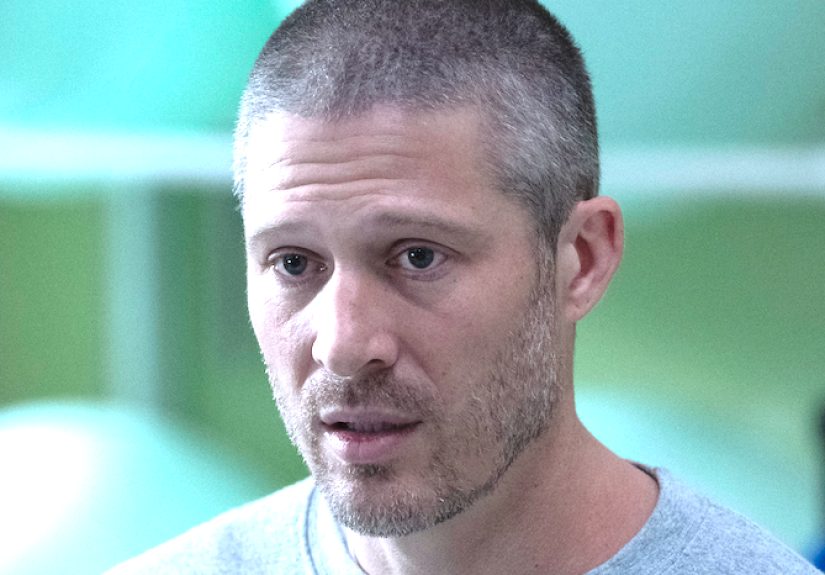
If Criminal Minds: Evolution knows how to do one thing extremely well, it is this: make viewers nervous, then make them more nervous, then casually slide a serial-killer smirk across the screen and call it a Thursday. By the time Season 3 of the revival rolled toward its finale, Zach Gilford’s Elias Voit had become the center of one of the show’s trickiest questions: can a monster change, or is that just a very polished performance with better lighting?
That is exactly why Gilford’s tease ahead of the finale got so much attention. He did not promise explosions, a neat redemption, or a tidy answer wrapped in FBI tape. Instead, he hinted at something far messier and more interesting. According to Gilford, Voit was “coming to terms with his past” and trying to figure out whether doing good now could somehow cancel out the terrible things he had done before. That is not just a plot tease. That is a thesis statement for the entire season.
For longtime fans, this was catnip. For the BAU, it was a migraine. And for the show itself, it was proof that Criminal Minds: Evolution had no interest in turning Voit into a simple villain-of-the-week. Instead, the series spent Season 3 pushing him into a strange gray zone: dangerous, damaged, unexpectedly useful, and still creepy enough to make everyone in the room wish the lights were brighter.
So what did Gilford’s finale tease really mean? Why did it land so hard with fans? And how did the season ultimately use Voit to raise the emotional stakes for the BAU? Let’s dig in before someone starts speaking ominously through an earpiece.
Why Zach Gilford’s Tease Was So Effective
Great finale teases do not spoil the meal. They just make the audience smell something delicious and slightly alarming from the kitchen. Gilford’s comments worked because they focused on Voit’s internal state rather than on a checklist of plot twists. He framed the finale around guilt, identity, and moral math. Can a man responsible for monstrous crimes do anything meaningful with the life he has left? Or is every “good” action just a drop of decency tossed into an ocean of horror?
That framing matched the season’s larger approach to Voit. Earlier episodes leaned hard into uncertainty. He was presented as a different version of himself, with questions swirling around memory, motive, and whether the BAU could trust even one word coming out of his mouth. Gilford himself described the experience of playing this version of Voit as almost like meeting everyone for the first time. He also admitted that the fun of the role came from not giving clean answers about whether Voit was faking anything.
In other words, the actor understood the assignment. He was not playing a straightforward reformed villain. He was playing a walking question mark in human form. And on Criminal Minds, that is often more unsettling than a guy with a basement and a manifesto.
Season 3 Turned Elias Voit Into the Show’s Most Uncomfortable Wild Card
One reason the finale had so much heat behind it is that Season 3 spent considerable time destabilizing viewers’ understanding of Voit. In previous arcs, he was terrifying because he was calculating, hidden, and in control. In Season 3, the horror shifted. Suddenly the audience had to sit with a version of Voit who might be altered, might be sincere, and might still be manipulating everyone in sight.
That ambiguity gave the season a weirdly intimate tension. Voit was no longer just the shadowy architect of a killer network. He became a character the BAU had to engage with directly, repeatedly, and often against their better judgment. The result was a darkly fascinating push-pull. Every scene with him carried the same basic question: is this vulnerability real, or is everyone one bad decision away from starring in his next nightmare?
Gilford’s performance helped sell that balance. He did not suddenly play Voit as harmless. He played him as disorienting. Even in quieter scenes, there was always a suggestion that the old Sicarius might still be in there, waiting for the right pressure point. That made the character compelling in a way many procedural villains never get to be. He was not just a case. He was an ongoing moral infection inside the story.
And because this is Criminal Minds, nobody got to deal with that stress in a calm, well-rested environment. The BAU was already carrying grief, exhaustion, and emotional fallout from multiple directions. Adding a semi-reformed serial killer to the mix was less “creative strategy” and more “what if HR gave up completely?”
The Finale Didn’t Go Small, and That Was the Point
By the time the finale arrived, the show had to answer several major questions at once. Who was really steering the surviving pieces of Voit’s network? How much of the old Voit was still alive inside him? And could the BAU survive working with the man who helped create the chaos in the first place?
The finale’s answer was characteristically twisted. The mysterious Disciple was revealed to be Tessa Lebrun, a figure tied to Voit’s past through Cyrus Lebrun, the cruel mentor who helped shape the darkness around him. That reveal mattered because it reframed the season’s central conflict. Voit was not just fighting outside threats. He was confronting a living extension of the cycle that made him who he was.
The finale also pulled off one of the season’s cleverest emotional feints. It let the audience wonder whether Tessa had succeeded in drawing out the old Voit for good. For a moment, it looked as if the show might be confirming the bleakest possible reading: that underneath the uncertainty, the original killer had simply been waiting for a chance to come roaring back.
But the episode swerved. Rather than simply re-crowning him as the ultimate villain, the story had Voit help bring down the remaining network by giving Garcia what she needed to trace its members. That choice did not erase his crimes, and the show wisely refused to act like it did. Instead, it reinforced the season’s central tension: Voit can do something useful without becoming a good man. He can help and still remain profoundly dangerous.
That is the sweet spot Criminal Minds: Evolution kept chasing all season. Not redemption. Not absolution. Just discomfort. Rich, high-grade discomfort.
Why Fans Couldn’t Stop Talking About Voit
The fascination with Voit comes down to one simple truth: he is not easy to file away. On a show built around profiling, categorizing, and understanding criminal behavior, he keeps resisting the neat label. He is horrifying, but also emotionally legible. He is manipulative, but not always in obvious ways. He is central to the damage, yet sometimes central to the solution.
That makes him ideal for modern serialized television. Viewers do not just want a villain to lose. They want to watch the story wrestle with what the villain means. Voit gives the series room to explore guilt, trauma, control, and the seductive danger of believing that intelligence can excuse monstrosity. He is not scary simply because he kills. He is scary because he understands people well enough to make them second-guess themselves.
Gilford’s chemistry with the ensemble only sharpened that appeal. His scenes with Joe Mantegna’s Rossi, in particular, became a major engine of the season. There was history there, but also a shifting power dynamic. Sometimes Voit felt cornered. Sometimes he felt oddly candid. Sometimes he felt like a snake deciding whether it was too tired to bite. You never got to relax, which is exactly why the dynamic worked.
And in a franchise that has now run for well over 350 episodes across its original and revival eras, that kind of tension matters. It keeps the storytelling from feeling mechanical. The crimes may still be investigated through familiar BAU rhythms, but Voit injects something thornier: an emotional contamination that does not wash off by the end of the hour.
What Gilford’s Tease Really Said About the Finale’s Themes
Looking back, Gilford’s pre-finale comments feel especially smart because they pointed toward the theme the episode would emphasize most: reckoning. Not justice in the clean TV sense. Not redemption in the sentimental sense. Reckoning.
Voit’s story in the finale was about facing the shape of his own legacy. He could not undo the murders. He could not un-build the network. He could not suddenly become the kind of man the BAU would invite to a barbecue and trust near the potato salad. But he could be forced to look at what his life had created and make a choice about what came next.
That made the finale more interesting than a standard showdown. The most important conflict was not just external. It was the battle between the mythology of Sicarius and the possibility that awareness, remorse, or at least self-recognition had begun to crack that mythology open. The finale did not “solve” Voit. It deepened him.
For viewers, that is often more satisfying than an easy answer. The best genre television understands that uncertainty can be more memorable than closure. You may forget the exact logistics of a takedown. You do not forget a villain staring at the wreckage of his own identity.
How the Finale Set Up the Next Chapter
The big reveal after the finale was that Voit’s story was not over. In fact, showrunner commentary made clear that the series still had plans for him, and not in a tiny cameo-from-a-cell kind of way. The next season would continue to use Voit as a resource, while also pushing him into a new, unnerving reality: public infamy.
That is a fascinating pivot. Earlier versions of Voit thrived in secrecy, in coded networks, in shadows. But the next phase turns him into something else entirely: a notorious figure whose crimes are widely known, whose name carries cultural weight, and whose visibility becomes its own source of pressure. According to post-finale teases, he is now a household name and must deal with the ugly celebrity that comes from being known for the worst thing imaginable.
For a series like Criminal Minds: Evolution, that is rich territory. It allows the show to examine how society turns criminals into spectacles, how notoriety reshapes power, and how the BAU must navigate a case when the man at the center of it has become both prisoner and public symbol.
It also keeps Gilford essential to the franchise’s momentum. Paramount+ has already confirmed his return in the next installment, which premieres on May 28, 2026. That means the finale was not a goodbye. It was more like the end of one chapter of Voit’s identity crisis and the beginning of a stranger, uglier, more public one.
The Bigger Reason This Storyline Works
Beneath all the murders, code names, and psychologically fraught standoffs, there is a simple storytelling reason this arc works: it gives the heroes something emotionally difficult to do. The BAU is very good at catching killers. What is harder is deciding what to do when a killer becomes useful, vulnerable, and possibly changed in ways nobody fully understands.
That question forces everyone into uncomfortable territory. It challenges Rossi’s instincts. It complicates Garcia’s morality. It puts the team’s trust, empathy, and caution into conflict. Even when Voit is helping, he is also corroding the emotional equilibrium of the room. That is good drama.
Gilford’s tease landed because it hinted at all of that. He was not selling one shocking moment. He was selling the idea that the finale would make viewers sit with Voit’s contradictions instead of smoothing them over. In a television landscape crowded with finales that scream for attention, that quieter promise turned out to be the more intriguing one.
The Viewer Experience: Why This Finale Tease Hit So Hard
Watching the lead-up to this finale felt a bit like standing in a hallway while someone slowly turns a doorknob you really wish would stay still. Even when the show was not doing something visibly explosive, it was creating that unnerving sensation that everything important was shifting underneath the surface. That is the experience Gilford’s tease captured so well.
For many viewers, the appeal was not just “What happens next?” It was “How am I supposed to feel about this man now?” That is a more powerful form of suspense because it turns the audience into participants. You are no longer just observing the BAU’s uncertainty. You are sharing it. Every time Voit looked sincere, there was a reflexive hesitation. Every time he seemed dangerous, there was still the possibility that the show was setting up something more complicated than simple relapse.
That kind of experience is rare in long-running crime television, where character functions can become predictable. Here, the writers and Gilford managed to make Voit feel unstable in the best dramatic sense. He was never boring. He was never fully readable. And because the show refused to hand out easy emotional instructions, fans were left arguing, theorizing, and reprocessing scenes long after episodes ended.
There was also something distinctly modern about the way the season played with sympathy without asking for forgiveness. The series did not suddenly pretend Voit deserved a clean slate. Instead, it explored the queasy space between accountability and usefulness. That is the exact sort of tension that sticks with viewers because it mirrors real debates people have about justice, harm, change, and whether someone can ever become more than the worst thing they have done.
On a purely entertainment level, the experience was also just fun in that slightly dreadful Criminal Minds way. The season gave fans procedural momentum, emotional fallout, returning favorites, and enough ominous character beats to keep social media properly caffeinated. Even moments that were quieter than expected carried weight because the show understood atmosphere. A glance, a pause, an almost-smile from Voit could feel more loaded than a full action sequence.
And then there is the performer effect. Gilford brought a strange elasticity to Voit this season. He could seem fragile, detached, manipulative, haunted, and darkly funny, sometimes in the same scene. That gave the audience an active viewing experience. You had to keep reading him. Keep adjusting. Keep wondering whether the show was inviting empathy, setting a trap, or doing both at once.
In that sense, the finale tease worked because it respected the intelligence of the audience. It did not oversell. It did not shout. It simply suggested that the ending would push Voit deeper into confrontation with his past. For a viewer already invested in the season’s moral mess, that was more than enough. It promised something richer than a twist. It promised consequence.
That is ultimately why this arc lingered. The experience of watching it was not just about solving the mystery. It was about sitting inside discomfort and realizing the show wanted you there. Not forever, hopefully. But long enough to make the finale matter.
Conclusion
Zach Gilford’s tease for the Criminal Minds: Evolution Season 3 finale turned out to be effective because it identified the real hook of the episode: not just danger, but reckoning. The finale did not magically redeem Elias Voit, and it did not flatten him back into a one-note monster either. Instead, it let the character remain what has made him so compelling from the start: deeply harmful, disturbingly useful, and impossible to summarize in one clean sentence.
For fans, that meant an ending with real dramatic weight. For the BAU, it meant no easy emotional exit. And for the franchise, it meant one very important thing: the Voit story still had gas in the tank, even if that tank is probably filled with dread and bad decisions.
So yes, Gilford teased the finale. But more importantly, he teased why it mattered. And that is the kind of preview that keeps viewers locked in, lights off, snacks forgotten, waiting for the next profile to drop.