Table of Contents >> Show >> Hide
- What Is Age-Related Macular Degeneration?
- Does AMD Cause Blindness?
- Dry AMD vs. Wet AMD: The Two Main Types
- Common Symptoms of Age-Related Macular Degeneration
- Who Is at Risk for AMD?
- How AMD Is Diagnosed
- Treatment Options for AMD
- Can AMD Be Prevented?
- Living With AMD: Practical Ways to Protect Independence
- The Emotional Side of Vision Loss
- When to See an Eye Doctor Immediately
- Experience-Based Insights: What AMD Feels Like in Real Life
- Conclusion
- SEO Tags
Age-related macular degeneration, usually shortened to AMD, is one of those health topics that sounds technical until it touches everyday life. Then it becomes very practical, very quickly. Reading a menu, recognizing a grandchild’s face, driving at dusk, threading a needle, checking a medicine label, or enjoying the tiny print on a suspiciously complicated coffee machine can all become harder when the macula starts to deteriorate.
The macula is the small but mighty central part of the retina that helps you see fine detail. Think of it as the “high-definition setting” of your eye. When AMD damages this area, central vision becomes blurry, distorted, dim, or partly missing. The key point is this: age-related macular degeneration does not usually cause total darkness. Peripheral, or side, vision often remains. However, advanced AMD can cause severe central vision loss and may lead to legal blindness, which can dramatically affect independence, confidence, and quality of life.
The good news? AMD is not a one-way ticket to helplessness. Early diagnosis, regular eye exams, healthy lifestyle choices, low-vision support, and modern treatments can help many people slow progression, preserve useful vision, and keep doing the things they lovewith a few smart adjustments and maybe a larger-font phone setting.
What Is Age-Related Macular Degeneration?
Age-related macular degeneration is a progressive eye disease that affects the macula, the central area of the retina responsible for sharp, straight-ahead vision. It is most common in adults over 50 and becomes more likely with advancing age. Because AMD affects central vision, it can interfere with tasks that require detail, such as reading, cooking, using a computer, watching television, identifying faces, and driving.
AMD usually develops gradually, especially in its early stages. Many people do not notice symptoms at first, which is exactly why comprehensive dilated eye exams matter. An eye doctor can often see early signs, such as drusentiny yellow deposits under the retinabefore a person realizes anything has changed.
Does AMD Cause Blindness?
Yes, age-related macular degeneration can lead to serious vision loss and legal blindness, especially when it reaches advanced stages. But it is important to understand what “blindness” means in this context. AMD typically damages central vision, not side vision. A person with advanced AMD may not be able to read standard print, drive safely, or recognize faces clearly, yet still see movement and objects around the edges of their vision.
This distinction matters because it changes the conversation from “I will lose everything” to “How can I protect, adapt, and use the vision I have?” Low-vision rehabilitation, magnifiers, contrast tools, lighting strategies, voice technology, and orientation support can make daily life much easier. AMD is serious, but it is not the end of independence.
Dry AMD vs. Wet AMD: The Two Main Types
Dry AMD
Dry AMD is the most common form. It develops when the macula thins over time and light-sensitive cells gradually break down. Drusen often appear under the retina. In early dry AMD, symptoms may be mild or absent. In intermediate AMD, a person may need brighter light to read, notice blur, or have more trouble adjusting to dim rooms. Advanced dry AMD can become geographic atrophy, a condition in which areas of retinal cells waste away, creating blind spots in central vision.
For many years, dry AMD had no approved treatment beyond monitoring, lifestyle changes, and nutritional support for certain patients. Today, specific injections are available for geographic atrophy. These medicines do not restore lost vision, but they may slow the growth of atrophy in some people. That is not magic, but in eye care, slowing damage can be a very big deal.
Wet AMD
Wet AMD is less common but often more aggressive. It happens when abnormal blood vessels grow under the retina and leak blood or fluid. This leakage can damage the macula quickly, sometimes causing sudden distortion or a dark spot in central vision. Straight lines may look wavy. A doorframe may appear bent. A person’s face may seem blurred in the middle, which is both frustrating and emotionally unsettling.
Wet AMD is treated most often with anti-VEGF injections. VEGF stands for vascular endothelial growth factor, a protein involved in abnormal blood vessel growth. Anti-VEGF medicines help reduce leakage and can stabilize vision in many patients. Some people even regain some vision, especially when treatment begins early. However, treatment usually requires repeated visits, ongoing monitoring, and patiencethe unglamorous but powerful trio of retina care.
Common Symptoms of Age-Related Macular Degeneration
AMD symptoms can vary depending on the type and stage. Early AMD may cause no noticeable changes, while advanced AMD can significantly interfere with daily activities. Warning signs may include:
- Blurred or fuzzy central vision
- Straight lines appearing wavy or distorted
- A dark, gray, or empty spot in the center of vision
- Difficulty recognizing faces
- Needing brighter light for reading or close work
- Colors appearing less vivid
- Trouble adapting from bright light to dim rooms
- Difficulty reading small print, labels, or phone screens
Any sudden change in central vision deserves prompt medical attention. With wet AMD, timing is especially important because early treatment can help prevent more damage.
Who Is at Risk for AMD?
Age is the biggest risk factor, but it is not the only one. AMD risk increases after age 50 and rises further in older adulthood. Family history also matters; genetics can influence susceptibility. Smoking is one of the strongest modifiable risk factors and can increase both the likelihood of developing AMD and the chance that it will progress.
Other risk factors include cardiovascular disease, high blood pressure, obesity, diets low in leafy greens and nutrient-rich foods, and long-term inflammation or oxidative stress. AMD is also reported more often in white adults than in some other racial groups. None of these risk factors guarantee that someone will develop AMD, but they do help identify who should be especially consistent with eye exams.
How AMD Is Diagnosed
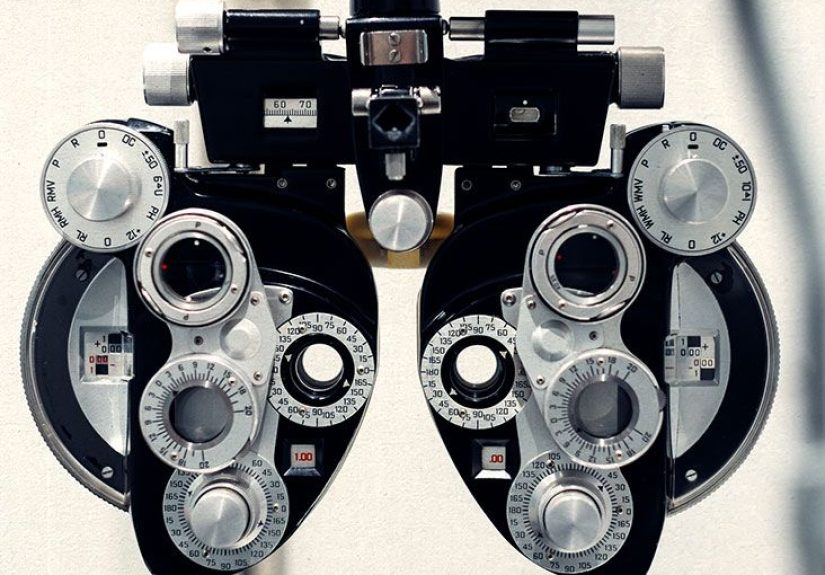
Diagnosing age-related macular degeneration usually starts with a comprehensive dilated eye exam. The eye doctor examines the retina and macula, looking for drusen, pigment changes, fluid, bleeding, or areas of atrophy. Several tools may be used:
Visual Acuity Test
This familiar eye chart test measures how clearly you see at a distance. It helps track changes over time.
Dilated Retinal Exam
Eye drops widen the pupils so the doctor can view the retina more clearly. The drops may make reading and driving difficult for a few hours, so bring sunglasses and, if needed, a ride. Your pupils will look dramatic, but sadly, not in a superhero way.
Optical Coherence Tomography
Optical coherence tomography, or OCT, creates detailed cross-sectional images of the retina. It can show fluid, swelling, thinning, and structural changes that may not be obvious from symptoms alone.
Amsler Grid
An Amsler grid is a simple square grid used to detect distortion or missing areas in central vision. Many patients with AMD use it at home to monitor changes between appointments.
Angiography
In some cases, special imaging with dye helps identify leaking blood vessels in wet AMD. This can guide treatment decisions.
Treatment Options for AMD
AREDS2 Supplements
For some people with intermediate AMD or advanced AMD in one eye, an AREDS2 supplement may help reduce the risk of progression to advanced disease. The typical AREDS2 formula includes vitamin C, vitamin E, zinc, copper, lutein, and zeaxanthin. It replaced beta-carotene with lutein and zeaxanthin, which is important because beta-carotene can raise lung cancer risk in current or former smokers.
These supplements are not a cure, and they are not recommended for everyone with early AMD. They also do not prevent AMD in people without the disease. The smartest move is to ask an ophthalmologist whether AREDS2 is appropriate for your specific stage and health history.
Anti-VEGF Injections for Wet AMD
Anti-VEGF injections are the main treatment for wet AMD. The medicine is placed directly into the eye after numbing drops and careful sterilization. That sentence sounds terrifying, but many patients say the anticipation is worse than the injection itself. The procedure is quick, and retina specialists perform it routinely.
The goal is to reduce fluid leakage, control abnormal blood vessels, and preserve vision. Treatment schedules vary. Some people need monthly injections at first, while others move to longer intervals based on response. Skipping appointments can allow leakage to return, so consistency matters.
Treatments for Geographic Atrophy
Geographic atrophy is an advanced form of dry AMD. Newer complement-inhibiting injections, such as pegcetacoplan and avacincaptad pegol, are designed to slow the expansion of atrophy. These treatments do not bring back cells that are already lost, and they are not right for everyone. Still, they represent a major shift because patients with advanced dry AMD now have options to discuss with a retina specialist.
Laser and Photodynamic Therapy
Laser treatment and photodynamic therapy are used much less often than anti-VEGF injections but may still be considered in selected cases of wet AMD. They are not standard for most patients today, but they remain part of the broader treatment toolkit.
Can AMD Be Prevented?
There is no guaranteed way to prevent age-related macular degeneration. Aging and genetics are not exactly negotiable, no matter how persuasive your moisturizer claims to be. But several habits may help lower risk or slow progression:
- Do not smoke, and seek help quitting if you do.
- Eat a nutrient-rich diet with leafy greens, colorful vegetables, fruit, legumes, whole grains, nuts, and fish.
- Manage blood pressure, cholesterol, diabetes, and heart disease.
- Exercise regularly, as safely recommended by your healthcare provider.
- Maintain a healthy weight.
- Wear sunglasses that block ultraviolet light outdoors.
- Keep regular eye exam appointments, especially after age 50.
A Mediterranean-style diet is often discussed in connection with eye and heart health because it emphasizes vegetables, fish, olive oil, beans, nuts, and whole foods. You do not need to become a gourmet chef. A spinach omelet, salmon salad, lentil soup, or handful of walnuts is a perfectly respectable start.
Living With AMD: Practical Ways to Protect Independence
Living with AMD often requires adaptation, not surrender. People with central vision loss can benefit from low-vision rehabilitation, where specialists teach strategies for using remaining vision more effectively. This may include magnifying devices, high-contrast labels, brighter task lighting, large-print books, text-to-speech tools, screen readers, talking watches, and smartphone accessibility features.
Small home changes can make a big difference. Use bold labels on medication bottles. Put contrasting tape on stair edges. Choose cutting boards that contrast with food. Increase lighting near reading areas. Reduce clutter in walkways. Use large-number clocks and phones. These adjustments may sound ordinary, but ordinary tools are often the heroes of daily independence.
Driving deserves special attention. AMD can make it harder to see road signs, pedestrians, traffic signals, and hazards, especially at night. Anyone with AMD should ask their eye doctor about driving safety and local vision requirements. Giving up or limiting driving can be emotionally difficult, but planning transportation options early can reduce stress later.
The Emotional Side of Vision Loss
AMD is not just an eye condition; it can affect identity, mood, relationships, and confidence. Losing the ability to read easily or recognize faces can feel isolating. Some people experience anxiety, depression, frustration, or fear about becoming dependent on others. These reactions are understandable. Vision is deeply connected to how people move through the world.
Support matters. Family members can help by avoiding two extremes: pretending nothing has changed or taking over everything. The best support respects independence while making tasks safer and easier. Instead of saying, “You can’t do that anymore,” try, “Let’s find a better way to do that.” A magnifier, better lighting, or audio tool can preserve dignity as well as function.
When to See an Eye Doctor Immediately
Call an eye care professional promptly if you notice sudden blurry central vision, new distortion, straight lines looking wavy, a dark spot in the center of vision, or rapid difficulty reading or recognizing faces. These changes may signal wet AMD or another urgent retinal condition. Waiting to “see if it clears up” is not a winning strategy. Retinas are not houseplants; they do not improve because you ignored them for a week.
Experience-Based Insights: What AMD Feels Like in Real Life
For many people, the first experience of age-related macular degeneration is not dramatic. It may begin as a small annoyance: the newspaper looks a little smudged, the grocery receipt seems printed by ants, or the center of a word disappears while reading. A person may clean their glasses several times before realizing the glasses are not the problem. This slow discovery can be confusing because AMD often changes vision unevenly. One eye may compensate for the other, hiding symptoms until the better eye is covered or tested.
A common experience is the “almost but not quite” problem. A person can see that someone is standing across the room but cannot clearly identify the face. They can see the plate on the table but struggle to distinguish white fish from mashed potatoes. They can watch television but miss facial expressions. This can lead to awkward moments: waving at the wrong neighbor, misreading a price tag, or adding cinnamon instead of cumin because the spice labels have apparently formed a secret society of tiny fonts.
Reading is often one of the biggest frustrations. People with AMD may find that standard print breaks apart, letters blur together, or a gray patch blocks the center of the page. Many learn to use eccentric viewing, which means looking slightly away from the object so the image falls on a healthier part of the retina. It feels unnatural at first, like trying to listen to music by turning your ear sideways, but training and practice can help.
Family dynamics may also change. Loved ones may become protective, sometimes too protective. The person with AMD may feel embarrassed asking for help with bills, forms, medication labels, or transportation. Clear communication helps. Saying, “I want help reading this label, but I still want to choose my own groceries,” sets a healthy boundary. Independence and assistance can share the same room.
Medical appointments become part of the rhythm of life, especially for wet AMD. Anti-VEGF injections may sound intimidating, but many patients adapt surprisingly well. The routine usually involves checking vision, imaging the retina, numbing the eye, receiving the injection, and going home with instructions. The eye may feel scratchy afterward. Some people plan a quiet afternoon, use artificial tears if recommended, and avoid dusty environments. The emotional challenge is often not the injection itself but the ongoing schedule. It can feel like a subscription service nobody asked for, except the “benefit” is preserving visionand that benefit is huge.
People living with AMD often become experts in practical creativity. They use tablets instead of paperbacks, audio books instead of tiny print, lamps that bend like friendly robots, large-button phones, voice assistants, talking prescription labels, and bold markers for household organization. These tools are not signs of defeat. They are signs of problem-solving. The goal is not to live exactly as before; the goal is to keep living fully, safely, and with as much choice as possible.
Perhaps the most important lived lesson is this: AMD changes vision, but it does not erase personality, intelligence, humor, relationships, or purpose. A person may need brighter lighting, bigger text, more rides, or more patience, but they are still the same person. With medical care, low-vision support, and a willingness to adapt, many people with AMD continue cooking, traveling, gardening, reading, socializing, working, and laughingsometimes at the absurdity of modern packaging labels, which frankly challenge everyone.
Conclusion
Age-related macular degeneration and blindness are closely connected, but the story is more hopeful than many people expect. AMD can cause severe central vision loss and legal blindness, especially in advanced dry AMD, geographic atrophy, or wet AMD. Yet it usually does not eliminate all vision. Early detection, routine dilated eye exams, healthy habits, AREDS2 supplements when appropriate, anti-VEGF treatment for wet AMD, newer geographic atrophy therapies, and low-vision rehabilitation can all help protect independence.
The best strategy is simple: take vision changes seriously, do not skip eye exams, and treat the retina like valuable real estate. Because it is. If straight lines look wavy, faces become harder to recognize, or reading suddenly feels like decoding ancient runes, call an eye care professional. Your future selfand your maculawill thank you.