Table of Contents >> Show >> Hide
- The Story Behind Chair 69
- Design Anatomy of Alvar Aalto Chair 69
- The L-Leg Innovation (And Why It Still Matters)
- Chair 69 vs. Other Aalto Icons
- How to Style Alvar Aalto Chair 69 in Modern Interiors
- Buying Guide: What to Check Before You Buy
- Durability, Sustainability, and Long-Term Value
- Common Mistakes People Make with Chair 69
- Who Should Buy Alvar Aalto Chair 69?
- Experience Section: Living with Alvar Aalto Chair 69 (Approx. )
- Final Takeaway
Some chairs whisper. Some chairs shout. The Alvar Aalto Chair 69 does neitherit calmly sits there looking effortless, while every other chair in the room suddenly feels like it’s trying too hard. Designed in 1935 and still very much relevant, Chair 69 is a rare design object that works in real life, not just in carefully staged photos where no one is allowed to spill coffee.
This is the kind of Scandinavian modern chair that earns its reputation the old-fashioned way: through use. It has lived in kitchens, cafés, studios, offices, and design museums. It has been painted, re-finished, handed down, and still kept its dignity. In a world of fast furniture and short trends, Chair 69 remains a practical icona bent birch chair that proves minimalism can be warm, comfortable, and surprisingly durable.
In this guide, we’ll break down what makes the Artek Chair 69 special: its materials, proportions, comfort, construction logic, styling flexibility, and buying tips. If you’ve ever wondered why this chair keeps showing up in the best interiors without screaming for attention, you’re in the right place.
The Story Behind Chair 69
Chair 69 was designed by Alvar Aalto in 1935, during a period when he and his collaborators were actively redefining modern furniture through wood technology rather than metal tubular frames. The chair belongs to a larger family of Aalto pieces built around his innovative bent-wood leg concept, often called the L-leg system. That single technical leap helped create a whole ecosystem of stools, tables, and chairs that could be manufactured consistently and used almost anywhere.
Around the same time, Artek was founded to distribute and promote this new design language internationally. The brand itself was built on the idea of combining art and technologyexactly the sweet spot where Chair 69 still lives. It’s not “artsy furniture” that fears fingerprints, and it’s not purely industrial either. It bridges both worlds.
Why 1935 Still Feels Contemporary
Chair 69 arrived in a decade obsessed with machine-age aesthetics. But instead of copying hard-edged steel modernism, Aalto leaned into wood’s tactile quality and organic curves. The result was modern without being cold. Today, that choice looks prophetic: people want simple, functional design, but they also want texture, warmth, and a sense that their home is for humansnot robots with perfect posture.
Design Anatomy of Alvar Aalto Chair 69
1) Form: The Quiet Geometry
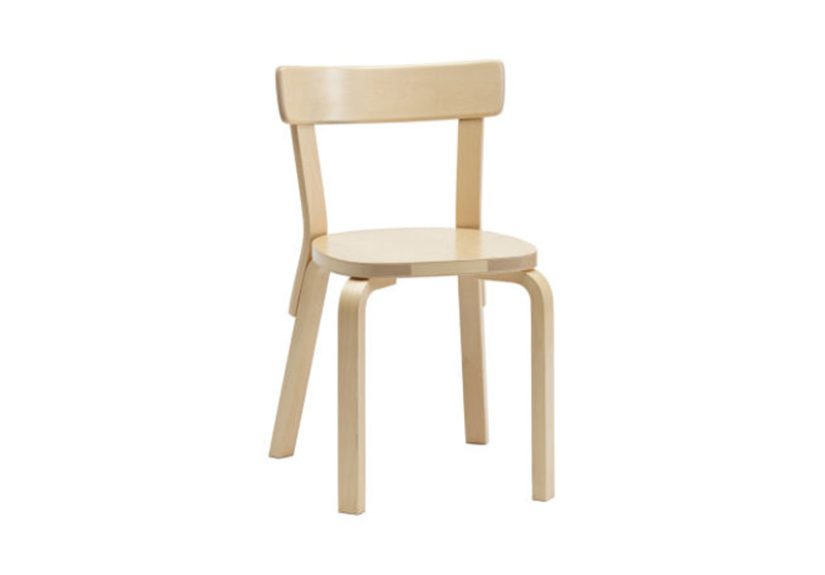
At first glance, the chair looks almost obviousfour legs, a round seat, a curved backrest. But the proportions are precise: compact footprint, stable stance, and a backrest that offers support without visual heaviness. It doesn’t dominate a room, which is exactly why designers keep using it.
In practical terms, this is what makes Chair 69 excellent for dining setups and multi-use spaces. It tucks in neatly, lines up cleanly, and pairs well with both round and rectangular tables. You can place one chair as an accent, or six around a table, and it still feels calm.
2) Materials: Birch as a Design Strategy
Authentic Chair 69 models are built around birch components, with options that may include natural veneer, laminate, lacquer finishes, and upholstered versions depending on configuration. Birch matters here: it is strong, relatively lightweight, and visually soft. That pale grain is one reason the chair works with almost every palette, from bright contemporary rooms to earthy, lived-in spaces.
This is not accidental “Scandi style.” It is a material decision connected to climate, craft, and manufacturing logic. Aalto used wood not as a nostalgic throwback, but as a modern engineering medium.
3) Comfort: Better Than It Looks
Minimal chairs often sacrifice comfort on the altar of aesthetics. Chair 69 avoids that trap. The broad seat and curved backrest provide practical support for meals, work sessions, or long conversations that begin with “just one coffee” and end with “wait, is it midnight?”
It won’t feel like an overstuffed lounge chair, and that’s the point. This is active comfortgood posture, stable support, and an easy sit/stand rhythm that works for everyday life.
The L-Leg Innovation (And Why It Still Matters)
The engineering breakthrough behind many Aalto pieces is the L-leg: solid birch bent at a right angle so it can connect directly to seat surfaces. This dramatically simplified construction and made standardized production possible across many designs. It also created visual coherence in the Aalto furniture family.
Why should you care in 2026? Because clever construction is what separates “looks nice online” from “still stable after years of use.” Chair 69’s structure isn’t decorativeit’s the reason the design scales from homes to hospitality environments while keeping its character.
Chair 69 vs. Other Aalto Icons
Chair 69 vs. Chair 66
Both are 1935 classics and share similar DNA. Chair 66 has a wider, more rectangular back profile, while Chair 69 leans toward a slightly softer silhouette with its rounded seat presence. In a room, Chair 66 reads a touch more graphic; Chair 69 feels a bit more gentle and domestic.
Chair 69 vs. Stool 60/E60
Stool 60 and E60 are great when you need stacking flexibility or small-space utility. But if you’re planning real seated meals or longer desk sessions, Chair 69 wins on back support and ergonomic consistency. Think of Stool 60 as a brilliant utility player and Chair 69 as the all-around starter.
Chair 69 vs. Paimio 41
Paimio is sculptural and iconic, but it’s a statement lounge piece. Chair 69 is the dependable everyday performer. One starts conversations about design history; the other quietly carries your Tuesday dinner, your Wednesday emails, and your Thursday game night.
How to Style Alvar Aalto Chair 69 in Modern Interiors
Kitchen and Dining Rooms
Pair natural birch Chair 69 models with solid wood or stone-top tables for a timeless look. If your table is visually heavy, the chair’s open profile keeps the room balanced. For family homes, laminate-seat versions can be practical for easier cleanup.
Home Office Setups
Chair 69 can work beautifully at secondary workstations or creative desks. It keeps visual clutter low, especially in multi-functional rooms where a desk shares space with dining or living zones. Add a thin seat pad if you sit for extended periods.
Hospitality-Inspired Corners
A pair of Chair 69s and a small round table instantly creates a café-like reading or tea nook. The chair’s classic profile gives these corners a designed feel without making them look staged.
Buying Guide: What to Check Before You Buy
1) Authenticity and Provenance
Buy through authorized dealers, trusted design retailers, or reputable vintage platforms. Confirm model details, manufacturer references, and dimensions. With vintage pieces, patina is normal and often desirablebut major structural issues are not.
2) Dimensions and Fit
Chair 69 is compact, but always check seat height and table clearance before purchasing. If you’re mixing chair brands around one table, compare seat heights carefully to avoid the “everyone at dinner is mysteriously sitting at different altitudes” problem.
3) Finish Selection
Natural birch is the most versatile long-term choice. Lacquered colors make a stronger design statement and can energize neutral rooms. Upholstered options improve comfort for longer sits and soften acoustics in echo-prone spaces.
4) New vs. Vintage
New pieces offer consistency, warranty support, and predictable condition. Vintage pieces offer history and character, sometimes at competitive pricing, though condition varies. If buying vintage, inspect leg joints, seat stability, and repairs.
Durability, Sustainability, and Long-Term Value
Chair 69 has survived decades of design shifts because it is fundamentally serviceable. Its material choices, structural logic, and replaceable utility make it less disposable than trend-driven furniture. The best sustainability feature in furniture is often simple: a piece people keep using.
From a value perspective, iconic functional designs tend to hold relevanceand often resale interestbetter than novelty pieces. Chair 69 isn’t “cheap furniture,” but it can be cost-effective across years of use, especially when compared with replacing lower-quality chairs every few seasons.
Common Mistakes People Make with Chair 69
- Ignoring table height: A beautiful chair can still be uncomfortable at the wrong table.
- Overcrowding: Leave breathing room between chairs so the curved backrest reads clearly.
- Choosing finish by trend only: Pick a finish that works with your long-term palette.
- Assuming all vintage is better: Originality matters, but structural integrity matters more.
- Treating it like a fragile museum object: It was designed for real, daily use.
Who Should Buy Alvar Aalto Chair 69?
Chair 69 is ideal for people who want one chair that can move between roles: dining chair, desk chair, occasional chair, and style anchor. It fits design lovers, practical homeowners, small apartments, family kitchens, and professional interiors alike.
If you want instant drama, there are louder chairs. If you want quiet confidence, excellent ergonomics for its category, and a true design lineage, Chair 69 is hard to beat.
Experience Section: Living with Alvar Aalto Chair 69 (Approx. )
Over time, the most convincing thing about Chair 69 is not how it photographsit’s how it behaves. In many homes, the chair starts as a “design purchase” and quickly becomes the chair everyone reaches for first. The one that migrates from dining table to desk, from desk to hallway, from hallway to that random corner where someone suddenly needs extra seating.
In open-plan apartments, users often describe Chair 69 as a visual stabilizer. Because the silhouette is simple and the birch tone is gentle, the chair helps connect zones without making the space look busy. Four chairs around a table can feel cohesive; one by itself can feel intentional. That versatility is why people keep adding “just one more” over time.
Families tend to appreciate the chair for different reasons than design collectors doand that’s part of its magic. Design-minded owners love the lineage, proportions, and material honesty. Parents or busy households often love the same chair because it’s sturdy, easy to move, and doesn’t look outdated when life gets messy. It can handle weekday breakfasts, laptop sessions, homework marathons, and impromptu dinner guests without feeling precious.
In work-from-home setups, Chair 69 is frequently used as a secondary office chair. It may not replace a fully adjustable ergonomic task chair for eight-hour corporate marathons, but for creative work, meetings, and mixed-use environments, it performs surprisingly well. Many people add a slim cushion and call it done. More importantly, when the workday ends, the room still looks like a home, not a cubicle farm.
Interior stylists also note how easily Chair 69 pairs with other materials. Next to steel, it softens the scene. Next to dark wood, it lightens it. Next to painted finishes, it adds grain and tactility. Even in colorful rooms, natural birch reads as a friendly neutral. This is one reason the chair appears across so many stylesfrom restrained Scandinavian spaces to eclectic, art-filled interiors.
Vintage owners often describe a different kind of satisfaction: continuity. A chair made decades ago still functioning today creates an emotional value modern fast furniture rarely offers. Scuffs become memory markers, not defects. A softened edge at the backrest might reflect years of hands pulling it out at dinner. Slight seat wear can read less like damage and more like proof of life.
There’s also a social quality to Chair 69 that people mention: it encourages “normal sitting.” Not slouch-and-scroll isolation, not formal discomfortjust practical posture that supports conversation. In gatherings, guests don’t ask, “Where should I sit?” They just sit. That effortless usability is underrated design excellence.
The long-term experience is simple: Chair 69 grows with your space. Move apartments? It adapts. Change table shape? It adapts. Shift from minimalist to layered interiors? It still adapts. In the end, the chair feels less like a trend purchase and more like a reliable tool with excellent manners. And honestly, in furniture terms, that’s about as close as it gets to a standing ovation.
Final Takeaway
The Alvar Aalto Chair 69 remains one of the clearest examples of human-centered modern design: technically clever, materially honest, visually quiet, and deeply usable. It is an icon, yesbut more importantly, it is a workhorse. If your goal is to invest in a chair that looks better over time, plays nicely with nearly any interior, and keeps doing its job decade after decade, Chair 69 is a very smart choice.