Table of Contents >> Show >> Hide
- What Is a Ground Effect Drone?
- Why Autonomous Flight Matters
- Real-World Example: The Autonomous Squire Seaglider
- Ground Effect Drones vs. Traditional Drones
- The Technology Behind Autonomous Ground Effect Flight
- Benefits of Ground Effect Drones
- Challenges That Still Need Solving
- Best Use Cases for Autonomous Ground Effect Drones
- Why This Technology Feels Different in 2026
- Experience-Based Insights: What It’s Like to Think Through a Ground Effect Drone Project
- Conclusion
A ground effect drone flying autonomously sounds like something built in a secret lab by engineers who drink espresso from torque wrenches. But the idea is very real, and it is quickly becoming one of the most interesting corners of unmanned aviation. Instead of climbing high into the sky like a typical airplane or hovering like a quadcopter, a ground effect drone skims close to a surfaceusually waterwhere physics gives it a helpful little shove.
That shove is called ground effect. When a wing flies close to the ground or water, the airflow beneath it changes. The wing experiences less induced drag and can generate lift more efficiently. In plain English: the drone can ride on a cushion of air, move fast, and use less energy than it would in normal flight. It is not magic, although from the shoreline it may look suspiciously like a flying boat trying to avoid paying airport fees.
The big breakthrough is autonomy. A ground effect vehicle has to stay low, stable, and precise. Too high, and it loses much of the efficiency advantage. Too low, and the water has an awkward conversation with the airframe. Autonomous flight control systems, sensors, airspeed measurement, GPS, radar, lidar, and advanced autopilot software can help keep the craft in that narrow sweet spot. That is why the phrase “ground effect drone flies autonomously” is more than a headlineit is a sign that a once-niche aerospace concept is finding modern purpose.
What Is a Ground Effect Drone?
A ground effect drone is an unmanned vehicle designed to fly very close to a surface so it can take advantage of improved aerodynamic efficiency. Many of these vehicles are also called wing-in-ground-effect vehicles, or WIG craft. Some look like small airplanes. Others look like futuristic boats with wings. A few look like something a Bond villain would park beside a private island.
Unlike a normal fixed-wing drone, a ground effect drone does not aim to cruise thousands of feet above the ground. Its performance advantage comes from staying low. Over water, this design becomes especially attractive because there are fewer obstacles than on land. The drone can use docks, beaches, small ports, or sheltered coastal routes rather than traditional runways.
Ground Effect Explained Without the Physics Headache
Aircraft wings create lift, but they also create drag. One major source of drag is the swirling air near the wingtips, known as wingtip vortices. When a wing flies close to a surface, the ground or water interferes with those vortices. The result is reduced induced drag and better lift-to-drag performance.
Think of it like cycling behind a large truckbut safer, cleaner, and with fewer honking drivers. The drone is not simply floating on air; it is using a real aerodynamic condition that pilots have known about for generations. During takeoff and landing, pilots often notice that an airplane feels like it wants to “float” near the runway. Ground effect vehicles turn that temporary behavior into the main event.
Why Autonomous Flight Matters
Flying in ground effect is efficient, but it is not forgiving. A drone must constantly manage altitude, speed, pitch, roll, wind gusts, waves, and turning radius. Human pilots can do it, but an autonomous system can react quickly and consistently when properly designed.
Autonomy matters because ground effect flight happens in a narrow operating envelope. The vehicle may need to fly within one wingspan of the water. That leaves little room for sloppy control. A good autopilot system can read sensor data many times per second and make small corrections before a human operator even notices a wobble.
The Role of Sensors and Autopilot Software
Modern autonomous ground effect drones may use a combination of GPS, inertial measurement units, airspeed sensors, radar altimeters, lidar, cameras, and control algorithms. The goal is simple to describe and difficult to perfect: keep the vehicle low enough to benefit from ground effect but high enough to avoid waves, debris, docks, birds, buoys, and any fisherman who suddenly becomes part of the test program.
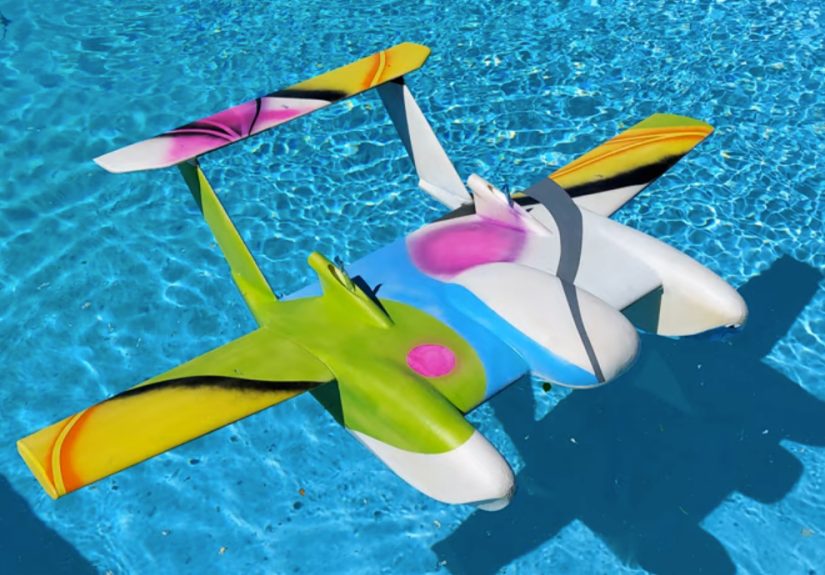
Autopilot platforms such as ArduPilot have already been used in experimental ground effect drone projects. Hobbyist and research prototypes have shown that a small WIG-style drone can follow pre-programmed waypoints, maintain speed, and stay in low-altitude flight around open water. These smaller demonstrations may look playful, but they point toward a much bigger future.
Real-World Example: The Autonomous Squire Seaglider
One of the most important recent examples is REGENT’s Squire Seaglider, an autonomous wing-in-ground-effect drone designed for defense missions. REGENT announced a successful ground-effect flight of Squire in April 2026, marking a major step for U.S. development of autonomous WIG craft.
Squire is designed to combine electric propulsion, hydrofoils, maritime operation, and autonomous flight. In concept, it begins as a watercraft, rises onto hydrofoils, and then transitions into ground-effect flight above the water. That “float, foil, fly” sequence is important because it avoids the need for a traditional runway. For military and emergency missions, runway independence can be a major advantage.
Why the Military Is Paying Attention
Defense planners are interested in platforms that can move supplies, sensors, and equipment across contested coastal regions without relying on large ports or airfields. A ground effect drone could support intelligence, surveillance, reconnaissance, search and rescue, anti-submarine missions, and small cargo delivery. It may not replace ships, helicopters, or aircraft, but it could fill the awkward gap between them.
That gap matters. Ships are efficient but slow. Aircraft are fast but expensive and infrastructure-hungry. Small drones are agile but often limited by battery life and payload. A wing-in-ground-effect drone offers a middle path: faster than a boat, potentially more efficient than conventional low-altitude aircraft, and able to operate from water.
Ground Effect Drones vs. Traditional Drones
A typical consumer drone uses rotors to hover. It is excellent for photography, inspection, mapping, and short flights. But hovering burns energy quickly. A fixed-wing drone is more efficient for long-distance travel, but it usually needs space for launch and recovery. A ground effect drone tries to borrow the best parts of several categories.
Key Differences
Altitude: Traditional drones may fly dozens or hundreds of feet above the ground. Ground effect drones are designed to stay extremely low, often within one wingspan of the surface.
Efficiency: Because ground effect reduces induced drag, WIG drones may travel farther on the same energy, especially over water.
Operating environment: Many ground effect drones are best suited for lakes, rivers, coastal waters, island routes, and maritime logistics.
Autonomy challenge: A normal drone has altitude room to correct errors. A ground effect drone must manage height with much tighter margins. It is less “set it and forget it” and more “set it, monitor it, and please respect the ocean.”
The Technology Behind Autonomous Ground Effect Flight
For a ground effect drone to fly autonomously, several systems must work together smoothly. The wing provides lift. The propulsion system provides thrust. The control surfaces manage direction and attitude. The sensors measure what is happening. The onboard computer decides what to do next. When everything works, the craft skims along with surprising grace. When it does not, engineers learn expensive lessons very quickly.
1. Airframe Design
The airframe must be shaped for stable low-altitude flight. Designers may use broad wings, endplates, carefully placed propellers, or lifting surfaces that perform well near the water. The structure must also handle spray, corrosion, vibration, and occasional hard contact with water.
2. Propulsion
Many modern designs are electric or hybrid-electric. Electric motors offer fast throttle response, lower mechanical complexity, and reduced local emissions. Battery energy density remains a challenge, but ground effect can help stretch available energy by improving aerodynamic efficiency.
3. Hydrofoils and Water Handling
Some seaglider concepts use hydrofoils to rise above the water before transitioning into flight. Hydrofoils reduce drag during the takeoff run and help the vehicle reach flight speed more smoothly. This is where the vehicle starts to feel like three machines in one: boat at rest, hydrofoil during acceleration, aircraft in cruise.
4. Navigation and Obstacle Avoidance
Autonomous navigation is not just about following GPS points. The drone must understand its environment. On water, that may include waves, vessels, markers, birds, floating debris, restricted zones, and changing weather. Reliable sense-and-avoid systems will be essential before ground effect drones can scale beyond controlled demonstrations.
Benefits of Ground Effect Drones
The excitement around autonomous ground effect drones comes from a practical list of benefits. This is not technology for technology’s sake. It solves real transportation headaches, especially around coastlines and islands.
Greater Efficiency
The main advantage is aerodynamic efficiency. By reducing induced drag, a ground effect drone can travel with less energy than a comparable aircraft flying out of ground effect. For electric vehicles, that efficiency can mean better range, smaller battery requirements, or more useful payload.
Runway-Free Operations
Many ground effect drones can use water as their operating surface. That opens possibilities for coastal communities, island deliveries, maritime patrol, disaster response, and military logistics. No runway? No problem. Well, fewer problems.
Fast Maritime Transport
Boats are dependable, but speed is not always their strongest personality trait. A ground effect drone can move faster than many conventional vessels while still operating in the maritime environment. That makes it appealing for urgent cargo, medical supplies, spare parts, and time-sensitive missions.
Lower Emissions Potential
Electric and hybrid-electric WIG craft could reduce emissions on short coastal routes. A battery-electric ground effect drone will not solve every transportation problem, but it could make some regional routes cleaner and quieter than diesel-powered alternatives.
Challenges That Still Need Solving
Of course, ground effect drones are not perfect. If they were, every harbor would already look like a sci-fi traffic jam. Several challenges remain before autonomous WIG craft become common.
Wave Conditions
Water is not a runway. It moves, rolls, reflects light, hides debris, and occasionally behaves like it has personal issues. Autonomous systems must account for sea state, wave height, wind direction, and spray.
Regulation
Ground effect vehicles sit in a strange regulatory neighborhood. They look like aircraft, behave partly like boats, and may be regulated differently depending on where and how they operate. In the United States, certain wing-in-ground craft are treated as maritime vessels, with the U.S. Coast Guard playing a key role and the FAA providing technical support in some certification pathways.
Public Trust
People are still getting comfortable with delivery drones overhead. A fast autonomous craft skimming across the water will need strong safety records, transparent rules, and clear operating zones. Nobody wants their peaceful kayaking trip interrupted by a robot seaglider with main-character energy.
Autonomy Reliability
The drone must handle failures gracefully. What happens if GPS drops out? What if a sensor is blinded by spray? What if communication is lost? Reliable fallback modes, remote supervision, redundant systems, and careful testing will decide whether autonomous ground effect drones remain prototypes or become working tools.
Best Use Cases for Autonomous Ground Effect Drones
The most promising applications are not random. Ground effect drones make the most sense where routes are long enough to need speed, close enough to fit electric or hybrid range, and water-based enough to avoid crowded land obstacles.
Island Logistics
Small islands often depend on ferries, small aircraft, or expensive supply chains. A ground effect drone could carry medicine, tools, food, emergency parts, or mail across short-to-medium maritime routes.
Search and Rescue
Autonomous WIG drones could quickly scan coastal areas, deliver flotation devices, transport sensors, or support rescue teams. Their speed and low-altitude operation could be valuable when minutes matter.
Environmental Monitoring
Researchers could use autonomous ground effect drones for water sampling, shoreline mapping, wildlife monitoring, and pollution detection. Because the craft can travel efficiently over water, it may cover larger areas than many small boats or multicopter drones.
Defense and Maritime Security
Defense use cases include surveillance, reconnaissance, communications relay, small cargo delivery, and support for dispersed coastal units. A runway-free autonomous craft is attractive in regions where traditional infrastructure may be damaged, monitored, or unavailable.
Why This Technology Feels Different in 2026
Ground effect is not new. Engineers experimented with WIG craft decades ago, including large ekranoplans that looked like airplanes trying to become ships. What is new is the combination of better sensors, electric propulsion, lightweight materials, autonomous control software, and renewed interest in distributed logistics.
Modern drones have changed expectations. We now expect small aircraft to stabilize themselves, follow waypoints, avoid obstacles, record data, and return home. That same digital nervous system makes ground effect flight more practical than it was in earlier eras.
At the same time, coastal transportation is ripe for innovation. Highways are congested. Ferries can be slow. Regional air service is expensive. Military planners want more flexible logistics. Climate concerns are pushing cleaner propulsion. Put those pressures together, and suddenly a low-flying autonomous seaglider does not look strange. It looks timely.
Experience-Based Insights: What It’s Like to Think Through a Ground Effect Drone Project
Anyone who has worked around drones, model aircraft, boats, or robotics will recognize one truth immediately: the concept is always cleaner than the test day. On paper, a ground effect drone flies smoothly over water, saves energy, and follows its route like a disciplined little aerospace intern. In real life, the lake has wind, the airframe has quirks, the battery is never as full as you want, and someone always says, “Let’s try one more run,” right before the weather changes.
The first practical lesson is that altitude control is everything. A normal drone can climb a little, drift a little, and recover. A ground effect drone lives close to the surface. That means even small mistakes matter. The autopilot must understand not only where the craft is going, but exactly how high it is above the water. GPS altitude alone is usually not enough for fine control. Designers need better height sensing, careful tuning, and a willingness to test in small steps.
The second lesson is that water operations add personality. Launching from land is one thing. Operating from water introduces spray, drag, reflection, corrosion, and retrieval issues. If a small fixed-wing drone lands in a field, you walk over and pick it up. If a ground effect drone stops in the middle of a lake, congratulations: you now own a boat problem. Good test planning includes recovery equipment, flotation, waterproofing, and a healthy respect for batteries near water.
The third lesson is that stable autonomy is not just software. Many people imagine autonomy as code sprinkled on top of a vehicle. In reality, the airframe must be stable enough for the software to control. If the design is too twitchy, underpowered, tail-heavy, or sensitive to waves, the autopilot will spend the whole flight wrestling the machine like a caffeinated raccoon. Good autonomous flight begins with good mechanical design.
The fourth lesson is that speed can be both a benefit and a bully. Ground effect drones can move quickly, which is useful for logistics and patrol. But speed reduces reaction time. At 50, 70, or 100 knots, the vehicle covers distance fast. Obstacle detection, route planning, emergency stop logic, and remote supervision must all be designed for that reality. Fast autonomous systems need boringly reliable safety architecture. Boring, in this case, is a compliment.
The fifth lesson is that the best applications are specific. A ground effect drone is not ideal for every mission. It will not replace a quadcopter inspecting a roof or a cargo plane crossing an ocean. Its sweet spot is over-water movement where speed, efficiency, range, and runway-free operation matter. Coastal resupply, island routes, environmental sampling, harbor patrol, emergency delivery, and maritime surveillance are the kinds of jobs where the technology makes sense.
Finally, ground effect drones teach a useful innovation lesson: old physics can become new technology when the supporting systems catch up. Ground effect has been understood for a long time. What changed is the availability of compact sensors, better batteries, powerful microcontrollers, rugged autopilots, modern composites, and more mature autonomous navigation. The result is a technology that feels both retro and futuristiclike an ekranoplan went to graduate school and came back with a robotics degree.
Conclusion
The autonomous ground effect drone is more than a clever flying machine. It is a bridge between boats, aircraft, and intelligent robotics. By riding close to the surface, it can reduce drag and improve efficiency. By flying autonomously, it can maintain the precision required for low-altitude operation. And by operating over water, it can unlock new options for logistics, rescue, defense, and environmental monitoring.
The technology still faces real challenges: regulation, sea conditions, safety systems, battery limitations, and public acceptance. But recent demonstrations show that ground effect drones are moving from experimental curiosity toward practical platform. The future may not be filled with flying cars on every street, but our coastlines could soon see autonomous craft skimming above the wavesquietly, efficiently, and with just enough sci-fi flair to make engineers grin.