Table of Contents >> Show >> Hide
- Why Bruce Lee’s Core Training Still Fascinates People
- What Bruce Lee’s Ab Workout Probably Emphasized
- The Modern, Safer Way to Train Like Bruce Lee
- A Bruce Lee-Inspired Weekly Core Plan
- Mistakes People Make When They Try to Train Like Bruce Lee
- What Results Should You Realistically Expect?
- The Real Bruce Lee Lesson
- Experience Section: What It Feels Like to Follow a Bruce Lee-Inspired Core Plan
- Conclusion
Bruce Lee’s midsection has been admired for decades, but the real magic of his core training was never just about visible abs. That is the part the internet loves to screenshot. Lee cared far more about speed, body control, balance, power transfer, and the ability to move like a human lightning bolt wearing kung fu shoes. In other words, his core was not decoration. It was equipment.
That distinction matters. If you are chasing a Bruce Lee-style core, the smartest goal is not to copy an ultra-lean movie-star look that depended on genetics, lifestyle, and an unusually intense training schedule. The better goal is to borrow the principles that made his training effective: consistency, control, smart progressions, and a serious respect for movement quality. Your abs do not need to audition for Enter the Dragon to become stronger, more stable, and more useful.
This article breaks down what made Bruce Lee’s ab work so legendary, what modern exercise science says about core training, and how to build a Bruce Lee-inspired routine that challenges your trunk without turning your lower back into a customer complaint. Expect practical advice, a little sweat, and at least one moment where the dragon flag reminds you that gravity has no feelings.
Why Bruce Lee’s Core Training Still Fascinates People
Bruce Lee trained like a man who viewed the body as a performance machine. Historical accounts from his family company describe a routine that included stretching, jogging, private teaching, martial arts practice, and a second personal workout later in the day. He also experimented constantly with different training methods, from cardio to strength work to technical drills. That blend helps explain why his core training became such a legend: it was never isolated from the rest of his athletic identity. His abs were part of a larger system.
Lee’s appeal also comes from the fact that his body looked functional. He did not carry the cartoon proportions of a comic-book bodybuilder. He looked fast, precise, and powerful. That is exactly why modern coaches still talk about him. A strong core is central to balance, posture, rotational control, and efficient movement. It helps the body transmit force instead of leaking it. When a punch, kick, sprint, pivot, or sudden stop looks clean, the core is usually doing more work than the spotlight suggests.
And yes, his training had flair. Dragon flags, V-sits, leg raises, and hard holds have all been linked to the Bruce Lee legacy over the years. But the deeper lesson is less glamorous and far more useful: Lee trained his trunk for performance first. The visible definition was a side effect, not the whole mission.
It Was About Function, Not Just Looks
One of the best things modern fitness culture can steal from Bruce Lee is this idea: stop treating your core like a vanity project with a six-pack mood board. A strong core supports your spine, improves balance, helps with posture, and makes everyday and athletic movement more efficient. That means carrying groceries, changing direction quickly, throwing a punch, standing taller, and getting through workouts with better mechanics.
So, even though the title of this article promises a core like Bruce Lee’s, let’s make one thing very clear: the healthiest takeaway is not “I must look exactly like Bruce Lee.” Bodies differ. Frame size differs. Genetics differ. Body-fat levels differ. Recovery ability differs. The win is learning how to train the way a high-level athlete thinks: with intention.
What Bruce Lee’s Ab Workout Probably Emphasized
Because Bruce Lee’s routines have been retold, republished, and occasionally turned into “bro science with dramatic lighting,” it is smarter to focus on the training themes that show up again and again rather than pretending there is one sacred laminated ab card from the heavens. Those themes are remarkably consistent.
1. Frequent Core Work
Lee appears to have trained often, and his day was full of physical practice. That does not necessarily mean you should train your abs every day like a caffeinated metronome. It does mean he treated core work as a regular part of athletic preparation, not a random finisher you remember once every nine days.
2. Trunk Control Over Mindless Reps
Bruce Lee-inspired training tends to favor movements that demand body awareness: leg raises, holds, twists, and advanced bench-supported drills like the dragon flag. These are not “swing your legs around and hope your soul stays attached” exercises. They require bracing, alignment, and control. Modern coaching agrees: momentum is the enemy when the goal is quality core training.
3. Isometrics Matter
Planks, side planks, and dragon flag positions all train the body to resist unwanted movement. That is a huge part of what the core actually does. It stabilizes. It prevents the lower back from collapsing into bad positions. It gives your arms and legs a solid base from which to generate force. Bruce Lee’s training style makes more sense when you view his abs not as crunch muscles, but as anti-chaos muscles.
4. Dynamic Strength Matters Too
Lee was not only bracing. He also used movements that challenged the trunk while the limbs moved, which is exactly how life and sport work. Hanging knee raises, controlled leg raises, reverse crunches, and twisting variations all train the core to stay organized while the body changes position. That blend of motion and stability is where the magic happens.
5. Warm-Up Is Not Optional
One lesson that should not be skipped: Bruce Lee suffered a serious back injury after a routine training session in 1969, a story often linked to inadequate warm-up. That is a giant neon sign for anyone trying to jump from “I do occasional sit-ups” to “today I become a dragon.” Warm up first. Always.
The Modern, Safer Way to Train Like Bruce Lee
If Bruce Lee were training today with access to modern physical therapy guidance, evidence-based coaching, and people who say useful things like “please stop yanking your lumbar spine around,” his approach would probably still be intense. But it would also be progressive. That is the sweet spot.
Here is the smarter formula: build stability first, then dynamic control, then advanced strength. In plain English, earn the cool stuff.
Phase 1: Foundation and Stability
Spend two to four weeks here if your current core training is inconsistent, your lower back gets cranky, or your plank looks like a folding lawn chair.
- Dead bug: 3 sets of 6 to 10 reps per side
- Bird dog: 3 sets of 6 to 8 reps per side with slow pauses
- Forearm plank: 3 sets of 20 to 40 seconds
- Side plank: 2 to 3 sets of 15 to 30 seconds per side
- Bridge: 2 to 3 sets of 8 to 12 reps
This phase teaches you to brace, breathe, and stabilize your trunk without cheating through speed. It is humble work. It is also the work that keeps later training from becoming a dramatic documentary about poor decisions.
Phase 2: Dynamic Core Strength
Once you can hold stable positions without wobbling, move on to exercises that involve more motion.
- Reverse crunch: 3 sets of 8 to 12 reps
- Hanging knee raise: 3 sets of 6 to 10 reps
- V-sit hold or tuck hold: 3 sets of 10 to 25 seconds
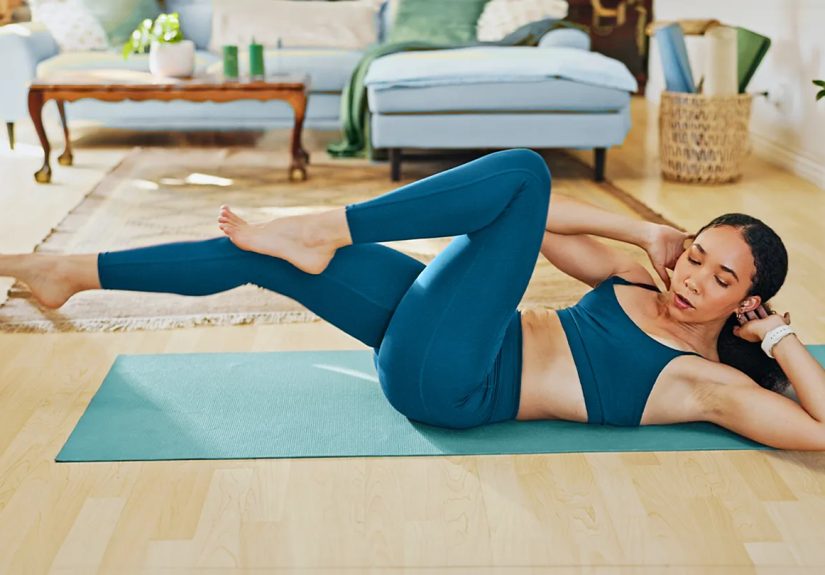
- Heel taps or hollow-body variations: 2 to 3 sets of 10 reps per side
- Slow lying leg raise: 2 sets of 6 to 10 reps, only if your back stays neutral
The key word here is slow. If your legs swing like wrecking balls, your core is not mastering the movement. Your momentum is.
Phase 3: Advanced Bruce Lee-Inspired Work
This is where the dragon flag enters, wearing a cape and making unreasonable demands. It is an advanced exercise, and it deserves respect.
- Dragon flag progression hold: 3 sets of 5 to 10 seconds
- Bent-knee dragon flag negatives: 2 to 3 sets of 3 to 5 reps
- Windshield wiper progression: 2 sets of 5 to 8 reps per side
- Advanced hanging knee raise with twist: 2 to 3 sets of 6 reps per side
If you cannot keep your torso stiff and your lowering phase controlled, regress immediately. There is no prize for doing an ugly dragon flag besides a sore ego and maybe a grumpy spine.
A Bruce Lee-Inspired Weekly Core Plan
Here is a realistic weekly schedule for normal humans with jobs, responsibilities, and only occasional cinematic entrance music.
Monday: Stability Day
Dead bugs, bird dogs, planks, side planks, bridges.
Wednesday: Dynamic Day
Reverse crunches, hanging knee raises, heel taps, V-sit holds.
Friday: Power-Control Day
Plank variation, side plank variation, dragon flag progression, controlled leg raises.
Optional Saturday: Light Movement
Walk, easy shadowboxing, mobility work, or a short recovery circuit. Nothing heroic. Bruce Lee loved training, but modern recovery still wins arguments.
This schedule gives you enough frequency to improve without turning core work into a daily punishment ritual. Two to three focused sessions per week is a solid place to start.
Mistakes People Make When They Try to Train Like Bruce Lee
They skip the warm-up.
A few minutes of mobility, easy bracing drills, and gradual activation can save you a lot of regret.
They confuse difficulty with effectiveness.
Dragon flags are impressive. So is doing a plank correctly. The second option is often more useful if you are still building control.
They let the hip flexors dominate everything.
Some hanging straight-leg work can become more hip-flexor party than ab training, especially when fatigue hits. Bent-knee raises, slow tempo work, and reverse crunches are often better stepping stones.
They train for appearance only.
Visible abs are influenced by body composition, nutrition, genetics, and overall training. You can have a stronger core long before you have magazine abs, and that still counts as progress. Actually, it counts more.
They progress too fast.
Bruce Lee built his abilities over years of martial arts practice, conditioning, experimentation, and freakish discipline. You do not need to reenact that timeline in eleven days.
What Results Should You Realistically Expect?
If you follow a Bruce Lee-inspired core plan consistently, the first noticeable result is usually not visual. It is mechanical. You stand taller. You feel more connected during pushups, rows, carries, and squats. Your punches, kicks, or athletic movements feel cleaner. Your balance improves. Your trunk stops acting like an unreliable intern and starts acting like management.
Physical changes may come too, especially if your nutrition, sleep, and full-body training line up. But the smartest benchmark is function. Can you hold a plank longer with better breathing? Can you do knee raises without swinging? Can you control a reverse crunch without slamming your back onto the floor? Can you lower into a dragon flag progression like a disciplined athlete instead of a dropped extension cord? Those are real wins.
Bruce Lee’s body became iconic because it looked ready for action. Train with that spirit, and your progress will be a lot more satisfying than chasing mirror drama under overhead bathroom lighting.
The Real Bruce Lee Lesson
The best thing about Bruce Lee’s ab workout is not that it looked intense. Plenty of bad workouts look intense. The best thing is that it reflected a larger philosophy: train what matters, move with purpose, and cut away what is unnecessary. That idea fits core training perfectly.
You do not need a museum replica of Bruce Lee’s routine. You need the principles behind it: consistency, control, progression, and a focus on useful strength. Build your core to support your life and performance, and the aesthetics can come along for the ride. That is the practical, modern version of training like an icon.
Experience Section: What It Feels Like to Follow a Bruce Lee-Inspired Core Plan
The first week of a Bruce Lee-inspired core routine is usually a humbling experience. On paper, the workout looks manageable. A few planks here, some dead bugs there, a couple of hanging knee raises, maybe a dragon flag progression if you are feeling brave and slightly overconfident. Then the session starts, and within ten minutes your core begins sending strongly worded letters to your brain. The surprise is not just the burn. It is how much concentration the workout demands. Every rep asks for body awareness. Every hold asks for tension in exactly the right places. Suddenly, “just abs” does not feel casual anymore.
By the second week, many people notice that daily movement feels different. Standing up from a chair is not dramatic, but it feels more organized. Walks feel lighter. Pushups feel more connected. Even carrying groceries becomes less of a side quest and more of a smooth transfer of force through the body. This is where the Bruce Lee method starts to make emotional sense. You stop thinking of core work as a vanity tax and start thinking of it as central wiring.
Week three is often where the ego tries to get involved. This is the dangerous stage. You feel stronger, so naturally the mind says, “Excellent, let’s attempt something cinematic.” That is when sensible athletes progress gradually and less sensible athletes try a full dragon flag after watching one inspirational clip and hearing imaginary applause. The better experience is slower: improve your plank, own your reverse crunch, clean up your hanging knee raise, and only then flirt with the advanced stuff. The strange thing is that this slower path usually feels more satisfying. Your reps become sharper. Your breathing gets better. Your control improves. You start to feel athletic instead of merely tired.
There is also a mental shift that happens with Bruce Lee-inspired training. Because the exercises demand control, you cannot coast through them while thinking about lunch, email, or whether your socks match. You have to pay attention. That makes the sessions feel almost meditative in a very sweaty, somewhat uncomfortable way. You brace, move, pause, breathe, and repeat. The simplicity of that process becomes part of the reward.
After several weeks, the biggest payoff is usually confidence in movement rather than a sudden movie-star transformation. You feel more stable, more coordinated, and more capable of producing force without wobbling like a shopping cart with one rebellious wheel. If visual changes happen, great. If they happen slowly, also great. The deeper reward is that your body feels more reliable. That is what makes this style of training stick. It is not just intense for the sake of being intense. It feels useful. And when training feels useful, discipline gets a lot easier.
Conclusion
Bruce Lee’s intense ab workout still captures attention because it represents more than famous abs. It represents discipline, movement quality, and the kind of core strength that helps the whole body perform better. Steal the method, not the mythology. Train consistently, progress patiently, respect your spine, and focus on control over chaos. That is how you build a core that is strong, athletic, and actually useful long after the workout ends.