Table of Contents >> Show >> Hide
- Picture Day Meets Time Travel (And Somehow Wins)
- The True Story Behind the Polyester Shirt and Sweater Vest
- Why This Went Viral: The Internet Loves a Good Pattern
- What the 40-Year Yearbook Outfit Teaches Us (Yes, Really)
- Want to Start Your Own “Same Outfit” Tradition? Here’s the Smart Way
- The Bigger Picture: Yearbooks as Micro-Histories
- Conclusion: The Outfit Was the HookThe Heart Was the Point
- Extra: of Picture-Day Experience (Inspired by the 40-Year Outfit)
Picture Day is usually a small, harmless kind of chaos: a lint roller sprint, a last-second tie adjustment,
a panicked search for the “good” cardigan that’s been missing since 2009. Students practice smiles that say,
“I’m totally relaxed,” while their eyes scream, “Is my hair doing something weird?” And teachers? Teachers
quietly hope nobody spills glue on them before 10:15 a.m.
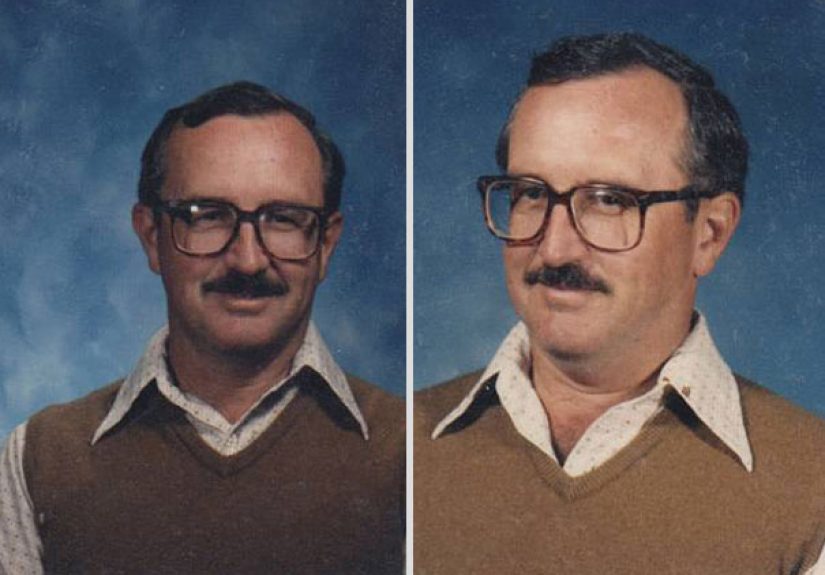
But one Dallas-area educator turned Picture Day into a decades-long punchline so perfectly executed that the
internet could only stand up and applaud. For 40 straight yearbook pictures, he wore the exact same
outfitsame wide-collared shirt, same sweater vest, same “I’m here to teach, not to chase trends” energy.
It’s the kind of commitment most of us can’t even manage with a gym membership.
Picture Day Meets Time Travel (And Somehow Wins)
The reason this story lands so well isn’t just the outfit. It’s what those yearbook photos do to your brain.
Flip through them and you get a human time-lapse: hairlines retreat, mustaches arrive and then settle in like
they’re paying rent, faces mature, and decades of students rotate through the school system like seasons.
Meanwhile, the outfit stays stubbornly loyal to 1973.
If you’ve ever wished you could “see time” without a science lab, congratulationssomeone did it with a
coffee-colored sweater vest.
The True Story Behind the Polyester Shirt and Sweater Vest
Meet the man behind the matching vest
The yearbook-outfit legend is Dale Irby, an educator who spent a career in North Texas and finished as a
physical education teacher at Prestonwood Elementary in the Richardson area. The tradition began in 1973,
back when disco was warming up in the wings and “polyester” was said proudly, like it was a luxury material
and not a mild threat to breathable skin.
How it started: an accidental outfit repeat
The origin story is wonderfully unglamorous: Picture Day arrived, teachers were told to “wear something nice,”
and Irbywho didn’t have an overflowing closet of dressy optionspicked a patterned, pointy-collared shirt and
a sweater vest that was perfectly on-trend for the era. Then, the next year, he unknowingly wore the same
outfit again. When the photos came back, he realized what happened and felt embarrassed.
This is the moment where most of us would vow, dramatically, “Never again,” and then spend the following year
overcompensating with a new blazer and the emotional support of three different belts.
How it kept going: a dare with unexpected staying power
Irby’s wife, Cathyalso an educatordared him to wear it a third time for laughs. Three turned into five,
five turned into ten, and eventually the joke became a tradition with a 40-year contract. At some point it
stops being a prank and becomes an institution, like recess or staff meetings that could’ve been an email.
The outfit: a disco-era uniform that refused to retire
The look is instantly recognizable: wide collar, patterned shirt, and that now-famous brown/coffee-colored
sweater vest. In later years, Irby didn’t even wear it all dayhe’d bring it to school, put it on for the
photo, and then change back into his usual work clothes. Which is a level of strategic planning that deserves
a small grant.
He also admitted that by the end, the shirt fit a little more…enthusiastically than it did in the
early yearsstill wearable, but with the kind of determination usually reserved for closing a suitcase that’s
clearly overpacked.
The final photo and the retirement mic drop
Irby’s 40th and final school picture in the outfit was taken in the last year of his career, and he retired
after 40 years in education (including 18 years as a physical education teacher at Prestonwood Elementary).
In local coverage, his exit was framed as the end of “one last echo of disco fashion”which feels like the
perfect farewell line for a sweater vest that survived multiple eras of denim.
The school community clearly adored him. A principal described him as someone who taught sportsmanship “both
in athletics and in life,” and his name even ended up on signage for the gym.
This is the part where the story stops being just funny and starts being quietly meaningful.
Why This Went Viral: The Internet Loves a Good Pattern
1) It’s a visual time capsule (no app required)
We’re used to “before and after” photos that show one dramatic transformation: a fitness journey, a home
renovation, a haircut that definitely happened at 2 a.m. Irby’s yearbook photos are different. They show
gradual changethe kind that’s more honest and, weirdly, more comforting. Same framing, same outfit, same
school-photo vibe. Everything else evolves.
That’s catnip for the human brain. Our minds love patterns. We love consistency. We love being able to say,
“Look, time is real,” without doing math.
2) Consistency feels like stability (especially in schools)
Schools are full of change: new students, new policies, new technology, new acronyms that appear in staff
emails like they’ve always existed. A teacher who stays steady becomes a landmark. Not because they never
change, but because they show upagain and againdoing the work.
A goofy yearbook outfit tradition is a small ritual, but it signals something bigger: “I’m here. I’m not
taking myself too seriously. And yes, I will absolutely commit to this bit for four decades.”
3) It’s wholesome, funny, and harmlessthe holy trinity of the internet
The online world can be exhausting. A story about a teacher’s sweater vest is refreshingly low-stakes.
Nobody’s getting dunked on. Nobody’s being cruel. It’s just a long-running joke that somehow ends up as a
tribute to a career in education.
Even national coverage leaned into the humor and the admirationbecause how could you not?
What the 40-Year Yearbook Outfit Teaches Us (Yes, Really)
Humor is leadership in a hallway
In schools, humor isn’t decorationit’s a survival skill. A teacher who can make students laugh can also
lower anxiety, build trust, and create a classroom climate where kids feel safe enough to try. A steady,
silly tradition broadcasts: “You can relax. I’m human. Let’s learn.”
Rituals create belonging
Humans run on rituals. Birthday candles, Friday pizza, the specific mug you “must” use for coffee or the day
feels cursed. School ritualspep rallies, spirit weeks, yearbook photoshelp students locate themselves in a
community.
Irby’s Picture Day ritual turned into a tiny annual event. Students could look forward to it. Staff could
joke about it. And yearbook pages became a living record of continuity.
It’s also a lesson in legacy
The outfit is what people notice first, but it’s not what people remember most. The most telling details are
the ones about how he was perceived: a beloved PE teacher, respected enough that colleagues and principals
spoke warmly about his impact.
The vest is the headline. The teaching is the story.
Want to Start Your Own “Same Outfit” Tradition? Here’s the Smart Way
Choose something you can actually tolerate
If your outfit itches, pinches, or makes you look like you’re auditioning for a mall kiosk, you will not
make it 40 years. Choose comfort first, comedy second. The goal is “charming tradition,” not “slow-motion
torture.”
Make it inclusive and kind
The best school traditions invite laughter without targeting anyone. If students want to join inmatching
ties, themed socks, “same pose” daygreat. Just keep it optional. Nobody should feel pressured to spend money
or break dress code rules to participate.
Document it on purpose
The magic of Irby’s tradition is that it’s visible. If you’re creating a yearbook-picture tradition,
photograph it consistently. Same angle. Similar lighting. Same framing. That’s how you get the satisfying
“time-lapse” effect.
The Bigger Picture: Yearbooks as Micro-Histories
We tend to treat yearbooks like a nostalgia productsomething that sits on a shelf until you move, at which
point you swear you’ll never throw it away and then immediately put it in a box labeled “misc.”
But yearbooks are also cultural artifacts. They record fashion shifts, photo styles, language trends, and the
subtle evolution of schools themselves. In Irby’s photos, you don’t just see a teacher agingyou see decades
of changing photography and design choices surrounding a constant reference point. It’s basically a sociology
lesson wearing a sweater vest.
And sometimes, a yearbook tradition becomes the doorway into a larger story. Coverage of Irby’s photos often
pointed back to the substance of his career: the respect he earned, the humor he shared, and the community he
helped build.
Conclusion: The Outfit Was the HookThe Heart Was the Point
On paper, “school teacher wears the same outfit for yearbook pictures for 40 years” sounds like a quirky
internet fact you’d scroll past while reheating leftovers. But in practice, it’s a story about commitment:
to a job, to a community, and to a joke that outlived disco, dial-up internet, and at least three different
definitions of “business casual.”
Dale Irby’s yearbook photos are funny because the outfit is stubborn. They’re meaningful because the career
behind them wasn’t. If you ever needed proof that small rituals can become big memories, consider the humble
sweater vestquietly doing its duty, one Picture Day at a time.
Extra: of Picture-Day Experience (Inspired by the 40-Year Outfit)
Let’s talk about the real reason this story resonates with teachers, students, and anyone who has
ever been trapped under fluorescent lights while someone says, “Okay, now tilt your chin downno, upno, just
be normal.” Picture Day isn’t just a photo. It’s a seasonal event, like taxes, except with more hairspray.
If you’ve never worked in a school, here’s a quick field guide: Picture Day begins with optimism and ends
with at least one person muttering, “Why did I wear this color?” Teachers learn early that it’s not the kids
who make it stressfulit’s the sudden awareness that a photo will exist forever, which is a lot of pressure
for a face that was up at 2 a.m. grading essays titled “My Summer As a Shark.”
Many educators develop their own mini-traditions because it’s easier than reinventing yourself annually. Some
keep a “Picture Day emergency kit” in a desk drawer: lint roller, safety pins, stain remover pen, a backup
tie, mints, and the kind of tiny comb that looks like it came free with a toy. Others keep a designated
“photo cardigan” that’s neutral, forgiving, and magically hides coffee splashes like it’s doing active duty.
(Every school has at least one staff member who can remove a Sharpie mark with a method that feels illegal
but isn’t.)
And then there’s the wardrobe strategy that Dale Irby accidentally perfected: consistency. A familiar outfit
lowers the mental load. No second-guessing, no last-minute shopping, no wrestling with a new shirt that’s
secretly made of sandpaper. Just: “This is what I wear in the yearbook. This is my uniform. Let’s proceed.”
It’s not lazinessit’s efficiency with a wink.
The funniest part of Picture Day, though, is how it turns into shared folklore. Years later, people don’t say,
“Remember that Tuesday in October?” They say, “Remember the year the photographer told us to ‘act natural’ and
half the staff looked like they were trying to solve a riddle?” Or: “Remember the year the wind outside the
gym turned everyone’s hair into modern art?”
That’s why Irby’s 40-year outfit tradition feels so satisfying. It’s the ultimate teacher move: take a small,
silly moment and turn it into something that connects people over time. The outfit is the punchline, but the
shared experience is the glue. And honestly, if you can make a whole school smile with a sweater vest, you’ve
already won Picture Day.