Table of Contents >> Show >> Hide
- Who Is Geoffrey Hinton?
- Early Life and Education
- The Big Idea: Machines That Learn From Examples
- Backpropagation and the Neural Network Revival
- Boltzmann Machines and Learning Hidden Patterns
- Deep Belief Networks and the Road to Deep Learning
- AlexNet: The Breakthrough That Changed Computer Vision
- Google, DNNresearch, and the Commercial AI Boom
- The 2018 Turing Award
- The 2024 Nobel Prize in Physics
- Why Geoffrey Hinton Left Google
- Major Career Highlights
- Geoffrey Hinton’s Influence on Modern AI
- Experience and Reflections Related to Geoffrey Hinton’s Career
- Conclusion
- SEO Tags
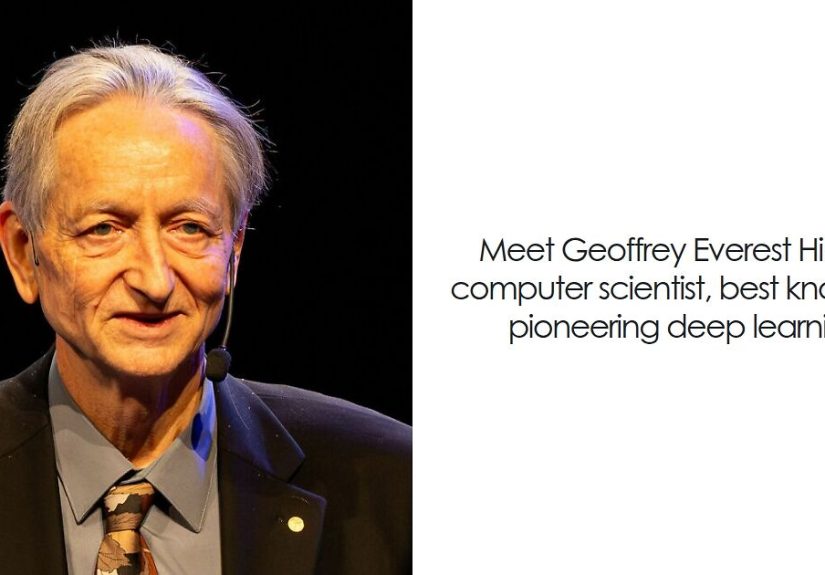
Geoffrey Hinton is one of those rare scientists whose ideas escaped the lab, slipped into everyday life, and started quietly running the modern world. Every time a phone recognizes a face, a translation app makes sense of a sentence, or an AI system sorts through medical images, there is a little echo of Hinton’s work humming in the background. Known widely as the “Godfather of AI,” Hinton helped turn artificial neural networks from an unfashionable research obsession into the foundation of modern deep learning.
His story is not just a neat academic biography with a few shiny awards pinned to the end. It is a decades-long tale of stubborn curiosity, intellectual risk, scientific rivalry, dramatic breakthroughs, and, later, a public warning about the very technology he helped create. From his early training in psychology to his Nobel Prize-winning contributions to machine learning, Geoffrey Hinton’s career shows how one persistent idea can reshape an entire century.
Who Is Geoffrey Hinton?
Geoffrey Everest Hinton was born on December 6, 1947, in Wimbledon, London, England. He is a British-Canadian computer scientist and cognitive psychologist best known for pioneering research in artificial neural networks, deep learning, backpropagation, Boltzmann machines, distributed representations, and other ideas that made today’s AI boom possible. He is also a University Professor Emeritus at the University of Toronto, a former Google researcher, a co-founder and chief scientific adviser of the Vector Institute, and one of the most influential figures in artificial intelligence.
Hinton’s career has often followed a simple but difficult question: can machines learn in a way that resembles the brain? For much of the twentieth century, many AI researchers focused on symbolic systems, hand-coded rules, and logic-based approaches. Hinton, however, believed that intelligence could emerge from networks of simple processing units that learned from examples. That view was not always popular. In fact, for years it was considered a scientific side street. Hinton kept walking down it anyway, apparently with a flashlight, a notebook, and an impressive tolerance for skepticism.
Early Life and Education
Hinton grew up in a family with strong intellectual roots, and he developed an early interest in how the mind works. Rather than moving in a straight academic line, he explored several subjects before settling into the field that would shape his career. He studied at King’s College, Cambridge, where he earned a bachelor’s degree in experimental psychology in 1970. That background mattered because Hinton was never just interested in making computers calculate faster. He wanted to understand learning, memory, perception, and the strange machinery of thought itself.
After Cambridge, Hinton continued his studies at the University of Edinburgh, earning a PhD in artificial intelligence in 1978. His doctoral work came at a time when AI was dominated by symbolic approaches. Neural networks, the area that would later make him famous, were often treated as impractical or outdated. Hinton’s decision to pursue them was not the obvious career move. It was more like bringing a banjo to a symphony and insisting, politely but firmly, that everyone was about to hear something important.
The Big Idea: Machines That Learn From Examples
To understand Geoffrey Hinton’s importance, it helps to understand the basic idea behind artificial neural networks. A neural network is a computational system inspired loosely by the way biological brains process information. Instead of following only fixed instructions, the system adjusts internal connections based on data. Show it enough examples, and it can learn patterns that are too complex for humans to hand-code.
Hinton’s work helped answer a central question: how can such networks learn effectively, especially when they have multiple layers? In simple terms, a deep neural network contains layers of artificial “neurons.” Early layers might detect basic patterns, while later layers combine them into more complex concepts. In image recognition, for example, lower layers may respond to edges or textures, while higher layers may identify eyes, wheels, animals, faces, or traffic signs. The magic is not that a programmer explicitly writes every rule. The network learns useful internal representations from data.
Backpropagation and the Neural Network Revival
One of the most important moments in Hinton’s career came in 1986, when he co-authored a landmark paper with David Rumelhart and Ronald Williams on learning representations by back-propagating errors. Backpropagation is a method for training multi-layer neural networks. It works by comparing a network’s output with the correct answer, calculating the error, and then sending that error backward through the network to update the connection weights.
That may sound technical, because it is. But the everyday meaning is simple: backpropagation gave neural networks a practical way to learn from mistakes. Without it, multi-layer networks were like students who got test scores but no feedback. With it, they could adjust, improve, and eventually perform tasks that once seemed out of reach.
Backpropagation was not invented from thin air by one person, and the broader history includes earlier contributors. However, Hinton and his collaborators played a crucial role in popularizing and demonstrating its power for neural networks. Their work helped revive interest in connectionist models and laid the groundwork for the deep learning revolution that would arrive decades later.
Boltzmann Machines and Learning Hidden Patterns
Another major Hinton contribution was the Boltzmann machine, a type of stochastic neural network influenced by ideas from statistical physics. A Boltzmann machine can learn internal representations of data, including hidden features that are not directly labeled. That matters because the real world rarely arrives with neat labels attached. Nobody walks around with a floating caption that says “slightly annoyed person holding coffee,” although many Monday mornings would be easier if they did.
Hinton’s work on Boltzmann machines helped show how machines could discover structure inside data. This became one of the scientific reasons he shared the 2024 Nobel Prize in Physics with John J. Hopfield. The Nobel committee recognized their foundational discoveries and inventions that enabled machine learning with artificial neural networks. Hopfield’s work on associative memory and Hinton’s development of methods for learning hidden patterns helped connect physics, computation, and modern AI in a way that reshaped multiple fields.
Deep Belief Networks and the Road to Deep Learning
In the 2000s, Hinton helped push neural networks into a new era through work on deep belief networks. At that time, many researchers still believed that training deep networks was too difficult. Computers were slower, labeled datasets were smaller, and neural networks did not yet enjoy their current celebrity status. Deep learning was not the cool kid at the conference. It was the kid in the corner saying, “Just wait until GPUs get cheaper.”
Hinton and his collaborators developed methods for training deep networks layer by layer, showing that these systems could learn powerful representations. This research helped reignite interest in neural networks and convinced more researchers that deeper architectures could solve practical problems in speech recognition, computer vision, language understanding, and other areas.
AlexNet: The Breakthrough That Changed Computer Vision
One of the defining career highlights in Geoffrey Hinton’s biography is AlexNet, the deep convolutional neural network developed by Alex Krizhevsky, Ilya Sutskever, and Hinton at the University of Toronto. In 2012, AlexNet won the ImageNet Large Scale Visual Recognition Challenge by a dramatic margin. The result stunned the computer vision community and made deep learning impossible to ignore.
AlexNet combined several ingredients that now seem obvious but were revolutionary at scale: deep convolutional layers, large labeled datasets, graphics processing units, and effective training techniques. The model did not simply edge out competitors. It demonstrated that deep neural networks could outperform traditional methods on one of the field’s most important benchmarks. In hindsight, AlexNet was one of those moments where an entire research community collectively blinked and said, “Oh. So that works.”
The impact was enormous. After AlexNet, deep learning quickly became central to computer vision and then spread across speech recognition, natural language processing, robotics, drug discovery, recommendation systems, and generative AI. Many of today’s AI products trace part of their lineage back to that 2012 breakthrough.
Google, DNNresearch, and the Commercial AI Boom
In 2012, Hinton co-founded DNNresearch with Alex Krizhevsky and Ilya Sutskever. Google acquired the company in 2013, bringing Hinton’s expertise directly into one of the world’s most powerful technology organizations. From 2013 to 2023, Hinton divided his time between Google and the University of Toronto.
His work during this period contributed to the broader commercial rise of deep learning. AI moved from academic papers into search engines, translation tools, speech recognition systems, image classifiers, medical applications, and consumer products. The same core idea that had once seemed marginal became a central engine of the technology industry.
Hinton’s influence also spread through his students and collaborators. Many researchers connected to his academic circle went on to shape major AI labs, companies, and research programs. That may be one of his most important legacies: he did not simply produce papers; he helped train a generation of people who carried deep learning into the world.
The 2018 Turing Award
In 2018, Geoffrey Hinton received the ACM A.M. Turing Award along with Yoshua Bengio and Yann LeCun. The award is often described as computing’s highest honor. The three researchers were recognized for conceptual and engineering breakthroughs that made deep neural networks a critical part of computing.
Hinton, Bengio, and LeCun are frequently called the “godfathers of deep learning,” a title that sounds like it should come with a dramatic soundtrack and possibly a neural network wearing a tuxedo. Their shared achievement was not a single invention but a long campaign: they kept developing and defending neural networks when many others had moved on. By the time the world realized deep learning was transforming technology, they had already spent decades building the foundation.
The 2024 Nobel Prize in Physics
In 2024, Hinton shared the Nobel Prize in Physics with John J. Hopfield for foundational work enabling machine learning with artificial neural networks. The award was historically significant because it recognized AI research through the lens of physics, especially the influence of statistical mechanics, energy-based systems, and complex networks.
For Hinton, the Nobel Prize marked a remarkable public acknowledgment of ideas that had once been treated as fringe. It also highlighted how machine learning had become deeply connected to many scientific disciplines. Neural networks are now used in physics, chemistry, biology, astronomy, medicine, engineering, climate research, and nearly every corner of data-heavy science. In other words, Hinton’s work did not just help computers identify cats. It helped scientists search for patterns in the universe.
Why Geoffrey Hinton Left Google
In 2023, Hinton left Google and began speaking more openly about the risks of artificial intelligence. He emphasized that he did not leave because Google had behaved irresponsibly, but because he wanted the freedom to discuss AI dangers without appearing to speak on behalf of the company.
His concerns include misinformation, job displacement, autonomous weapons, loss of human control, and the possibility that advanced AI systems could eventually become more intelligent than people in ways that are difficult to predict or manage. Hinton has warned that AI systems may learn strategies humans do not understand and could be misused by bad actors. His public shift from builder to cautionary voice made headlines because few people understand the technology’s promise and danger as deeply as he does.
Major Career Highlights
1. Pioneering Artificial Neural Networks
Hinton helped keep neural network research alive during periods when the field was unpopular. His persistence helped make deep learning possible long before the technology became a global buzzword.
2. Advancing Backpropagation
His 1986 work with Rumelhart and Williams helped popularize backpropagation as a practical method for training multi-layer neural networks.
3. Developing Boltzmann Machines
Hinton’s work on Boltzmann machines showed how networks could learn hidden structure in data, contributing to the scientific foundation honored by the Nobel Prize.
4. Building Deep Belief Networks
His research on deep belief networks helped prove that deep architectures could be trained effectively and could learn useful representations.
5. Helping Launch the AlexNet Revolution
With Alex Krizhevsky and Ilya Sutskever, Hinton helped produce one of the most important breakthroughs in modern computer vision.
6. Winning the Turing Award
The 2018 Turing Award recognized Hinton, Bengio, and LeCun for their deep learning breakthroughs and their long-term impact on computer science.
7. Winning the Nobel Prize in Physics
The 2024 Nobel Prize confirmed Hinton’s influence beyond computer science, placing his work within the wider history of scientific discovery.
Geoffrey Hinton’s Influence on Modern AI
Geoffrey Hinton’s influence can be seen in the architecture of modern AI systems, the language of machine learning, and the ambitions of today’s research labs. Concepts such as representation learning, deep networks, unsupervised learning, knowledge distillation, dropout, and capsule networks all connect in some way to his long research career.
His work helped shift AI away from brittle, hand-coded rules and toward systems that learn from data. This change made possible the rapid progress behind voice assistants, automatic translation, image search, fraud detection, medical imaging tools, recommendation engines, and generative AI. While Hinton did not build every modern AI system, his ideas helped create the conditions in which those systems could exist.
The most striking part of his career is that he pursued neural networks before they were fashionable. That matters because science often advances not only through sudden brilliance but through patient conviction. Hinton believed that learning machines could become powerful if researchers found the right algorithms, data, and computing resources. He was right, though even he now worries about how powerful those machines may become.
Experience and Reflections Related to Geoffrey Hinton’s Career
Studying Geoffrey Hinton’s biography offers several practical lessons for anyone interested in technology, science, or creative problem-solving. The first lesson is that important ideas are not always popular at the beginning. For years, neural networks were seen by many researchers as inefficient, unrealistic, or simply unfashionable. Hinton’s career shows that being early can feel a lot like being wrong, especially when the tools needed to prove the idea have not yet arrived.
That experience is familiar in many fields. A student may have a project that teachers do not immediately understand. A startup founder may work on a product that seems strange before the market is ready. A researcher may spend years developing a method that looks impractical until hardware, data, or social demand catches up. Hinton’s life reminds us that persistence is not the same as stubbornness when it is paired with evidence, curiosity, and a willingness to refine the idea.
The second lesson is that breakthroughs usually come from combinations. AlexNet did not succeed because of only one magical ingredient. It came from deep neural networks, better training methods, large datasets, and powerful GPUs arriving at the right moment. That pattern appears across innovation. A great idea often needs the right tools, the right team, and the right timing. Hinton’s career highlights the value of building patiently until the world is ready for what you are building.
The third lesson is intellectual humility. Hinton helped create modern AI, yet he later became one of the most prominent voices warning about its dangers. That shift is important. It shows that a scientist can be proud of a discovery while still asking whether society is prepared for its consequences. In a world where technology often moves faster than public understanding, this kind of humility is not weakness. It is responsibility.
For students and young researchers, Hinton’s path also shows the value of crossing disciplines. His early background in psychology influenced his approach to computer science. He did not treat intelligence as only a programming problem; he treated it as a learning problem, a brain problem, and a representation problem. That interdisciplinary mindset helped him ask questions that more conventional approaches missed.
There is also a personal lesson in how Hinton handled long periods of doubt from the field. He continued publishing, teaching, mentoring, and experimenting. He trained students who became influential researchers in their own right. He built communities around ideas that were not yet mainstream. This is a reminder that impact is not only measured by awards. It is also measured by the people you teach, the questions you keep alive, and the research culture you help create.
Finally, Hinton’s career encourages a balanced view of AI itself. Artificial intelligence is not magic, and it is not just a gadget. It is a powerful technology built from mathematical ideas, scientific labor, enormous data, and human choices. It can help doctors, scientists, teachers, engineers, and everyday users. It can also create risks when deployed carelessly. Hinton’s legacy is therefore not only about making machines learn. It is about asking what kind of future we want those machines to learn inside.
Conclusion
Geoffrey Hinton’s biography is the story of a scientist who believed deeply in learning machines long before the world had proof that they could transform modern life. From experimental psychology at Cambridge to AI research at Edinburgh, from neural network breakthroughs at the University of Toronto to Google’s deep learning era, Hinton helped define the path of artificial intelligence. His work on backpropagation, Boltzmann machines, deep belief networks, AlexNet, and representation learning changed computer science and influenced nearly every major AI application today.
Yet his career is also a reminder that invention carries responsibility. Hinton’s later warnings about AI risks make his story more complex and more important. He is not simply the “Godfather of AI” because he helped create powerful technology. He holds that title because he understands, perhaps better than almost anyone, both the promise and the danger of what he helped unleash.