Table of Contents >> Show >> Hide
- The Humble Origin: A Weird Movie About Honey, Labor, and One Very Ambitious Bee
- How the ‘Bee Movie’ Script Became Internet Copypasta
- Why Copypasta Works as Protest
- From Meme to Movement: Key Protest Examples
- Why ‘Bee Movie’ Specifically?
- The Politics of Weaponized Absurdity
- Digital Activism, Low Barriers, and High Visibility
- The Ethical Line: Protest, Spam, and Public Systems
- What the Bee Teaches Us About Modern Protest
- Experiences and Lessons From the ‘Bee Movie’ Protest Era
- Conclusion
- SEO Tags
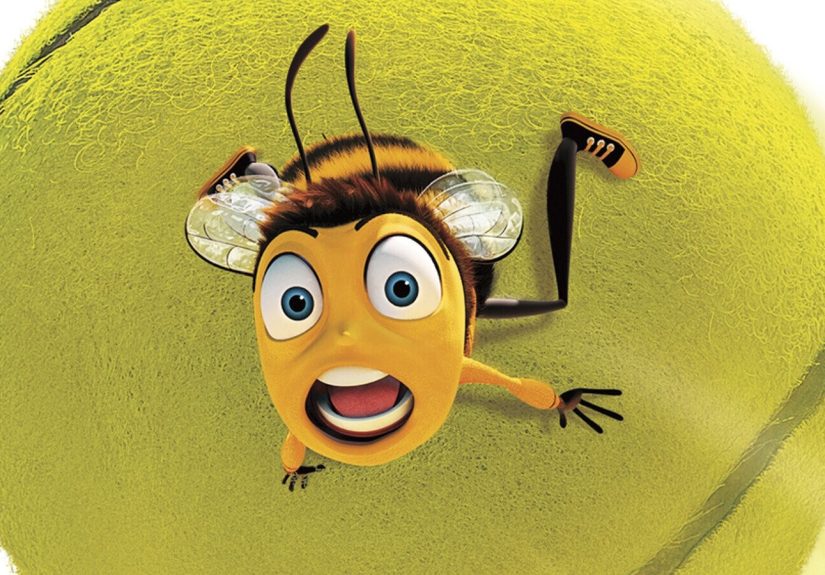
When Bee Movie arrived in theaters in 2007, nobody in a marketing meeting at DreamWorks Animation was likely saying, “Great, and in about 15 years this cheerful animated comedy will become a weaponized copypasta used against government complaint portals.” Yet here we are, living in the timeline where Barry B. Benson, a tiny animated bee voiced by Jerry Seinfeld, has become an accidental mascot for digital protest.
At first glance, Bee Movie seems like a harmlessly odd family film: a restless bee leaves the hive, befriends a human florist, discovers that people sell honey, and sues humanity. It was strange, pun-heavy, and proudly Seinfeldian. Critics were mixed, the box office was respectable, and the movie appeared destined to live as another late-2000s animated curiosity. Then the internet got involved, which is usually when culture puts on roller skates and heads downhill.
Today, the Bee Movie script is more than a meme. It is a prank, a signal, a clog in the gears, and, in some cases, a protest tactic. From abortion whistleblower websites to anti-trans complaint forms and education “snitch lines,” activists and online communities have repeatedly used the film’s absurd wall of text to overwhelm reporting systems they view as invasive, discriminatory, or politically motivated. Somehow, the bee did not just fly; it unionized the comments section.
The Humble Origin: A Weird Movie About Honey, Labor, and One Very Ambitious Bee
Bee Movie was released in the United States on November 2, 2007. Directed by Simon J. Smith and Steve Hickner, the film starred Jerry Seinfeld as Barry B. Benson and Renée Zellweger as Vanessa Bloome. Seinfeld also co-wrote and produced the movie, giving it the unmistakable rhythm of observational comedy: tiny frustrations, legal absurdity, social rules, and one bee with a surprisingly strong sense of consumer justice.
The premise is already halfway to satire. Barry graduates from college and realizes that bee society expects him to work one job for the rest of his life. He ventures outside the hive, learns that humans have been harvesting and selling honey, and decides to sue the human race. Beneath the jokes about pollen, jazz, and tiny bee cars, the movie contains themes of labor, exploitation, environmental balance, and institutional absurdity. That does not make it a protest film, exactly, but it does make its later afterlife feel oddly appropriate.
Commercially, Bee Movie was not a flop. It grossed roughly $293.5 million worldwide, a solid total for an animated feature. Still, it was not embraced as a masterpiece. Many critics found it funny in spots but awkward in concept. The movie’s tone was hard to categorize: part children’s adventure, part courtroom satire, part workplace comedy, part “wait, is the bee flirting with a human woman?” fever dream.
That weirdness became its secret superpower. Some films become memes because they are bad. Others because they are brilliant. Bee Movie became a meme because it was too specific, too polished, too bizarre, and too earnest to ignore. It looked like a mainstream family film, but it behaved like someone dared Jerry Seinfeld to explain capitalism using insects.
How the ‘Bee Movie’ Script Became Internet Copypasta
Before Bee Movie became a protest tool, it had to become a joke that everyone recognized. The key object was not just the film itself, but the full transcript commonly referred to online as the “Bee Movie script.” Its opening line, beginning with “According to all known laws of aviation,” became one of the most recognizable snippets in meme culture.
The script spread widely across Tumblr, Facebook, Reddit, YouTube, and comment sections in the mid-2010s. Users pasted large chunks of it in places where it clearly did not belong: private messages, school forums, group chats, image captions, social media posts, and unsuspecting comment threads. It worked because it was instantly excessive. One second you were reading a normal conversation; the next you were buried under thousands of words about bee society. Digital comedy, like beekeeping, occasionally requires protective gear.
By 2016, the meme had reached mainstream visibility. Viral videos remixed the film in absurd ways, including versions that sped up every time someone said “bee.” Entertainment outlets covered the strange revival. Meme historians tracked how the movie moved from ironic fandom into a shared internet language. The joke was not simply “Bee Movie exists.” The joke was that the entire script could be dropped anywhere, at any time, for no practical reason whatsoever.
Why Copypasta Works as Protest
To understand how a movie transcript became a protest device, it helps to understand copypasta. Copypasta is reusable text copied and pasted across the internet, often as a joke, prank, or cultural marker. It can be nonsense, satire, fandom material, political commentary, or all of the above. The Bee Movie script is ideal copypasta because it is long, recognizable, harmlessly ridiculous, and immediately annoying to anyone who must process it manually.
In protest contexts, that combination matters. When activists encounter an online form designed to collect tips about private behavior, political beliefs, school content, gender identity, or abortion access, they may see the form itself as a mechanism of surveillance. Submitting the Bee Movie script becomes a way to reject the legitimacy of the system without writing a formal essay. It says, in effect: “This form deserves exactly as much seriousness as a bee suing the human race.”
This is not traditional protest with signs, speeches, and permits. It is digital friction. Instead of marching outside an office, users flood the office’s intake system with absurdity. The tactic can make a portal harder to use, create negative publicity, expose weak design, and turn a bureaucratic project into a public joke. It also lowers the barrier to participation. You do not need to be a policy expert to paste Barry B. Benson into a complaint box.
From Meme to Movement: Key Protest Examples
Texas Abortion Whistleblower Website
One of the most widely discussed examples came in 2021 after Texas passed a restrictive abortion law that allowed private individuals to sue people accused of helping someone obtain an abortion after about six weeks of pregnancy. Texas Right to Life, an anti-abortion organization, promoted a website for anonymous tips. Critics viewed the site as an invitation to monitor neighbors, patients, providers, and support networks.
Online users responded with a flood of bogus submissions, memes, fictional reports, and pop-culture nonsense. Among the material reportedly submitted were Shrek memes and copies of the Bee Movie script. The point was not subtle, but subtlety was never the bee’s brand. The form became a target because it relied on public participation, and the public participating did not behave as its organizers hoped.
Missouri’s Gender-Affirming Care Complaint Form
In 2023, Missouri’s attorney general’s office launched an online form for complaints about gender-affirming care. The form was criticized by LGBTQ+ advocates and civil rights supporters as a “snitch” mechanism aimed at clinics and transgender people. After the form spread online, users submitted fanfiction, rambling anecdotes, irrelevant messages, and the Bee Movie script. The form reportedly lacked basic anti-spam protections at launch, making it especially vulnerable to mass misuse.
The Missouri example helped cement the Bee Movie script as a repeat protest object. It was no longer just an old Tumblr gag. It had become a recognizable response to systems that critics saw as intrusive or punitive. In that sense, the meme gained political memory. People remembered where it had worked before and reapplied it when a similar target appeared.
Utah’s Bathroom Complaint Form
In 2024, Utah introduced a form connected to enforcement of a law involving bathrooms and changing facilities on government property. Critics described it as an anti-trans bathroom complaint form. Almost immediately, the system was flooded with irrelevant submissions, memes, and images, including Bee Movie character art. Reports later noted that the portal received more than 10,000 submissions, with officials saying none appeared legitimate at the time.
This example showed that the tactic had expanded beyond text. The Bee Movie script was the original blunt instrument, but images of Barry and friends could carry the same message faster. A picture of a cartoon bee in a government reporting portal says a great deal, most of it followed by buzzing noises.
Indiana’s ‘Eyes on Education’ Portal
Also in 2024, Indiana Attorney General Todd Rokita launched the “Eyes on Education” portal, which invited submissions about what officials described as inappropriate or ideological school content. The portal drew pushback from educators, school districts, and critics who questioned whether complaints were properly vetted. Online users responded with memes and mockery, and the broader pattern of protest spam once again became part of the conversation.
Whether the submission is a bee script, a monster meme, or a fake report, the strategy is similar: take a system built to collect accusations and force it to sort through noise. The tactic is not just about comedy. It challenges the reliability of crowdsourced reporting tools by showing how easily crowds can refuse to play along.
Texas Driver’s License Gender Marker Emails
In 2024, Texas changed procedures around gender marker updates on driver’s licenses. Reporting later found that an email inbox connected to tracking certain requests received hundreds of pages of messages. Only one appeared to involve an actual gender marker request; many others were spam, criticism, newsletters, jokes, and multiple copies of the Bee Movie script.
This case is important because it shows the meme moving from public web forms into administrative email systems. The target changed, but the logic stayed the same. If people believed a database or inbox was being used to monitor transgender residents, then sending Barry B. Benson into the system became a way to object, ridicule, and overload the process.
Why ‘Bee Movie’ Specifically?
Plenty of memes could be used for protest spam. So why does Bee Movie keep returning like a yellow-and-black boomerang?
First, the script is long. A full transcript creates bulk. It is not a witty one-liner; it is a digital hay bale. Anyone reviewing submissions has to scroll, filter, delete, or build a tool to remove it.
Second, it is recognizable. Even people who have never seen the movie often know the opening line or the “Do you like jazz?” joke. Recognition creates community. When one user sees the script, they understand the wink.
Third, the film is absurd but not obscure. It sits in a perfect cultural pocket: famous enough to be legible, weird enough to be funny, and old enough to feel like internet folklore. It is not a random paragraph from a tax manual. It is a familiar piece of nonsense with a built-in laugh track.
Fourth, the movie’s own plot accidentally fits. Barry B. Benson challenges an exploitative system, enters court, disrupts business as usual, and discovers that large systems have unintended consequences. Activists are not necessarily quoting the movie for its politics, but the symbolism is hard to resist. A small creature taking on a large machine is, after all, a protest story. Add wings and legal paperwork, and you are halfway to a civic allegory.
The Politics of Weaponized Absurdity
The phrase “weaponized absurdity” captures what makes the Bee Movie protest tactic so effective. It does not argue point by point. It refuses the premise. Instead of treating a complaint form as a dignified civic instrument, it turns the form into a stage for farce.
This matters because many of the targeted systems depend on seriousness. A tip line looks official. A portal looks administrative. A reporting form suggests neutrality and order. When users flood it with cartoon bees, fake names, fanfiction, and obvious nonsense, they attack that aura of authority. They make the system look fragile, silly, and perhaps poorly planned.
Humor also protects morale. Protest movements often deal with fear, anger, exhaustion, and bureaucracy. A meme gives participants a shared joke. It says, “We are angry, but we are not powerless.” That emotional shift can be important. Laughter does not replace strategy, but it can keep people from feeling alone.
Digital Activism, Low Barriers, and High Visibility
Research on social media and political engagement has repeatedly shown that online platforms help people find like-minded communities, share political information, and participate in public debate. Memes are part of that ecosystem. They are fast, remixable, emotionally direct, and easy to spread. A person who might never attend a formal meeting can still recognize a meme, share it, or participate in a low-risk digital action.
The Bee Movie script works especially well as a low-barrier action. It requires no design skills, no public speaking, and no advanced technical knowledge. The object already exists. The joke already exists. The cultural meaning has already been built by years of repetition. That makes it ideal for decentralized protest, where no single organization controls the message.
Of course, low barriers can be both a strength and a weakness. Meme protest can attract attention quickly, but attention is not the same as policy change. A flooded form may create embarrassment, but it does not automatically protect vulnerable communities. The best digital activism usually connects humor to broader efforts: legal challenges, mutual aid, public education, journalism, voting, organizing, and direct support for affected people.
The Ethical Line: Protest, Spam, and Public Systems
It is important to be clear: this article explains a cultural phenomenon; it is not an instruction manual for attacking websites, harassing workers, or submitting false information. Digital protest raises real ethical questions. Some reporting systems may be harmful or discriminatory, while others may be intended to address genuine safety concerns. Flooding any system can have consequences, including wasted public resources, legal risk, and collateral harm to people who are not responsible for the policy.
That said, the popularity of Bee Movie protest spam reveals a deep distrust of certain crowdsourced surveillance tools. When people see forms as invitations to report neighbors, teachers, doctors, students, or transgender people, they may respond by undermining the form’s usefulness. The meme becomes a pressure valve for a public that feels watched, judged, or deputized into someone else’s culture war.
The better long-term question is not simply “How do agencies stop Bee Movie spam?” It is “Why are so many people ready to turn official portals into meme dumpsters?” If a public system inspires thousands of joke submissions before it inspires trust, the design problem is larger than CAPTCHA.
What the Bee Teaches Us About Modern Protest
The journey of Bee Movie from animated comedy to protest tool says a lot about modern activism. Protest is no longer limited to streets, signs, chants, and sit-ins. It also happens in inboxes, hashtags, shared documents, meme pages, Discord servers, TikTok videos, and comment sections. Sometimes it looks like a carefully researched thread. Sometimes it looks like a cartoon bee arriving where a bureaucrat expected a complaint.
This does not make meme activism silly or serious by default. It can be both. The humor is silly; the conditions that produce it may be serious. Anti-trans laws, abortion restrictions, school surveillance, and politicized reporting portals affect real people. The absurdity of the protest often mirrors what protesters see as the absurdity of the policy.
In that sense, Barry B. Benson became useful because he is not a polished political symbol. He is too goofy to be controlled, too familiar to be ignored, and too ridiculous to fit neatly into official language. That makes him perfect for a culture where protest often begins with a screenshot and ends with a meme folder.
Experiences and Lessons From the ‘Bee Movie’ Protest Era
For people who grew up online, seeing the Bee Movie script appear in protest spaces feels like watching an old internet prank graduate from community college and run for office. Many users first encountered the script in harmless settings: a friend pasted it into a group chat, a Tumblr post turned into a scrolling marathon, or a YouTube remix compressed the entire movie into a chaotic blur. The joke was annoying, but it was also communal. Everyone understood that the point was excess. The script was funny because it was too much.
When that same joke appears in political protest, the experience changes. It becomes funnier and heavier at the same time. A teenager pasting the script into a school chat is trolling classmates. A crowd pasting it into a form designed to report gender-affirming care providers is making a statement about power, privacy, and surveillance. The text is identical, but the context transforms it. That is the strange magic of internet culture: meaning travels with the container, not just the words.
For activists, the experience can feel empowering because it turns bureaucracy into a target that ordinary people can reach. Many political systems feel distant and locked behind formal language. A meme breaks that mood. It says that people do not need to respond to every official-looking mechanism with fear or obedience. They can respond with critique, ridicule, and solidarity. The laughter matters because it changes the emotional temperature. Instead of isolated frustration, participants feel like part of a swarm. Yes, the bee metaphor is unavoidable. No, we are not apologizing.
For journalists and researchers, the Bee Movie protest pattern offers a useful case study in how memes evolve. A joke can begin as fandom nonsense, become a shared reference, gain tactical value, and eventually enter political reporting. It also shows how decentralized communities learn from previous actions. When one tip line is flooded with memes, people watching elsewhere remember the tactic. The next time a similar portal appears, the response arrives faster. The meme becomes a cultural shortcut for dissent.
For public agencies, the experience should be a warning. If a form depends on public submissions, it needs technical safeguards, clear purpose, transparent oversight, and public legitimacy. Without those, it may become a magnet for spam and satire. People are more likely to respect systems that feel fair, necessary, and carefully designed. When a portal appears rushed, punitive, or politically loaded, it practically hangs a neon sign reading: “Please insert cartoon bees here.”
For readers, the lasting lesson is simple: digital culture is not separate from real politics. The memes people share at midnight can reappear in legislative fights, civil rights debates, and public policy controversies. A children’s movie can become a protest symbol. A script can become a barricade. A joke can reveal distrust. And a bee who once wanted justice for honey can accidentally help people express anger about surveillance, discrimination, and the machinery of complaint-based governance.
Conclusion
Jerry Seinfeld’s Bee Movie did not set out to become a tool for protest movements. It set out to make jokes about bees, honey, work, lawsuits, and jazz. Yet its afterlife proves that the internet can repurpose almost anything. Through years of meme circulation, the movie’s script became a shared object of comic disruption. When activists needed a quick, recognizable, absurd way to protest reporting portals they considered harmful, Barry B. Benson was already waiting in the hive.
The result is one of the stranger stories in modern digital activism: a mid-budget animated comedy transformed into a symbol of resistance through repetition, irony, and collective annoyance. It is funny, but it is not meaningless. The Bee Movie protest phenomenon shows how humor can expose weak systems, build solidarity, and challenge the seriousness of institutions that many people distrust. According to all known laws of political messaging, a bee movie script should not become a protest tactic. The internet, of course, flies anyway.