Table of Contents >> Show >> Hide
- What Is the Viper Tool Storage Five-Drawer Rolling Cabinet?
- Key Features That Make It Practical
- Design and Dimensions: Choosing the Right Size
- Mobility: Why Casters Matter More Than You Think
- Who Should Buy This Cabinet?
- Best Ways to Organize the Five Drawers
- How It Compares With Other Tool Storage Options
- Safety and Maintenance Tips
- Pros and Cons
- Buying Advice: Which Version Makes the Most Sense?
- Real-World Experience: Living With a Five-Drawer Rolling Cabinet
- Conclusion
A good rolling tool cabinet does not merely hold tools. It rescues your garage from chaos, saves your knees from crawling under benches, and prevents the classic Saturday-morning mystery: “Where did I put the 10mm socket?” The Viper Tool Storage Five-Drawer Rolling Cabinet is built for people who want their tools close, protected, mobile, and organized without turning the workspace into a metal jungle.
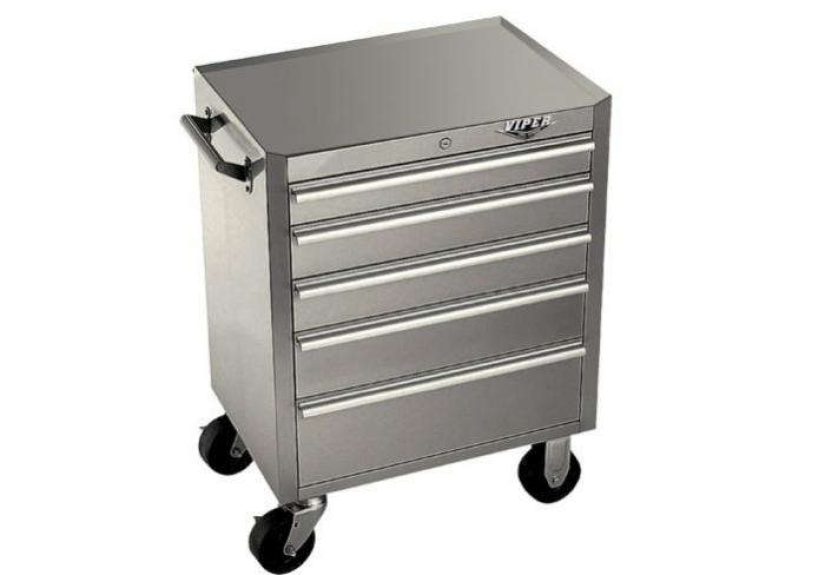
Viper’s five-drawer rolling cabinet lineup includes compact steel models, larger 30-inch rolling cabinets, and stainless steel options for users who want more corrosion resistance and a premium shop look. Across the range, the major selling points are familiar but important: steel construction, full-extension ball-bearing drawers, lockable storage, drawer liners, sturdy casters, side handles, and drawer-latching systems designed to keep tools where they belong. In other words, it is the kind of cabinet that says, “Yes, I own three torque wrenches, and no, they do not live in a cardboard box anymore.”
What Is the Viper Tool Storage Five-Drawer Rolling Cabinet?
The Viper Tool Storage Five-Drawer Rolling Cabinet is a mobile tool storage cabinet designed for garages, workshops, automotive bays, craft rooms, maintenance departments, and serious DIY spaces. Unlike a portable toolbox, this cabinet is meant to stay in the work area while rolling where needed. It is not a tiny carry box for a hammer and two screwdrivers; it is a home base for socket sets, ratchets, pliers, measuring tools, power-tool accessories, electrical supplies, small parts, and heavier hand tools.
Depending on the model, Viper offers five-drawer rolling cabinets in different widths and materials. The 26-inch steel cabinet is a compact choice with five drawers, cold-rolled steel construction, a powder-coated finish, soft-close full-extension ball-bearing slides, 8,374 cubic inches of lockable storage, 100-pound drawer capacity, non-slip drawer liners, 5-inch polyurethane casters, a full-grip side handle, and Viper SlideLock Technology. The larger 30-inch steel cabinet increases storage capacity to 14,869 cubic inches and gives the bottom drawer a higher 200-pound rating. The 30-inch stainless steel version uses 304 stainless steel and is designed for users who want corrosion resistance and a sharper professional appearance.
Key Features That Make It Practical
Five Drawers for Real-World Organization
Five drawers may sound simple, but it is a smart middle ground. Too few drawers and everything becomes a soup of pliers, sockets, tape, and tiny fasteners. Too many drawers and you spend more time labeling than working. A five-drawer cabinet gives you enough separation to build a logical storage system without overcomplicating the layout.
A practical setup might look like this: the top drawer for precision tools, calipers, markers, and measuring tapes; the second drawer for sockets and ratchets; the third drawer for wrenches and pliers; the fourth drawer for screwdrivers, pry tools, and specialty hand tools; and the bottom drawer for heavier items such as impact tools, larger cases, battery chargers, or bulky accessories. The best part is that you can create order based on how you actually work, not how a catalog photo thinks you work.
Full-Extension Ball-Bearing Drawer Slides
Full-extension ball-bearing slides are one of the features that separates a useful rolling cabinet from a frustrating metal box on wheels. Full extension means the drawer opens far enough that you can reach tools at the back without performing a garage version of yoga. Ball-bearing slides help drawers glide more smoothly, especially when loaded with dense tools.
This matters because tools are heavy. A drawer full of chrome sockets can quickly become a small gym membership. Smooth slides reduce pulling effort, help protect the cabinet from racking and twisting, and make everyday work feel more efficient. When a drawer opens cleanly, you are more likely to put tools back where they belong. Organization is partly discipline, yes, but good hardware helps discipline show up on time.
Strong Drawer Capacity
Viper’s five-drawer cabinets are designed with meaningful drawer capacity. The 26-inch steel model lists each drawer at 100 pounds. The 30-inch steel and stainless steel cabinets list four drawers at 100 pounds and the bottom drawer at up to 200 pounds. That gives the cabinet enough muscle for mechanic tools, woodworking tools, home repair gear, and compact power-tool storage.
Still, capacity should be used intelligently. Heavy tools belong low. Lighter and frequently used tools belong higher. This improves stability, makes the cabinet easier to move, and reduces the risk of tipping. A rolling cabinet is not a game of “how much steel can I cram into the top drawer before physics files a complaint?” Balance matters.
Steel or Stainless Steel Construction
The standard steel versions use cold-rolled steel with a powder-coated finish. Powder coating helps resist wear and corrosion while giving the cabinet a clean, finished appearance. This is a strong option for most home garages, DIY spaces, and general shop environments.
The stainless steel version steps up to 304 stainless steel. That makes it especially attractive for users who want better corrosion resistance, easier wipe-downs, and a more polished look. Stainless steel is not magic armor, but it does handle moisture and shop grime better than many basic finishes when cared for properly. For a garage that doubles as a showcase space, the stainless model has the “I definitely know where my torque wrench is” energy.
Lockable Storage and Drawer-Latching Systems
Security is another reason people choose a rolling tool cabinet instead of open shelving. Viper’s cabinets use locking systems such as Viper SlideLock Technology, and certain models also include ReSecure drawer latches to help keep drawers from drifting open during movement. This is useful in shared garages, professional shops, schools, maintenance rooms, and any space where tools have a mysterious habit of walking away.
A lockable cabinet will not replace a safe, but it does discourage casual borrowing and keeps sharp or valuable tools more controlled. It also protects the workspace itself. A drawer that slides open while you roll the cabinet across the floor is not just annoying; it can become a shin-level surprise attack.
Design and Dimensions: Choosing the Right Size
The right cabinet size depends on your tool collection and available floor space. The 26-inch Viper five-drawer steel cabinet is best for tighter garages, compact workshops, or users who want a capable storage station without dominating the room. Its listed overall dimensions are about 26 5/8 inches wide, 18 3/8 inches deep, and 37 5/8 inches high.
The 30-inch steel cabinet gives you a deeper and wider storage footprint. Its listed overall dimensions are about 30 1/2 inches wide, 24 5/8 inches deep, and 40 1/8 inches high. It also increases storage capacity to 14,869 cubic inches, making it better for larger tool sets, automotive work, or users who want fewer compromises in drawer depth.
The 30-inch stainless steel model shares the same general cabinet footprint as the 30-inch steel version and offers the same 14,869 cubic inches of lockable storage. The choice between steel and stainless steel comes down to budget, environment, finish preference, and how much you care about that clean, professional shine.
Mobility: Why Casters Matter More Than You Think
Casters are not glamorous, but they can make or break a rolling cabinet. Viper’s larger five-drawer models use 5-inch polyurethane casters, typically with two swivel and two rigid casters. This setup provides a combination of steering control and straight-line stability. The side handle gives you leverage when moving the cabinet around the shop.
Why does this matter? Because a cabinet full of tools is heavy. Small, cheap wheels can chatter, jam, damage floors, or turn a simple move into a wrestling match. Larger polyurethane casters are better suited for garage floors, workshop concrete, and the occasional tiny obstacle that appears exactly where your wheel wants to go. A smooth-rolling cabinet gets used more often because moving it does not feel like relocating a vending machine.
Who Should Buy This Cabinet?
The Viper Tool Storage Five-Drawer Rolling Cabinet is a strong fit for several types of users. Home mechanics will appreciate the drawer capacity, lockable storage, and mobility. DIY homeowners can use it to consolidate scattered tools into one central station. Woodworkers and makers can store measuring tools, blades, layout gear, sanding supplies, and accessories. Facility maintenance teams can use it to organize shared tools in a way that is easier to monitor and maintain.
It is also useful for people who have outgrown a portable toolbox but do not need a massive 72-inch professional tool chest. That is the sweet spot: more serious than a plastic box, less overwhelming than a full wall of shop storage. If your current tool system involves drawers, buckets, shelves, and “I think it is under the extension cord,” this cabinet may feel like a personality upgrade for your garage.
Best Ways to Organize the Five Drawers
Use the Top Drawer for Fast Access
The top drawer should hold the tools you reach for most often. Think tape measure, utility knife, pencil, marker, flashlight, inspection mirror, small screwdriver set, hex keys, and common pliers. Keeping daily-use tools at the top reduces wasted movement and prevents the entire cabinet from becoming a treasure hunt.
Group Tools by Task, Not Just Type
Many people organize by tool category: wrenches with wrenches, sockets with sockets, and screwdrivers with screwdrivers. That works. But you can also organize by task. For example, one drawer can hold electrical work tools: wire strippers, crimpers, multimeter leads, electrical tape, terminals, and small connectors. Another drawer can support automotive work with sockets, ratchets, extensions, adapters, and torque tools.
Use Liners, Trays, and Foam Inserts
Drawer liners protect the cabinet and reduce sliding. Trays and socket rails keep smaller tools visible. Foam inserts are excellent for users who want a “shadow board” effect inside drawers, where every tool has a specific outline and missing tools are easy to spot. This is especially helpful in professional or shared spaces where accountability matters.
Put Heavy Tools Low
The bottom drawer is the best place for heavier items. On larger 30-inch Viper models, the bottom drawer is rated higher than the others, making it suitable for heavier cases or dense tools. Keeping weight low improves stability and helps the cabinet roll more predictably.
How It Compares With Other Tool Storage Options
Compared with a portable toolbox, the Viper five-drawer rolling cabinet offers better capacity, better organization, and easier access to a larger tool collection. Compared with pegboard, it protects tools from dust and keeps sharp items enclosed. Compared with open shelving, it offers locking security and a cleaner appearance. Compared with giant professional tool chests, it takes up less space and usually costs less.
The tradeoff is that it is still a rolling cabinet, not a full workstation. Some versions do not include an integrated worktop or power strip, and optional accessories may be sold separately. If you want built-in charging, a thick work surface, or massive drawer volume, you may need to compare larger cabinets or modular storage systems. But for a compact, mobile, lockable tool cabinet, the five-drawer Viper layout covers a lot of ground.
Safety and Maintenance Tips
Tool storage is not only about looking tidy for guests who wander into the garage and say, “Wow, you are organized.” It is also about safety. OSHA guidance emphasizes that storage areas should be kept free from materials that create tripping, fire, explosion, or pest hazards. Hand and power tools can also cause injuries when used or maintained improperly, so keeping tools stored, inspected, and accessible supports safer work habits.
To use a rolling cabinet safely, place it on a level surface, avoid opening multiple loaded drawers at once, lock the casters when working near it, and distribute weight evenly. Do not store flammable liquids in a standard tool cabinet unless the product is specifically rated for that purpose. Gasoline, solvents, and similar chemicals require appropriate safety storage, not just “the bottom drawer because it fits.”
Maintenance is straightforward. Wipe down the exterior regularly, clean drawer liners when they collect grit, avoid overloading drawers, and inspect casters and fasteners occasionally. If you use the cabinet in a humid garage, keep moisture under control and clean metal surfaces before grime has a chance to become a long-term tenant.
Pros and Cons
Pros
- Five-drawer layout balances capacity and simplicity.
- Full-extension ball-bearing slides improve access.
- Steel and stainless steel versions are available.
- Lockable storage helps protect valuable tools.
- Drawer liners help prevent tool movement and scratches.
- 5-inch casters and side handle improve mobility.
- Compact footprint works well in home garages and shops.
Cons
- Some models do not include a built-in worktop.
- No integrated power strip on certain versions.
- Five drawers may not be enough for very large professional collections.
- Fully loaded cabinets require careful movement and weight distribution.
Buying Advice: Which Version Makes the Most Sense?
Choose the 26-inch steel model if your garage is tight, your tool collection is moderate, or you want a compact cabinet that can still hold serious weight. It is a sensible upgrade from scattered portable boxes and works especially well for homeowners, hobbyists, and DIY repair spaces.
Choose the 30-inch steel model if you want more drawer depth, higher total storage capacity, and a stronger bottom drawer for heavier tools. This is probably the best all-around choice for automotive enthusiasts and users who expect their tool collection to grow. Tool collections always grow. They are like houseplants, except louder and made of chrome.
Choose the 30-inch stainless steel model if corrosion resistance, appearance, and easy cleaning matter more to you. It is the most premium-looking option and fits well in professional shops, polished garages, and workspaces where the cabinet needs to perform and look sharp doing it.
Real-World Experience: Living With a Five-Drawer Rolling Cabinet
Using a five-drawer rolling cabinet changes the rhythm of a workspace. Before a proper cabinet, many garages operate on a system best described as “archaeology.” You dig through a drawer, find a screwdriver, uncover a mystery washer from 2018, and then forget why you opened the drawer in the first place. With a cabinet like the Viper Tool Storage Five-Drawer Rolling Cabinet, the workflow becomes calmer and faster. The tool has a place, the place has a drawer, and the drawer opens without sounding like a shopping cart losing a fight.
One of the biggest everyday benefits is visibility. When sockets are on rails, pliers are grouped, drill bits sit in a case, and measuring tools stay in the top drawer, small jobs feel less irritating. Tightening a hinge, checking battery terminals, fixing a cabinet pull, or assembling a new workbench becomes a five-minute task instead of a scavenger hunt. That convenience sounds small until you experience it repeatedly. Organization pays you back in minutes, and those minutes add up.
The rolling feature is another practical advantage. In a garage, work rarely happens in one perfect spot. Sometimes you are near the car. Sometimes you are at the bench. Sometimes you are outside fixing a mower while silently negotiating with mosquitoes. Being able to roll the cabinet closer means fewer trips back and forth. The side handle gives control, and larger casters help the cabinet feel stable when moving across typical shop floors. The key is to move it with drawers closed and latched, because a surprise drawer launch is nobody’s idea of premium engineering.
Weight distribution becomes something you learn quickly. Put dense socket sets, impacts, and heavy cases toward the lower drawers. Keep light precision tools and frequent-use items higher. This not only makes the cabinet safer and easier to move, it also makes the layout feel natural. Your hands learn where things live. After a while, reaching for the right drawer becomes automatic.
Drawer liners are more important than they look. Without liners, tools slide, rattle, and scratch the drawer surface. With liners, the cabinet feels quieter and more controlled. If you add socket trays, wrench racks, or foam inserts, the cabinet becomes even more efficient. Foam inserts are especially satisfying because they make missing tools obvious. When a tool outline is empty, the cabinet politely says, “Nice try, but your 12mm wrench is still on the bumper.”
A five-drawer cabinet also encourages better buying habits. When storage is messy, people often buy duplicates because they cannot find what they already own. A rolling cabinet reduces that waste. You can see your tools, identify gaps, and stop purchasing the same tape measure like it is a collectible trading card.
In daily use, the best thing about this kind of cabinet is not that it looks professional, although it does. The best thing is that it removes friction from work. You start faster, clean up faster, and feel more confident taking on projects. A garage does not need to be perfect, but when your tools are organized, mobile, and secure, the entire space becomes more useful. The Viper Tool Storage Five-Drawer Rolling Cabinet is not just furniture for tools; it is a quiet upgrade to how you work.
Conclusion
The Viper Tool Storage Five-Drawer Rolling Cabinet is a practical, durable, and attractive storage solution for anyone who wants better control over a growing tool collection. Its strongest qualities are the five-drawer layout, full-extension ball-bearing slides, solid drawer capacities, lockable design, drawer liners, side handle, and mobile caster system. Whether you choose the compact 26-inch steel model, the roomier 30-inch steel version, or the corrosion-resistant stainless steel option, the core idea remains the same: tools should be easy to find, easy to reach, and safely stored.
For homeowners, DIYers, mechanics, and workshop users, this cabinet offers a smart balance of size, strength, and usability. It will not turn you into a master mechanic overnight, but it may stop your garage from looking like a socket tornado passed through. That is progress worth celebrating.