Table of Contents >> Show >> Hide
- What Is a Simple Origami Flower?
- Materials You Need
- Before You Start: Learn Three Basic Folds
- How to Fold a Simple Origami Flower: Step-by-Step Instructions
- Step 1: Start With the Colored Side Down
- Step 2: Fold the Paper in Half Diagonally
- Step 3: Fold the Other Diagonal
- Step 4: Fold the Paper in Half Horizontally
- Step 5: Fold the Paper in Half Vertically
- Step 6: Collapse Into a Square Base
- Step 7: Position the Open End Down
- Step 8: Fold the Right Edge to the Center
- Step 9: Fold the Left Edge to the Center
- Step 10: Flip and Repeat
- Step 11: Open the Top Flaps Slightly
- Step 12: Fold the Top Points Outward
- Step 13: Shape the Petals
- Step 14: Add a Center Detail
- Common Mistakes and How to Fix Them
- Creative Ways to Use Origami Flowers
- Tips for Better Origami Flowers
- Why Origami Is Great for Beginners
- Simple Origami Flower Variations
- Experience Notes: What Folding Origami Flowers Teaches You
- Conclusion
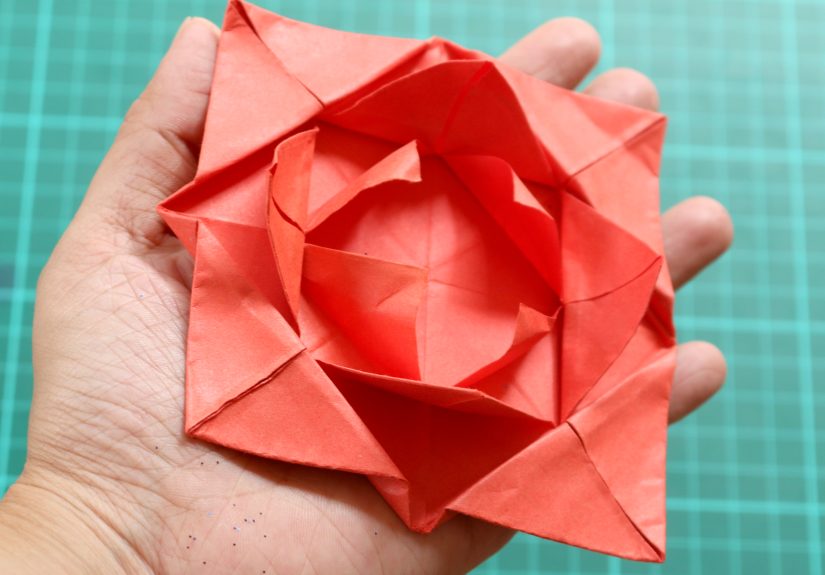
Origami has a funny way of making you feel powerful. One minute you are holding a plain square of paper, and a few folds later you are staring at a flower like you just negotiated peace between art and geometry. The best part? You do not need fancy tools, expensive materials, or the patience of a monk on vacation. You only need one square sheet of paper, a flat surface, and a willingness to forgive your first crease for looking slightly “abstract.”
This step-by-step guide will show you how to fold a simple origami flower that is beginner-friendly, pretty enough for cards and decorations, and easy enough to make again without rewatching a 14-minute tutorial at half speed. Whether you want a relaxing paper craft, a handmade gift topper, a classroom activity, or a cute DIY flower that will not wilt by Wednesday, this tutorial has you covered.
What Is a Simple Origami Flower?
A simple origami flower is a folded paper blossom created from a square sheet using basic origami folds. Unlike more advanced paper flowers such as complex roses or lilies, this beginner version focuses on clear symmetry, clean creases, and a flower shape that appears quickly without complicated reverse folds or tiny details that make your fingers question their career choices.
The model in this guide creates a flat, petal-style flower. It is ideal for decorating greeting cards, scrapbooks, gift boxes, party banners, classroom boards, journals, and handmade wall art. Because it lies mostly flat, it is easier to glue, display, and store than bulky 3D origami flowers.
Materials You Need
You only need a few basic supplies. Origami is refreshingly low-maintenance, unlike hobbies that require 47 accessories and a dedicated storage cabinet.
- One square sheet of paper, ideally 6 x 6 inches for beginners
- A flat folding surface such as a desk or table
- Optional: a ruler or bone folder for sharper creases
- Optional: glue if you plan to attach the flower to a card or craft project
- Optional: a small circle of paper, button, or sticker for the flower center
Best Paper for Beginners
Origami paper, also called kami, is usually thin, square, and easy to crease. It often has color on one side and white on the other, which helps beginners see where folds are going. Printer paper can work too, but it must be cut into a true square first. If the paper is not square, the final flower may look like it had a difficult morning.
For your first flower, avoid thick cardstock. It looks sturdy, but it resists folds and makes layered steps harder. Lightweight craft paper, wrapping paper, magazine pages, or standard origami paper are better choices.
Before You Start: Learn Three Basic Folds
This origami flower uses a few simple folding ideas. Once you understand them, the process becomes much easier.
Valley Fold
A valley fold is made by folding the paper toward you so the crease sinks inward like a valley. Most beginner origami instructions use valley folds often.
Mountain Fold
A mountain fold is the opposite. The paper folds away from you, and the crease rises like a mountain ridge. If a valley fold says “come here,” a mountain fold says “I need personal space.”
Crease and Unfold
Many origami steps ask you to fold, press, and then unfold. This creates a guide crease that helps the paper collapse neatly later. These guide creases are not mistakes; they are your paper’s GPS.
How to Fold a Simple Origami Flower: Step-by-Step Instructions
Follow each step slowly. Origami rewards patience more than speed. A clean crease now saves you from a mysterious paper lump later.
Step 1: Start With the Colored Side Down
Place your square sheet on the table with the colored or patterned side facing down. If your paper has the same color on both sides, choose either side. Turn the square so it looks like a diamond, with one corner pointing up and one corner pointing down.
This starting position helps create a balanced flower shape. Smooth the paper with your hand so it lies flat before folding.
Step 2: Fold the Paper in Half Diagonally
Bring the bottom corner up to meet the top corner. Line up the tips carefully, then press the fold from the center outward. You should now have a triangle.
Open the paper again. You will see one diagonal crease running from corner to corner.
Step 3: Fold the Other Diagonal
Now bring the left corner over to meet the right corner. Align the points and crease firmly. Open the paper again. Your square should now have an “X” crease pattern through the center.
This X is important because it helps the flower stay even. Think of it as the skeleton of your blossom, but much less creepy.
Step 4: Fold the Paper in Half Horizontally
Turn the paper so it looks like a square again. Fold the bottom edge up to meet the top edge. Crease well, then unfold.
You now have a horizontal crease through the center.
Step 5: Fold the Paper in Half Vertically
Fold the left edge over to meet the right edge. Press the crease and unfold. Your paper now has diagonal, horizontal, and vertical guide creases.
These creases may look like your paper is preparing for a math exam, but they are about to become petals.
Step 6: Collapse Into a Square Base
With the colored side facing down, gently push the left and right sides inward along the existing creases. The paper should begin to collapse naturally into a smaller diamond-shaped square. Flatten it carefully.
This shape is commonly called a square base. It is used in many origami models, including flowers, cranes, and other classic paper crafts. If it does not collapse perfectly the first time, reopen the paper and reinforce the creases. The paper usually behaves better after a polite reminder.
Step 7: Position the Open End Down
Place the square base in front of you like a diamond. The closed point should be at the top, and the open flaps should point downward.
Keeping the open end down helps you fold the petals in the right direction. If your flower begins to look like a confused kite, check this position.
Step 8: Fold the Right Edge to the Center
Take the right edge of the top layer and fold it toward the center crease. Press firmly. The edge should line up with the vertical center line.
Do not rush this fold. Clean alignment here makes the petal shape sharper later.
Step 9: Fold the Left Edge to the Center
Repeat the same fold on the left side. Bring the left edge of the top layer to the center crease and press. Your model should now look like a narrow kite shape on top of the diamond base.
If both sides are close to even, you are doing great. If one side is slightly wider, welcome to handmade art. It has personality.
Step 10: Flip and Repeat
Turn the paper over. Fold the right and left edges of the top layer to the center just as you did before. Crease both sides firmly.
Now the model should be symmetrical on both front and back.
Step 11: Open the Top Flaps Slightly
Gently open the folded flaps near the top. Do not flatten the entire model. You are simply loosening the layers so they can become petals.
This step is where the flower begins to appear. It may still look shy. Give it a moment.
Step 12: Fold the Top Points Outward
Take one top point and fold it outward at a slight angle to form a petal. Repeat with the other top point. Turn the paper over and do the same on the back.
The exact angle is flexible. Wider angles create a rounder, open flower. Narrower angles create a taller, tulip-like shape.
Step 13: Shape the Petals
Use your fingers to gently curve or open the petals. You can press the base slightly to help the flower sit flatter. If you want a softer look, curl the petal tips around a pencil for a subtle rounded edge.
Be gentle. Paper remembers everything, including aggressive enthusiasm.
Step 14: Add a Center Detail
This step is optional, but it makes the flower look more finished. Glue a small paper circle, sticker, bead, or button in the center. For a no-glue origami approach, simply leave the center as folded paper.
Use yellow for a daisy effect, dark brown for a sunflower-inspired look, or a contrasting color for a playful modern style.
Common Mistakes and How to Fix Them
The Flower Looks Uneven
Uneven flowers usually come from uneven starting paper or rushed creases. Make sure your paper is a true square. When folding corners or edges, line them up before pressing the crease.
The Paper Tears
This often happens when the paper is too thick or when a fold is pressed too hard in a tiny area. Try thinner paper and use smooth pressure from the center of the crease outward.
The Square Base Will Not Collapse
Reopen the paper and strengthen each crease. Fold the diagonals and straight folds again, then try collapsing slowly. The paper should follow the crease pattern once the folds are clear.
The Petals Do Not Stay Open
Press the base more firmly or use a tiny dot of glue if the flower is for decoration. Traditional origami avoids glue, but craft projects are allowed to be practical. The origami police are not coming.
Creative Ways to Use Origami Flowers
Once you learn how to fold a simple origami flower, you may suddenly want to fold an entire garden. This is normal. It is also cheaper than buying a greenhouse.
Greeting Cards
Glue one or three flowers onto a blank card. Add hand-drawn stems and leaves. This works beautifully for birthdays, Mother’s Day, thank-you notes, teacher appreciation cards, and spring-themed invitations.
Gift Wrapping
Attach a paper flower to a wrapped gift instead of a bow. It adds a handmade touch and makes even plain kraft paper look charming.
Wall Art
Create several flowers in matching colors and arrange them in a frame. Use different sizes for depth. A group of paper flowers can brighten a bedroom, craft room, classroom, or office wall.
Party Decorations
String origami flowers onto thread to make a garland. You can also scatter them on tables for baby showers, garden parties, tea parties, or spring celebrations.
Bookmarks and Journals
Flatten a small origami flower and glue it to the top of a bookmark or journal cover. It gives everyday stationery a personal, cheerful detail.
Tips for Better Origami Flowers
Good origami is not about being perfect. It is about understanding the paper, controlling the creases, and resisting the urge to panic when a step looks weird halfway through. Most models look strange before they look lovely.
- Use larger paper while learning. A 6 x 6 inch sheet is easier than a tiny square.
- Fold on a hard, flat surface for cleaner creases.
- Match corners first, then press the crease.
- Work slowly during base folds because small errors can grow later.
- Practice with scrap paper before using decorative paper.
- Use lighter paper for layered flowers.
- Do not overwork the paper. Too much folding and unfolding can weaken it.
Why Origami Is Great for Beginners
Origami is more than a cute craft. It builds focus, patience, hand coordination, and spatial thinking. Every fold asks you to notice edges, angles, symmetry, and sequence. That makes origami useful for kids, students, hobbyists, teachers, and adults who want a screen-free creative break.
It is also wonderfully forgiving. If a fold goes wrong, you can unfold and try again. If the final flower is not perfect, it still looks handmade in the best way. A slightly lopsided paper flower has the same charm as homemade cookies: nobody complains because the effort is obvious and the result is still delightful.
Simple Origami Flower Variations
Two-Tone Flower
Use paper that is colored on one side and white on the other. The contrast will make the petal folds stand out clearly.
Mini Flower
Use a 3 x 3 inch square for tiny flowers. These are perfect for cards, bookmarks, and scrapbook pages. Try this only after practicing with larger paper.
Layered Flower
Fold two flowers in different sizes and glue the smaller one on top of the larger one. This creates a fuller bloom with more dimension.
Origami Flower Bouquet
Fold several flowers and attach them to paper stems, wooden skewers, or pipe cleaners. Place them in a small jar for a cheerful handmade bouquet.
Experience Notes: What Folding Origami Flowers Teaches You
The first time you fold a simple origami flower, you may discover that paper has a personality. Some paper behaves like a polite student, accepting every crease with grace. Other paper acts like it has somewhere better to be. That is part of the experience. Learning how to fold a simple origami flower is not only about reaching the final shape; it is about paying attention to the small details that make the process smoother.
One helpful lesson is that preparation matters. Starting with a clean square sheet makes the entire project easier. When the paper is slightly crooked, each fold becomes slightly crooked too. By the end, those tiny errors can gather together like a committee and vote against symmetry. Taking thirty seconds to check your paper before folding can save several minutes of frustration.
Another important experience is learning the value of sharp creases. A soft crease can make the flower look loose or bulky. A crisp crease gives the model structure. You do not need to crush the paper, but you should press with confidence. Use your fingernail, a ruler edge, or a bone folder if you want extra neat lines. The goal is not to bully the paper; the goal is to guide it firmly.
Beginners often worry when the model looks messy halfway through. This is completely normal. Origami has an awkward middle stage, just like growing out a haircut. The square base may look plain, the folded flaps may look strange, and the petals may not seem flower-like until the final shaping step. Keep going. Many origami models reveal their charm near the end.
It also helps to fold more than one flower. The first flower teaches the sequence. The second flower teaches control. The third flower usually looks much better, and by the fourth you may start acting like a paper florist with a very tiny shop. Repetition builds muscle memory, and muscle memory is what makes origami relaxing instead of confusing.
Color choice changes the mood of the finished flower. Soft pinks and yellows feel sweet and spring-like. Bright reds and oranges feel bold and festive. Patterned paper adds energy, while solid paper makes the folds easier to see. If you are making flowers for a gift, choose colors that match the wrapping paper or the recipient’s favorite shades.
Finally, origami flowers are satisfying because they turn a small effort into something visible. You can finish one in a few minutes, display it immediately, and make another whenever you want. It is a calm craft, a tiny decoration, and a reminder that creativity does not always need a big budget. Sometimes it only needs a square of paper and a table that is not covered in snacks.
Conclusion
Learning how to fold a simple origami flower is one of the easiest ways to enter the world of paper folding. The project is quick, affordable, and beginner-friendly, but it still creates a beautiful result. With one square sheet of paper, a few basic folds, and a little patience, you can make a handmade flower for cards, gifts, decorations, journals, and creative displays.
The key is to start with square paper, make clean creases, move step by step, and let the flower take shape gradually. Your first attempt does not need to be perfect. In fact, it probably will not be, and that is fine. Origami improves with practice, and every fold teaches your hands what to do next time.
So grab a sheet of paper, clear a small space, and fold your first flower. It will not need sunlight, water, or emotional support. Just a few careful creases and a proud place to bloom.
Note: This article is original, publication-ready, and written in standard American English for web use.