Table of Contents >> Show >> Hide
- What Are Boba Pearls, Exactly?
- Before You Start: The “Why This Works” Mini-Science
- Ingredients and Tools
- Step-by-Step: Homemade Brown Sugar Boba Pearls
- How to Use Homemade Boba in Bubble Tea
- Storage and Make-Ahead Tips (Because Boba Is a Diva)
- Troubleshooting: Common Boba Problems (and Fixes)
- Flavor Variations (Without Losing the Chew)
- Safety Notes
- Conclusion
- Kitchen Experiences: The Real-Life Side of Making Boba (About )
Boba pearls are the chewy little “pop-pop-sip” surprises that turn an ordinary iced tea into bubble tea magic.
If you’ve ever wondered how those glossy, caramel-brown pearls get that bouncy, mochi-like bite, here’s the good news:
you can make them at home with a short ingredient list and a little patience.
This guide walks you through the real-deal method (not the “shake a bag and hope” approach): you’ll make a warm tapioca dough,
roll and cut pearls, cook them to that perfect chewy center, and finish with a brown sugar syrup bath so they taste like they lookirresistible.
Along the way, you’ll get troubleshooting tips for common boba drama (crumbly dough, sticky pearls, hard centers) and a few flavor variations.
What Are Boba Pearls, Exactly?
Traditional boba pearls are made from tapioca starch, which comes from the cassava root. Tapioca is naturally gluten-free and acts like a culinary chameleon:
it doesn’t taste like much on its own, but it’s fantastic at creating that signature chewy texture when heated and hydrated.
Boba doesn’t “become” boba until it’s cooked properly. Raw pearls are firm and chalky; cooked pearls turn translucent and springy.
Then they’re usually sweetenedmost famously in brown sugar syrupfor flavor and that shiny, café-style finish.
Before You Start: The “Why This Works” Mini-Science
Tapioca starch needs heat to gelatinize (a fancy word for “turn into a stretchy, workable dough and then a chewy gel”).
That’s why most successful homemade boba methods use very hot liquid early on.
If your water isn’t hot enough, the dough won’t bind and you’ll end up with tapioca sand. (Not the beach vacation you wanted.)
The second secret is lots of water when cooking. Pearls release starch into the pot, and that starch loves to glue pearls together.
A big pot of water plus stirring keeps them separate and helps them cook evenly.
Ingredients and Tools
Ingredients (Small Batch: about 2 generous servings of drinks)
- 100 g tapioca starch (also labeled tapioca flour; measure by weight if you can)
- 60 g water (about 1/4 cup)
- 50 g dark brown sugar (about 1/4 cup packed)
- Extra tapioca starch, for dusting (2–4 tablespoons)
Optional add-ins
- 1–2 teaspoons cocoa powder for darker “black” pearls
- 1–2 teaspoons matcha for a green tea twist
- A pinch of salt to make the sweetness pop
Tools
- Small saucepan
- Mixing bowl
- Heatproof spatula or wooden spoon
- Cutting board and knife or bench scraper
- Fine mesh strainer
- Medium or large pot for boiling
Step-by-Step: Homemade Brown Sugar Boba Pearls
Step 1: Make a hot brown sugar base
- Add 60 g water and 50 g dark brown sugar to a small saucepan.
- Heat over medium-high, stirring until the sugar dissolves and the mixture reaches a simmer.
- Once it’s bubbling, reduce heat slightly to keep it hot but controlled (you want heat, not a sugar volcano).
Step 2: Create a “starter paste” (this is the glue)
This is the part that makes homemade boba actually work. You’re going to partially cook some tapioca starch so it becomes sticky and elastic,
then use it to bind the rest of the starch into a kneadable dough.
- Remove the saucepan from heat for a moment (safer and less splatter).
- Add about 2 tablespoons of the tapioca starch into the hot syrup.
- Stir quickly until it thickens into a glossy paste. If it looks like mashed potatoes’ more glamorous cousin, you’re on track.
- Return to low heat for 15–30 seconds if needed to tighten the paste slightly (it should be thick and cohesive).
Step 3: Form the dough
- Turn off the heat.
- Add the remaining tapioca starch to the saucepan or pour the paste into a bowl and add starch there.
- Stir until shaggy, then knead when cool enough to handle.
Dough target: Smooth, pliable, and not sticky. Think “soft modeling clay,” not “cookie batter.”
Quick fixes if the dough misbehaves
- Too dry/crumbly: Sprinkle in hot water, 1 teaspoon at a time, kneading between additions.
- Too sticky: Dust with a little tapioca starch and knead until it stops clinging to you like a needy toddler.
- Cracks everywhere: Dough is drying outcover with a damp towel and work in smaller pieces.
Step 4: Roll, cut, and shape pearls
- Dust your board with tapioca starch.
- Divide dough into 4 pieces (easier to work with; less chance it dries out).
- Roll one piece into a rope about 1/4-inch thick.
- Cut into small bits (about 1/4-inch each).
- Roll each piece into a ball between your palms. Dust lightly to prevent sticking.
Size tip: Smaller pearls cook more evenly and are easier to sip.
If you go jumbo, plan for longer cooking time and a higher risk of hard centers.
Step 5: Cook the pearls (the chew is born here)
- Bring a medium-to-large pot of water to a rolling boil (use a lot of waterat least 6 cups).
- Add pearls and stir immediately for 15–30 seconds so they don’t stick to the bottom.
- Boil gently for 15–20 minutes, stirring every few minutes.
- Turn off heat, cover, and let them sit for 15–20 minutes to finish cooking through.
- Taste-test: they should be chewy and mostly translucent with no hard chalky center.
- Drain in a strainer. Do not rinse unless you absolutely must (rinsing cools them fast and can firm them up).
Step 6: Soak in brown sugar syrup (the café finish)
Pearls taste best when they’re sweetened and glossy. A syrup soak also keeps them from clumping into one mega-pearl blob.
- In the same saucepan, add 1/2 cup water and 1/3–1/2 cup brown sugar.
- Simmer 2–3 minutes until slightly thickened.
- Add cooked pearls and stir to coat for 1–2 minutes.
- Let sit for 10–30 minutes for best flavor and sheen.
How to Use Homemade Boba in Bubble Tea
You can put boba in almost anything drinkable, but classic bubble tea works best with a strong tea base, a little sweetness,
and enough milk (or non-dairy milk) to make it creamy without erasing the tea flavor.
Simple bubble tea formula (per glass)
- 2–4 tablespoons warm boba in syrup
- 1 cup strong brewed tea (black tea is a common go-to)
- 1/4–1/2 cup milk or non-dairy milk
- Sweetener to taste (simple syrup, brown sugar syrup, honey)
- Ice
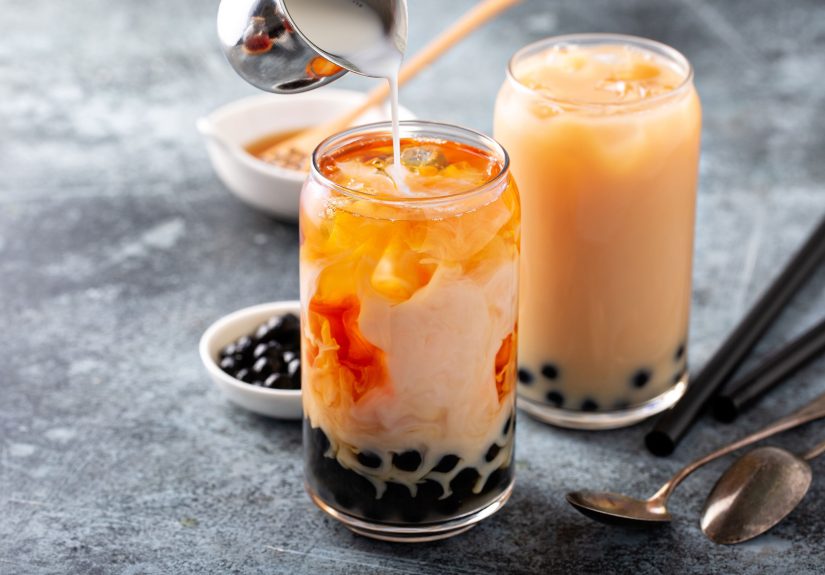
Texture tip: Add pearls first, then pour your drink over them. If you want that dramatic “striped” look,
swirl syrup along the inside of the glass before adding ice and tea.
Storage and Make-Ahead Tips (Because Boba Is a Diva)
Cooked boba
- Best same day: The chew is at its peak within a few hours.
- Keep in syrup at room temp: Great for a few hours; stir occasionally.
- Avoid refrigeration: Cold temperatures can make pearls firm and unpleasantly stiff.
Uncooked boba
- Freeze for later: Dust well with starch, spread on a tray, freeze, then bag.
- Cook from frozen: Drop into boiling water (no thaw), and add a few extra minutes to cooking time.
Troubleshooting: Common Boba Problems (and Fixes)
“My dough won’t come together.”
Usually the liquid wasn’t hot enough to gelatinize some starch. Fix by warming a few teaspoons of water until very hot,
then knead it in slowly. If it’s still sandy, make a small starter paste (hot syrup + a spoon of starch), then knead into the dough.
“The pearls stuck together in the pot.”
Use a bigger pot with more water and stir right after adding pearls. Dusting pearls with starch before cooking also helps.
If they clump anyway, gently separate with a spoon early in the boilbefore they fully set.
“Hard center, chewy outside.”
This means undercooked. Extend the covered resting time, or lower the simmer slightly and cook longer. Pearl size matters too:
big pearls need more time to heat through.
“Gummy and mushy.”
Overcooked pearls can lose their bounce. Shorten the boil time next round and rely on the covered rest to finish the center.
Also, don’t keep pearls in very hot syrup for too longwarm is good, scorching-hot is not.
“They’re perfect… then they turn hard in my drink.”
If your drink is ice-cold and the pearls were only barely cooked, the center can firm up.
Cook until fully translucent and give them the full covered rest. Also, serve pearls warm (not piping hot, not cold).
Flavor Variations (Without Losing the Chew)
Dark “black” pearls
Add 1–2 teaspoons cocoa powder to the dry starch before making dough.
This deepens color and adds a gentle chocolate note that plays nicely with milk tea.
Matcha pearls
Whisk 1–2 teaspoons matcha into the sugar-water mixture or into the dry starch.
Pair with a creamy milk base and a touch of vanilla for “green tea latte” vibes.
Less-sweet pearls
Reduce the sugar in the dough and lean on the syrup soak for sweetness control.
This works well if you like fruit teas or want a lighter drink overall.
Safety Notes
- Choking hazard: Pearls can be a choking risk for small childrensupervise and consider smaller pearls if serving kids.
- Starch dust: Tapioca starch is fine and powdery; avoid breathing clouds of it when dusting your board.
- Food safety: Treat boba like fresh pasta: make, cook, enjoydon’t keep cooked pearls for days.
Conclusion
Homemade boba pearls are a little hands-on, but the payoff is huge: fresher chew, customizable sweetness, and that smug satisfaction
of saying, “Yes, I made the pearls.” The keys are heat (for a workable dough), water (for even cooking), and syrup (for flavor and shine).
Once you nail the base recipe, you can riff on it endlesslydifferent teas, milks, sweetness levels, and flavorsuntil your kitchen feels like a bubble tea shop.
Kitchen Experiences: The Real-Life Side of Making Boba (About )
The first time most people try homemade boba, they expect a calm, therapeutic cooking sessionlike kneading bread while classical music plays.
What they actually get is a fast-paced craft project with delicious consequences. The dough cools and dries quicker than you think,
so it’s less “slow Sunday baking” and more “tiny edible marbles, assembly line, go!”
One of the most relatable moments happens about five minutes in: you look down and realize you’re dusted in tapioca starch like a powdered donut,
your cutting board resembles a snowdrift, and you’ve rolled approximately seven pearlsmeaning you’re now emotionally invested in this process
whether you like it or not. This is the point where a simple system saves you. Work in quarters, keep the rest covered with a damp towel,
and embrace the idea that pearls don’t need to be perfect spheres. Slightly wonky boba still tastes like victory.
Another “ah-ha” experience is learning how much texture depends on timing. People often assume pearls are either cooked or not cooked,
like pasta. Boba is fussier. A pearl can be chewy outside but secretly chalky in the center, which is why the covered rest matters so much.
It’s also why taste-testing is your best friend. Yes, it feels funny to stand over the sink chewing tiny starch balls like a scientist,
but it’s the quickest path to the texture you want. If you like a softer, more tender pearl, extend the resting time a few minutes.
If you want a firmer chew, shorten it slightlyjust don’t skip it.
Serving is its own mini adventure. Fresh pearls are warm and glossy, and they instantly make your drink feel special.
But if you dump piping-hot pearls into a glass packed with ice, you’ll get a temperature shock: the syrup thins, the ice melts faster,
and your drink can taste watered down. A smoother experience is letting pearls sit in syrup for a short while so they’re warm-not-hot,
then building the drink. This also helps with that café-style swirl, where syrup clings to the glass and makes everything look dramatically delicious.
(It’s not vanity. It’s beverage architecture.)
Finally, there’s the “boba clock” reality: pearls are best the day they’re made, and their texture changes as they sit.
Many home cooks learn to treat boba as an event, not a leftovers plan. Make a batch when you’re actually going to enjoy it:
movie night, a weekend hangout, a DIY dessert bar, or a “let’s pretend we’re in a café” afternoon.
And if you freeze uncooked pearls, you’ll have a shortcut for the next cravingbecause the next craving is not a question of if,
it’s a question of when.