Table of Contents >> Show >> Hide
- Why Sausage Stuffing Muffins Work So Well
- Flavor Blueprint: What Makes a Great Stuffing Muffin
- Ingredients (Makes 12 Standard Muffins)
- Equipment You’ll Want Nearby
- Step-by-Step: How to Make Sausage Stuffing Muffins
- How to Nail Texture Every Time
- Flavor Variations You Can Actually Use
- Make-Ahead Plan (Stress-Free Hosting)
- Storage and Reheating
- Serving Ideas (Beyond Thanksgiving)
- Frequently Asked Questions
- Kitchen Experiences: of Real-World Lessons from Sausage Stuffing Muffin Life
- Conclusion
If classic stuffing and crispy-edged comfort food had a baby, it would be sausage stuffing muffins.
They’re golden on the outside, tender in the middle, and perfectly portioned so no one at the table
has to negotiate over “the crunchy corner piece.” (Peace treaties are hard enough during holidays.)
This guide walks you through exactly how to make sausage stuffing muffins from scratch with reliable
texture, bold flavor, and practical timing. You’ll learn why bread dryness matters, how much broth is
too much, how to keep muffins from crumbling, and how to make them ahead for busy holiday schedules.
Whether you’re planning Thanksgiving, Friendsgiving, or a random Tuesday that needs more joy, this
recipe framework gives you pro-level results without culinary drama.
You’ll also get flavor variations, troubleshooting, reheating tips, and food-safety checkpoints.
In short: everything you need to make stuffing muffins that taste like they came from a test kitchen,
but still feel homemade and very much yours.
Why Sausage Stuffing Muffins Work So Well
Traditional stuffing in a casserole dish gives you a spectrum: crispy top, soft center. Stuffing muffins
amplify that magic by increasing surface area, meaning more savory browned edges and more flavor per bite.
They’re also easier to serve, easier to reheat, and easier to customize.
- Portion control: one muffin per person (or three, we don’t judge).
- Better texture: more golden crust, less soggy middle.
- Great for hosting: neat presentation and easy plating.
- Meal-prep friendly: fridge and freezer storage are straightforward.
Flavor Blueprint: What Makes a Great Stuffing Muffin
A successful sausage stuffing muffin balances four things:
- Dry bread: stale or toasted cubes absorb broth without turning mushy.
- Rendered sausage: browned sausage brings fat, seasoning, and savory depth.
- Aromatics: onion, celery, and garlic build the classic stuffing backbone.
- Controlled moisture: enough broth for tenderness, not enough for soup.
Herbs like sage, thyme, and rosemary make the dish taste unmistakably “holiday,” while parsley brightens
everything so it doesn’t feel heavy.
Ingredients (Makes 12 Standard Muffins)
Core Ingredients
- 1 pound mild or sweet Italian sausage (casings removed if needed)
- 10 cups day-old bread cubes (French bread, sourdough, or country loaf)
- 6 tablespoons unsalted butter
- 1 1/2 cups diced yellow onion
- 1 1/4 cups diced celery
- 3 garlic cloves, minced
- 1 tablespoon chopped fresh sage (or 1 teaspoon dried)
- 2 teaspoons chopped fresh thyme (or 3/4 teaspoon dried)
- 1 teaspoon chopped fresh rosemary (or 1/2 teaspoon dried)
- 1/4 cup chopped parsley
- 2 large eggs
- 2 1/4 to 2 3/4 cups low-sodium chicken broth
- 1 teaspoon kosher salt (adjust to taste)
- 1/2 teaspoon black pepper
Optional Add-Ins (Pick 1–2)
- 1 cup small-diced tart apple
- 1/3 cup dried cranberries
- 3/4 cup shredded sharp cheddar
- 1/2 cup chopped toasted pecans or walnuts
- Pinch of red pepper flakes for mild heat
Equipment You’ll Want Nearby
- 1 standard 12-cup muffin tin
- Large skillet or Dutch oven
- Large mixing bowl
- Whisk
- Measuring cups and spoons
- Instant-read thermometer
- Nonstick spray or softened butter for the tin
Step-by-Step: How to Make Sausage Stuffing Muffins
Step 1: Dry the bread (if needed)
If your bread is truly stale, greatskip ahead. If it’s fresh, spread cubes on a sheet pan and toast at
300°F for 12–15 minutes until dry but not dark brown. Let cool completely.
Step 2: Brown the sausage
Heat a large skillet over medium heat. Add sausage and cook, breaking it into small crumbles, until no pink
remains and bits are nicely browned, about 8–10 minutes. Transfer sausage to a bowl; leave about 1 tablespoon
rendered fat in the pan.
Step 3: Build the aromatic base
Add butter to the pan. Once melted, cook onion and celery for 6–8 minutes until softened and lightly golden.
Stir in garlic, sage, thyme, rosemary, salt, and pepper. Cook 1 minute until fragrant.
Step 4: Mix the wet binder
In a large bowl, whisk eggs with 2 1/4 cups broth. The eggs help structure the muffins so they slice and lift
cleanly instead of collapsing like a sad soufflé.
Step 5: Combine everything gently
Add bread cubes, cooked sausage, aromatic mixture, and parsley to the bowl. Fold gently until bread is evenly
moistened. Let mixture sit 5 minutes so bread can absorb liquid. If dry pockets remain, add extra broth
2–4 tablespoons at a time. The mixture should feel moist and cohesive, never soupy.
Step 6: Fill the muffin tin
Preheat oven to 375°F. Grease all 12 muffin cups generously. Divide mixture evenly (about heaping 1/2 cup per
cup). Press lightly to shape, but don’t compact aggressivelyyou want texture, not stuffing bricks.
Step 7: Bake until golden and set
Bake 22–28 minutes until tops are crisp and deeply golden. Check center temperature with an instant-read
thermometer; aim for at least 165°F in the middle for safe serving and ideal set.
Step 8: Rest and release
Cool 8–10 minutes in the pan, then run a thin offset spatula or butter knife around edges and lift out.
Resting helps structure lock in and reduces crumbling.
How to Nail Texture Every Time
If your muffins are too dry
- Increase broth by 1/4 cup next batch.
- Use richer bread (sourdough or country loaf) instead of very lean baguette.
- Don’t overbakecheck at the 22-minute mark.
If your muffins are soggy
- Dry the bread longer before mixing.
- Reduce broth by 1/4 cup.
- Bake 3–5 minutes longer and cool in pan before removing.
If muffins fall apart
- Don’t skip eggs.
- Press mixture into muffin cups lightly so it holds shape.
- Let muffins cool 10 minutes before lifting.
Flavor Variations You Can Actually Use
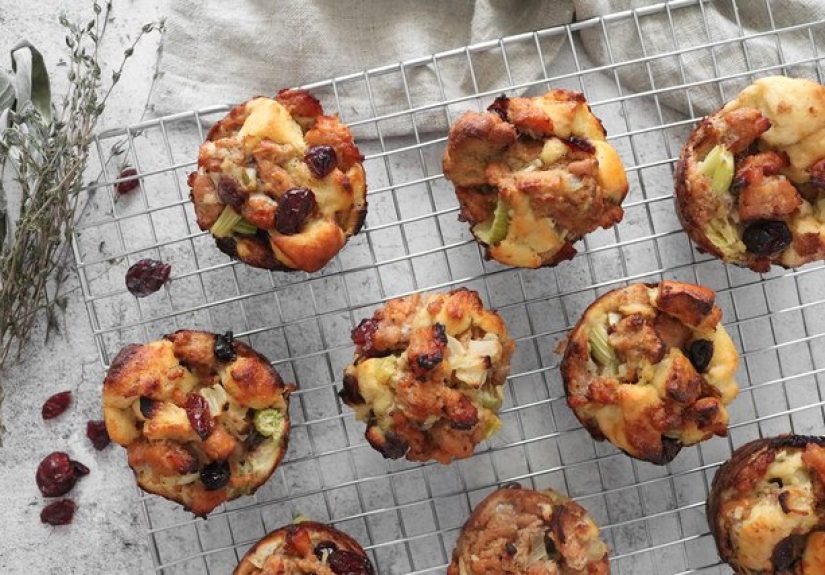
1) Apple-Cranberry Sausage Stuffing Muffins
Add 1 cup diced apple and 1/3 cup dried cranberries when combining ingredients. Sweet-tart notes make this
version holiday-ready and excellent with turkey or pork.
2) Cheddar-Sourdough Stuffing Muffins
Swap bread for sourdough and fold in 3/4 cup sharp cheddar. This version has richer body and gorgeous browned
cheese edges.
3) Cornbread-Herb Muffins
Replace half of the bread cubes with dry cornbread cubes for a Southern-leaning flavor profile. Keep a close eye
on broth since cornbread absorbs liquid differently.
4) Spicy Breakfast-Style Stuffing Muffins
Use hot breakfast sausage and add red pepper flakes plus a pinch of smoked paprika. Serve with scrambled eggs and
hot sauce for brunch.
Make-Ahead Plan (Stress-Free Hosting)
You can assemble the mixture up to 24 hours ahead and refrigerate covered in the muffin tin or in a bowl.
If chilled overnight, add about 3–5 minutes to bake time.
For deep prep mode, toast bread 1–2 days early and refrigerate cooked sausage separately. On cook day, you’ll be
mostly mixing and baking while everyone else is asking, “Need help?” and then mysteriously disappearing.
Storage and Reheating
- Refrigerator: Store in airtight container up to 3–4 days.
- Freezer: Wrap individually and freeze up to 1 month for best texture.
- Reheat (oven): 350°F for 10–15 minutes until hot.
- Reheat (microwave): 30–60 seconds each, then check center heat.
- Safety target: Reheat leftovers to 165°F internal temperature.
Serving Ideas (Beyond Thanksgiving)
- With roast chicken and green beans for an easy weeknight “holiday-ish” dinner.
- As a brunch side with poached eggs and crispy bacon.
- With gravy for comfort-food nights.
- Crumble leftovers into a breakfast hash with eggs and spinach.
- Pack one in lunchboxes with roasted carrots and a fruit cup.
Frequently Asked Questions
Can I use boxed stuffing mix?
Yes. Use about 8–9 cups and reduce added salt first, since many mixes are already seasoned. Start with less broth
and add gradually to avoid overhydration.
Do I have to use eggs?
Eggs improve structure significantly in muffin format. If you need an egg-free version, use a flax egg substitute,
but expect a softer, more delicate crumb.
Can I make them in mini muffin tins?
Absolutely. Bake at 375°F for roughly 12–16 minutes. Great for appetizers, buffets, and “just one more” snacking.
What sausage works best?
Mild Italian sausage is the all-purpose winner. Breakfast sausage gives classic diner comfort. Turkey sausage
works too, though you may want a touch more butter for richness.
Can I cook this in one casserole dish instead?
Yessame mixture, different pan. Bake at 350°F in a buttered 9×13 dish for about 35–45 minutes, covered for part
of the time if the top browns too fast.
Kitchen Experiences: of Real-World Lessons from Sausage Stuffing Muffin Life
My first batch of sausage stuffing muffins looked perfect and tasted… confused. The tops were crisp, but the
centers were dry enough to squeak. I’d made the classic new-cook mistake: I measured bread by volume but ignored
how dry it was. One loaf had been stale and thirsty; the other was still soft and springy. On batch two, I toasted
all cubes until evenly dry, then added broth gradually and paused five minutes before deciding if the mix needed
more. That one pause changed everything. Suddenly, the muffins were moist in the center and still crisp around the
edges.
A week later, I made them again for a Friendsgiving where everyone brought one side and one opinion. One friend
wanted fruit in stuffing, another considered that a personal attack. So I split the mixture in two bowls: one
classic herb sausage, one with apple and dried cranberries. Same base, same method, zero stress. Both trays
vanished in under twenty minutes, which is the food-world equivalent of a standing ovation.
I also learned timing tricks that matter when the kitchen is chaotic. Browning sausage the night before is a huge
win. Toasting bread two days ahead is an even bigger win. When oven space gets tight, muffin tins are surprisingly
efficient: faster bake times than a deep casserole and easier rotation for even browning. If your oven has hot
spots, turn the pan halfway through and you’ll avoid the “half of these are bronzed, half are pale” situation.
The biggest practical lesson came from leftovers. Stuffing muffins reheat better than traditional pan stuffing
because each piece has built-in edges. I store them in a single layer for day one, then freeze extras individually.
For weekday lunches, I reheat two muffins, add a fried egg, and call it breakfast-for-dinner in broad daylight.
Nobody complains.
One holiday, I tried overpacking the muffin cups because I wanted dramatic height. That produced dense centers with
less crisp exteriorbasically stuffing paperweights. Now I lightly press the mixture just enough so it holds shape.
Think “firm handshake,” not “bench press.” Small adjustment, big improvement.
I’ve served these to picky kids, grandparents who swear only “real stuffing” counts, and guests who arrive saying
they’re “just having a little.” The consistent feedback is the same: people love the texture contrast and the
built-in portioning. They also love that each muffin feels like a corner pieceno negotiation required.
If I had to summarize the experience in one sentence, it’s this: sausage stuffing muffins reward calm technique more
than fancy skill. Dry bread, browned sausage, patient moisture control, and a proper rest after baking. Do those
four things and the recipe stops feeling fragile. It becomes dependable, repeatable, and honestly kind of fun.
The kind of dish you can make every holidayand a few random Sundays in betweenwithout needing luck, only rhythm.
Conclusion
Sausage stuffing muffins are the smartest upgrade to classic stuffing: easier serving, better texture, and
incredible flexibility. Once you lock in the moisture balance and bake time, you can adapt the flavor profile
endlesslyapple-cranberry for holiday sweetness, cheddar-sourdough for richness, spicy sausage for brunch energy.
Keep the process simple, use a thermometer for safety, and treat each batch like a chance to fine-tune your own
house style. That’s how a side dish becomes a signature.