Table of Contents >> Show >> Hide
- Why injuries mess with your mind (not just your muscles)
- First 72 hours: mental triage that actually helps
- Build a comeback mindset (without toxic positivity)
- Evidence-backed mental skills that pair well with physical rehab
- 1) Imagery and visualization (your brain’s practice reps)
- 2) Relaxation and breathing (turn down the nervous system volume)
- 3) Self-talk and cue words (coach yourself like you’d coach a teammate)
- 4) Mindfulness and acceptance (stop fighting every feeling)
- 5) Graded exposure (confidence is built, not wished for)
- Stay connected to your team (even if you’re in the hoodie club)
- Handle setbacks and plateaus (the part nobody posts)
- When to get extra help (and why that’s a power move)
- Return to play: making your brain match your body
- Quick mental comeback checklist
- Conclusion
- Experience-Based Lessons From Injured Athletes (About )
- 1) The runner with the stress fracture: “I thought resting meant I was falling behind.”
- 2) The basketball player post-ACL: “My knee was ready before my brain was.”
- 3) The swimmer with shoulder pain: “I kept pushing because stopping felt like quitting.”
- 4) The high school soccer player: “What hurt most was feeling invisible.”
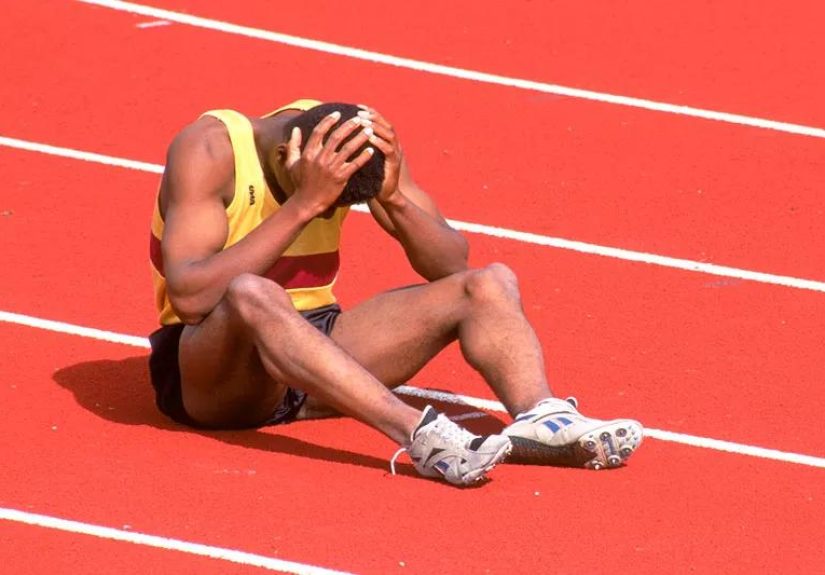
A sports injury doesn’t just sideline your bodyit also gives your brain a brand-new hobby: overthinking.
One minute you’re icing your ankle; the next you’re icing your confidence, your routine, and your identity as
“the athletic one.” The good news? Mental recovery is trainable. The same way you rebuild strength and mobility,
you can rebuild trust, motivation, and that “I’ve still got it” feeling.
This guide breaks down how to mentally come back from a sports injury with practical, evidence-backed strategies,
specific examples, and a fun-but-not-annoying tone (because your injury already took enough from you).
It’s educational, not medical advicealways follow your clinician’s plan for diagnosis, rehab, and return to play.
Why injuries mess with your mind (not just your muscles)
The “injury grief” roller coaster
Many athletes experience a very real grief response after getting hurtespecially if the injury changes your season,
your role, or your plans. It can look like irritability, sadness, anxiety, frustration, embarrassment, or even numbness.
None of this means you’re “weak.” It means something you care about got interrupted.
Your brain is also reacting to uncertainty: “How long will this take?” “Will I lose my spot?” “What if I’m never the same?”
Those questions can be emotionally loud, even when you’re doing everything right physically.
Identity: when “I am my sport” gets benched
If your sport is a huge part of who you are, an injury can feel like losing your normal self. That’s why you might feel
off-balance even when the injury itself is “minor.” One helpful mindset shift is to treat your identity like a team roster:
you’re not only an athleteyou’re also a friend, student, teammate, sibling, leader, music nerd, gamer, coach-in-training,
or whatever else is true for you. Injuries shrink your schedule; they don’t have to shrink your whole life.
Fear of reinjury: the loudest heckler in the stands
Fear of reinjury is one of the most common mental blocks in recovery. It can show up as hesitation, “playing not to get hurt,”
avoiding certain moves, or feeling panic when you try a skill that caused pain before.
Sometimes fear is protective; sometimes it becomes a false alarm that keeps blaring long after the threat is gone.
Here’s the key: confidence isn’t something you wait for. It’s something you rebuild through smart steps, repetition, and support.
First 72 hours: mental triage that actually helps
Early on, emotions spikebecause you’re dealing with pain, logistics, and a sudden change in plans. These small moves help stabilize you:
- Name what you feel. “I’m scared,” “I’m mad,” “I’m relieved it’s not worse,” “I’m disappointed.” Labeling emotion reduces its intensity.
- Separate facts from stories. Fact: “My knee hurts.” Story: “My season is over and everyone will forget me.” Write both downthen challenge the story.
- Build a tiny routine. Sleep, meals, hydration, and a few predictable daily anchors keep your brain from free-falling.
- Ask for a clear plan. When you understand the next step (even if it’s just “rest 48 hours and re-check”), your mind calms down.
- Don’t binge injury content. A 2 a.m. highlight reel of worst-case outcomes is not “research.” It’s anxiety in a trench coat.
Build a comeback mindset (without toxic positivity)
Switch from outcome goals to process goals
Outcome goals (“be back in four weeks,” “start the first game back,” “hit my PR again”) can motivate youbut they’re also fragile,
because timelines and bodies do not care about your calendar. Process goals are sturdier:
- “Do my rehab exercises 5 days this week.”
- “Increase range of motion by a small, clinician-approved amount.”
- “Practice my breathing routine before PT.”
- “Walk for 10 minutes pain-free before adding more.”
Process goals give you daily wins. And daily wins rebuild momentum.
Track wins like a scientist
Recovery can feel slow because progress is often incremental. Track it so your brain stops yelling, “Nothing’s changing!”
Try a simple rehab log:
- Physical: pain level, swelling notes, range of motion, strength benchmarks your clinician uses
- Mental: motivation (1–10), confidence (1–10), fear level (1–10), stress triggers you noticed
- Behavior: sleep, nutrition, rehab completion, hydration, time spent catastrophizing (be honest)
Over time, you’ll spot patterns: “I feel more confident on days I sleep 8 hours,” or “My anxiety spikes before new drills.”
That’s valuable data.
Rewrite the storyline (gently, not delusionally)
The goal is not to pretend this is fun. The goal is to interpret it in a way that helps you recover.
Compare these two inner narratives:
- Story A: “I’m broken. I’m behind. I’ll never catch up.”
- Story B: “I’m healing. I’m learning what my body needs. I can still become strong again.”
Story B doesn’t deny realityit supports action. And action is the antidote to helplessness.
Evidence-backed mental skills that pair well with physical rehab
1) Imagery and visualization (your brain’s practice reps)
Mental imagery is more than “daydreaming a comeback montage.” Done correctly, it can support motivation, pain management,
and confidenceespecially when you can’t fully train yet.
Try this 3-minute sequence:
- Set the scene: Picture your rehab space or practice area with realistic detail.
- Run the rep: Visualize doing one rehab movement with excellent form and steady breathing.
- Feel safety: Imagine your body moving smoothly and comfortably.
- Add a cue: Pair the image with a short phrase like “steady,” “strong,” or “smooth.”
Keep it realistic. Your brain trusts reps that match reality.
2) Relaxation and breathing (turn down the nervous system volume)
Injury can put your body in a threat statetense muscles, shallow breathing, racing thoughts.
Breathing and relaxation help your nervous system downshift so you can rehab more effectively.
- Box breathing: inhale 4 seconds, hold 4, exhale 4, hold 4 (repeat 3–5 rounds).
- Progressive muscle relaxation: gently tense then release muscle groups (avoid the injured area if advised).
- Pre-PT reset: 60 seconds of slow exhale breathing before rehab drills.
3) Self-talk and cue words (coach yourself like you’d coach a teammate)
Athletes often speak to themselves in a way they’d never speak to anyone else. (“Nice job, genius. Great limp.”)
Helpful self-talk is not hype; it’s instruction.
Use cue words that match your rehab goal:
- Form cues: “tall,” “brace,” “soft landing,” “hips back”
- Emotion cues: “breathe,” “reset,” “one rep”
- Confidence cues: “I’ve trained for this,” “I can do hard things safely”
4) Mindfulness and acceptance (stop fighting every feeling)
Mindfulness doesn’t mean “be calm all the time.” It means noticing what’s happening without instantly spiraling.
You can feel scared and still do rehab. You can feel frustrated and still show up.
A quick tool: when a tough thought hits, add the phrase “I’m having the thought that…”
Example: “I’m having the thought that I’ll reinjure myself.” This creates space between you and the fear.
5) Graded exposure (confidence is built, not wished for)
Mental comeback often fails when athletes jump from “basic rehab” straight to “full-speed chaos.”
Your brain needs proof that movement is safe, step by step.
Work with your clinician/coach to build a ladder:
- Level 1: controlled drills (slow, predictable)
- Level 2: sport-specific movement without contact/pressure
- Level 3: reaction drills (light unpredictability)
- Level 4: partial practice, limited intensity
- Level 5: full practice, then return to competition
Each step is a “trust deposit” for your nervous system.
Stay connected to your team (even if you’re in the hoodie club)
Isolation makes recovery harder. Staying connected protects your mood and motivation:
- Keep a role: chart plays, lead warm-ups (if appropriate), mentor younger teammates, or help with strategy.
- Communicate clearly: tell your coach what you can do and what you can’tthen do what you said you’d do.
- Pick a “recovery buddy”: someone who checks in and keeps you honest about rehab.
- Celebrate progress out loud: let people support you instead of silently struggling.
Handle setbacks and plateaus (the part nobody posts)
Setbacks aren’t proof you’re failing; they’re part of rehab. Swelling returns. Pain flares. Confidence dips.
When this happens, use the “3R” response:
- Recognize: “This is a normal bump.”
- Regroup: review the plan with your clinician and adjust load.
- Recommit: focus on what you can do today, not what you can’t do yet.
Plateaus are especially rough because they feel like you’re stuck. But often you’re consolidating gainsyour body is adapting.
The rehab process is more like stock market growth than elevator travel: overall up, with some annoying dips.
When to get extra help (and why that’s a power move)
Sometimes you need more than grit. Consider talking to a sports psychologist, counselor, or qualified mental health professional if you notice:
- persistent sadness, hopelessness, or irritability that lasts for weeks
- panic symptoms, constant worry, or sleep falling apart
- loss of appetite or using food/exercise in extreme ways to cope
- feeling detached from teammates, school/work, or activities you usually enjoy
If you’re a student-athlete, ask about mental health resources through your school or sports medicine team.
Getting support isn’t “being dramatic.” It’s optimizing your recoverylike doing PT for your brain.
If you ever feel unsafe or like you might hurt yourself, tell a trusted adult or medical professional right away.
Return to play: making your brain match your body
Physical readiness is necessarybut mental readiness matters too. Returning before you feel psychologically ready can increase stress,
hesitation, and risk-taking (or risk-avoiding) behaviors that affect performance and safety.
Use a “confidence check-in” before advancing:
- Can I do this movement without guarding?
- Do I trust my body at the current level?
- Do I know what my next step is?
- Can I manage fear when it shows up?
Confidence doesn’t mean zero fear. It means you can perform while fear rides in the backseatquietly, with a seatbelt on.
Quick mental comeback checklist
- Build process goals you can win weekly.
- Track physical and mental progress (your brain needs receipts).
- Use imagery, breathing, and cue words to train focus and calm.
- Practice graded exposure instead of jumping levels.
- Stay connected to your team and keep a role.
- Expect setbacks, respond with the 3R method.
- Get support early if mood/anxiety starts running the show.
Conclusion
Learning how to mentally come back from a sports injury is part strategy, part patience, and part self-respect.
Your body heals through smart rehab; your mind heals through structure, support, and skills you practice on purpose.
Keep the plan clear, stack small wins, and rebuild trust in steps. One day you’ll realize your injury story isn’t just
about what stoppedit’s also about what you built on the way back.
Experience-Based Lessons From Injured Athletes (About )
To make this practical, here are common “been-there” lessons athletes describe after injuries. These are composite examplesrealistic patterns
drawn from what sports medicine teams and sport psychology resources consistently observeso you can borrow the wisdom without borrowing the scar tissue.
1) The runner with the stress fracture: “I thought resting meant I was falling behind.”
A distance runner gets a stress fracture and immediately spirals: “Everyone else is training. I’m losing fitness. I’m losing my place.”
The turning point isn’t magical motivationit’s changing the scoreboard. Instead of measuring worth by miles, the runner tracks rehab compliance:
sleep, nutrition, cross-training that’s allowed, and weekly check-ins. The runner also stays connected by helping teammates with pacing and workouts.
Lesson: when your sport is paused, you still need a performance metric. Make it rehab performance.
2) The basketball player post-ACL: “My knee was ready before my brain was.”
Strength tests look great. The surgeon clears activity. But the first time the athlete tries a sharp cut, fear hits like a defender:
stiff movement, hesitation, then frustration. The athlete rebuilds confidence with graded exposurestarting with slow, planned cuts, then reactive drills,
then controlled scrimmage. They use a cue word (“smooth”) and a pre-drill breathing routine to stay calm. The athlete doesn’t wait to “feel fearless.”
They practice feeling fear and moving well anyway. Lesson: clearance is a green light, not a teleport. Confidence needs reps.
3) The swimmer with shoulder pain: “I kept pushing because stopping felt like quitting.”
Overuse injuries are sneaky. A swimmer keeps training through pain, then gets pulled back by a clinician who insists on load management.
Mentally, this athlete struggles with guilt and identity: “If I’m not grinding, am I still committed?” The athlete eventually reframes rest as training
(because tissue adapts during recovery), and channels drive into perfecting rehab form. They also adopt a rule: no emotional decisions in pain.
If the shoulder flares, the athlete follows the plan, not the mood. Lesson: discipline isn’t only “do more.” Sometimes it’s “do the right amount.”
4) The high school soccer player: “What hurt most was feeling invisible.”
A teen athlete feels left out after an injury: teammates keep practicing, social life revolves around the sport, and suddenly the athlete feels like
a background character. The fix is surprisingly simple: a coach assigns a role (help with drills, track stats, encourage others), and the athlete
sets a weekly goal to connect with teammates outside practice. Mood improves, rehab effort increases, and confidence returns. Lesson: connection isn’t a bonus.
It’s part of recoveryespecially when your sport is your community.
Across these stories, one theme repeats: the athletes who come back strongest don’t rely on “being tough.”
They rely on structure, support, and skillsgoal setting, self-talk, breathing, and progressive exposure. That’s not just a comeback.
That’s a smarter athlete.