Table of Contents >> Show >> Hide
- Why the 2025 Maker Gift Guide Hits the Sweet Spot
- The Standout Picks from the 2025 Maker Shed Vibe
- What the Broader 2025 Maker Market Is Telling Us
- How to Choose the Right Maker Gift Without Guessing Wildly
- Why Make: Still Nails the Tone
- 500 More Words on the Real Experience of Giving Maker Gifts
- Final Thoughts
If you have ever tried buying a gift for a maker, you already know the struggle. They own three screwdrivers that look identical but apparently have “totally different personalities.” They can explain why a $4 connector is exciting with the emotional intensity of an Oscar speech. And they are wildly easy to shop for once you understand one simple truth: makers do not just want stuff. They want possibility.
That is why the spirit of the 2025 Maker Shed Gift Guide works so well. The best gifts are not just objects sitting in boxes waiting to collect dust beside an abandoned ring light and a bread maker from 2019. They are invitations to build, solder, test, launch, remix, repair, and occasionally shout, “Why is this upside down?” before fixing it and feeling like a genius. In 2025, the strongest maker gifts are practical, playful, skill-building, and just weird enough to be memorable.
This guide takes that Make: energy and turns it into a publishable, reader-friendly roundup. Instead of dumping products into a giant holiday pile and hoping for the best, let’s look at what makes these gifts exciting, who they are for, and why the best maker presents often lead to more ideas than instructions.
Why the 2025 Maker Gift Guide Hits the Sweet Spot
The smartest maker gifts this year land in a very satisfying middle ground. They are approachable enough for beginners, but not so basic that experienced tinkerers roll their eyes and wander off to reorganize their resistor drawers. That balance is exactly what makes the 2025 Maker Shed lineup feel strong. It mixes robotics, cardboard construction, music, books, apparel, launchable projects, and electronics learning tools in a way that says, “Sure, you can have fun, but you might accidentally learn something impressive too.”
That is the secret sauce. A good maker gift does at least one of these things well:
1. It teaches a skill without feeling like homework
No one tears open gift wrap hoping for a lecture. The best kits sneak learning into the fun. A project that introduces soldering, robotics, simple circuits, or fabrication feels far more exciting when it comes attached to a robot monster, a synth, or a rocket launcher. Suddenly education is not a chore. It is a Saturday.
2. It rewards curiosity immediately
Makers love momentum. A gift that produces a result fast, whether that is a blinking badge, a cardboard creature, a weird electronic noise, or a flying rocket, has much better odds of becoming a real experience instead of a shelf ornament with ambition issues.
3. It leaves room for remixing
The truly great gifts are never finished when the manual ends. They invite customization. A maker does not want a dead-end object; they want a launchpad. That is why kits, tools, books, and modular accessories remain perennial favorites.
The Standout Picks from the 2025 Maker Shed Vibe
The Make: version of a gift guide is rarely about bland consumerism. It is about giving someone a reason to head to the workbench with a cup of coffee and an absurd amount of confidence. Several categories stand out right away.
Robotics and electronics kits that make people say, “Okay, that’s cool”
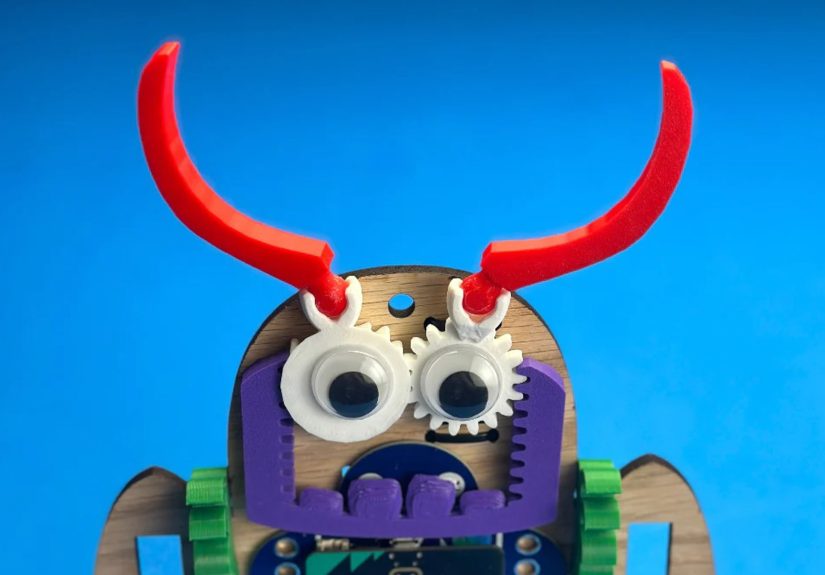
The Very Useful Monsters Robotic Workshop Kit absolutely understands the assignment. It is cute, creative, and hands-on, which is a very dangerous combination for anyone who enjoys making things. A robot kit with personality has a huge advantage over dry educational gear because it makes people want to keep going. It is not just “learn basic robotics.” It is “build a little creature and see what happens.” That is far better marketing for STEM than a thousand posters with gears on them.
The EMF Explorer Kit belongs in the same category of gifts that turn invisible science into visible delight. Makers love hidden systems. Give them a badge or device that reveals the electromagnetic weirdness of everyday life, and suddenly the room feels like a puzzle instead of a room. It is educational, yes, but also satisfyingly sneaky about it.
Then there is the Boxytone Synth Kit, which is a gift for the maker who likes their projects to beep, buzz, squeal, and occasionally sound like a robot discovering jazz. Music-making hardware is one of the most joyful corners of the maker world because it sits right at the intersection of art, engineering, and “What if I turned this knob?”
Cardboard creativity is having a very respectable moment
If you still think cardboard is just the thing that keeps your online impulse purchases safe during shipping, maker culture would like a word. Makedo Kits and the wonderfully named ChompSaw remind us that low-cost materials plus better tools equal big imagination. This is especially powerful for younger makers, classrooms, family projects, and anyone who wants immediate creative payoff without buying a laser cutter and pretending that was a normal financial decision.
Cardboard-based making works because it lowers the fear factor. You can cut, attach, fail, rebuild, and decorate without treating every mistake like a tiny tragedy. A cardboard fort, costume piece, automaton shell, or diorama is not “less real” than a polished wood or metal build. It is faster, friendlier, and often more collaborative. In 2025, that matters. People want hands-on projects that feel accessible, social, and delightfully unpretentious.
Books and archives still matter in a screen-heavy hobby
One of the smartest entries in the Maker Shed orbit is not a gadget at all. It is knowledge. The Make: Electronics Super Bundle and the Make: Complete Magazine eCollection are gifts for the kind of person who enjoys both inspiration and reference. That combination matters more than ever. A maker may find flashy project videos everywhere, but serious progress usually comes from having reliable explanations, diagrams, ideas, and examples close at hand.
A good book bundle says, “I support your weird little genius.” A deep digital archive says, “Here are years of experiments, projects, and rabbit holes. Please cancel your weekend plans responsibly.” For learners, these are high-value gifts. For experienced makers, they are creative fuel.
Yes, even the wearable gifts make sense
A Maker Faire hoodie or Maker Faire hat may not be the flashiest item in the list, but maker culture has always been part project bench and part community. Apparel works because it signals identity. It says, “I am the kind of person who thinks fixing something is more fun than replacing it.” Also, a good hoodie is basically workshop emotional support equipment.
What the Broader 2025 Maker Market Is Telling Us
When you zoom out from Maker Shed and compare it with other respected U.S. maker, electronics, repair, and tool sources, a clear pattern appears. The best 2025 gifts are less about novelty and more about capability. Makers do not just want a shiny object. They want something that helps them start faster, fix better, print cleaner, or experiment more often.
Portable soldering and repair gear are having a big year
One of the strongest themes in 2025 is the rise of better portable soldering kits and bench-ready starter tools. That makes perfect sense. Soldering is one of those gateway skills that unlocks a shocking amount of the maker universe. Once someone is comfortable with an iron, the door opens to repairs, prototyping, upgrades, custom builds, and the occasional heroic rescue of a gadget everyone else had given up on.
That is why toolkits make excellent gifts. A well-chosen set with a soldering iron, multimeter, cutters, pliers, wick, stand, and basic accessories feels instantly useful. It does not require the recipient to already know everything. It says, “Here is your starter bench. Go make a mess, then make something better.”
Portable systems are especially attractive because modern makers are not always working in a dedicated workshop with the lighting of a NASA lab. Sometimes the project happens at the kitchen table. Sometimes at school. Sometimes at a makerspace. Sometimes on the floor because every flat surface in the house is already occupied by half-finished brilliance. A compact, high-quality soldering setup fits the real world.
Beginner-friendly electronics kits are still undefeated
Another major trend is simple: people still love projects that actually get them building. Adafruit, SparkFun, DigiKey, and other electronics-focused brands continue to emphasize kits and boards that make coding, circuitry, sensors, and prototyping feel approachable rather than intimidating. That is good news for gift-givers because it means there are more ways than ever to match a kit to a personality.
For the science-curious maker, a sensor-focused project is a winner. For the crafty maker, a decorative electronics kit feels natural. For the code-first builder, a board that supports experiments in motion sensing, sound, lighting, or edge AI opens a lot of doors. The goal is not to overwhelm someone with a parts catalog. The goal is to create an “I can do this” moment.
That is also why gifts like beginner synth kits, robotics projects, and playful microcontroller bundles remain so effective. They give a quick result while teaching durable skills. And quick results matter. The distance between opening the box and making the first cool thing should be short enough that excitement does not evaporate somewhere around bag number six of tiny components.
3D printing gifts are getting smarter
In previous years, people often assumed the answer to every 3D-printing gift question was “buy a printer.” But 2025 is a little more mature than that. Serious gift guides increasingly point toward practical accessories: filament storage, nozzle maintenance, anti-stick solutions, small repair tools, build surface helpers, and gadgets that make leftover material more useful. That is the kind of advice that comes from actual use instead of holiday panic.
It is also more thoughtful. A maker who already owns a printer may not need another machine. They may need fewer failed prints, better filament management, cleaner nozzles, or a more reliable workflow. That is the kind of gift that earns genuine gratitude instead of a polite smile and a future appearance on a resale site.
How to Choose the Right Maker Gift Without Guessing Wildly
For beginners
Choose gifts that produce a visible result quickly: a robot kit, starter electronics bundle, cardboard construction set, or beginner soldering kit. The best beginner gifts remove friction. They do not assume a full workshop, advanced vocabulary, or infinite patience.
For kids and families
Lean into safe, open-ended, tactile creativity. Cardboard tools, simple launchers, playful robotics, and visual science kits tend to work well because they invite teamwork. They also create stories, which is exactly what the best gifts should do.
For repair-minded tinkerers
Get them tools. Not random tools. Good tools. Precision drivers, portable soldering gear, pliers, wire strippers, and a respectable multimeter will go farther than novelty gadgets ever could. Repair people do not need more clutter. They need gear that earns drawer space.
For the maker who already owns everything
That person does not own everything. They own most of the obvious things. Surprise them with an archive, a specialized accessory, a smarter consumable, a niche educational book, or a project kit outside their usual lane. The woodworker may love synth electronics. The coder may get hooked on cardboard engineering. The 3D printer fanatic may become emotionally attached to a humble maintenance tool.
Why Make: Still Nails the Tone
What separates Make: from generic shopping content is that it respects the culture behind the products. This is not a gift guide aimed at passive consumption. It is aimed at active participation. The items feel connected by a philosophy: build more, learn more, fix more, and enjoy the process.
That makes the 2025 Maker Shed approach especially appealing for web readers. It is not just about what to buy. It is about what kind of experience a gift unlocks. A robotic monster kit can become a child’s first confident step into coding. A cardboard tool can transform a recycling pile into a spaceship. A synth kit can become a weird little family concert. A soldering station can become the beginning of a repair habit that saves money and builds real independence.
That is the difference between a decent present and a memorable one. One gets opened. The other gets used.
500 More Words on the Real Experience of Giving Maker Gifts
There is something wonderfully different about giving a maker gift compared with giving a standard holiday present. A normal gift often has a short dramatic arc: unwrap, smile, maybe model it for the room, and then move on to dessert. A maker gift is messier and much more fun. The wrapping comes off, there is a brief pause, and then somebody says, “Wait, can we open this right now?” That is when you know you chose correctly.
I have seen this happen with all kinds of projects. A simple build kit hits the table and suddenly nobody is sitting normally anymore. One person is reading the instructions too fast, another is sorting parts into “important” and “mysterious,” and a third has already appointed themselves project manager despite having no qualifications beyond enthusiasm. It is chaos, but productive chaos. The room changes. The gift becomes an activity instead of an object.
That is especially true with gifts inspired by the Maker Shed world. Robotics kits tend to pull in the curious people, even the ones who claimed they were “just watching.” Cardboard construction tools are magnets for kids, but adults get pulled in almost immediately because they start by helping and end by engineering a suspiciously ambitious structure with windows, ramps, and a completely unnecessary but emotionally important turret. Soldering kits create a different kind of experience: quieter at first, then triumphant. The first clean joint feels like a tiny graduation ceremony.
One of the best parts of maker gifts is that they flatten age groups in a really charming way. The twelve-year-old, the parent, the uncle who suddenly remembers building model rockets in the eighties, and the neighbor who “doesn’t know anything about electronics” all end up huddled around the same project. Nobody cares who is technically the expert. Everyone cares whether the thing lights up, moves, launches, or makes noise. It is collaborative in a way that many gifts simply are not.
Maker gifts also age well. A sweater is lovely, but its life story is usually straightforward. A project kit can turn into a hobby. A beginner toolset can become the first shelf in a future workshop. A magazine archive can spark months of experiments. Even the gifts that look simple at first often have a long tail. Someone builds the kit, modifies the kit, borrows an idea from the kit, or uses the tools from the kit on five unrelated projects later. That kind of ripple effect makes the original gift feel bigger over time.
And let’s be honest, maker gifts create better stories. Nobody tells a hilarious ten-minute story about receiving a generic gift card. But people absolutely tell stories about the cardboard dragon that got too large for the hallway, the robot that frightened the dog, the synth that accidentally recreated the sound of a haunted microwave, or the rocket that launched beautifully and then landed in the one place everyone swore it could not possibly reach. Those stories are part of the value.
So when readers look at the 2025 Maker Shed gift idea landscape, the takeaway should not be “buy more gadgets.” It should be “give better experiences.” The strongest maker gifts are invitations to spend time, solve little problems, laugh at mistakes, and end the day with a table full of parts and a head full of new plans. That is not just good gifting. That is a pretty great way to make memories.
Final Thoughts
If there is one lesson from the It’s the 2025 Maker Shed Gift Guide! – Make: mindset, it is this: the best gifts do not just entertain makers, they empower them. Whether you choose a robot kit, a cardboard-building toolset, a synth project, a repair toolkit, a 3D-printing helper, or a stack of Make: knowledge, the goal is the same. Give someone the joy of creating something they did not have before.
That is why maker gifts continue to stand out in a sea of forgettable holiday shopping. They are practical without being boring, educational without feeling preachy, and fun without being disposable. In the best cases, they kick off a hobby, a habit, or a full-blown obsession with small parts in labeled bins. And frankly, that is beautiful.
So yes, get the hoodie if it is cozy. Get the hat if it looks great. But if you really want to win gift season, give the thing that gets used, shared, modified, and talked about long after the wrapping paper disappears. In other words, give possibility.