Table of Contents >> Show >> Hide
- Why the Fire Country Season 3 Midseason Finale Felt So Big
- Max Thieriot’s Tease: “Terrifying” Situations and Major Decisions
- Bode Leone’s Season 3 Journey: Freedom Is Not a Finish Line
- The Bode and Audrey Cliffhanger: A Pool, a Fire, and Very Bad Timing
- Gabriela Perez: The Emotional Fireline Nobody Can Ignore
- Manny Perez and the Protective Parent Problem
- Eve Edwards and the Family Story Inside the Fire Story
- Why Fire Country Cliffhangers Keep Working
- Season 3’s Bigger Theme: Becoming Who You Are Under Pressure
- What the Midseason Finale Means for Bode and Gabriela
- Why Fans Respond So Strongly to Max Thieriot’s Bode
- Experience-Based Add-On: Watching a Fire Country Finale Like a Fan Who Knows Better but Still Isn’t Ready
- Conclusion: A Terrifying Finale That Sets the Stage for Bigger Changes
When Max Thieriot says a Fire Country episode is going to be terrifying, fans know it is time to check the smoke alarms, cancel all casual plans, and prepare emotionally for CBS to turn Friday night into a full cardio workout. The Fire Country Season 3 midseason finale, titled Promise Me, arrived with exactly the kind of danger, character tension, and flaming chaos that has made the drama one of network TV’s most dependable engines of adrenaline. And this time, the fear was not just about walls of fire. It was about choices, guilt, family loyalty, fractured romance, and the terrifying possibility that one wrong promise could put several beloved characters in serious danger.
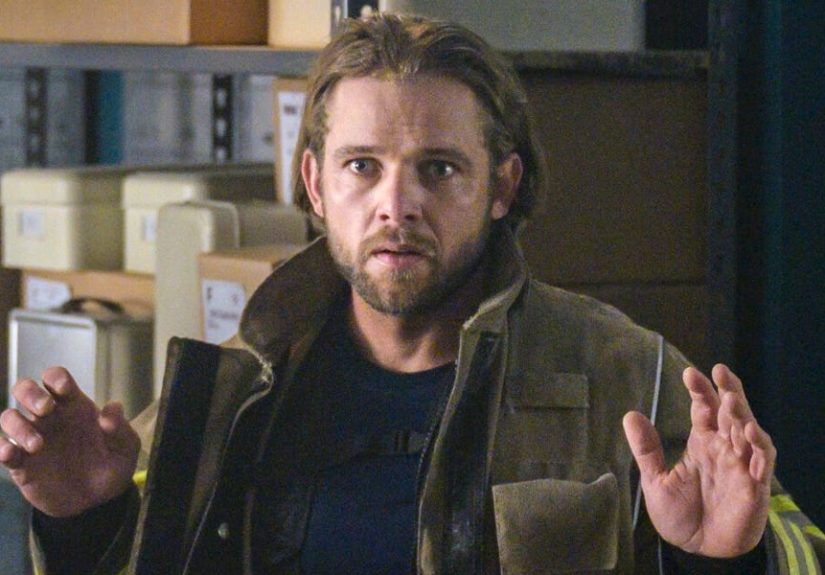
Max Thieriot, who stars as Bode Leone and also serves as a co-creator and executive producer, teased ahead of the episode that the midseason finale would leave multiple characters facing frightening situations and major decisions. That is a very polite Hollywood way of saying: nobody in Edgewater was getting a peaceful evening, and the audience was absolutely not getting a calm commercial break.
Season 3 has followed Bode as he tries to turn hard-won freedom into a real future. After years of chasing redemption through the inmate firefighting program at Three Rock, he is now attempting to become the kind of Cal Fire firefighter people can trust under pressure. But Fire Country has never been interested in making growth look easy. Bode may be out of prison, but he is still surrounded by old wounds, complicated love, and the dangerous habit of trying to save everyone before saving himself.
Why the Fire Country Season 3 Midseason Finale Felt So Big
The midseason finale, Promise Me, is Season 3, Episode 8. It aired as the winter cliffhanger and centered on dangerous underground “zombie fires” threatening the town. The phrase sounds like something invented by a horror-loving firefighter after too much coffee, but in the world of Fire Country, it is deadly serious. These fires can smolder out of sight, travel underground, and erupt when people least expect them. In other words, perfect television danger: invisible, unpredictable, and extremely rude.
The episode placed Station 42 and Three Rock in a race against time as the team tried to protect Edgewater from a spreading threat. But the emergency was only half the story. The real heat came from how the crisis exposed every personal fault line in the ensemble. Bode and Audrey were on their first official day as full-time firefighters. Gabriela was emotionally unraveling. Manny was navigating his own turmoil. Eve had to face family tension involving her estranged father, Elroy. When the external firestorm met the internal drama, Fire Country did what it does best: it made emotional baggage highly flammable.
Max Thieriot’s Tease: “Terrifying” Situations and Major Decisions
Before the episode aired, Max Thieriot previewed a finale with massive scope, intense fire sequences, and characters forced into “terrifying” positions. That tease mattered because Thieriot is not just the star reading promotional talking points. He is one of the creative engines behind the series, and Fire Country is partly inspired by his own Northern California background and familiarity with communities shaped by wildfire risk.
His comments suggested that the finale would not simply be about spectacle. Yes, viewers would get the towering flames, the urgent radio calls, and the heroic-but-questionable decisions that make everyone yell at the TV. But the true suspense would come from the characters being pushed into situations where the right answer is not obvious. In Fire Country, danger often begins as a practical emergency and ends as a moral test.
That is exactly what happened in Promise Me. Bode’s confidence, Gabriela’s emotional state, Audrey’s emerging role, and Manny’s protective instincts all collided under dangerous conditions. The result was a midseason finale that felt less like a pause and more like someone slammed the brakes on a fire engine at the edge of a cliff.
Bode Leone’s Season 3 Journey: Freedom Is Not a Finish Line
Bode’s Season 3 arc is central to why the midseason finale lands with so much weight. At the beginning of the series, Bode was a young man trying to shorten his prison sentence through a firefighting program. By Season 3, he is no longer simply fighting for release. He is fighting for identity. Who is he when he is not defined by incarceration, guilt, or other people’s expectations?
That question becomes even sharper as Bode trains under Camden Casey, played by Jared Padalecki. Camden sees Bode’s raw potential and encourages him to trust his instincts. Bode’s family, meanwhile, wants him to become stable, responsible, and safe. Those are loving goals, but they can also feel like another uniform Bode is expected to wear. The tension between instinct and discipline sits underneath many of his Season 3 choices.
In the midseason finale, Bode’s promise to protect a home becomes more than a tactical decision. It becomes a snapshot of his biggest flaw and greatest strength: he commits with his whole heart, sometimes before his brain has had time to file a safety report. Bode wants to be the guy people can count on. The problem is that fire does not care about good intentions, and neither does a cliffhanger.
The Bode and Audrey Cliffhanger: A Pool, a Fire, and Very Bad Timing
One of the most memorable images from the finale involves Bode and Audrey trapped near a pool as danger closes in. On paper, a pool sounds like a comforting location. In a Fire Country finale, it is basically the universe saying, “Here is water, now panic creatively.”
Bode and Audrey’s predicament works because it combines physical danger with emotional uncertainty. Audrey, played by Leven Rambin, has become an important presence in Bode’s Season 3 story. She understands parts of his struggle, and the show has carefully built their connection without pretending it is simple. Their chemistry complicates the long-running Bode and Gabriela dynamic, but it also gives Bode someone who sees him in a different context: not only as a former inmate, not only as Gabriela’s complicated love, and not only as Vince and Sharon’s son.
The pool sequence also tests Bode’s ability to act under pressure as a professional firefighter rather than as a man driven purely by instinct. It is one thing to be brave. It is another thing to survive because bravery is paired with training, timing, and humility. Season 3 keeps asking whether Bode can become that version of himself before his old habits cost someone dearly.
Gabriela Perez: The Emotional Fireline Nobody Can Ignore
Gabriela’s Season 3 story has been one of the show’s most emotionally charged threads. After the collapse of her wedding plans with Diego and her unresolved feelings for Bode, Gabriela has spent much of the season trying to outrun her own pain. Unfortunately, emotional avoidance has terrible mileage. It always runs out of gas at the worst possible moment.
In the midseason finale, Gabriela walks into danger without the kind of protection she needs. That moment is not just a suspense device. It is a visual expression of where she is emotionally: exposed, overwhelmed, and separated from the systems that usually keep her grounded. For a character trained to help others in crisis, Gabriela is now the one in desperate need of rescue, clarity, and care.
Her relationship with Bode remains one of the show’s biggest magnets. Fans keep returning to the question of whether they belong together, whether too much damage has been done, and whether love is enough when both people are still rebuilding themselves. Season 3 wisely avoids turning the answer into a simple yes or no. Instead, it shows how chemistry can be real while timing can still be a disaster wearing a cute jacket.
Manny Perez and the Protective Parent Problem
Manny’s role in the finale adds another layer of urgency. As Gabriela’s father and Bode’s longtime mentor figure, Manny is emotionally tied to both sides of the Bode-Gabriela equation. That makes him one of the most compelling characters in Season 3 because he is not simply being controlling when he worries about them. He knows what instability can do. He knows what redemption costs. He knows that love can be sincere and still not be safe.
When Manny heads toward danger to find Gabriela, the episode sharpens his defining conflict: he is a firefighter who has been trained to respond with discipline, but he is also a father whose daughter may be in mortal danger. That combination can make even the calmest person toss the rulebook into the nearest flame.
For Bode and Manny, Episodes 8 and 9 were positioned as major turning points. That matters because their relationship is one of the series’ strongest emotional anchors. Manny has believed in Bode when others were not sure they should. But belief is not the same as blind approval. Season 3 asks whether Manny can keep supporting Bode while also protecting Gabriela from becoming collateral damage in Bode’s redemption story.
Eve Edwards and the Family Story Inside the Fire Story
Another important piece of the midseason finale is Eve Edwards facing unresolved family tension with her estranged father, Elroy Edwards. Eve has often been the competent, grounded presence in the ensemble: loyal friend, strong firefighter, and the kind of person you would want nearby if your day suddenly involved smoke, sirens, or emotionally messy coworkers.
But Fire Country understands that strong characters still have private fractures. Bringing Eve’s father into the story expands the emotional geography of Edgewater. The show is not only about Bode’s family or Gabriela’s pain. It is about a whole community where everyone has a history, and every history can complicate a rescue.
That community focus is one reason the series continues to work. Wildfire drama gives the show scale, but family drama gives it staying power. Flames may get the promotional images, but unresolved parent-child tension does a surprising amount of heavy lifting.
Why Fire Country Cliffhangers Keep Working
By Season 3, Fire Country has developed a reputation for finales that do not gently tuck viewers into hiatus. Instead, the show prefers to leave fans sitting upright, whispering, “Wait, that’s it?” at the screen while the credits roll. The midseason finale follows that tradition by leaving multiple characters in jeopardy and multiple relationships on unstable ground.
Good cliffhangers are not just about danger. They are about consequence. Viewers need to believe that what happens next will change the characters, not merely reset them by the end of the next episode. Promise Me succeeds because the danger is tied to ongoing emotional arcs. If Bode survives, what does he learn? If Gabriela makes it out, what does she confront? If Manny reaches her, what does that do to his future and his relationship with Bode? If Audrey remains close to Bode, what does that mean for the show’s romantic center?
Those questions are why the episode feels bigger than a disaster-of-the-week story. The fire is the pressure cooker. The characters are the meal. And CBS, apparently, is the chef who refuses to use low heat.
Season 3’s Bigger Theme: Becoming Who You Are Under Pressure
The most interesting thing about Fire Country Season 3 is that nearly every main character is trying to become someone new without fully escaping who they used to be. Bode wants to be a legitimate firefighter. Gabriela wants to understand herself outside her romantic chaos. Manny wants to be a protector without controlling everyone’s choices. Eve wants to lead while facing her own family wounds. Sharon and Vince continue to navigate what it means to love a son whose life has been defined by second chances.
The midseason finale compresses all of those transformations into one dangerous hour. In real life, growth is usually quiet. On Fire Country, growth tends to happen while something explodes in the background. It is dramatic, yes, but it also makes emotional sense. Crisis strips away performance. When characters are scared, exhausted, and out of options, they reveal who they are becoming.
That is why Max Thieriot’s tease about terrifying situations was more than hype. The terror was not only physical. It was personal. The finale asked each character to face the consequences of their choices, and it did so in a way that made the next chapter feel essential.
What the Midseason Finale Means for Bode and Gabriela
No discussion of Fire Country Season 3 is complete without Bode and Gabriela. Their relationship has always been a mix of longing, bad timing, shared history, and emotional combustion. They clearly care about each other, but the show has repeatedly shown that caring is not the same as being ready.
The midseason finale underlines that point. Gabriela’s crisis is not simply a romantic obstacle for Bode to overcome. It is her own story. She has to face what she is running from, what she wants, and what kind of person she wants to become. Bode, meanwhile, has to learn that love cannot be another emergency he charges into without a plan.
That is what makes their dynamic frustrating in the best TV way. Fans may want a clean reunion, but the show keeps insisting on emotional homework. Annoying? Sometimes. Dramatically useful? Absolutely. Nobody gets to skip the character development just because the chemistry is strong enough to power a small county.
Why Fans Respond So Strongly to Max Thieriot’s Bode
Max Thieriot’s performance is a major reason Bode remains compelling even when he makes questionable choices. Bode is not written as a flawless hero. He is impulsive, wounded, stubborn, loyal, and sometimes dangerously convinced that sacrifice is the same as maturity. Thieriot plays those contradictions with enough vulnerability that viewers understand why people keep rooting for Bode even when they want to gently remove him from the decision-making committee.
Because Thieriot also helped create the show, Bode’s journey feels unusually personal. There is a grounded quality to the way Fire Country treats small-town identity, family expectation, and the emotional burden carried by first responders. The show may heighten reality for television, but its core themes are relatable: people want to be forgiven, families want to heal, and communities want to believe that disaster does not get the final word.
Experience-Based Add-On: Watching a Fire Country Finale Like a Fan Who Knows Better but Still Isn’t Ready
Watching a Fire Country midseason finale is a very specific viewing experience. You begin with confidence. You tell yourself, “I understand how this show works. There will be fire, someone will make a risky decision, and I will remain calm.” This confidence lasts approximately seven minutes. Then a character says something emotionally loaded, a radio call comes in, and suddenly your living room feels like a command center with snacks.
The Promise Me finale is especially effective because it combines two kinds of suspense. The first is obvious: physical danger. Bode and Audrey are trapped. Gabriela is exposed. Manny is moving toward the danger zone. The underground fires create the sense that the earth itself has become unreliable. That is a frightening setup because safety usually depends on knowing where the threat is. When the danger is hidden beneath the surface, every step feels suspicious.
The second kind of suspense is emotional, and honestly, it may be worse. Physical danger makes viewers gasp. Emotional danger makes viewers pause the episode and ask, “Why are all of you like this?” Bode wants to prove himself. Gabriela is hurting. Manny is protective. Audrey is becoming more important. Eve is facing family pain. Each character is doing something understandable, but when all those understandable choices collide, the result is chaos with a CBS logo.
For fans who have followed Bode from the beginning, the midseason finale feels like a progress report written in smoke. He has grown, but he is not finished growing. He is braver, freer, and more focused than the man we met in Season 1, but he still has the same instinct to turn himself into the solution even when the problem is bigger than one person. That makes him heroic and occasionally exhausting, which is a very realistic combination for a TV protagonist.
Gabriela’s experience also hits hard because many viewers understand the feeling of pretending to be functional while internally holding everything together with tape and vibes. Her choices may be dramatic, but the emotional truth is familiar. People in pain sometimes isolate. They sometimes reject help. They sometimes walk straight into metaphorical fire because standing still with their feelings seems even scarier. In Fire Country, the metaphor just happens to come with actual fire, because subtlety has apparently been evacuated from Edgewater.
The best way to watch this episode is to treat it as both spectacle and character study. Enjoy the big fire sequences, the urgent rescues, and the cliffhanger tension. But also notice the quieter questions underneath: Who does Bode become when he cannot fix everything? Who is Gabriela when she stops defining herself through romantic chaos? Can Manny protect his daughter without closing every door around her? Can Audrey become a genuine partner in Bode’s growth without becoming another complication?
That is the real experience of the finale. It is not just scary because characters might get hurt. It is scary because change is coming, and change on Fire Country rarely knocks politely. It kicks open the door, tracks ash across the floor, and leaves everyone staring at the horizon wondering what burns next.
Conclusion: A Terrifying Finale That Sets the Stage for Bigger Changes
Max Thieriot’s warning about a terrifying Fire Country Season 3 midseason finale was not an exaggeration. Promise Me delivered high-stakes action, emotionally loaded character choices, and the kind of cliffhanger that makes a hiatus feel personally offensive. By placing Bode, Audrey, Gabriela, Manny, and Eve in situations shaped by both external danger and internal conflict, the episode reminded viewers why the series continues to connect.
Fire Country works because it understands that fires are not the only things that spread. Fear spreads. Guilt spreads. Love spreads. So does the hope that people can survive their worst moments and come out changed on the other side. Season 3’s midseason finale left fans with plenty to worry about, but it also reinforced the show’s central promise: in Edgewater, redemption is never easy, but it is always worth fighting for.
Note: This article is an original, fully rewritten synthesis created for web publishing. It is based on publicly available entertainment reporting, official episode information, and real series context, with no copied passages, no source-code artifacts, and no unnecessary citation placeholders inside the HTML body.