Table of Contents >> Show >> Hide
- 1. Guinea Worm: The Slow Exit No One Asked For
- 2. Pork Tapeworm: The Body-Hopping Freeloader
- 3. Loa Loa: The Worm That Crosses the Eye
- 4. Schistosomes: The Freshwater Invaders
- 5. Bobbit Worm: The Ocean Ambush With Jaws
- 6. New Guinea Flatworm: The Slippery Invasive Menace
- What These Worms Teach Us About Nature
- Extra Experience Section: Real-World Encounters With Worm Nightmares
- Conclusion
Worms do not get enough credit for being nature’s tiny horror writers. They do not roar, they do not have dramatic theme music, and most of them look like someone dropped a wet shoelace in the wrong place. Yet some worms are so bizarre, painful, invasive, or biologically rude that they deserve their own midnight documentary narrated in a whisper.
The most nightmarish worms on the planet are not scary because they are big, although one ocean predator on this list can grow long enough to make your fishing rod feel insecure. They are scary because they use stealth, patience, parasites, sharp jaws, toxic slime, or the human body itself as part of their life cycle. Some crawl through eyes. Some emerge from skin. Some turn freshwater into a biological trap. One hides under sand like a spring-loaded nightmare with antennae.
This guide explores six real worms that sound fictional but are very much part of life on Earth. The goal is not to make you afraid of every garden worm. Earthworms are still the gentle soil noodles keeping plants happy. These six, however, are the creatures that remind us biology can be clever, brutal, and occasionally in need of a better public relations team.
1. Guinea Worm: The Slow Exit No One Asked For
Why It Is Nightmarish
The Guinea worm, known scientifically as Dracunculus medinensis, may be the most unfairly dramatic parasite in the worm world. People become infected by drinking water contaminated with tiny crustaceans carrying the parasite larvae. Then comes the truly awful part: after about a year, the mature female worm causes a painful blister, often on the foot or leg, and slowly emerges from the skin.
Slowly is the key word. This is not a quick horror-movie jump scare. It is a drawn-out biological eviction. The worm can take weeks to come out. The burning sensation often drives people to place the affected limb in water for relief, which triggers the worm to release larvae and continue the cycle. In other words, the parasite weaponizes pain, thirst, and geography.
There is no magic pill or vaccine that simply makes Guinea worm disappear from an infected person. Traditional removal involves carefully winding the worm out over time, which is exactly as pleasant as it sounds. Secondary bacterial infections can make the suffering even worse.
Why It Still Matters
The good news is that Guinea worm disease has been pushed close to eradication through water filtration, surveillance, education, and community health programs. Once affecting millions of people every year, it has become one of the great public-health comeback stories. Still, until cases reach zero and stay there, the Guinea worm keeps its spot as one of the most nightmarish worms on the planet.
2. Pork Tapeworm: The Body-Hopping Freeloader
Why It Is Nightmarish
Tapeworms already have a bad reputation, mostly because “long ribbon parasite living in your intestine” is not a phrase that makes anyone reach for a party hat. But the pork tapeworm, Taenia solium, deserves special attention because it has a second act that can be far more dangerous than an intestinal infection.
An adult tapeworm in the intestine may cause digestive symptoms such as abdominal discomfort, appetite changes, upset stomach, or weight loss. Some people notice passing tapeworm segments in stool, which is a discovery nobody wants to make before breakfast. However, the more serious condition happens when microscopic eggs are ingested and larvae form cysts in tissues. This is called cysticercosis.
When cysts reach the brain, the condition is called neurocysticercosis. That can cause seizures, headaches, neurological problems, and other serious complications. The nightmare is not just that a worm exists in the body. It is that one species can shift the entire problem from “gross digestive parasite” to “medical emergency involving the central nervous system.”
How People Reduce Risk
Prevention is refreshingly practical: cook pork properly, maintain good hygiene, wash hands after using the bathroom, and avoid food or water that may be contaminated with human feces. The pork tapeworm is not a monster that teleports into people. It relies on sanitation gaps, undercooked meat, and microscopic eggs getting where they do not belong.
3. Loa Loa: The Worm That Crosses the Eye
Why It Is Nightmarish
Loa loa is commonly called the African eye worm, and that nickname does not need much marketing help. This parasitic roundworm spreads through repeated bites from infected deerflies in parts of West and Central Africa. Once inside the human body, adult worms can migrate under the skin. Sometimes, they move across the surface of the eye beneath the conjunctiva.
To be clear, the eye crossing is often brief and may not be painful, but emotionally? That is a full five-alarm situation. People may also experience itchy swellings that come and go, often called Calabar swellings, along with fatigue, joint pain, or itching. Many infected people have no symptoms, which somehow makes the whole thing feel even more sneaky.
The true nightmare of Loa loa is not just the visual shock. It can complicate public-health treatment campaigns for other parasitic diseases because certain medications used for mass treatment may cause serious side effects in people with heavy Loa loa infection. One worm, therefore, can become a medical and logistical problem far beyond its own creepy résumé.
What Makes It So Memorable
Some parasites are terrifying because they hide. Loa loa is terrifying because it may briefly introduce itself in the mirror. Few biological experiences are more unsettling than realizing that a living organism is moving through one of the most sensitive and emotionally protected parts of the body.
4. Schistosomes: The Freshwater Invaders
Why They Are Nightmarish
Schistosomes are parasitic flatworms responsible for schistosomiasis, a disease linked to contaminated freshwater in parts of Africa, South America, the Caribbean, the Middle East, and Asia. These worms do not wait for you to eat them. Their larval form can penetrate human skin during contact with contaminated freshwater. That means swimming, bathing, washing, or wading can become the entry point.
Early symptoms may include itchy skin or a rash. Within weeks, some people develop fever, chills, cough, and muscle aches. The long-term damage, however, often comes from the body’s reaction to the eggs produced by adult worms. Eggs can become trapped in tissues, leading to inflammation and scarring in the intestine, liver, bladder, or other organs.
Repeated infections in children can contribute to anemia, malnutrition, and learning difficulties. That makes schistosomiasis more than a “gross parasite” story. It is a disease that can quietly affect growth, schooling, energy, and entire communities.
Why They Feel Like a Trap
The scary part is how ordinary the exposure can be. Freshwater looks peaceful. People need it for daily life. Schistosomes exploit that routine. They turn a river, pond, or lake into a place where a microscopic encounter can have long-term consequences. Compared with a giant predator, schistosomes are tiny. Compared with most nightmares, they are far more efficient.
5. Bobbit Worm: The Ocean Ambush With Jaws
Why It Is Nightmarish
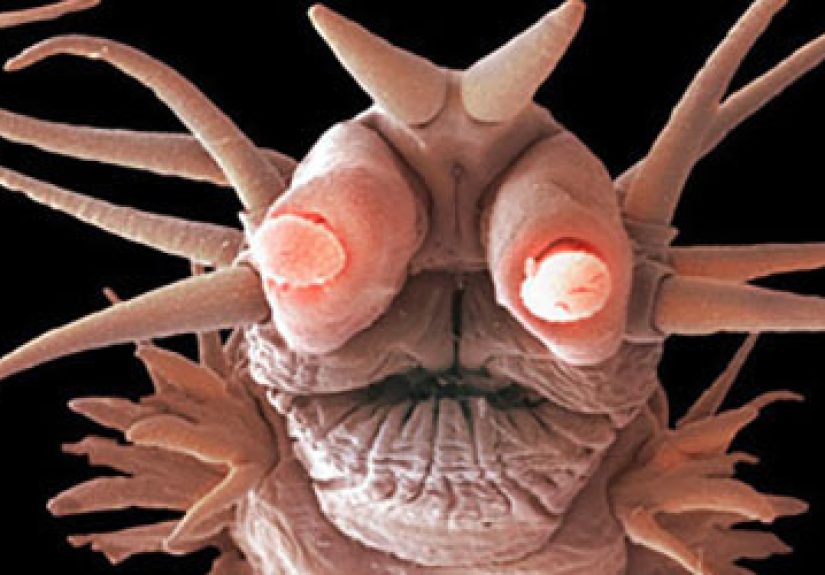
The Bobbit worm, or Eunice aphroditois, is not interested in your intestines, your eyes, or your vacation photos. It is a marine predator, and it has chosen the lifestyle of a buried bear trap. Found in warm marine environments, this worm hides beneath sand or sediment with only its antennae exposed. When prey brushes past, it erupts upward with shocking speed and grabs it with sharp jaws.
Some Bobbit worms can reach impressive lengths, with reports of individuals growing several feet long. That alone is enough to make divers reconsider the phrase “peaceful seafloor.” The worm’s hunting style is what earns the nightmares: it waits, detects movement, and strikes from below. Nature looked at a jump scare and said, “Let’s add teeth.”
Despite the dramatic reputation, Bobbit worms are not villains. They are predators doing predator things. In a reef or sandy habitat, ambush hunting is a successful strategy. The problem is that humans are emotionally unprepared for a worm that behaves like a sci-fi trapdoor monster.
Why Aquarium Owners Fear It
Bobbit worms have occasionally appeared in saltwater aquariums, often hiding in live rock. Because they are nocturnal and secretive, they can go unnoticed while fish mysteriously disappear. Imagine buying a beautiful reef tank and slowly discovering that the decoration came with a hidden sand dragon. That is not a hobby; that is an investigation.
6. New Guinea Flatworm: The Slippery Invasive Menace
Why It Is Nightmarish
The New Guinea flatworm, Platydemus manokwari, does not need fangs or dramatic eyeball cameos to be disturbing. It is a dark, slimy, land-dwelling predator of snails and other invertebrates, and it has become an invasive species in several places beyond its native range. In Florida, it has been reported in many counties and is considered a concern for native snail species.
This flatworm is especially troubling because it may serve as a host for rat lungworm, a parasite that can infect people if they eat raw or undercooked infected snails or slugs, or contaminated raw produce carrying tiny infected material. The flatworm itself is not lunging at humans like a villain in a tiny cape. The risk is more indirect, which is often how parasites prefer to keep the paperwork confusing.
New Guinea flatworms may also cause skin irritation through stomach secretions if handled. Wildlife agencies generally recommend avoiding bare-handed contact, washing hands carefully after possible exposure, and cleaning raw produce thoroughly.
Why It Is an Ecological Nightmare
The scariest thing about this worm may be what it does to ecosystems. Native snails can be important parts of local biodiversity, and invasive predators can pressure species that did not evolve defenses against them. A flatworm in the garden may look like a harmless strip of wet ribbon, but at scale, invasive species can rewrite entire ecological neighborhoods.
What These Worms Teach Us About Nature
The six most nightmarish worms on the planet are not frightening for the same reason. Guinea worm is horrifying because of pain and patience. Pork tapeworm is terrifying because it can move from the digestive tract into far more serious territory. Loa loa wins the award for “worst mirror surprise.” Schistosomes show how dangerous contaminated freshwater can be. Bobbit worms prove that the ocean floor has excellent jump-scare technology. New Guinea flatworms remind us that small invasive predators can have oversized consequences.
They also teach a useful lesson: fear works best when it becomes respect. Understanding these worms helps people reduce real risks. Cook meat properly. Wash produce. Avoid unsafe freshwater in regions where schistosomiasis occurs. Wear shoes where soil-transmitted parasites are common. Do not handle unfamiliar flatworms with bare hands. Support clean water and sanitation programs. The best response to nightmare biology is not panic. It is knowledge, prevention, and maybe a healthy reluctance to poke mystery slime in the backyard.
Extra Experience Section: Real-World Encounters With Worm Nightmares
Most people will never meet a Guinea worm, watch a Loa loa worm cross an eye, or find a Bobbit worm lurking in an aquarium. That is good. Life already has taxes, traffic, and group chats. But people do encounter worm-related fear in ordinary ways, and those experiences show why these creatures fascinate us so much.
One common experience is the backyard discovery. Someone walks outside after rain and sees a strange flat, shiny creature sliding across a patio. It does not look like an earthworm. It looks more like a living bookmark. The first instinct is usually to grab a stick, take a photo, and ask the internet whether the yard has been cursed. In areas where invasive flatworms are reported, the best reaction is calm caution: do not touch it bare-handed, keep pets away, and follow local guidance for disposal or reporting. The experience is unsettling because it turns a familiar spacethe garden, driveway, or flowerpotinto a tiny wildlife mystery.
Another real-world experience is travel anxiety. A person reads about parasites before visiting a tropical destination and suddenly every lake looks suspicious. The key is balance. Not every body of water is dangerous, and not every destination carries the same risk. Still, smart travelers check health guidance, avoid swimming in freshwater where schistosomiasis is known to occur, drink safe water, and pay attention to local advice. The nightmare shrinks when preparation grows.
Food-related worm fears are also common. People hear “tapeworm” and immediately start inspecting every pork chop like a forensic scientist. That level of panic is unnecessary, but the lesson is solid: cook meat to safe temperatures, avoid cross-contamination, wash hands, and treat food safety as a normal kitchen habit rather than a dramatic event. The pork tapeworm sounds like horror, but prevention often looks like basic hygiene and proper cooking.
Aquarium keepers have their own special version of worm dread. Saltwater tanks can contain unexpected hitchhikers in live rock, and a hidden predatory worm can become the prime suspect when small fish or invertebrates vanish. The experience is part detective story, part monster movie, and part reminder that reef ecosystems are complicated. A tank may look decorative, but it is a living system with nocturnal activity most owners never see.
Finally, there is the psychological experience: worms disturb people because they cross boundaries. They blur lines between inside and outside, harmless and harmful, tiny and powerful. A lion is scary in an obvious way. A worm is scary because it can be almost invisible, patient, and biologically strategic. That is what makes the most nightmarish worms so memorable. They are not just gross. They are proof that nature can solve survival problems in ways humans would rather not think about while eating noodles.
Conclusion
The planet’s most nightmarish worms are a reminder that horror does not need claws, glowing eyes, or a haunted castle. Sometimes it arrives as a parasite in unsafe water, a tapeworm egg on contaminated hands, a flatworm in the garden, or a marine predator hiding under sand. These creatures are unsettling, but they are also scientifically fascinating. They reveal how evolution rewards patience, stealth, adaptation, and, occasionally, behavior that makes humans whisper “absolutely not” at their screens.
Respecting these worms does not mean living in fear. It means understanding how they spread, where they live, and how to avoid unnecessary risk. The nightmare becomes manageable when facts replace myths. Still, if you ever see a strange worm in your yard, your aquarium, or a medical illustration, nobody will blame you for taking one respectful step backward.