Table of Contents >> Show >> Hide
- What makes a pun a pun?
- Why bad puns still work, even when they are painfully cheesy
- Why illustration makes pun humor better
- The secret sauce behind a collection like “My 40 Bad Puns I Illustrated To Show You ‘How Eye Roll’”
- Why people keep sharing pun cartoons online
- How to create illustrated bad puns that actually land
- Why “how eye roll” is a perfect pun mission statement
- The experience of living with illustrated bad puns
- Conclusion
There are two kinds of jokes on the internet: the ones that make you laugh out loud, and the ones that make you close your eyes, sigh deeply, and still send them to three friends anyway. This article is about the second kind. Specifically, it is about the glorious, ridiculous, beautifully unnecessary world of illustrated bad punsthe kind of wordplay that turns a harmless phrase into a tiny visual ambush and somehow leaves you amused, annoyed, and impressed all at once.
The title My 40 Bad Puns I Illustrated To Show You “How Eye Roll” says everything you need to know about the tone. It is knowingly corny. It leans into the groan. And it understands one of the oldest truths in comedy: sometimes the joke is not just the punch line. Sometimes the joke is the fact that someone had the nerve to make it, draw it, color it, and post it with confidence.
That is why illustrated puns keep thriving online. They blend verbal humor with visual surprise. They are quick to consume, easy to share, and weirdly memorable. Even when a pun is objectively terribleand let us be honest, many of them are proudly terribleit can still work because it asks your brain to do a tiny double take. You hear one meaning, see another, and then both ideas click together in that split second where annoyance turns into delight.
In other words, the eye roll is not a failure. It is the applause.
What makes a pun a pun?
At its core, a pun is wordplay built on double meanings, similar sounds, or unexpected substitutions. A good pun makes language wobble for a moment. One word opens two doors, and your brain has to choose both at the same time. That tiny collision is the whole game. A bad pun does the same thing, just with a little less elegance and a lot more audacity.
That is exactly why pun humor has such a loyal audience. It is accessible, fast, and surprisingly clever beneath the silliness. You do not need a long setup, deep lore, or a three-part callback. You just need the right phrase, the right object, and the confidence to draw a loaf of bread doing something emotionally inappropriate.
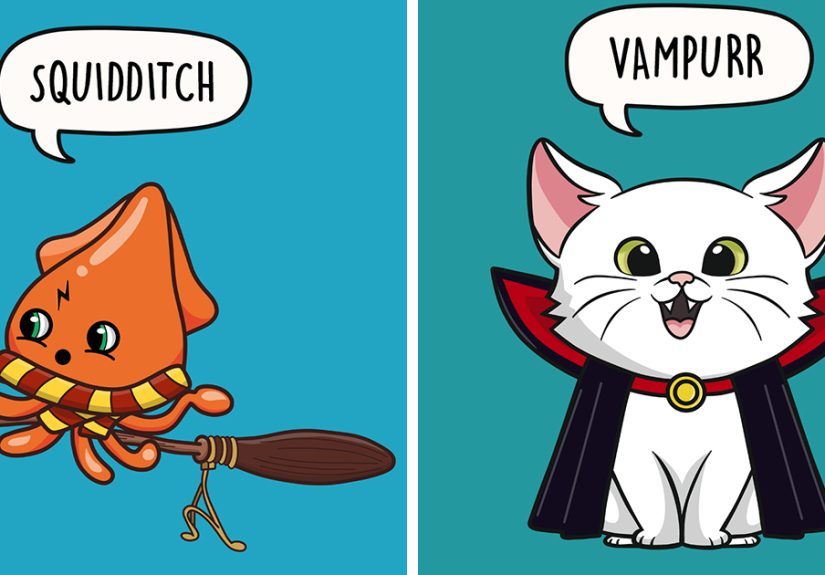
Illustrated puns take that formula and make it even more immediate. Instead of asking readers to imagine the alternate meaning, the artist does the work for them. The drawing becomes the reveal. It is the comedic equivalent of underlining a joke with a highlighter and then putting googly eyes on it.
Why bad puns still work, even when they are painfully cheesy
They create a quick mental twist
A pun works because it briefly sets up one interpretation and then swaps in another. That tiny switch is satisfying. It gives the brain a miniature “aha” moment. Even when the joke is groan-worthy, the structure still delivers a small reward: you got it. And getting it feels good.
The groan is part of the fun
Bad puns live in a special category of humor where the negative reaction is actually the positive reaction. The win condition is not “make them scream with laughter.” The win condition is “make them laugh while pretending they hate you.” That is why dad jokes, punny greeting cards, and cartoon wordplay have such staying power. They invite a playful social ritual: mock suffering, reluctant approval, repeat.
They are clean, friendly, and shareable
One reason illustrated puns perform so well across social platforms is that they are usually light, visual, and low-risk. A pun about fruit, coffee, bread, clouds, or office supplies can travel almost anywhere. It does not ask much from the audience. It is quick, harmless, and easy to forward with a message like, “I hate this. You need to see it.”
Why illustration makes pun humor better
The picture speeds up the punch line
In plain text, a pun can sometimes feel thin. In illustration, the image supplies the second meaning instantly. A phrase that might look ordinary in writing becomes funny the moment you draw it literally. That visual shortcut matters. It reduces friction and increases the chance that the joke lands before the viewer scrolls away.
Cartoons add personality
A pun does not just become funnier because it is visible. It becomes funnier because it becomes a character. A gloomy mushroom, an overconfident lemon, a tired slice of toast, or a smug cup of coffee can do more than illustrate a phrase. They can perform it. Eyebrows, posture, expression, and color all add emotional flavor that plain text cannot.
Visual puns belong to a long tradition
Illustrated wordplay may feel tailor-made for Instagram, meme pages, and quick-scroll culture, but the idea is older than social media by a mile. Gag cartoons, caricature, single-panel humor, and visual satire have long used the partnership between image and language to create comic tension. Today’s pun cartoon is simply that tradition wearing cleaner lines and brighter colors.
The secret sauce behind a collection like “My 40 Bad Puns I Illustrated To Show You ‘How Eye Roll’”
A title like this works because it promises a very specific emotional experience. You already know what you are getting: a parade of ridiculous visual jokes, each one trying to earn a smirk through shameless wordplay. There is comfort in that. The joke format is familiar, but the execution can still surprise you.
Collections of illustrated puns tend to work best when they follow a few unwritten rules:
- Clarity first. The reader should understand the base phrase quickly.
- Literalization second. The drawing should make the alternate meaning obvious.
- Strong expressions. The characters need emotional faces, even when they are technically vegetables.
- Speed. Every joke should land in seconds, not minutes.
- Variety. Food puns, animal puns, office puns, weather puns, and idiom twists keep the collection fresh.
Think about the kinds of jokes that thrive in this format. A “cereal killer” can be dressed like a tiny criminal mastermind. A “seal of approval” can literally be a seal stamping paperwork. “Nacho average joke” can become a bag of chips acting way too proud of itself. These ideas are simple, but that simplicity is their strength. Illustrated puns do not need to be complicated. They need to be instantly readable and visually committed.
That commitment matters more than people think. A weak pun can become a strong cartoon if the illustration fully believes in itself. Comedy loves confidence. If the artist draws a completely serious avocado therapist counseling a stressed tortilla chip, the absurdity gets a boost from the sincerity of the presentation. The joke lands harder because the art refuses to apologize.
Why people keep sharing pun cartoons online
Part of the appeal is nostalgia. Punny humor feels old-school in the best way. It recalls newspaper comics, classroom doodles, lunchbox notes, and greeting cards from relatives who would absolutely say “lettuce celebrate” with a straight face. In a digital environment full of aggressive hot takes and algorithmic chaos, illustrated puns feel refreshingly low-stakes.
Another reason is that pun cartoons are social glue. They are tiny conversation starters. You can comment with your own worse pun. You can tag a friend who loves corny humor. You can argue over whether the joke is brilliant or illegal. The format invites participation, and participation is a big part of why this kind of content keeps circulating.
There is also a practical reason: visual wordplay is sticky. Humor tied to a specific image is easier to remember than a plain one-liner floating by on its own. If the drawing is clear and the pun is sharp, the joke hangs around in the brain much longer than it has any right to.
How to create illustrated bad puns that actually land
Start with familiar phrases
The best pun cartoons usually begin with language people already know: idioms, cliches, common expressions, or recognizable sayings. If the viewer has to decode the original phrase before they can decode the joke, the cartoon has already made life too hard.
Choose objects with expressive potential
Some things are just born for pun art. Food, animals, household items, weather icons, and office supplies are excellent because they are visually simple and emotionally flexible. Put tiny eyes on a stapler and suddenly it has office drama. Draw a moody banana and now you have a personality.
Keep the composition simple
An illustrated pun is a joke, not a mural. The faster the eye finds the gag, the better. Clean lines, a single focal point, and readable lettering usually outperform busy backgrounds and overworked details.
Let the image do real comedic work
If the drawing only repeats the caption, the joke can feel flat. The strongest pun cartoons use the image to add something extrafacial expression, physical action, irony, or a visual detail that deepens the gag. That is where “cute” becomes “clever.”
Accept the groan
This might be the most important rule of all. If you are making bad puns, do not chase perfection. Chase reaction. A laugh, a groan, a snort, a head shakethose all count. In this genre, emotional resistance often means success.
Why “how eye roll” is a perfect pun mission statement
The phrase “how eye roll” is exactly the sort of joke that captures the spirit of illustrated pun culture. It is playful, slightly absurd, and proud of being corny. It invites the audience to participate in the joke emotionally. Before you even see the art, you can already feel the reaction the creator wants from you.
And that may be the real genius of these collections. They understand that humor is not always about delivering the biggest laugh in the room. Sometimes it is about building a friendly little contract with the audience: I am going to make something shamelessly silly, and you are going to pretend to suffer through it while secretly enjoying every second.
That is a powerful formula for web content. It is memorable, visual, highly shareable, and easy to revisit. One pun cartoon is cute. Forty pun cartoons become an experience. They create rhythm. You scroll, brace yourself, groan, smile, and keep going. The collection becomes a game of comic endurance, and the audience happily signs up.
The experience of living with illustrated bad puns
There is a very specific experience that comes with encountering a long series of illustrated bad puns, and it is different from reading regular jokes. A normal joke wants a clean laugh. An illustrated pun wants a layered reaction. First, you see the object. Then you spot the phrase hiding inside it. Then you realize the artist really went through with it. That final step is what gets people. The joke is not just “here is a pun.” The joke is also “someone loved this terrible idea enough to draw it properly.”
That experience gets even stronger when you consume several puns in a row. By the fifth one, your brain starts adjusting to the game. You begin scanning each image for the phrase before you even finish reading the caption. By the tenth one, you are no longer just a viewer. You are a participant. You are predicting the twist, judging the execution, and silently preparing your next eye roll like a trained athlete entering competition.
There is also something oddly comforting about the harmlessness of the format. In a media environment that often feels loud, cynical, and designed to exhaust you, illustrated puns are gloriously unserious. A drawing of a dramatic onion with a caption built around a cheap word swap is not trying to reshape your worldview. It is just trying to make your day 3 percent sillier. That smallness is part of the charm.
For creative people, the experience is even more interesting because pun illustration sits right at the crossroads of writing and drawing. It is not enough to be witty. You also need visual instincts. You have to ask practical questions: Can this phrase be shown clearly? Will the character read in one second? Does the punch line need text, or can the picture carry it? That challenge is why illustrated puns often feel more crafted than people expect. They may look effortless, but the best ones depend on timing, layout, expression, and restraint.
For readers and viewers, the experience becomes social almost immediately. Bad puns practically beg to be shared. People send them to siblings, partners, coworkers, and group chats with the same emotional tone every time: “This is awful. You have to see it.” That sentence is basically the official slogan of pun culture. The complaint is sincere, but the affection is more sincere. Nobody forwards a joke they truly regret seeing. They forward the ones that annoy them in exactly the right way.
And then there is the memory factor. Illustrated puns tend to linger. You may forget a clever paragraph from an article, but you will remember a cartoon dumpling making a dramatic speech about being emotionally stuffed. The combination of language and image makes the joke stick. It becomes a tiny mental sticker your brain did not ask for and now refuses to throw away.
That is why titles like My 40 Bad Puns I Illustrated To Show You “How Eye Roll” are so effective. They do not promise sophistication. They promise an experience: quick wit, visual absurdity, and repeated low-grade comic damage. Strangely enough, that is exactly what many people want. Not every funny thing has to be sharp, edgy, or brilliant. Sometimes a pun cartoon with a cheerful face and a dreadful caption is enough to rescue a tired afternoon.
So yes, bad puns deserve their reputation. They are corny. They are excessive. They are often one shade away from criminal. But when they are illustrated with charm, clarity, and commitment, they become something oddly irresistible. They remind us that humor does not have to be elegant to be effective. Sometimes it just has to be silly enough, visual enough, and brave enough to earn the most honest review a joke can get: one laugh, one groan, and one deeply deserved eye roll.
Conclusion
Illustrated bad puns succeed because they combine the oldest tricks in language with the fastest rewards in visual storytelling. They rely on double meanings, quick recognition, and playful exaggeration. More importantly, they understand their audience. These jokes are not trying to be cool. They are trying to be charmingly unbearable, and that is exactly why they work.
If a collection titled My 40 Bad Puns I Illustrated To Show You “How Eye Roll” makes people laugh, groan, share, and remember, then it has done its job perfectly. In the crowded world of online humor, that kind of shamelessly punny creativity still has real staying power.