Table of Contents >> Show >> Hide
- Who Is Dmitry Muratov?
- Why Did Muratov Auction His Nobel Peace Prize?
- The $103.5 Million Auction That Shocked the Room
- Where Did the Money Go?
- Why This Auction Mattered Beyond the Money
- Novaya Gazeta and the Pressure on Independent Media
- The Human Cost Behind the Headline
- Why the Winning Bid Was So Unusual
- Lessons From Muratov’s Decision
- Experiences Related to Muratov’s Nobel Auction and the Ukrainian Refugee Crisis
- Conclusion
Editorial note: This article is based on verified reporting and public records from reputable organizations including AP, Reuters, NobelPrize.org, Heritage Auctions, UNICEF, UNHCR, the Committee to Protect Journalists, and other established news and humanitarian sources. Source links are not embedded to keep the HTML clean for publication.
Every so often, the news produces a headline so unlikely it sounds like a screenwriter got carried away after too much coffee: a Russian journalist wins the Nobel Peace Prize, watches a devastating war unfold next door, decides the medal should not sit politely in a display case, and puts it up for auction to help Ukrainian refugee children. Then an anonymous bidder offers $103.5 million.
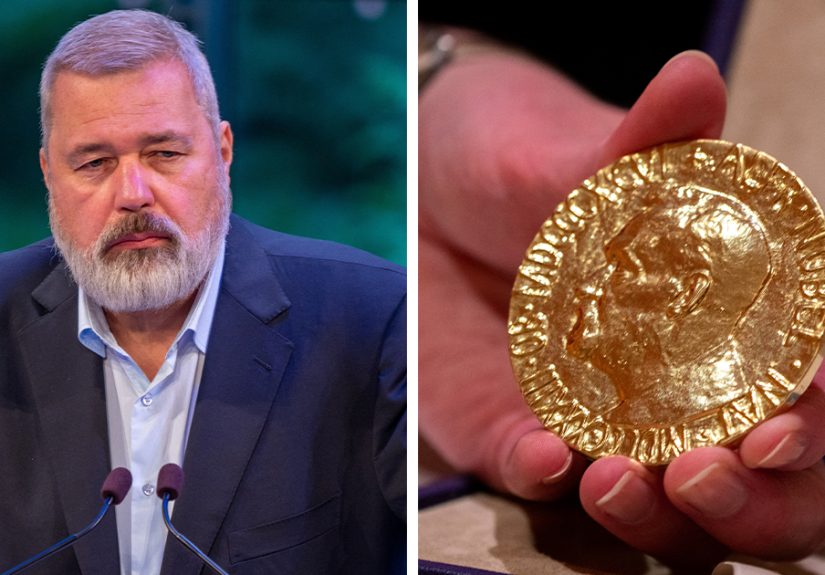
That is exactly what happened when Dmitry Muratov, the Russian journalist and former editor-in-chief of the independent newspaper Novaya Gazeta, auctioned his 2021 Nobel Peace Prize medal in New York. The sale, handled by Heritage Auctions, raised a record-breaking $103.5 million for UNICEF’s humanitarian response supporting children and families affected by the war in Ukraine. It was not just an auction. It was a moral exclamation point.
In a world where awards often gather dust, Muratov turned one of the highest honors on Earth into food, shelter, medical care, psychosocial support, and emergency assistance. The medal did what journalism at its best tries to do: it pointed attention toward people who might otherwise be reduced to statistics.
Who Is Dmitry Muratov?
Dmitry Muratov is one of Russia’s most recognized independent journalists. He helped build Novaya Gazeta, a newspaper known for investigations into corruption, human rights abuses, war, and abuses of power. The publication became a symbol of stubborn, fact-based reporting in a country where independent journalism has often been treated less like public service and more like an extreme sport without protective gear.
Muratov shared the 2021 Nobel Peace Prize with Filipino-American journalist Maria Ressa. The Nobel Committee honored both journalists for defending freedom of expression, which it described as a necessary condition for democracy and lasting peace. In other words, the prize was not simply a shiny “good job” sticker for journalism. It was a global reminder that free speech, independent reporting, and public accountability are not decorative extras. They are load-bearing walls in any functioning society.
For Muratov, the recognition carried deep emotional weight. Several journalists and contributors associated with Novaya Gazeta have been killed in connection with their work. The newspaper’s history is not just a story of headlines and deadlines; it is also a story of personal risk. Muratov has repeatedly linked the honor to the broader community of reporters who paid a heavy price for telling uncomfortable truths.
Why Did Muratov Auction His Nobel Peace Prize?
After Russia launched its full-scale invasion of Ukraine in February 2022, millions of Ukrainians were forced from their homes. Families fled cities under bombardment. Children left behind bedrooms, schools, pets, grandparents, toys, and the ordinary rhythms of childhood. The humanitarian crisis spread across Ukraine and neighboring countries as refugees searched for safety.
Muratov responded by announcing that he would auction his Nobel Peace Prize medal and donate the proceeds to help Ukrainian refugee children. The decision was remarkable because Nobel medals are not everyday collectibles. They are historic objects, personal achievements, and symbols of a lifetime’s work. Selling one is not like listing an old bicycle online and hoping someone throws in free shipping.
But that was the point. Muratov seemed to understand that symbols matter most when they are put to work. The medal represented peace, but peace was exactly what Ukrainian children had lost. By selling it, he transformed symbolic recognition into practical aid.
The $103.5 Million Auction That Shocked the Room
The auction took place on June 20, 2022, at The Times Center in Manhattan. The date was significant: World Refugee Day, an international observance dedicated to people forced to flee conflict and persecution. Heritage Auctions organized the sale and waived its fees and commissions, meaning the funds could go directly toward the humanitarian purpose.
Bidding reportedly began at a far lower level before climbing into historic territory. Then came the moment that made the room gasp: one anonymous phone bidder offered $103.5 million. The amount shattered the previous auction record for a Nobel medal. It was the kind of number that makes auctioneers, journalists, and spreadsheet software all sit up straighter.
The buyer chose to remain anonymous, but the impact of the bid was very public. The sale became the most expensive Nobel medal auction ever recorded. More importantly, it sent a clear message: Ukrainian refugee children were not invisible, and humanitarian action could still command the world’s attention.
Where Did the Money Go?
The proceeds were directed to UNICEF’s humanitarian response for children and families affected by the war in Ukraine and surrounding regions. UNICEF’s work in the crisis has included emergency health services, child protection, clean water and sanitation support, education access, mental health services, and assistance for displaced families.
For refugee children, aid is not a vague nice-to-have. It can mean safe spaces at border crossings, support for unaccompanied or separated minors, access to learning materials, winter supplies, trauma care, vaccines, and help for families trying to rebuild some version of normal life. When a child has been uprooted by war, “normal” becomes a very big word.
The donation also highlighted a crucial reality: humanitarian crises are not solved by one dramatic auction, no matter how generous. But large gifts can accelerate response efforts, fill urgent gaps, and inspire additional support. Muratov’s medal became both funding and a megaphone.
Why This Auction Mattered Beyond the Money
The $103.5 million figure was extraordinary, but the symbolism may have been even more powerful. A Russian journalist used his Nobel Peace Prize to help Ukrainian children displaced by a war launched by Russia’s government. That fact alone carried enormous moral force.
It showed that nationality and conscience are not the same thing. Governments make decisions, but individuals still make moral choices. Muratov’s action rejected the idea that compassion must stop at borders or that people are responsible only for those who look, speak, or live like them.
It also connected two urgent issues: press freedom and humanitarian suffering. The Nobel Committee honored Muratov for defending independent journalism. Months later, his medal supported children harmed by a war in which truth itself became a battlefield. Propaganda, censorship, and disinformation are not abstract problems. They shape public understanding, excuse violence, and make human suffering easier to ignore.
Novaya Gazeta and the Pressure on Independent Media
To understand the weight of Muratov’s decision, it helps to understand the environment in which he worked. Novaya Gazeta built its reputation on reporting that challenged powerful interests. After the invasion of Ukraine, Russian authorities intensified pressure on independent media. New laws restricted how outlets could report on the military, and several independent news organizations were blocked, closed, or forced to suspend operations.
Novaya Gazeta suspended publication in Russia in March 2022, saying it would pause until the end of what Russian authorities required media to call the “special military operation.” Later, Russian authorities moved to revoke the newspaper’s license. For critics of the Kremlin, the move was part of a broader crackdown on dissent and independent reporting.
Against that backdrop, Muratov’s auction was not just philanthropy. It was a statement about the responsibilities of journalism in wartime. When a government tries to narrow public language, independent journalists often try to widen public attention. Muratov widened it toward children.
The Human Cost Behind the Headline
Large numbers can make suffering seem distant. Millions displaced. Billions needed. Thousands injured. Statistics are necessary, but they can flatten reality. Behind each number is a child learning to sleep through sirens, a parent trying to explain the unexplainable, a teacher conducting lessons in fragments, or a teenager pretending to be brave because younger siblings are watching.
UNICEF has reported that millions of Ukrainian children have been affected by displacement, interrupted schooling, attacks on infrastructure, and psychological trauma. Years into the war, many children remain displaced either inside Ukraine or as refugees abroad. For a child, displacement is not just a change of address. It is a rupture in routine, identity, friendships, and safety.
This is why Muratov’s gesture resonated. He did not merely donate money; he made people look. The Nobel medal carried prestige. The auction converted prestige into attention. And attention, when directed honestly, can become action.
Why the Winning Bid Was So Unusual
Nobel medals have been sold before, but Muratov’s sale was exceptional. Previous Nobel medal auctions had reached impressive sums, but nothing close to $103.5 million. The price was not simply about the material value of the medal, even though Nobel medals are made from precious metal and carry immense historical significance. The bid reflected the story attached to the object.
Collectors often value rarity, provenance, and cultural meaning. Muratov’s medal had all three. It belonged to a living Nobel Peace Prize laureate, was connected to press freedom under pressure, and was being sold during an active humanitarian crisis. The auction created a rare convergence of history, politics, journalism, charity, and urgency.
That combination turned the medal into something larger than memorabilia. It became a vessel for solidarity. If ordinary auctions ask, “How much is this object worth?” this one asked, “How much can this object do?”
Lessons From Muratov’s Decision
1. Symbols Are Strongest When They Serve People
A Nobel medal is one of the world’s most prestigious symbols. Muratov’s choice showed that a symbol can become more meaningful when it leaves the shelf and enters the world. The medal did not lose value because it was sold. In many ways, it gained a new chapter.
2. Journalism and Humanitarian Action Are Connected
Good journalism exposes suffering, corruption, injustice, and abuse of power. Humanitarian action responds to suffering. Muratov’s auction bridged those missions. It reminded readers that facts are not cold objects; they are often the first step toward responsibility.
3. One Person’s Platform Can Move Global Attention
Muratov did not end the war. No single auction could. But he used the platform available to him and redirected global attention toward children. That matters. Public attention is imperfect, but without it, crises fade into background noise.
4. Moral Courage Can Be Practical
Courage is often imagined as dramatic speeches or heroic gestures. Sometimes it looks like paperwork, logistics, a public auction, and a decision to part with something priceless so others can receive something necessary.
Experiences Related to Muratov’s Nobel Auction and the Ukrainian Refugee Crisis
To understand why Dmitry Muratov’s auction struck such a deep chord, imagine the experience from several human angles. First, picture a Ukrainian child crossing a border with one backpack. Inside might be a sweater, a toy, a phone charger, and a snack packed by a parent who is trying very hard not to cry. Children notice everything: the long lines, the whispered conversations, the adults checking news updates, the way home suddenly becomes a place discussed in the past tense. For them, refuge is safety, but it is also confusion. It means sleeping somewhere unfamiliar and asking when they can go back to school, back to friends, back to the ordinary little rituals that make childhood feel secure.
Now picture a journalist like Muratov watching these scenes unfold while carrying a medal that represents peace. The emotional contradiction is almost unbearable. A Nobel Peace Prize honors the defense of human dignity, yet children were being forced into displacement by war. In that context, keeping the medal as a private treasure may have felt insufficient. Auctioning it turned personal honor into public help. It was a rare case where the phrase “put your money where your mouth is” became “put your Nobel medal where the need is.” Not quite as catchy, perhaps, but much more powerful.
There is also the experience of aid workers and volunteers who meet families at train stations, shelters, schools, and border crossings. Their work is practical and deeply human. They help register families, distribute supplies, identify vulnerable children, arrange medical care, and provide safe spaces where kids can draw, talk, rest, or simply stop being brave for a few minutes. A donation of this size can strengthen those systems. It can help turn a chaotic emergency response into a more organized lifeline.
For readers far from the war, Muratov’s decision offers another kind of experience: the uncomfortable but useful realization that compassion is not passive. Most people will never own a Nobel medal, which is probably just as well because many of us have trouble keeping track of house keys. But everyone has something: attention, money, professional skills, a platform, time, or the ability to share accurate information. Muratov’s act challenges people to ask what they can convert into help.
Finally, there is the experience of seeing a Russian public figure openly support Ukrainian children. In a polarized wartime environment, that matters. It reminds the world that empathy can cross national lines even when governments do not. It also gives people a language for refusing collective hatred. Children harmed by war do not need perfect political speeches; they need safety, care, and adults willing to act. Muratov’s auction became a lesson in turning grief into usefulness. It was not sentimental. It was concrete. That is why the story still resonates: because it shows that even in a brutal moment, one person can take a symbol of peace and make it behave like peace.
Conclusion
Dmitry Muratov’s decision to auction his Nobel Peace Prize medal for Ukrainian refugee children was one of the most striking humanitarian gestures of the war. The $103.5 million winning bid made history, but the deeper story is not only about money. It is about what people choose to do with honor, visibility, and moral responsibility.
Muratov could have kept the medal as a personal monument to courage. Instead, he turned it into aid for children who had lost homes, schools, routines, and safety. The auction connected press freedom, peace, refugee protection, and child welfare in one unforgettable act. It reminded the world that awards are meaningful, but action is what gives them a heartbeat.
In the end, the Nobel medal did not stop being a prize. It became something more: a shelter, a signal, a challenge, and a very expensive reminder that compassion should never be left locked in a glass case.