Table of Contents >> Show >> Hide
- Why Ricky Gervais’s “We Won” Comment Hit a Nerve
- The Walk of Fame Moment: Symbolism with Extra Sparkle
- How Gervais Became a Cancel Culture Lightning Rod
- The Netflix Factor: Why Streaming Changed the Debate
- Did Ricky Gervais Really Defeat Cancel Culture?
- Free Speech, Accountability, and the Comedy Contract
- Why Audiences Still Respond to Gervais
- The Bigger Cultural Shift
- Experiences and Reflections: What the Gervais Debate Teaches Content Creators, Comedians, and Audiences
- Conclusion
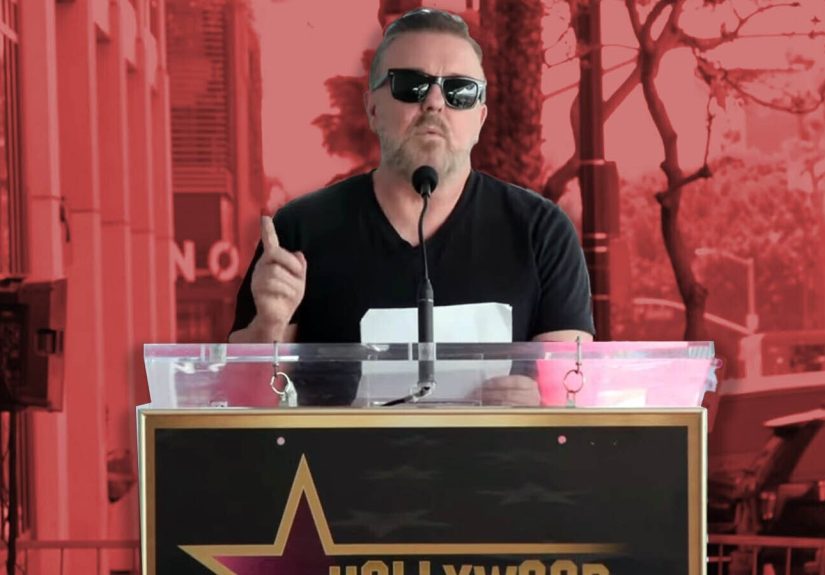
Ricky Gervais has never been the kind of comedian who tiptoes into a room. He arrives with a smirk, a sharpened line, and the energy of someone who already knows half the audience is bracing for impact. So when Gervais accepted his star on the Hollywood Walk of Fame and joked that he had helped defeat cancel culture, the moment felt less like a surprise and more like a perfectly timed punchline from a man who has spent years treating controversy as both weather and fuel.
His message was simple: after several strange years of cultural policing, outrage cycles, online petitions, and debates over what comedians can say, he believes the pushback against cancel culture has worked. “We won,” he suggested, with the usual Ricky Gervais caveat: until the next round begins. That last part matters. Gervais was not declaring that outrage has vanished from public life. He was saying the mood has shifted. Audiences, comics, streamers, and even critics now seem more aware that comedy cannot survive if every joke is treated like a court case.
The statement immediately sparked discussion because Gervais is not just commenting on cancel culture from the sidelines. He has been one of its most visible combatants. From The Office to Extras, from the Golden Globes stage to Netflix specials like SuperNature and Armageddon, his career has repeatedly tested the boundary between satire, offense, free speech, and public accountability. Love him or loathe him, he has become one of the clearest examples of a modern entertainer who can be criticized fiercely and still sell tickets, win awards, and get honored on Hollywood Boulevard.
Why Ricky Gervais’s “We Won” Comment Hit a Nerve
Cancel culture is one of those phrases that means different things depending on who is holding the microphone. To supporters of calling people out, it can mean accountability: powerful figures facing consequences for harmful words or actions. To critics, it means public shaming, career threats, ideological conformity, and a culture where people are afraid to speak honestly.
Gervais’s “we won” remark landed because it sits right in the middle of that argument. He was not speaking as an academic, politician, or corporate executive. He was speaking as a comedian whose job is to say the wrong thing in exactly the right way. For Gervais, comedy is supposed to be uncomfortable. The laugh often comes from tension. Remove the tension, and the joke becomes a motivational poster wearing a fake mustache.
His critics argue that “just joking” should not be a magical shield. They point to past backlash against his jokes about transgender people, disability, illness, religion, and celebrity hypocrisy. They say comedy can punch down, normalize cruelty, or make vulnerable people feel mocked rather than included. That concern is not imaginary. Comedy has always had consequences because jokes are not floating bubbles; they land in real communities.
But Gervais’s defenders see something else. They argue that grown adults should be able to handle jokes they dislike without demanding removal, punishment, or public exile. They see Gervais as a comic who tells audiences exactly what they are buying: dark humor, blunt language, and social satire with no complimentary emotional support blanket included.
The Walk of Fame Moment: Symbolism with Extra Sparkle
Gervais received the 2,813th star on the Hollywood Walk of Fame in the television category, a fitting honor for someone whose biggest cultural breakthrough came from the original British version of The Office. The ceremony brought together industry figures including Netflix CEO Ted Sarandos and actor Christopher Guest, two names that underline Gervais’s odd but powerful place in entertainment: part prestige writer, part stand-up provocateur, part internet grenade.
The location also added irony. Hollywood is often accused of being cautious, image-obsessed, and allergic to unscripted honesty. Yet here was Gervais, a comedian famous for roasting Hollywood elites at the Golden Globes, being permanently stamped into the pavement of the same industry he has mocked for years. If satire had a trophy room, this would be one of the stranger shelves.
His “cancel culture” comment worked because it was both self-congratulatory and self-aware. Gervais understands the ridiculousness of claiming victory over a huge cultural phenomenon while standing beside a ceremonial star. He also knows that the phrase “we won” is guaranteed to annoy people who believe cancel culture was exaggerated in the first place. In other words, the line did exactly what a Gervais line is designed to do: make fans cheer, critics sigh, and everyone else click.
How Gervais Became a Cancel Culture Lightning Rod
Ricky Gervais did not build his career by being universally lovable. He built it by creating characters and performances that expose ego, insecurity, hypocrisy, and social discomfort. David Brent in The Office is not funny because he is admirable. He is funny because he is painfully recognizable: the boss who thinks he is a philosopher, entertainer, rebel, and humanitarian, when in reality he is just making the room deeply uncomfortable near a photocopier.
That discomfort has followed Gervais into stand-up. His Netflix specials lean into taboo topics, including death, religion, identity, political correctness, and moral panic. Armageddon, released on Netflix in 2023, was promoted as a taboo-busting special about the end of humanity, oversensitivity, and political correctness. Before its release, a joke in promotional material drew criticism and a petition asking Netflix to remove it. Gervais responded by framing critics as hecklers and telling viewers who disliked the material not to watch.
That response became central to his public persona. Gervais often argues that offense is not the same as harm and that the target of a joke is not always the subject mentioned in the joke. In his view, audiences sometimes mistake a joke about bad thinking for an endorsement of bad thinking. His critics counter that intent does not erase impact. The disagreement is not new, but social media has made it faster, louder, and harder to escape.
The Netflix Factor: Why Streaming Changed the Debate
Netflix has played a major role in keeping Gervais at the center of the cancel culture conversation. In the old television era, a controversial comedian depended on network executives, advertisers, time slots, and broadcast standards. Streaming changed the equation. A platform can host a special for a global audience while letting viewers decide whether to press play, complain, or keep scrolling toward a cooking show where nobody gets morally injured except the soufflé.
This matters because cancellation is often measured by visibility. If a comedian faces backlash but remains heavily promoted, sells out tours, wins awards, and releases new specials, critics of cancel culture point to that as evidence that the “canceled” person was not truly canceled. Supporters of Gervais respond that the attempt still matters. To them, petitions, campaigns, and pressure on platforms represent a chilling effect even when the target survives.
Gervais’s career shows the difference between criticism and cancellation. He has absolutely been criticized. He has also remained commercially powerful. His Armageddon special won the Golden Globe for Best Performance in Stand-Up Comedy on Television in 2024, proving that controversy did not prevent industry recognition. If anything, the arguments around his work may have made his brand clearer: Ricky Gervais is where you go when you want comedy with elbows.
Did Ricky Gervais Really Defeat Cancel Culture?
The honest answer is: not exactly. No single comedian defeated cancel culture because cancel culture is not a single dragon waiting outside a castle. It is a messy social pattern shaped by media incentives, political polarization, online outrage, corporate caution, activist pressure, fandom wars, and the human desire to be right in public.
What Gervais may have helped defeat is the assumption that backlash automatically ends a career. His continued success suggests that audiences are more fragmented than ever. One group can denounce a special while another group makes it a hit. A joke can trend for the wrong reasons and still sell the next tour. Public criticism no longer moves in one direction; it splits, multiplies, mutates, and sometimes accidentally becomes marketing.
That is why “we won” is more useful as a cultural signal than a literal scoreboard. Gervais is saying that comedians and audiences pushed back against the idea that offense alone should decide artistic value. He is also saying that the public has become more skeptical of outrage cycles. Many people now recognize the pattern: clip, outrage, counter-outrage, think piece, podcast debate, apology demand, no apology, ticket sales, repeat.
Still, victory is complicated. Some performers have lost jobs over past comments. Some people self-censor because they fear professional or social consequences. At the same time, marginalized groups have used public criticism to challenge lazy stereotypes and demand better treatment. The culture war around comedy is not simply brave artists versus humorless scolds. It is also about who gets mocked, who profits, who gets heard, and who is expected to laugh along.
Free Speech, Accountability, and the Comedy Contract
Comedy depends on an unwritten contract between performer and audience. The comedian gets permission to exaggerate, provoke, and explore uncomfortable ideas. The audience gets permission to laugh, reject the joke, criticize it, or walk away. Problems start when either side tries to control the entire exchange.
Gervais’s position is that the right to joke must include the right to offend. That does not mean every offensive joke is brilliant. Some are lazy. Some are cruel. Some are about as sharp as a wet cracker. But if comedians only say things everyone already agrees with, comedy becomes customer service with a microphone.
Accountability also matters. Audiences are not obligated to laugh. Critics are not obligated to be quiet. Viewers can object to material they find harmful. That, too, is free expression. The difference lies between criticism and coercion. Saying “this joke failed and here is why” is part of cultural debate. Saying “this person must be erased from every platform forever” is where many people begin to worry.
Why Audiences Still Respond to Gervais
One reason Gervais remains popular is that he projects confidence in a nervous age. Many public figures speak as if every sentence has been approved by a committee of lawyers, brand managers, and someone named Madison from Reputation Strategy. Gervais speaks like a man who fired that committee before breakfast.
Another reason is that his best work is not merely offensive. It is observant. The Office understood workplace vanity. Extras mocked fame and artistic compromise. After Life mixed grief, anger, and tenderness in a way that surprised people who expected only cynicism. Even his harshest stand-up persona is rooted in a recognizable frustration with hypocrisy and moral performance.
That said, Gervais’s weaknesses are also part of the conversation. His critics argue that he sometimes repeats the same free-speech argument instead of finding fresher angles. They say controversy can become a creative shortcut: mention a taboo subject, wait for backlash, then call the backlash proof that the joke was necessary. The strongest version of Gervais is not the one who simply offends; it is the one who offends while revealing something true.
The Bigger Cultural Shift
Gervais’s “we won” comment reflects a broader fatigue with permanent outrage. Many people are tired of watching every joke become a national referendum. They may still care about kindness and inclusion, but they also want space for messiness, irony, and adult disagreement. The public mood appears less patient with campaigns that treat every uncomfortable line as an emergency.
At the same time, the debate has matured. More people understand that free speech does not mean freedom from criticism. More people also understand that criticism can become excessive, performative, or punitive. The question is no longer whether jokes should be allowed or criticized. The better question is: what kind of culture produces better comedy and better conversations?
A healthy culture can handle both a provocative comedian and a thoughtful critic. It can say, “That joke was funny,” “That joke was cheap,” or “That joke made me think,” without immediately forming a digital mob in matching T-shirts. If Gervais has won anything, perhaps it is the argument that discomfort is not automatically a defect. Sometimes it is the point.
Experiences and Reflections: What the Gervais Debate Teaches Content Creators, Comedians, and Audiences
The Ricky Gervais cancel culture debate offers a practical lesson for anyone who publishes, performs, posts, or speaks in public: attention is powerful, but it is also unstable. One sentence can travel farther than the full context. A clipped joke can become a headline. A headline can become a moral argument. A moral argument can become a brand identity. In that environment, creators need both courage and judgment.
For comedians, the lesson is not “say anything and blame the audience.” That is too easy. The real lesson is to know exactly what you are doing. If a joke touches a sensitive topic, it should have structure, purpose, and a target. Shock by itself gets old quickly. A comedian who only provokes is like a chef who only owns hot sauce. Exciting for five minutes, exhausting by dessert.
For writers and media creators, Gervais’s career shows the value of a distinct voice. People know what a Ricky Gervais performance promises. That clarity is a major advantage in a crowded entertainment market. Whether someone loves him or avoids him, they understand the product. Modern audiences reward creators who have a point of view, especially when that point of view feels consistent rather than focus-grouped.
For audiences, the experience is more personal. Everyone has laughed at something they later questioned. Everyone has disliked a joke that someone else found hilarious. That does not make one side evil and the other enlightened. Humor is shaped by background, taste, timing, identity, and mood. A joke that feels harmless to one person may feel nasty to another. The challenge is learning how to disagree without demanding total victory.
The Gervais debate also reminds us that public criticism should be specific. It is more useful to explain why a joke fails than to simply label the comedian as bad. Specific criticism improves culture. Vague outrage mostly improves engagement metrics. If the goal is better comedy, better media, and better public conversation, then the response should be sharper than “cancel him” or “people are too sensitive.” Both slogans are too small for the issue.
There is also a workplace lesson hiding inside this comedy argument. Many people self-censor not because they are planning to say something cruel, but because they fear being misunderstood. That fear can make offices, schools, and creative teams less honest. A culture where everyone speaks in polished disclaimers may look polite, but it can become intellectually boring. On the other hand, a culture that excuses every rude remark as “just honesty” becomes unpleasant fast. The sweet spot is candor with responsibility.
Gervais thrives because he understands the entertainment value of risk. Not everyone should copy his tone, and not every creator has his audience, experience, or armor. But the broader principle matters: memorable work usually contains some risk. It may risk disagreement, vulnerability, weirdness, or simply being different. Safe content can be useful, but safe content rarely becomes unforgettable.
So when Gervais says “we won,” the most generous reading is not that cruelty won, or that criticism lost. It is that comedy survived another panic cycle. The audience still gets to choose. Critics still get to critique. Comedians still get to test the line. And the rest of us still get to decide whether to laugh, groan, think, or change the channel. In a free culture, that messy freedom is not a bug. It is the whole strange, noisy, occasionally hilarious machine.
Conclusion
Ricky Gervais’s claim that he helped defeat cancel culture is partly a joke, partly a boast, and partly a cultural weather report. He has not ended outrage, nor has he settled the argument over comedy and accountability. But his career proves that backlash does not automatically equal cancellation, and that audiences still have a large appetite for comedians who refuse to sand down every edge.
The better takeaway is not that one side “won” forever. It is that comedy works best when it remains free enough to offend, smart enough to justify its risks, and open enough to be criticized. Gervais may be standing on a star, but the debate beneath his feet is still moving.