Table of Contents >> Show >> Hide
- What Is the Schoolhouse Recycled Glass Carafe?
- Why Recycled Glass Matters
- Design: Simple, Clear, and Surprisingly Versatile
- Who Is This Carafe Best For?
- How to Style the Schoolhouse Recycled Glass Carafe
- Care and Cleaning Tips
- How It Compares With Other Carafes
- The Appeal of Sustainable Home Goods That Do Not Feel Like Homework
- Buying Considerations Before You Add It to Your Kitchen
- Experience: Living With a Schoolhouse Recycled Glass Carafe
- Final Thoughts
- SEO Tags
The Schoolhouse Recycled Glass Carafe is the kind of tableware piece that quietly walks into a room, looks around, and says, “Don’t worry, I’ve got this.” It is not flashy. It does not need a dramatic gold rim, a complicated stopper, or a backstory involving a fictional countess and a vineyard. Its appeal is simpler: clean glass, classic proportions, practical capacity, and a sustainable material story that makes your countertop feel slightly more thoughtful without turning breakfast into an environmental lecture.
At a time when home design is moving away from disposable trends and toward objects that feel useful, honest, and long-lasting, this recycled glass carafe fits beautifully. It works as a water carafe, juice pitcher, bedside bottle, brunch companion, desk hydration helper, or vase for the flowers you bought because the grocery store placed them dangerously close to checkout. It is a small object, but it carries a bigger design idea: everyday items can be beautiful, functional, and more responsible at the same time.
What Is the Schoolhouse Recycled Glass Carafe?
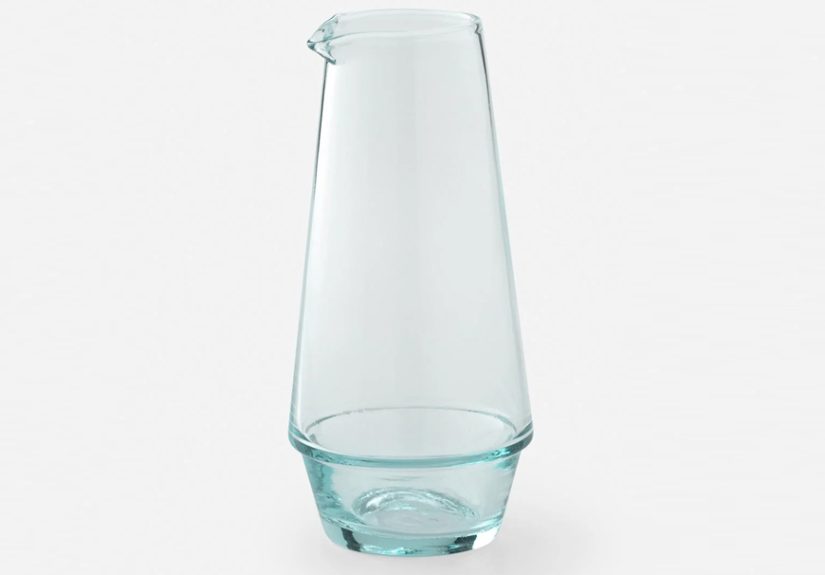
The Schoolhouse Recycled Glass Carafe is a clear glass serving vessel designed for daily use. Product listings have described it as holding about 32 ounces, with approximate dimensions of 8 inches high by 3.5 inches wide. That size makes it large enough to serve water at dinner, iced tea at lunch, or orange juice at breakfast, but not so large that lifting it becomes a tiny upper-body workout.
Its most important material detail is right there in the name: recycled glass. The carafe has been described as made from 100% recycled soda bottles, giving used glass a second life as something elegant enough to leave out on the table. The result is a piece that feels relaxed rather than precious. It has the simple charm of old-world glassware, but with the kind of clean silhouette that works in modern kitchens, farmhouse dining rooms, minimalist apartments, and rental spaces where the “dining room” is technically a corner near the Wi-Fi router.
Why Recycled Glass Matters
Recycled glass is not just a marketing phrase meant to make a product sound greener than a cucumber in a yoga class. Glass is widely valued because it can be recycled repeatedly without losing quality or purity. When recycled glass, also called cullet, is used to make new glass products, manufacturers can reduce the need for virgin raw materials and lower energy demand during production.
For shoppers, the appeal is straightforward. Buying a recycled glass carafe supports the market for materials that have already been collected, processed, and remade into something useful. That matters because recycling systems work best when there is real demand for recycled content. In other words, putting bottles in the bin is only half the story. Choosing products made from recycled material helps close the loop.
Design: Simple, Clear, and Surprisingly Versatile
The Schoolhouse Recycled Glass Carafe has a clean, unfussy shape. Its narrow neck makes pouring easier, while the wider body gives it a grounded, stable look. Because the glass is clear, it does not fight with the rest of your table setting. It can sit next to white dinner plates, colorful stoneware, linen napkins, vintage silverware, or everyday stainless flatware and still look like it belongs.
This is where Schoolhouse’s design language matters. The brand is known for pieces that lean into utility, craft, and timelessness rather than loud trend-chasing. A recycled glass carafe fits that philosophy nicely. It is not trying to reinvent the pitcher. It is simply trying to be a better, prettier, more considered version of a thing people already use every day.
A Carafe That Does More Than Hold Water
Of course, water is the obvious use. Place the carafe on the dinner table and suddenly “everyone grab your own bottle from the fridge” becomes “look at us, we are civilized now.” But its usefulness goes further. It can serve cold brew, lemonade, cucumber water, iced tea, breakfast juice, infused water, or a batch of homemade hibiscus tea. It can also sit on a nightstand, making midnight hydration feel less like fumbling around in the dark and more like staying in a very tiny boutique hotel.
When it is not serving drinks, the carafe works beautifully as a vase. A few stems of tulips, a casual bunch of daisies, or even a single leafy branch can look intentional in it. That is the hidden advantage of simple glass vessels: they do not announce one specific purpose. They adapt.
Who Is This Carafe Best For?
The Schoolhouse Recycled Glass Carafe is ideal for people who like practical objects with visual warmth. It is especially appealing if you enjoy hosting but do not want your home to feel over-styled. It is also a smart choice for small-space living because it earns its storage space. A piece that can function as a drink server, bedside carafe, desk bottle, and vase is doing more work than many gadgets that require charging cables and a user manual.
It is also a good fit for shoppers who prefer sustainable home goods but do not want products that look aggressively “eco.” Some recycled products have a rustic or handmade appearance, which can be beautiful, but not everyone wants every item in the kitchen to look like it just returned from a woodland retreat. This carafe strikes a practical balance: sustainable material, classic form, and enough polish to work in a refined setting.
How to Style the Schoolhouse Recycled Glass Carafe
One of the easiest ways to style the carafe is to place it at the center of a casual table. Add a stack of simple glasses, a linen runner, and a bowl of citrus, and you have a table that looks finished without looking like you spent three hours arranging it with tweezers.
For breakfast, fill it with orange juice or chilled water and place it beside ceramic mugs, toast plates, and a small dish of butter or jam. For lunch, use it for iced tea with lemon slices. For dinner, keep it filled with still water and let it do what good design often does best: disappear into the rhythm of the meal while quietly improving everything around it.
Bedside Styling
On a nightstand, the carafe feels calm and practical. Pair it with a small tumbler, a book, and a warm reading lamp. Unlike a plastic bottle, it adds softness and intention to the space. It also encourages a tiny ritual: fill the carafe before bed, place it within reach, and congratulate yourself for being the kind of person who plans for hydration. Character development comes in many forms.
Kitchen Counter Styling
In the kitchen, the carafe looks especially good near wood cutting boards, ceramic crocks, glass jars, and natural textiles. Because it is transparent, it also turns whatever is inside into part of the design. Mint leaves, lemon rounds, berries, cucumber slices, or tea all become visual details. This is the easiest kind of decorating: let the beverage do the accessorizing.
Care and Cleaning Tips
Because recycled glass can vary depending on the maker and finishing process, the safest care approach is gentle and simple. Wash the carafe with warm water, mild dish soap, and a soft sponge or bottle brush. Avoid sudden temperature changes, such as pouring boiling water into cold glass, unless the product is specifically labeled for that use. Glass may be strong, but thermal shock is not its favorite party trick.
For mineral spots, a little diluted white vinegar can help restore clarity. Let the solution sit briefly, rinse thoroughly, and dry with a lint-free towel. If the neck is narrow, a long bottle brush is useful. For lingering scents from juice or tea, rinse soon after use rather than letting residue settle in. The goal is not complicated maintenance; it is simply keeping the glass bright and ready for the next pour.
How It Compares With Other Carafes
Compared with a plastic pitcher, the Schoolhouse Recycled Glass Carafe feels more permanent and table-ready. Plastic may be lightweight, but it can scratch, stain, and hold odors over time. Glass has a cleaner taste profile and a more elevated appearance, especially when serving guests.
Compared with crystal or delicate decorative pitchers, this carafe feels more approachable. It is not the kind of piece that makes guests afraid to touch it. That is important. The best everyday objects invite use. They do not sit in a cabinet waiting for a holiday, a formal dinner, or a visit from someone you are trying very hard to impress.
Compared with oversized pitchers, the 32-ounce format is easier to manage. It is large enough to be useful but compact enough for a refrigerator door, dining table, or bedside surface. This middle-ground size is one reason it feels so practical. It does not shout, “I am the centerpiece.” It says, “I brought water, and I look good doing it.”
The Appeal of Sustainable Home Goods That Do Not Feel Like Homework
One reason the Schoolhouse Recycled Glass Carafe stands out is that it makes sustainable living feel natural. Nobody wants every purchase to come with guilt, spreadsheets, and a documentary narrator whispering in the background. A good sustainable product should be useful first. The better material choice should be part of the value, not the only value.
This carafe succeeds because it is genuinely practical. You can use it daily. You can leave it out. You can repurpose it. You can style it casually or elegantly. The recycled glass story gives it depth, but the design gives it staying power.
Buying Considerations Before You Add It to Your Kitchen
Before buying the Schoolhouse Recycled Glass Carafe, check current availability, price, and care instructions, since product details can change over time. Also think about how you plan to use it. If you need a large pitcher for big family dinners, 32 ounces may be too small as your only serving vessel. If you want something compact for everyday meals, a nightstand, or a home office, the size may be just right.
It is also worth remembering that recycled glass pieces may show small variations. Tiny bubbles, slight differences in thickness, or subtle texture shifts can be part of the charm. If you prefer machine-perfect glass with no personality whatsoever, recycled or handmade-style glass may not be your first choice. If you enjoy objects with a little character, those details are part of the appeal.
Experience: Living With a Schoolhouse Recycled Glass Carafe
The real test of a carafe is not how it looks in a product photo. Product photos are easy. Everything looks peaceful when it is standing on a perfect table beside one artfully folded napkin and a lemon that has never known stress. The real test is whether the object earns a place in daily life. A carafe has to survive breakfast rushes, half-cleaned counters, unexpected guests, and that mysterious moment when everyone in the house suddenly becomes thirsty at the same time.
In everyday use, a recycled glass carafe like this one shines because it makes ordinary routines feel more intentional. Filling it in the morning and placing it on a desk can help turn hydration into a visible habit. Instead of wandering to the kitchen every hour or forgetting to drink water until late afternoon, the carafe sits there as a polite reminder. It does not beep. It does not send a notification. It simply exists, which is honestly refreshing in a world where even toothbrushes want app connectivity.
On a dining table, the experience is equally satisfying. Guests reach for it easily. The neck is simple to grip, and the clear glass makes it obvious what is inside. Lemon water looks bright. Iced tea looks amber and inviting. Cucumber water looks like you have your life together, even if there is laundry hiding somewhere offstage. The carafe adds a quiet hospitality cue: someone thought about the table before people sat down.
It is also useful during casual hosting. Instead of leaving a carton of juice or a large bottle on the table, pouring drinks into a glass carafe instantly makes the spread feel more considered. This is especially helpful for brunch, where presentation does a lot of work. Pancakes, fruit, coffee, and a simple glass carafe can make a modest meal look like a small celebration. No catering team required.
The vase function is another pleasant surprise. A few leftover stems can look awkward in a large vase, but a slim carafe gives them structure. It is perfect for small arrangements: herbs from the garden, a handful of wildflowers, or one dramatic branch that makes you feel like you understand interior design on a spiritual level. Because the shape is minimal, it does not compete with the flowers.
There is also something emotionally appealing about using recycled glass. It adds a small layer of meaning to an everyday object. The carafe is not just new material pulled from the earth; it represents reuse, transformation, and a second life. That does not mean you will think about the circular economy every time you pour water. You probably will not. Sometimes you will just be thirsty. But the knowledge is there, quietly making the object feel more thoughtful.
The best experience, though, may be how adaptable the carafe feels across seasons. In summer, it belongs with iced drinks, citrus slices, and outdoor meals. In fall, it can hold cider or sit beside warm-toned linens. In winter, it becomes a simple bedside water vessel. In spring, it turns into a vase almost automatically, because spring has a way of making people buy flowers and pretend they planned it.
That is the real strength of the Schoolhouse Recycled Glass Carafe. It does not demand a lifestyle change. It simply improves the small, repeatable moments that already happen at home. Pouring water, setting a table, serving breakfast, placing flowers by the windowthese are tiny acts, but they shape how a home feels. A good carafe makes those acts easier and prettier. A recycled glass carafe makes them feel a little more responsible, too.
Final Thoughts
The Schoolhouse Recycled Glass Carafe is a strong example of useful design with a conscience. It is simple enough for daily use, attractive enough for entertaining, and versatile enough to justify its place in a cabinet or on the counter. Its recycled glass construction gives it an environmentally thoughtful foundation, while its timeless shape makes it easy to live with.
For anyone building a home around fewer, better objects, this carafe is worth considering. It is not a flashy statement piece, and that is exactly the point. It is the kind of item that becomes part of the background of good living: water at the table, flowers by the bed, iced tea on a warm afternoon, and a small reminder that practical things can still have soul.
Note: Before publishing or purchasing, verify current Schoolhouse availability, pricing, and care instructions, as product listings and stock status may change over time.