Table of Contents >> Show >> Hide
- What Makes These Vintage Libbey Smoke Glass Sake Cups Special?
- A Quick Look at Libbey’s American Glassmaking Legacy
- Understanding the Smoke Glass Look
- Are These Really Sake Cups?
- How to Style a Set of Three Vintage Libbey Smoke Glass Sake Cups
- How to Identify Vintage Libbey Glassware
- Care Tips for Vintage Smoke Glass
- Why Collectors Love Small Vintage Glassware
- Buying Advice: What to Look For Before You Purchase
- Experience Notes: Living With a Set of Three Vintage Libbey Smoke Glass Sake Cups
- Final Thoughts
Some tableware whispers. Some tableware shouts. And then there is the Set of Three Vintage Libbey Smoke Glass Sake Cups, which calmly leans against the bar cart like it owns a black turtleneck, a jazz record collection, and very strong opinions about overhead lighting.
These compact smoke gray glass cups sit at a charming intersection of American glassmaking, mid-century style, practical entertaining, and collectible vintage decor. They are small enough to feel intimate, dark enough to look dramatic, and versatile enough to serve more than one purpose without filing a formal complaint. Whether used as sake cups by legal-age hosts, tasting glasses, tiny dessert cups, or display pieces on a shelf, they bring a moody little wink to the table.
Libbey has long been associated with durable, accessible American glassware, and vintage smoke glass has become especially appealing to collectors who love retro color, sculptural silhouettes, and objects that feel more personal than mass-produced sameness. A set of three is also oddly perfect: not too many, not too few, just enough to suggest that a small gathering is happening and that someone probably has excellent taste.
What Makes These Vintage Libbey Smoke Glass Sake Cups Special?
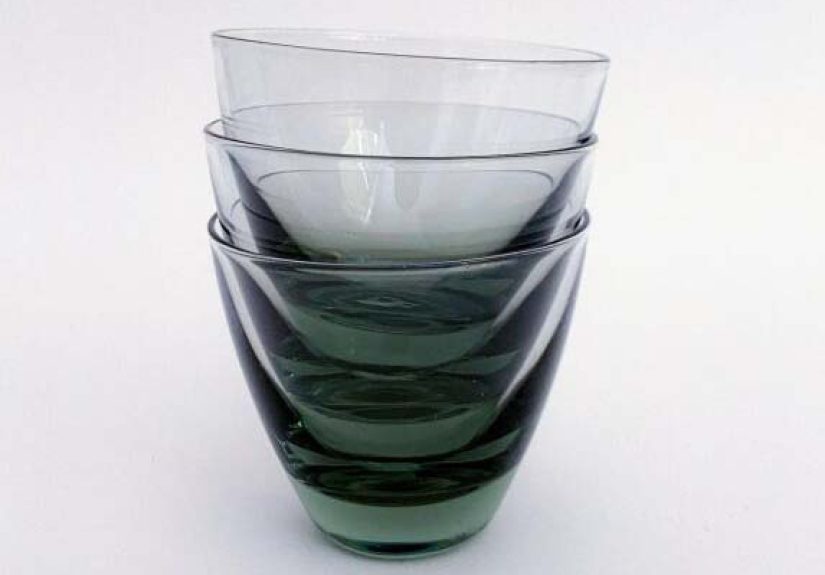
The appeal begins with the color. Smoke glass, sometimes called smoky gray glass, has a soft charcoal tint that changes depending on the light. Near a window, it can look airy and translucent. On a dark tray, it becomes richer and moodier. In a minimalist kitchen, it adds depth. On a mid-century bar cart, it basically starts humming lounge music.
The original product description for this type of set identifies the cups as vintage Libbey smoke gray glass rocks sake cups in excellent condition, with no visible wear, scratches, or chips. That matters because vintage glassware is often judged by condition first and charm second. A chip on a rim is not “character”; it is a tiny glass-based jump scare. Clean rims, stable bases, and clear surfaces make a vintage cup more usable and more desirable.
Why a Set of Three Feels So Collectible
Most glassware is sold in pairs, sets of four, or sets of six. A set of three feels more accidental, and that is part of its charm. It suggests survival. It has lived through decades of cupboards, moves, parties, estate sales, and possibly one person who insisted on putting everything in the dishwasher. The fact that three cups remain together gives the set a story, even if that story politely refuses to give us all the details.
For collectors, smaller sets are attractive because they are easy to display and easy to use. You do not need a giant hutch or a butler named Harold. Three small cups can sit on a tray, fit inside a cabinet, or become part of a mixed vintage glassware collection. They also photograph beautifully, which matters in the modern world where even glassware needs a good profile picture.
A Quick Look at Libbey’s American Glassmaking Legacy
Libbey’s roots reach back to the New England Glass Company, founded in East Cambridge, Massachusetts, in 1818. In 1888, Edward Drummond Libbey moved the company to Toledo, Ohio, where access to natural gas, quality sand, railroads, and steamship routes helped make the region a center for glass production. By 1892, the company was known as The Libbey Glass Company.
That background matters because vintage Libbey glassware is not just “old glass.” It belongs to a broader American tableware tradition: practical, widely distributed, and often surprisingly stylish. Libbey produced glassware for homes, restaurants, bars, and hospitality settings, which explains why many vintage pieces have a satisfying sturdiness. They were made to be handled, washed, stacked, poured into, lifted, and usednot treated like fragile museum ghosts.
Libbey’s long production history also means that identifying every vintage pattern can be tricky. The company itself notes that it does not maintain a complete public database of vintage items and suggests checking resale and replacement marketplaces for discontinued pieces. Translation: vintage Libbey hunting can be part research project, part treasure hunt, and part “why did I just spend 40 minutes comparing cup bases?”
Understanding the Smoke Glass Look
Smoke glass became popular in many mid-century and late-20th-century interiors because it offers color without shouting. Unlike bright amber, avocado green, or ruby red glass, smoky gray works almost like a neutral. It pairs well with walnut wood, chrome, brass, black lacquer, white stone, and natural linen. It also looks good with both modern and vintage pieces, which is the tableware equivalent of being able to talk to everyone at a party.
The shade is especially effective in small cups because it gives them visual weight. Clear glass can disappear on a table; smoke glass holds its place. A small smoky cup looks intentional, like a design decision rather than a random object pulled from the back of the cabinet.
Why Smoke Gray Glass Still Feels Modern
One reason smoky vintage glassware has returned to favor is that today’s interiors lean heavily toward texture, contrast, and mixed eras. People are less interested in everything matching perfectly and more interested in rooms that feel collected over time. A set of vintage Libbey smoke glass sake cups fits that mood beautifully. It looks refined but not fussy, nostalgic but not dusty, and decorative without becoming the kind of object that demands its own insurance policy.
For anyone building a bar cart, open shelf, or small hosting collection, these cups create an easy bridge between retro and contemporary. Place them next to a matte black tray, a small ceramic bottle, or a simple linen napkin, and suddenly your countertop has a personality. A calm personality, thankfully. Not the kind that says, “Let’s wallpaper the ceiling at midnight.”
Are These Really Sake Cups?
The phrase “sake cup” can cover many small vessels. Traditional sake cups may be ceramic, lacquered, wooden, or glass. In Japan, small cups are commonly used, and the material, thickness, and shape can influence the way aroma, temperature, and texture are experienced. Glass cups are often associated with chilled or room-temperature sake, while wine glasses may be used for aromatic styles.
That said, vintage Libbey smoke glass cups may also resemble rocks glasses, tasting cups, or small barware pieces. This is not unusual. Many vintage items cross categories because sellers describe them based on size, use, shape, and buyer expectations. A compact smoke gray cup can work as a sake cup for legal-age serving, but it can also function as a small tasting glass, espresso-side dessert cup, tea cup, or decorative vessel.
Shape, Size, and Practical Use
Small cups encourage slower serving and a more intentional table experience. For legal-age gatherings, they can be used for sake tasting or small pours. For everyday non-alcoholic use, they are just as charming with cold brew concentrate, herbal tea, sparkling water tastings, tiny puddings, fruit, nuts, or a dramatic single scoop of sorbet. Honestly, if a cup can make three almonds look curated, it deserves respect.
The key is scale. These are not oversized tumblers. Their appeal comes from being compact and tactile. They invite the hand to close around them, and their smoky color adds a sense of ceremony even when the contents are simple.
How to Style a Set of Three Vintage Libbey Smoke Glass Sake Cups
One of the best things about small vintage glassware is how easy it is to style. You do not need a formal dining room. You do not need a perfect tablescape. You do not even need matching plates. In fact, the cups often look better when paired with slightly imperfect, collected pieces.
On a Bar Cart
Place the three cups on a small tray with a carafe, a ceramic tokkuri-style bottle, or a low vase. The smoke glass will contrast nicely with metal, wood, and stone. If your bar cart includes amber bottles, brass tools, or black accessories, the cups will look right at home. They add that “yes, I know what I’m doing” energy without requiring you to actually know where the cocktail strainer went.
On Open Kitchen Shelving
Open shelves can get visually chaotic fast. Smoke glass helps because it adds depth without adding loud color. Group the cups together rather than spreading them out. Three small pieces displayed as a cluster look intentional; three small pieces scattered randomly look like someone got distracted while unloading the dishwasher.
As Dessert or Tasting Cups
These cups are excellent for small portions: panna cotta, chocolate mousse, fruit compote, espresso granita, or even a tiny layered trifle. The smoky glass gives desserts a restaurant-like presentation. It says, “This took planning,” even if the dessert involved two spoons and mild panic.
How to Identify Vintage Libbey Glassware
Many Libbey pieces feature a maker’s mark, often a stylized cursive “L,” sometimes seen on the base. However, not every piece is easy to identify. Marks can be faint, worn, distorted by the glass, or absent depending on age, production line, and style. This is why collectors often compare shape, color, weight, pattern, and known replacement listings.
When evaluating a set of vintage Libbey smoke glass cups, look closely at the base and rim. Check whether the cups match in color and form. Feel the weight in hand. Examine the glass for bubbles, scratches, chips, cloudiness, or rough spots. A little age-related variation is normal, but damage that affects safety or appearance should be taken seriously.
Condition Details Collectors Care About
For vintage glassware, condition can make or break the appeal. The most important areas to inspect are the rim, base, and sidewalls. Chips on the rim are especially concerning because they affect use. Scratches can dull the smoky finish. Cloudiness may come from mineral buildup, dishwasher wear, or glass etching. Minor shelf wear on the base is common, but deep scratches or cracks are less desirable.
If buying online, clear photos matter. A good listing should show the cups from multiple angles, including close-ups of the rim, base, and interior. If a seller describes the set as “excellent condition,” that should mean no visible chips, cracks, or major scratchesnot “excellent if viewed from across the room during a power outage.”
Care Tips for Vintage Smoke Glass
Vintage glassware deserves gentle care. Hand washing is the safest option, especially for older pieces or cups with unusual color, finish, or unknown production details. Use warm water, mild dish soap, and a soft sponge or cloth. Avoid abrasive pads, harsh cleaners, and sudden temperature changes.
Dishwashers can be rough on vintage glass. Heat, detergent, and repeated cycles may contribute to cloudiness or surface wear. Even sturdy glass can lose its sparkle over time if treated like a cafeteria tray. After washing, dry the cups with a soft towel to prevent water spots and keep the smoke gray surface looking clear.
Storage Matters Too
Store the cups upright rather than stacked if possible. Stacking can create pressure points, especially if the cups were not designed for it. If cabinet space is tight, place a soft liner underneath them. Keep them away from heavy items that might bump or chip the rims. Vintage glass does not need luxury treatment, but it does appreciate not being crushed by a rogue casserole dish.
Why Collectors Love Small Vintage Glassware
Large sets can be impressive, but small vintage pieces are often easier to live with. They provide the pleasure of collecting without taking over the house. A set of three vintage Libbey smoke glass sake cups can be used, displayed, moved, gifted, or styled in different ways. They offer flexibility, which is one of the reasons vintage glassware remains popular with decorators and collectors alike.
There is also a sustainability angle. Buying vintage gives existing objects a second life. Instead of purchasing newly made decor that imitates old style, you can own the real thingcomplete with history, character, and maybe a few tiny mysteries. Vintage glassware feels personal because it has already existed in other kitchens, cabinets, and celebrations before arriving in yours.
Buying Advice: What to Look For Before You Purchase
If you are considering a set like this, start with condition. Ask whether there are chips, cracks, scratches, stains, or cloudiness. Confirm the number of cups included. Check the dimensions if available, because “small cup” can mean very different things depending on the seller. A sake-style cup, rocks-style cup, and mini tumbler may overlap in appearance but differ in use.
Next, consider the shade. Smoke glass can range from pale gray to deep charcoal. Matching color across all three cups is a good sign that they belong together. If one cup looks significantly darker or lighter, it may be from a different batch or set. That is not always a problem, but it should be disclosed.
Finally, think about how you will use them. If the goal is display, minor wear may not matter. If the goal is serving, the rims should be smooth and the cups should feel stable. For legal-age entertaining, they can be a stylish choice for small pours. For everyday use, they are equally delightful as tasting cups or tiny dessert vessels.
Experience Notes: Living With a Set of Three Vintage Libbey Smoke Glass Sake Cups
There is a particular joy in owning small vintage pieces because they do not demand a lifestyle makeover. A set of three vintage Libbey smoke glass sake cups does not require a formal cabinet, a themed dining room, or a dramatic announcement like, “I have become a collector now.” They simply arrive, look good, and start making ordinary moments feel more considered.
The first experience is usually visual. You place them near natural light and notice how the smoke gray color shifts. In the morning, they may look soft and translucent. In the evening, especially under warm lighting, they become deeper and more cinematic. They are small, but they change the mood of a surface. A plain wooden tray suddenly looks styled. A simple shelf becomes more layered. Even a kitchen counter with yesterday’s mail nearby looks slightly more intentional, although the mail is still judging you.
Using them is different from using regular tumblers. Their compact size slows everything down. They are good for small tastings, little servings, or quiet presentation. For non-alcoholic everyday moments, they work beautifully with iced tea samples, sparkling water, chilled juice, or a small pour of cold brew. They also make surprisingly elegant dessert cups. A spoonful of lemon curd, berries, or chocolate mousse looks special inside smoky glass. The cup does half the styling work, which is very kind of it.
They also encourage creative hosting. A set of three is ideal for a small table: two guests and one extra serving cup, three tiny desserts, or a trio of tastings. If you enjoy mixing vintage pieces, these cups pair well with ceramic plates, linen napkins, stainless flatware, and mid-century serving trays. They do not need everything around them to match. In fact, they look best when the table has a collected, relaxed feeling.
Care becomes part of the ritual. Hand washing them after use may feel slower than tossing them into the dishwasher, but that is not a bad thing. Vintage objects remind us that not everything has to be treated like disposable background equipment. Drying each cup with a soft towel gives you a chance to check the rim, admire the tint, and feel mildly superior for being responsible with glassware. Is that a personality flaw? Perhaps. Is it enjoyable? Absolutely.
The best part is that these cups are useful without being ordinary. They can sit quietly on a shelf for weeks, then become the detail everyone notices when you serve something small in them. They are conversation starters, but not loud ones. Someone may ask where you found them. Someone else may pick one up and comment on the color. And you, with great restraint, can avoid giving a 20-minute lecture on vintage Libbey glassware. Or not. The cups will support you either way.
Final Thoughts
The Set of Three Vintage Libbey Smoke Glass Sake Cups is more than a small group of gray glass vessels. It is a compact example of why vintage tableware continues to charm collectors, decorators, and practical hosts. The cups bring together Libbey’s American glassmaking legacy, the cool elegance of smoke glass, and the versatility of small-format serving pieces.
They are stylish without being precious, useful without being boring, and collectible without requiring a second mortgage or a museum label. Whether displayed on a shelf, used for legal-age sake service, filled with tiny desserts, or admired as part of a vintage glassware collection, these cups prove that small objects can still make a memorable impression. Sometimes the best tableware does not shout for attention. It just sits there in smoky gray glass, looking effortlessly cool while the rest of us try to keep up.
Note: This article is written for informational, collecting, decorating, and legal-age entertaining contexts. No source links are embedded in the HTML so the content can be copied cleanly for web publishing.