Table of Contents >> Show >> Hide
- Meet the New Face of the Garage
- How a Ten-Year-Old Can Actually Diagnose Car Problems
- What Young Gearheads Get Right That Adults Often Miss
- What a Kid Can Fix, and What Should Stay With the Pros
- Why This Story Matters in 2026
- What Drivers Can Learn From a Ten-Year-Old Mechanic
- Experiences That Make This Story Feel Real
- Conclusion
Most adults react to a check engine light the way people react to a surprise email from accounting: with dread, denial, and a strong urge to pretend it does not exist. Then along comes a ten-year-old kid who can walk into a garage, listen to an engine stumble, spot a pattern, grab a scanner, and start talking through the problem with the calm confidence of someone who has already seen this movie before.
That is what makes the idea behind This Ten-Year-Old Can Diagnose and Fix Your Car Problems so irresistible. On the surface, it sounds like internet clickbait wearing greasy coveralls. But underneath the headline is something real and surprisingly important: car repair is not magic, and the people who get good at it usually begin with curiosity, patience, and the willingness to learn how machines talk back.
A young car enthusiast can seem almost superhuman because adults tend to overcomplicate the process. We imagine diagnosis as a dark art practiced only by veteran mechanics under fluorescent shop lights. In reality, great troubleshooting usually starts with simple questions. What changed? What sound is new? Is the warning light steady or flashing? Does the issue happen at idle, during acceleration, or only when the engine is cold? That is not wizardry. That is pattern recognition with a socket set nearby.
And that is why the story of a kid mechanic lands so well. It reminds us that cars are complicated, yes, but not unknowable. The right mindset matters just as much as the right wrench.
Meet the New Face of the Garage
The modern kid mechanic is not just some child randomly wandering into a repair bay and announcing, “Fear not, citizens, I have arrived.” He is usually the product of exposure, mentorship, repetition, and a deep love of figuring out how things work. In the best cases, he grows up around tools, watches repairs happen in real time, asks approximately 700 questions before lunch, and slowly learns that every vehicle leaves clues.
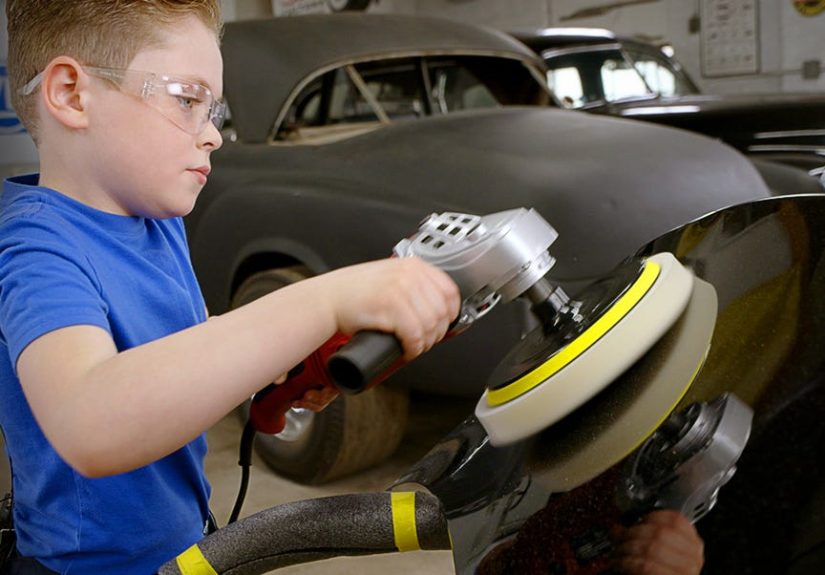
That is part of what made the young Giuseppe from a Pennsylvania family shop so memorable in automotive media. He was not framed as a gimmick. He was shown learning real maintenance basics, from paint correction to shop skills, in an environment where automotive knowledge was part hands-on work and part family language. That detail matters. Skill at that age does not come from magic. It comes from being allowed to learn seriously.
There is also something refreshing about a child approaching car care without the ego that often shows up in adult DIY culture. Plenty of grown drivers attack repairs with the confidence of a reality-show contestant and the wiring logic of a squirrel. A smart young learner often does the opposite. He observes first. He follows steps. He respects process. He knows the scanner is not an answer machine, just a clue machine. Frankly, that already puts him ahead of a shocking number of drivers.
How a Ten-Year-Old Can Actually Diagnose Car Problems
Let us be fair: a ten-year-old is not rebuilding every transmission in America before bedtime. But diagnosing common vehicle issues? That is completely believable when the child has guidance, practice, and access to the same basic tools adults use.
He Starts With Symptoms, Not Guesses
Good diagnosis always begins with observation. Is the engine rough? Is there a squeal on startup? Does the car pull to one side? Is the battery dying? Is there a smell of fuel, coolant, or burnt oil? Kids who spend time around garages get very good at connecting noises, smells, vibrations, and warning lights to likely systems.
That matters because the first step in repair is not “replace parts until your wallet cries.” It is narrowing the field. A rough idle might point toward ignition, air intake, fuel delivery, or vacuum issues. A soft brake pedal points somewhere entirely different. A smart beginner learns that every symptom belongs to a category before it belongs to a specific repair.
He Uses the Same Onboard Clues Adults Use
Modern cars are constantly monitoring themselves. That is why even entry-level diagnosis today often starts with an OBD-II reader. Plug it into the port under the dash, pull the code, and the vehicle gives you a starting point. Not the whole answer, mind you. More like a trail of breadcrumbs from a robot that is trying its best.
A kid who learns how to read codes quickly discovers something experienced mechanics already know: a code is not the same as a confirmed bad part. A sensor-related code might actually be caused by damaged wiring, a vacuum leak, a loose gas cap, poor combustion, or another upstream issue. This is where young gearheads can surprise adults. They are often willing to investigate the chain of cause and effect instead of jumping straight to the most expensive conclusion.
He Understands That Warning Lights Have Levels
One of the most useful lessons any young mechanic can learn is that not all warning lights mean the same thing. A steady check engine light tells you to investigate promptly. A flashing one is the automotive version of your car yelling, “Now would be a wonderful time to stop pretending.” That distinction changes how you respond, whether the culprit is minor or serious.
This is where early education really shines. Teaching a child how to interpret urgency creates safer habits later. It also builds respect for the machine. Cars are generous with clues, but they hate being ignored.
What Young Gearheads Get Right That Adults Often Miss
The reason a ten-year-old can impress everyone in a shop is not just because he can hold a wrench. It is because he approaches the work differently.
Curiosity Beats Assumption
Adults love shortcuts. Kids love discovery. In car repair, discovery wins. The best young learners ask why a problem happened, what the part does, what changed after the last repair, and whether the symptom matches the diagnosis. That curiosity turns them into better troubleshooters.
Repetition Builds Confidence Fast
Once a child has checked tire pressure, scanned codes, inspected belts, topped off washer fluid, or watched a brake inspection enough times, the mystery begins to evaporate. What once looked like a giant steel beast starts to look like systems with names, jobs, and predictable failure points.
They Are Not Afraid to Learn the Boring Stuff
And yes, the boring stuff matters. Fluids. Tire wear. Battery voltage. Brake lining condition. Service intervals. Wiring connectors. Ground points. Owners’ manuals. The glamorous image of automotive genius usually involves a dramatic rev, but the truth is that many real problems are solved by the humble habits nobody brags about at parties.
What a Kid Can Fix, and What Should Stay With the Pros
This is where grown-up judgment has to stay in the room. A talented child can absolutely learn maintenance and basic repair, but supervision is not optional. The garage is full of things that can hurt you, poison you, burn you, or drop an SUV on your foot with life-changing enthusiasm.
With proper adult supervision, young learners can safely participate in tasks such as:
- reading basic diagnostic codes
- checking tire pressure and tread wear
- inspecting lights and wiper blades
- learning fluid locations and basic condition checks
- helping with oil changes and filter replacements
- cleaning terminals, checking a battery, and using simple hand tools
- doing cosmetic fixes like buffing light paint transfer
On the other hand, some jobs should be left to trained technicians or carefully supervised professionals, especially on modern vehicles loaded with electronics and safety systems. That includes advanced brake work, airbag systems, ADAS sensor calibration, hybrid and electric high-voltage components, major engine teardown, suspension geometry, and anything involving structural repair or unsafe lifting.
In other words, a ten-year-old can be remarkably skilled without being turned loose to battle an airbag module like a cartoon inventor.
Why This Story Matters in 2026
The idea of a child diagnosing cars is fun. The bigger story is why it feels timely. Cars are getting more complex, not less. They have more sensors, more software, more safety systems, more modules, and more layers between a symptom and the actual root cause. That means future drivers need stronger mechanical literacy, not weaker.
At the same time, everyday drivers are pushing back against the idea that vehicles should be mysterious sealed boxes. More consumers want to understand their cars, compare repair options, and make informed decisions about when to DIY and when to call a professional. That is one reason the conversation around repair access, diagnostic tools, and consumer choice has become so important. Drivers do not just want transportation. They want clarity.
There is also a workforce angle here. The auto industry needs skilled technicians, and the best way to create future talent is to spark interest early. A ten-year-old who learns how diagnostics work today may become the ASE-certified technician, shop owner, engineer, or EV specialist people rely on tomorrow. A child who learns to respect machinery grows into an adult who can solve expensive, real-world problems. That is not cute. That is valuable.
What Drivers Can Learn From a Ten-Year-Old Mechanic
Even if you have never changed your own oil and the phrase “diagnostic trouble code” sounds mildly threatening, there is a lot to learn from a kid who feels at home in a garage.
Pay Attention Early
Most expensive repairs start as cheaper repairs wearing a fake mustache. A weird noise, a warning light, uneven tire wear, hard starts, dim lights, rough idle, poor fuel economy, or a soft brake pedal are all early clues. Spot them early and you save money. Ignore them and you finance someone else’s boat.
Use Tools the Right Way
A basic code reader is useful. It is not a replacement for diagnosis. It helps you ask smarter questions. That alone is powerful. If you know what code appeared, when it appeared, and what the car was doing at the time, you become a better customer and a smarter DIYer.
Respect Skill
There is no shame in going to a professional. In fact, knowing when to stop is one of the clearest signs of competence. Great mechanics are not just part-swappers. They understand systems, testing procedures, and repair strategy. Look for training, ask questions, and do not be afraid to find a shop that explains things clearly.
Teach the Next Generation
Car care is one of those practical life skills that pays off for decades. Teaching kids how to check a tire, identify a dashboard light, or understand why maintenance matters builds confidence and independence. It also creates respect for the tools, the machine, and the people who know how to keep both working.
Experiences That Make This Story Feel Real
Stories like this resonate because almost everyone has had a moment when a car problem felt bigger than it really was. One family notices their sedan idling rough after a fuel stop. Dad assumes the engine is on its last legs. The kid in the garage asks whether the gas cap was tightened all the way. It was not. Suddenly the mighty family mechanic empire is saved by a child and a click-click-click. Humbling? Yes. Useful? Also yes.
Another common experience is the mystery warning light that appears the night before a road trip. Adults tend to cycle through the classic emotional stages: annoyance, bargaining, internet doom-scrolling, and finally snacks. A young learner often goes straight to the process. Read the code. Check for obvious symptoms. Listen to the engine. Inspect the basics. If the problem is minor, handle it. If it is not, change plans and stay safe. The point is not that kids are fearless. It is that they are often wonderfully literal. The car has information. Let us read the information.
Then there is the garage experience every future mechanic seems to collect: discovering that repairs are rarely glamorous. Maybe it is helping rotate tires, cleaning up tools, labeling bolts, holding the flashlight correctly for once, or learning that “lefty-loosey” becomes less funny when rust enters the chat. These moments are not dramatic, but they build the instincts that make real diagnosis possible later. A kid who learns to notice uneven tread wear today may be the one who catches a suspension problem before it becomes a safety issue tomorrow.
Plenty of people also remember the first time they heard a true gearhead explain a problem in plain English. Not in “your flux capacitor is misaligned” shop-speak, but in normal human language. Something like: the battery is weak, the alternator may not be charging properly, and we should test both before replacing anything. That kind of calm explanation changes the entire relationship people have with their vehicles. It turns fear into understanding. A bright ten-year-old who grows up in that environment often learns early that repair is really communication. The car says something strange. You learn how to answer.
And maybe that is the most relatable part of all. Behind every impressive young mechanic is usually a family member, mentor, teacher, or shop owner who made room for learning. Someone handed over a safe task. Someone explained what the part did. Someone treated curiosity like a strength instead of a nuisance. That is how confidence gets built in garages, driveways, and family shops across America. One lesson at a time. One code at a time. One stubborn bolt at a time.
So when people hear a headline like This Ten-Year-Old Can Diagnose and Fix Your Car Problems, they laugh, then pause, then believe it. Not because every child is secretly a master technician, but because mechanical skill has always started the same way: by paying attention. The surprising part is not that a kid can learn. The surprising part is how many adults never try.
Conclusion
A ten-year-old who can diagnose car problems is more than a fun human-interest story. He is proof that automotive knowledge is teachable, practical, and still deeply relevant in a world full of sensors and software. The best mechanics do not rely on mystery. They rely on clues, process, patience, and respect for the machine. Whether the person holding the scanner is a veteran tech or a kid standing on a milk crate to reach the fender, the lesson is the same: cars reward attention. Ignore the signals and they get expensive. Listen early and they start making a lot more sense.
And that might be the best part of this whole story. It is not really about a ten-year-old being extraordinary. It is about car care becoming less intimidating for everyone else.