Table of Contents >> Show >> Hide
- The Classic Story: Chicxulub and the End of the Dinosaurs
- Enter Nadir: The Possible Second Dinosaur-Era Asteroid
- Did Nadir Help Kill the Dinosaurs?
- Why Scientists Are So Interested in a Buried Ocean Crater
- What the Second-Asteroid Theory Means for Dinosaur Extinction
- What Happened After the Sky Fell?
- How Scientists Will Test the Nadir Hypothesis
- Why This Story Captures the Imagination
- Experiences and Reflections: What the Two-Asteroid Theory Teaches Us
- Conclusion
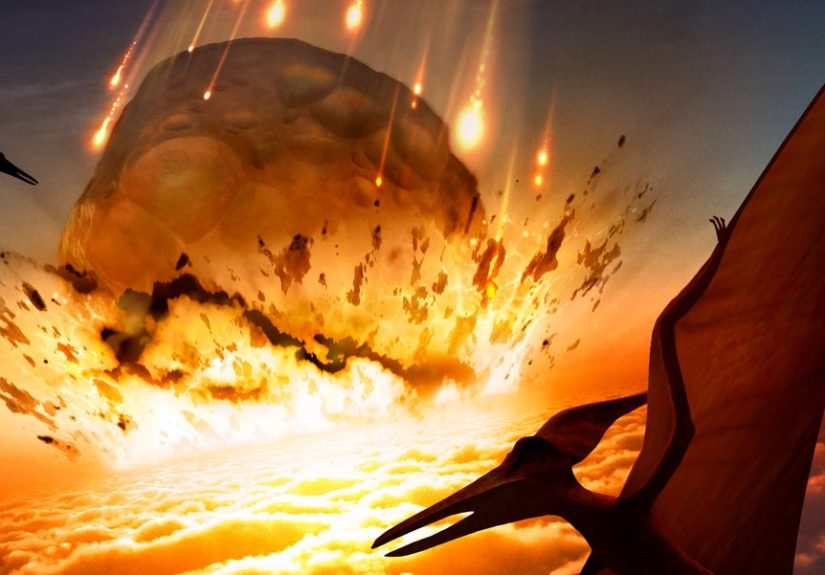
For decades, the dinosaur extinction story has sounded almost too cinematic to be true: one enormous asteroid, one terrible day, one very bad career move for every non-avian dinosaur on Earth. The famous Chicxulub impact, buried beneath Mexico’s Yucatán Peninsula and the Gulf of Mexico, has long been the star villain of the Cretaceous-Paleogene extinction event. But scientists now say the plot may have had a second space rock waiting in the wings.
New research on the Nadir crater, a buried impact structure beneath the Atlantic Ocean off West Africa, suggests that another asteroid slammed into Earth around the same general time as Chicxulub, roughly 66 million years ago. That does not mean scientists are rewriting the whole dinosaur obituary in permanent ink. Chicxulub remains the confirmed extinction-scale impact. But the Nadir discovery raises a thrilling question: did dinosaurs face not just one cosmic disaster, but a one-two punch from space?
The idea is equal parts terrifying and fascinating. Imagine surviving the first round of earthquakes, tsunamis, firestorms, darkness, acid rain, and collapsing food chains, only for Earth to receive another asteroid-shaped “and another thing.” Nature, apparently, does not always believe in moderation.
The Classic Story: Chicxulub and the End of the Dinosaurs
Before we add a second asteroid to the suspect list, we need to give Chicxulub its grim due. Around 66 million years ago, a large asteroid, commonly estimated at several miles wide, struck near what is now the Yucatán Peninsula. The impact carved out a crater roughly 180 to 200 kilometers across and unleashed energy far beyond anything in recorded human history.
The immediate effects were catastrophic. Rock vaporized. Earthquakes shook the planet. A massive tsunami surged through the ancient Gulf of Mexico and beyond. Thermal radiation likely ignited fires over large areas. Then came the slower killer: dust, soot, sulfur aerosols, and pulverized rock blasted into the atmosphere, blocking sunlight and disrupting photosynthesis. With plants struggling, food webs unraveled from the bottom up. Dinosaurs were impressive, but even a Tyrannosaurus rex cannot eat its way through a broken biosphere.
Evidence for the Chicxulub impact includes shocked quartz, impact glass, tsunami deposits, crater rocks, and the famous global iridium layer at the Cretaceous-Paleogene boundary. Iridium is rare in Earth’s crust but more common in asteroids, making that thin layer of enriched sediment one of geology’s most dramatic receipts.
Enter Nadir: The Possible Second Dinosaur-Era Asteroid
The Nadir crater was identified offshore West Africa, buried under hundreds of meters of sediment beneath the Atlantic seafloor. At first, researchers saw it in seismic reflection data, which works a little like an ultrasound for rocks. Instead of peeking at a baby, scientists were peeking at ancient catastrophe. The images showed a crater-like structure nearly 9 kilometers wide, with features consistent with a hypervelocity impact.
Later, high-resolution 3D seismic data gave researchers a much clearer view. The structure showed a near-circular rim, a central uplift, terraces, faulting, and a wider disturbed “brim” around the crater. These are not casual dents. They are the geological fingerprints of something arriving at cosmic speed and refusing to use the brakes.
Scientists estimate that the Nadir impactor may have been hundreds of meters wide. That is much smaller than the Chicxulub asteroid, but still enormous by human standards. A rock of that size striking the ocean would be capable of producing a huge fireball, violent seismic shaking, seabed deformation, and a tsunami hundreds of meters high near the impact zone.
Did Nadir Help Kill the Dinosaurs?
Here is where careful science matters. The title “Two Asteroids May Have Killed Off the Dinosaurs” is exciting, but the word “may” is doing important work. Chicxulub is firmly linked to the mass extinction that wiped out non-avian dinosaurs and roughly three-quarters of Earth’s species. Nadir, by contrast, is a newer discovery. It appears to be approximately the same age, but scientists still need more precise dating and, ideally, drilled rock samples showing shock minerals to fully lock down its timing and impact origin.
If Nadir struck close enough in time to Chicxulub, it could have made an already apocalyptic situation worse. Researchers have floated several possibilities. The two impacts might have come from fragments of a larger parent asteroid that broke apart. They might have been part of a broader cluster of impacts over one or two million years. Or Nadir might have been a separate event that happened near the same geological boundary without directly causing the mass extinction.
Even if Nadir did not “kill the dinosaurs” by itself, it could still matter. A second impact would add stress to oceans, coastlines, climate systems, and already battered ecosystems. Think of Chicxulub as the knockout blow and Nadir as a brutal punch in the same fight. The exact order, timing, and consequences remain under investigation, but the discovery reminds us that Earth’s extinction history may be messier than the neat version we learned in school.
Why Scientists Are So Interested in a Buried Ocean Crater
Most impact craters on Earth are hard to study because our planet is rude to evidence. Wind erodes it. Water buries it. Plate tectonics shoves it around like furniture during a chaotic move. Marine craters are especially tricky because they can be hidden under sediments and deep water. That makes Nadir valuable.
The crater is unusually well preserved and beautifully imaged in 3D seismic data. Researchers can study its rim, central peak, fault systems, resurge scars, and chaotic deposits around the crater. These details help scientists understand what happens when an asteroid hits the ocean, which is not exactly a small concern on a planet covered mostly by water.
In a marine impact, the asteroid does not simply splash down like a dramatic cannonball. It vaporizes water, blasts sediment, deforms the seabed, launches waves, and creates intense pressure changes. The ocean first rushes outward, then surges back into the crater, dragging debris with it. The result is a violent geological mess that can be preserved as layers of disturbed sediment.
What the Second-Asteroid Theory Means for Dinosaur Extinction
The possible second asteroid does not weaken the Chicxulub theory. In fact, it may enrich it. For years, the debate over dinosaur extinction included competing ideas: asteroid impact, volcanic eruptions from the Deccan Traps in India, climate stress, sea-level change, and ecological decline. Today, most scientists agree that Chicxulub was the major trigger, while other factors may have influenced how vulnerable ecosystems were at the time.
The Nadir crater adds another layer. It suggests the end of the Cretaceous may have been a period of multiple high-energy disruptions. Dinosaurs, marine reptiles, ammonites, flying reptiles, and countless other organisms were living through a world already shaped by changing climates, volcanic activity, and shifting ecosystems. Then came Chicxulub. If Nadir occurred close enough to the same boundary, the planet may have faced more than one impact shock.
That matters because mass extinctions rarely have only one clean cause. They are often cascading disasters. A forest does not collapse because one leaf had a bad day. It collapses when fire, drought, pests, and bad luck arrive together. The end-Cretaceous extinction may have been similar: Chicxulub as the main event, with possible additional pressures making recovery harder for many species.
What Happened After the Sky Fell?
For non-avian dinosaurs, the aftermath was terminal. But life did not end. Birds, which are living dinosaurs, survived. Mammals expanded into newly opened ecological roles. Plants recovered. Oceans slowly rebuilt their food webs. The catastrophe that ended the age of giant dinosaurs also helped shape the world that eventually made room for primates, humans, and, somehow, people arguing online about whether a chicken is technically a dinosaur. It is, and the chicken knows.
Core samples from the Chicxulub crater have revealed how fast the first changes happened. Within minutes, rock melted and rebounded. Within hours, tsunamis moved sediment and debris. Within months, layers of material settled into the crater. Over years and decades, the global climate shock played out. Fine dust and aerosols reduced sunlight, cooled the planet, and disrupted photosynthesis. That was the true extinction engine: not just impact, but planetary systems failing in sequence.
The Nadir crater, if tied closely to this same interval, gives scientists another way to test how multiple impacts could affect oceans and climate. A smaller asteroid would not need to match Chicxulub’s size to cause regional devastation. In an already damaged world, even a “smaller” impact could be a serious problem. Cosmic disasters, much like surprise plumbing bills, scale badly.
How Scientists Will Test the Nadir Hypothesis
The next big step is direct sampling. Seismic images are powerful, but rock samples can provide the strongest confirmation. Scientists want to recover cores from the crater that might contain shocked minerals, impact melt, breccia, or other materials formed under the extreme pressures of an asteroid collision. Precise dating would also help determine whether Nadir happened before, after, or nearly simultaneously with Chicxulub.
If Nadir is dated exactly to the Cretaceous-Paleogene boundary, the two-asteroid theory becomes much stronger. If it is older or younger by hundreds of thousands of years, it may still be scientifically important but less likely to have played a direct role in dinosaur extinction. Either result would be valuable. In science, even “nope, not quite” is progress, though it rarely gets the same movie trailer voiceover.
Why This Story Captures the Imagination
The possibility of two dinosaur-era asteroids grips people because it changes the emotional shape of the extinction story. One asteroid feels like a freak accident. Two asteroids suggest a planet caught in a dangerous moment of cosmic traffic. It makes the ancient sky feel more alive, more hostile, and more mysterious.
It also reminds us that Earth is not separate from space. Our planet is part of a solar system full of moving objects, from dust grains to mountain-sized rocks. Most miss us. Some become shooting stars. A few, over deep time, change everything. The dinosaurs did not have telescopes, planetary defense programs, or press conferences with nervous scientists standing beside diagrams. They simply had the sky.
Experiences and Reflections: What the Two-Asteroid Theory Teaches Us
Thinking about the possibility that two asteroids may have contributed to the dinosaur extinction feels like standing at the edge of a cliff and realizing the cliff is also standing on another cliff. The story is not only about ancient reptiles. It is about uncertainty, resilience, and how quickly ordinary life can become extraordinary history.
Anyone who has visited a natural history museum knows the strange feeling of staring at dinosaur bones. A Triceratops skull looks solid enough to argue with a truck. A T. rex skeleton seems too powerful to belong to a vanished world. Yet these animals disappeared because strength at the individual level could not overcome collapse at the planetary level. That is a humbling experience. It says survival is not only about being big, fast, armored, or toothy. It is about fitting into a world that continues to function.
The two-asteroid hypothesis also offers a useful lesson in how science works. Scientific knowledge does not always arrive as a clean announcement with confetti. It often begins as an odd shape in a dataset, a crater-like feature in seismic images, a suspicious layer in rock, or a question that refuses to leave the room. Researchers compare possibilities, test models, argue politely, argue less politely, and collect better evidence. Over time, the story sharpens.
That process is worth appreciating. When scientists say Nadir may be linked to the dinosaur extinction, they are not being vague because they are confused. They are being precise because the evidence is still developing. That kind of honesty is not weakness; it is the engine of discovery. In a world where headlines often sprint ahead wearing roller skates, careful wording is a public service.
There is also something oddly personal about impact stories. We all know what it feels like to have one disaster arrive, and then another, before we have recovered from the first. A lost job followed by a medical bill. A storm followed by a power outage. A bad Monday followed by an email that begins, “Just circling back.” The end-Cretaceous world may have experienced catastrophe in layers: impact, darkness, cooling, food-chain collapse, and possibly another major strike. The scale is cosmic, but the pattern is recognizable.
Yet the story is not only gloomy. Life recovered. Not quickly in human terms, but impressively in geological terms. Forests returned. Oceans repopulated. Mammals diversified. Birds carried the dinosaur lineage into the modern world with feathers, beaks, and the confidence to steal french fries. The planet was wounded, not erased. That distinction matters.
For modern readers, the Nadir crater is a reminder to value both curiosity and preparedness. We study ancient impacts not because we enjoy bad news from space, but because understanding them helps us understand risk. Today, astronomers track near-Earth objects, space agencies test asteroid-deflection technology, and scientists model impact hazards with tools the dinosaurs would have found extremely useful, had they not lacked both thumbs and grant funding.
In the end, the possibility of two asteroids does not make the dinosaur extinction less understandable. It makes it more realistic. Earth history is rarely simple. It is layered, dramatic, occasionally unfair, and full of plot twists buried under mud. Somewhere beneath the Atlantic, the Nadir crater waits like a footnote that may become a chapter. And above us, the sky remains beautiful, ancient, and worth watching.
Conclusion
The claim that two asteroids may have killed off the dinosaurs is not science fiction. It is an active scientific hypothesis built around the confirmed Chicxulub impact and the emerging evidence from the Nadir crater. Chicxulub remains the main culprit behind the mass extinction 66 million years ago, but Nadir suggests Earth may have experienced another major impact around the same period. Whether it was a companion strike, part of a broader impact cluster, or an unrelated event, the discovery deepens our understanding of one of the most important turning points in life’s history.
The dinosaurs were not simply defeated by a rock. They were caught in a planetary systems crisis triggered by impact: darkness, cooling, tsunamis, fires, acid rain, and collapsing food chains. If a second asteroid played a role, the end of the Cretaceous was even more dramatic than we thought. The lesson is clear: Earth’s past is still full of buried surprises, and sometimes the biggest stories are hiding under the seafloor.