Table of Contents >> Show >> Hide
- What Actually Happened
- Why the Backlash Hit So Fast
- The Bigger Problem With Overedited Celebrity Images
- Why Amal Clooney Was the Worst Possible Subject for This Treatment
- What Vogue Could Have Done Instead
- The Real Lesson From the Backlash
- Related Experiences: Why This Kind of Story Feels So Personal to So Many People
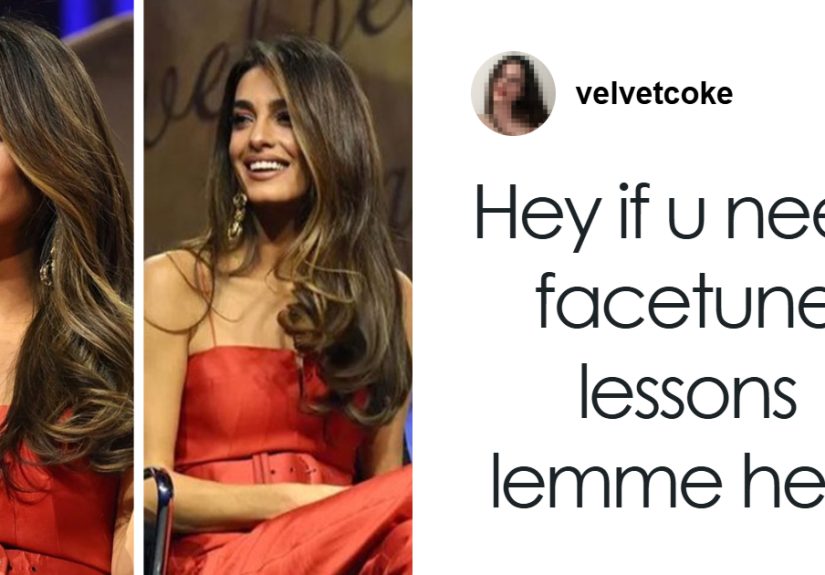
When Vogue posted photos of Amal Clooney from the Prix Suisse event in Bern, Switzerland, the internet did what the internet has trained itself to do at Olympic level: zoom in, squint hard, and ask, “Wait… why does this look so weird?” What should have been a straightforward style-and-events post quickly turned into a mini culture war over photo retouching, beauty standards, and the increasingly awkward relationship between glossy media and actual human faces.
The uproar was not just about whether Amal Clooney looked overly smoothed, softened, or polished into a version of herself that felt more app-filter than real life. It was also about who Amal Clooney is. This is not just a celebrity spouse or red-carpet regular. She is one of the most recognizable human-rights lawyers in the world, a barrister known for taking on cases involving genocide, press freedom, political imprisonment, and accountability for war crimes. So when a major fashion publication appeared to sand down her features while foregrounding her outfit, critics saw something bigger than bad retouching. They saw the old playbook: make the woman look “perfect,” then quietly shove her actual work into the corner.
What Actually Happened
On November 8, 2025, Amal Clooney appeared at the Prix Suisse, where she took part in a fireside chat tied to themes such as justice, responsibility, and press freedom. She wore a striking red Sergio Hudson jumpsuit that instantly made fashion writers happy, because of course it did. Two days later, on November 10, Vogue published coverage of the appearance, emphasizing her signature public-speaking style and the statement-making look she wore on stage.
On paper, none of that sounds remotely scandalous. Amal Clooney speaks at a major event. Vogue covers the outfit. Fashion publication behaves like fashion publication. End scene. Except the photos sparked criticism because many viewers felt her face looked so airbrushed and unnaturally smooth that the images no longer resembled the Amal Clooney people recognize from Getty shots, red carpets, interviews, and live event photos. In other words, the problem was not merely glamour. It was the faintly uncanny feeling that someone had taken a high-achieving, fully grown woman and run her through the “make her look 22, poreless, and mildly AI-generated” machine.
That reaction grew stronger because commenters and readers also felt the framing missed the point of her appearance. Amal Clooney was not at Prix Suisse to model a jumpsuit in a vacuum. She was there to discuss her legal work, her views on justice, and the causes she supports through the Clooney Foundation for Justice. When an accomplished public figure appears at a forum like that, and the online conversation ends up orbiting skin texture, facial smoothing, and outfit copy, it feels less like coverage and more like a very shiny distraction.
Why the Backlash Hit So Fast
Amal Clooney Is Already Famous for Looking Like Amal Clooney
This may sound obvious, but apparently it needs saying in bold, underlined, all-caps spiritual font: Amal Clooney does not need digital rescue. Her public image has long been built on a rare mix of intellect, polish, and visible self-possession. She is elegant without looking generic, glamorous without seeming manufactured, and serious without feeling stiff. That is a hard combo to fake and even harder to improve by softening every line until the face stops behaving like a face.
Retouching becomes controversial when it does not merely flatter but replaces a person’s natural features with a smoother, younger, more algorithm-approved version. The public can usually tell the difference. People may not know the exact editing tool. They may not understand which sliders were dragged around behind the scenes. But they know when an image starts whispering, “This person was edited into a beauty standard rather than photographed as herself.”
The Internet Is Tired of the Same Old Beauty Math
What really fueled the backlash was not just one image. It was fatigue. Collective, bone-deep, eye-roll-inducing fatigue. Women in public life have spent decades being told, explicitly or implicitly, that aging must be hidden, softened, cropped, blurred, or corrected. The modern twist is that the tools are now faster, cheaper, and disturbingly accessible. Once upon a time, heavy retouching required an art department and some plausible deniability. Now it can happen with a few taps, a smoothing pass, and a vague shrug about “lighting.”
That wider context matters. Digital manipulation is no longer some rare, glossy-magazine dark art. It is mainstream. It lives in apps, social feeds, influencer content, brand campaigns, and casual selfies. That means viewers are more suspicious than ever. They have developed a kind of digital sixth sense. They know the telltale signs: skin turned into silk, bone structure slightly rearranged, expression oddly flattened, age scrubbed away like it was a coffee stain. So when a major outlet posts a face that looks overprocessed, audiences do not respond with polite confusion. They respond with, “Oh, come on.”
It Seemed to Reduce a Serious Woman to a Soft-Focus Fashion Object
The strongest criticism was not even the visual editing itself. It was the symbolism of it. Amal Clooney’s career is built on substance. She works on cases involving human rights, mass atrocities, women’s rights, and freedom of expression. The Clooney Foundation for Justice says it provides free legal aid in more than 40 countries. That is not fluff. That is not decorative biography material. That is the actual story.
So when critics argued that the post focused too much on her look and not enough on why she was speaking, they were reacting to a familiar imbalance. Women are still routinely treated as visual material first and intellectual material second. If the woman is beautiful, the imbalance can get even worse. Her face enters the room before her work does. And if that face is then digitally “improved,” the insult doubles: now she is being aestheticized and subtly told that even her already-famous appearance was not enough.
The Bigger Problem With Overedited Celebrity Images
Retouching Is Not New, but Public Trust Is Different Now
There was a time when retouching in celebrity and beauty media was treated almost like background wallpaper. Everyone assumed it happened. Few people expected total realism from a fashion story. But the culture has changed. The age of filters, AI-assisted edits, face apps, and instantly manipulated images has made audiences more skeptical, not less. We are living in a moment when people distrust visuals more easily because they understand just how easy it is to manufacture them.
That is why even small editing decisions now land harder. Once viewers suspect a publication has altered an image too aggressively, the conversation stops being about style and becomes about credibility. If a face can be reshaped this casually, what exactly are readers supposed to trust? The image? The caption? The framing? The editorial judgment? Over-retouching is no longer just an aesthetic choice. It is a trust problem wearing expensive shoes.
The Beauty Industry Has Been Moving Away From This for Years
Another reason the Vogue-Amal Clooney moment annoyed people is that the culture has already been trying to move past this nonsense. Beauty and fashion media have spent years talking about authenticity, real skin, age positivity, and unretouched imagery. Allure famously dropped the term “anti-aging” from its vocabulary years ago, which was not just a language tweak but a signal that treating age like a design flaw had become deeply outdated.
Brands have also responded. CVS rolled out its Beauty Mark initiative to identify unretouched imagery and said unrealistic images can have negative effects on self-esteem and health, especially for girls and young women. Olay later committed to not retouching the complexions of models in certain campaigns. These moves were not random acts of corporate virtue. They reflected a growing recognition that consumers are exhausted by fake perfection and can spot it from orbit.
That makes the Amal Clooney situation feel particularly clumsy. At a moment when major brands are trying to show pores, freckles, lines, scars, texture, and actual skin, an overly polished image of a world-famous lawyer lands like a time capsule from a less self-aware era.
Other Public Figures Have Pushed Back Against Retouching Too
Amal Clooney is not the first public figure caught in this kind of argument, even if she did not personally launch the complaint. Emily Ratajkowski publicly criticized a magazine cover that altered her body and face. Lupita Nyong’o objected after a cover appeared to remove her natural hair texture. Lena Dunham called out a cover that she said did not resemble her body. Lorde openly preferred an unretouched image that showed her acne over a polished version designed to look “flawless.”
The details differ from case to case, but the through line is clear: when editing stops being light correction and starts changing identity, people notice. And when the subject is a woman, the message becomes painfully familiar. Be visible, but not too real. Be admired, but not textured. Be powerful, but still somehow airbrushed into harmlessness.
Why Amal Clooney Was the Worst Possible Subject for This Treatment
If this had happened to a reality star promoting a makeup line, people still would have complained. But because the subject was Amal Clooney, the criticism carried extra weight. Her public image is built on credibility, intellect, and seriousness. She represents journalists, survivors, and victims. She has spoken publicly about genocide, accountability, and threats to free expression. She is also a professor of international law and co-founder of a foundation focused on justice.
That makes any attempt to visually smooth her into generic glamour feel especially tone-deaf. The entire point of Amal Clooney’s public presence is that she is not generic glamour. She is a woman whose authority comes from expertise and action. Yes, she is stylish. Yes, she photographs beautifully. Yes, the red jumpsuit was excellent. But all of that is supposed to orbit the substance, not replace it. Editing her face until it feels detached from the person doing the work only feeds the worst stereotype in modern media: that even the most accomplished woman can still be flattened into aesthetics if the lighting is right and the caption is lazy enough.
What Vogue Could Have Done Instead
Keep the Photo Natural
A little color correction? Fine. Slight exposure adjustment? Sure. Every image is edited in some way. But there is a difference between polishing a photo and polishing the humanity out of it. Leaving in normal skin texture, natural lines, and the face the camera actually captured would have avoided the entire mess.
Lead With the Work, Then Mention the Wardrobe
There is nothing wrong with writing about what Amal Clooney wore. She is, objectively, extremely good at dressing for high-profile public appearances. But the order matters. The strongest version of that post would have led with why she was at Prix Suisse, what she spoke about, and what her work represents. The fashion details could have followed. Readers would still have clocked the jumpsuit. Trust me, nobody was going to miss the jumpsuit.
Respect the Face as Part of the Story
A face is not just decoration. It carries age, experience, fatigue, confidence, stress, composure, and life. Erasing those things to make someone look “better” can accidentally erase what makes them feel real, authoritative, and memorable. In Amal Clooney’s case, the real face was the stronger editorial choice. It always was.
The Real Lesson From the Backlash
The public is no longer shocked that digital retouching exists. What shocks people now is when a major publication still seems not to understand the cultural mood. Audiences are more visually literate, more suspicious of manipulation, and more impatient with old-school perfection politics. They know that age is not a glitch. They know that high-achieving women do not need to be digitally shrink-wrapped to be compelling. And they increasingly expect media brands to act like they know it too.
That is why the reaction to the Amal Clooney images felt bigger than a passing comment storm. It tapped into long-running frustrations about how women are presented, how authority gets aestheticized, and how beauty media still occasionally trips over its own ring light. The backlash was not anti-fashion. It was anti-erasure. And that distinction matters.
Related Experiences: Why This Kind of Story Feels So Personal to So Many People
Part of what made this controversy travel so fast is that it did not feel remote. It felt familiar. A lot of women know the strange little sting of seeing a face edited into “acceptable” beauty and realizing the edit is supposed to look like an improvement. It can happen when a school photo comes back looking weirdly smoothed, when a wedding picture is filtered until everyone resembles cousins in a wax museum, or when a friend posts a selfie so tuned that you can barely recognize the person you had coffee with two hours earlier. The reaction is rarely just, “That looks fake.” It is often, “So this is what we are supposed to look like now?”
For professional women, the feeling can be especially sharp. You spend years building expertise, credibility, and a voice people take seriously. Then one image reminds you that the culture still evaluates your face like it is part of your résumé. Not your ideas. Not your record. Not your work ethic. Your face. If you look tired, people comment. If you look polished, people speculate. If you look older, somebody somewhere acts like they have spotted a scandal. And if someone edits you to look younger, smoother, and more “ideal,” the message is not flattering. It is corrective.
There is also the social-media layer, which makes everything louder and stranger. Many people now live inside an image economy where normal human texture can feel almost rebellious. Pores become controversial. Smile lines become “before” material. Under-eyes are treated like moral failure. You do not need to be a celebrity to absorb that pressure. Teenagers get it. Working moms get it. Men get it too, though usually with less intensity. Anyone who has looked at a filtered picture and then glanced at a mirror knows the tiny psychological whiplash that follows.
That is why an image of Amal Clooney mattered beyond celebrity gossip. She represents a kind of polished competence many people admire. She is intelligent, composed, stylish, and visibly accomplished. If even that woman gets visually “corrected,” what hope is there for the rest of us on a random Tuesday under fluorescent kitchen lighting? The backlash, in that sense, was not simply outrage on her behalf. It was accumulated exhaustion from everyone who is tired of watching reality lose a fight against aesthetic software.
There is another experience buried in this story too: relief. Relief when someone says, enough already. Relief when a brand leaves the freckles in. Relief when a magazine shows wrinkles, scars, texture, gray hair, or acne and does not behave like it has documented a rare weather event. Relief when a public figure looks like herself and still gets to be glamorous, respected, and worthy of the frame. That is the future audiences are asking for. Not less beauty. Not less style. Just less nonsense.
And maybe that is the most useful takeaway from this entire episode. People are not demanding that every photo be raw, unlit, and spiritually produced in a parking lot. They are asking for proportion. For honesty. For editorial instincts that understand the difference between enhancement and erasure. In a world drowning in filters, the most refreshing luxury is starting to look like reality. Fancy that.