Table of Contents >> Show >> Hide
- What overplanting really means
- Why overplanting is the biggest landscaping mistake
- Warning signs your landscape is already overplanted
- How to create a full landscape without overplanting
- Common overplanting mistakes in real yards
- What to do if you already overplanted
- Experience: what overplanting teaches you the hard way
- Final thoughts
Every yard has that moment. You stand in a nursery parking lot with a cart full of adorable baby shrubs, feathery grasses, and one dramatic hydrangea that clearly spoke to you on a spiritual level. Back home, everything looks tiny in the empty bed, so you tuck the plants a little closer together. Then a little closer. Then you step back and think, “Perfect. Instant lushness.”
That, dear gardener, is how overplanting begins.
Overplanting is one of the most common landscaping mistakes because it feels smart in the moment. A sparse bed can look unfinished. Fresh mulch makes plants seem lonely. And when a plant tag says “3 feet wide,” it is very tempting to assume that number is merely a suggestion from an overly cautious stranger. It is not. It is a warning label in polite horticultural language.
If you want a landscape that looks beautiful for more than one spring, you have to design for what plants become, not what they look like on planting day. That is why overplanting is such a costly mistake. It creates crowding, weakens plant health, increases pruning, wastes money, blocks walkways, complicates home maintenance, and turns a promising design into a leafy traffic jam.
The good news is that this mistake is preventable. Even better, it is fixable. Once you understand why overplanting backfires, you can build a landscape that looks full, balanced, and intentional without becoming an overgrown jungle auditioning for its own zip line.
What overplanting really means
Overplanting does not simply mean “using a lot of plants.” A garden can be abundant and still be well designed. The problem starts when plants are placed too close together, too close to the house, too close to hardscaping, or in conditions that will not support their mature size. In other words, overplanting is less about enthusiasm and more about bad math.
It usually happens for three reasons. First, homeowners buy based on how the yard looks today instead of how it will look in three years. Second, plant labels and design plans often get ignored in the excitement of making a new bed look full right away. Third, many people underestimate how fast healthy plants grow when they are happy. That cute little dwarf shrub may still become a wide, dense, maintenance-demanding blob if you give it sun, water, and a mission.
A well-planned landscape accounts for mature height, mature spread, root space, sun exposure, airflow, drainage, and access to the house. An overplanted one skips most of that and hopes pruning will solve the problem later. It usually does not.
Why overplanting is the biggest landscaping mistake
1. Plants do not stay cute for long
The biggest reason overplanting fails is simple: plants grow. Shocking, yes. A three-gallon shrub that looks dainty today may double or triple in width. Perennials that seem charmingly modest in spring can sprawl across the border by midsummer. Ornamental grasses can go from tidy fountain to “I now own the sidewalk” in a single season.
When plants are spaced according to their immature size, they eventually compete for light, water, and air. Instead of showing off their natural shape, they press into each other like passengers on an overbooked flight. The result is distorted growth, lopsided forms, bare lower stems, and a bed that looks cramped instead of lush.
This is especially obvious in foundation plantings. A shrub that seemed perfectly placed under a window can grow into the siding, block light, crowd the entry, or hide architectural features you actually paid for.
2. Crowding creates health problems
Plants need room not just for beauty, but for basic function. When beds are too dense, airflow drops. Leaves stay damp longer. Shade increases at the base of the planting. Humidity lingers where it should not. That is a fine recipe for fungal problems, mildew, and stress-related decline.
Crowded plants also make pest issues easier to miss and harder to manage. If leaves overlap heavily and branches knit together, it becomes difficult to inspect stems, remove diseased foliage, or even notice trouble before it spreads. The bed may look green from a distance while quietly becoming a five-star resort for plant problems.
Healthy landscapes are not just pretty; they are breathable. Good spacing allows foliage to dry faster, light to reach more of the plant, and maintenance to happen before small issues become expensive ones.
3. Overplanting turns low-maintenance landscaping into a part-time job
Many people overplant because they want immediate fullness. Ironically, that shortcut often creates years of extra work. Once shrubs and perennials outgrow their allotted space, you are stuck pruning constantly, dividing clumps, cutting plants back from windows, and editing the bed like a nervous movie producer.
And here is the tricky part: constant pruning is not the same as smart pruning. Repeated shearing to keep an oversized plant in a too-small space can ruin its natural form, reduce flowering, increase dense outer growth, and make the plant look more like a hedge-shaped regret than a design choice.
If you have ever spent a sweaty Saturday hacking back a shrub that should never have been there in the first place, you already understand the economics of poor spacing.
4. It causes hardscape and house-related headaches
Overplanting is not only bad for the plants. It is inconvenient for people and risky for property. Shrubs placed too close to the house can trap moisture, reduce airflow near walls, limit access for repairs, and create hiding spots for pests. Trees planted without enough distance or rooting space may interfere with structures, paving, or utilities as they mature.
Then there are paths, patios, and entries. A plant that gracefully “softens the edge” on day one may become a trip hazard, sightline blocker, or shoulder-level ambush by year three. Nobody wants to brush past wet foliage every time they carry groceries inside. Landscaping should welcome you home, not mug you at the walkway.
5. Too many plants can make a design look worse, not richer
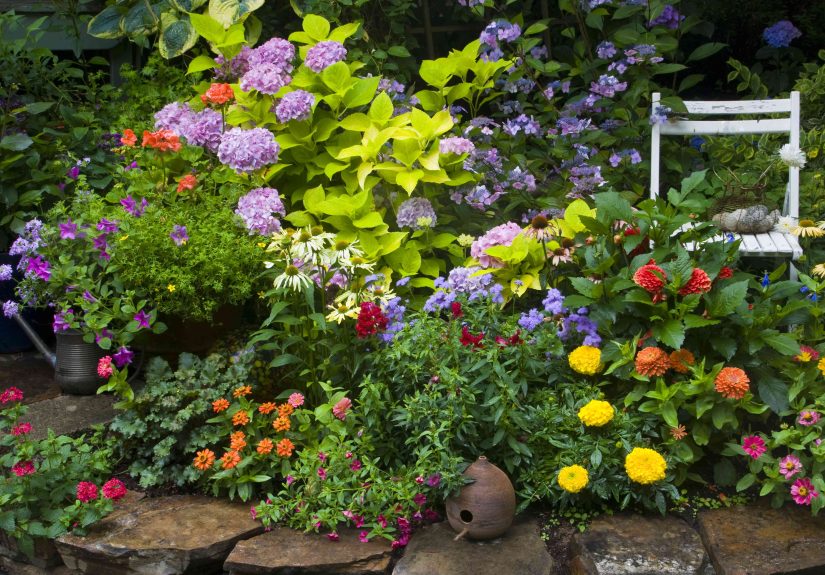
There is a difference between lush and chaotic. A good landscape usually relies on structure, repetition, and contrast. Overplanting often happens when people try to fit one of everything into one bed. The result is visual noise: different textures fighting for attention, heights layered without logic, and focal points buried under a crowd of equally eager co-stars.
Ironically, leaving some space can make a garden look more sophisticated. Open areas allow specimen plants to read clearly. Repetition creates rhythm. Layers become legible. Hardscape, mulch, and lawn all have a role to play in making plants look intentional rather than accidental.
Think of it like decorating a room. Ten accent pillows do not automatically make a sofa more elegant. Sometimes they just make sitting down feel like an obstacle course.
6. It wastes money, water, and future effort
Overplanting is expensive twice. You pay for too many plants at installation, and then you pay again when some must be removed, replaced, relocated, or heavily maintained. Add in extra water, fertilizer, disease management, and pruning, and that “full look” becomes a budget leak with flowers.
In drought-conscious or low-maintenance landscapes, this matters even more. Plants chosen for the right place and given enough room usually need fewer interventions over time. Crowded beds, on the other hand, often become thirsty, competitive, and fussy. That is not sustainable landscaping. That is plant-related overcommitment.
Warning signs your landscape is already overplanted
If you are not sure whether your yard has crossed the line, look for these clues:
- Plants are touching the house, windows, gutters, or utility boxes.
- Branches from different shrubs are tangled together.
- You prune the same plants several times a season just to keep paths open.
- Lower leaves are sparse, yellowing, or dying from lack of light and airflow.
- Mulch has disappeared under a solid mass of stems and foliage.
- Some plants consistently underperform because stronger neighbors are shading or crowding them.
- The bed looks bigger every year, even though the border itself is not moving.
If you nodded at three or more of those, your landscape may not need a trim. It may need a re-think.
How to create a full landscape without overplanting
Design for year three, not week one
This mindset shift solves half the problem. A newly planted bed is supposed to look a little open. That is not failure. That is the beginning of growth. Designing for the mature form means accepting some patience early on so you do not create congestion later.
If the empty spaces bother you, remind yourself that gardens are not static decor. They are living systems. They fill in. Sometimes faster than you would prefer.
Start with structure, then layer thoughtfully
Use trees, shrubs, or evergreens as the backbone of the design. Then add perennials, grasses, and groundcovers around them. This gives the bed year-round form and keeps you from stuffing it with short-lived fillers just to avoid visible mulch.
Repeating a smaller number of reliable plants usually looks better than packing in dozens of one-off varieties. It also makes maintenance easier because plants with similar needs are easier to water, prune, and evaluate together.
Pay attention to mature width, not just height
People often think vertically and forget that plants expand sideways too. Width is what causes most crowding problems. A shrub may be only 4 feet tall, but if it spreads 5 feet wide, it can still swallow a narrow bed. Always measure the bed depth and check the plant’s mature spread before you buy.
For foundation plantings, leave enough space so the plant will not touch the house at maturity. For walkways and entries, choose varieties that will not spill too far into traffic areas. Tall plants also need enough setback so the space does not feel pinched.
Use temporary fillers the smart way
If you want the bed to look finished sooner, use annuals, bulbs, mulch, decorative stone, or low temporary fillers that can be removed later without drama. This approach gives you early color without committing permanent plants to space they will eventually fight over.
That is the difference between designing for fullness and planting out of impatience.
Match plants to the site
Right plant, right place is not just a gardening slogan people put on tote bags. It is a survival strategy. Consider sun, shade, drainage, wind exposure, soil, and available root space. A plant that fits the site naturally will reach its mature size with less stress and less maintenance. A plant forced into the wrong conditions often grows awkwardly, struggles, or becomes more vulnerable to pests and disease.
Common overplanting mistakes in real yards
The front foundation jungle: A row of shrubs planted too close to the house and too close together. At first it looks polished. A few years later, windows disappear, air conditioners vanish into foliage, and every repair requires a machete.
The tiny walkway ambush: Lush perennials and grasses line a front path, but mature width was never considered. By midsummer, the path narrows, plants flop into foot traffic, and guests arrive lightly exfoliated.
The one-of-everything border: The bed contains a rose, two salvias, three hostas, a hydrangea, a random coneflower, and something bought on sale because the foliage was “interesting.” None of it repeats, all of it grows differently, and the result feels busy instead of beautiful.
The too-small tree site: A shade tree goes into a narrow strip between driveway and house because the sapling looked harmless. Years later, roots are cramped, pruning is constant, and the tree never becomes the stately feature it was meant to be.
What to do if you already overplanted
Do not panic. You do not need to tear out the entire yard in a single dramatic weekend montage. Start by identifying the plants that are causing the most conflict. Remove dead, weak, or badly placed plants first. Then thin overlapping shrubs, divide overcrowded perennials, and relocate anything that clearly has no future in its current spot.
When editing, prioritize plant health, access, and overall structure. A garden usually improves when you can clearly see its bones again. In fact, many overplanted beds become more elegant after subtraction, not addition.
It helps to take photos before and after. Gardeners are often surprised to discover that the bed looks larger, calmer, and more expensive after removing several plants. Space, when used well, is not emptiness. It is design.
Experience: what overplanting teaches you the hard way
I have seen overplanting happen in almost every kind of landscape, from compact front entry beds to sprawling suburban yards. The pattern is usually the same. The first season looks fantastic because everything is fresh, mulched, and neatly arranged. By the second or third season, the plants start negotiating for territory. By year four, the negotiation is over and the strongest shrubs have staged a quiet coup.
One of the clearest examples was a front-yard bed built to improve curb appeal quickly before a family gathering. The homeowner wanted color, texture, and that lush magazine look right away, so the plan included several shrubs, flowering perennials, ornamental grasses, and trailing plants tucked between them. On planting day, it looked amazing. Nobody wanted to leave visible mulch, so every gap got filled. The bed photographed beautifully. For about eleven months.
After that, the maintenance started stacking up. The grasses leaned into the path, the shrubs blocked the lower windows, and the perennials began disappearing under bigger neighbors. Watering became inconsistent because the crowded root zones dried at different speeds. When mildew showed up, it spread faster than expected because the foliage was packed so tightly. Eventually, the homeowner spent more time cutting things back than enjoying them.
The most frustrating part was that none of the plants were bad choices on their own. The problem was that they were all chosen as if they would remain nursery-sized forever. Once we removed a few plants, widened the visual spacing, and repeated fewer varieties, the whole bed improved. It actually looked more polished with less in it.
I have also seen the opposite approach work beautifully. In one smaller yard, the owner resisted the urge to cram the border full. She chose a few shrubs with dependable mature forms, repeated two perennials in drifts, and used bulbs plus annuals for early color while the permanent plants filled in. The first season looked neat rather than crowded. The second season looked intentional. By the third season, it had the full, layered look people usually try to fake on day one. The difference was that nothing needed emergency pruning, nothing blocked the walkway, and the maintenance stayed manageable.
That is really the lesson overplanting teaches. Landscaping is not improved by stuffing every square foot with plant material. It is improved by judgment. Restraint feels boring when you are holding a flat of healthy perennials at the garden center, but in the landscape, restraint ages well. It gives plants room to show their shape, gives air room to move, and gives you room to live with the garden instead of wrestling it.
Over time, experienced gardeners start to recognize that the empty-looking space between young plants is not wasted space. It is future space. It is where the plant will become what it was meant to be. Once you understand that, your buying habits change. You stop asking, “How can I make this bed look full today?” and start asking, “How can I make this bed look great three years from now?” That single shift saves money, reduces maintenance, and leads to landscapes that feel calmer, healthier, and far more refined.
In other words, overplanting is often a beginner’s mistake, but learning not to do it is one of the clearest signs that your landscaping instincts are getting sharper.
Final thoughts
If overplanting is the biggest landscaping mistake you can make, it is because it quietly creates five more mistakes behind it. It invites crowding, disease pressure, excessive pruning, design confusion, and preventable expense. It makes a new landscape look finished faster, but it often makes the long-term result worse.
The best gardens do not rely on plant quantity alone. They rely on spacing, structure, repetition, and patience. Give plants the room they need, and they will reward you with healthier growth, stronger form, and a landscape that still looks intentional years later.
So the next time a fresh bed looks a little empty, resist the urge to “fix” it with more shrubs. Your future self, your foundation, and your Saturday mornings will thank you.