Table of Contents >> Show >> Hide
- 1. The “Ghost Army” Used Inflatable Tanks and Sound Effects to Fool the Nazis
- 2. Navajo Code Talkers Were Not the Only Native Code Talkers
- 3. Women Pilots Flew Millions of Miles but Were Not Treated as Full Military Veterans at the Time
- 4. The Red Ball Express Kept the Allied Advance Moving
- 5. Weather Forecasting Helped Decide the Timing of D-Day
- 6. The War Came to American Soil in the Aleutian Islands
- 7. Japanese Balloon Bombs Reached the United States
- 8. The 555th Parachute Infantry Battalion Became Smokejumpers
- 9. The Double V Campaign Connected WWII to the Civil Rights Movement
- 10. Japanese American Soldiers Fought While Families Were Incarcerated
- 11. Victory Gardens Produced a Huge Share of America’s Vegetables
- 12. The Monuments Men Saved Art While Armies Were Destroying Cities
- Why These Lesser-Known WWII Facts Matter
- Experiences and Reflections: Learning WWII Beyond the Big Headlines
- Conclusion
World War II history is often told through its biggest headlines: Pearl Harbor, D-Day, Hitler, Churchill, Roosevelt, Hiroshima, and the dramatic surrender scenes that look as if they were staged by Hollywood with a fog machine and a brass band. Those stories matter, of course. But WWII was also shaped by strange inventions, quiet courage, overlooked communities, secret missions, weather reports, supply drivers, code speakers, gardeners, postal workers, artists, and ordinary people who did extraordinary things while the world was on fire.
That is why the most fascinating WWII history facts are sometimes the ones hiding in the margins. They do not replace the famous chapters; they deepen them. They remind us that wars are not won only by generals pointing at maps. They are also won by mechanics tightening bolts, pilots ferrying planes, farmers growing vegetables, translators breaking language barriers, and yes, artists building fake tanks. History, it turns out, occasionally has a sense of humor.
Below are 12 under-discussed facts from World War II that deserve more attentionnot because they are trivia, but because they reveal how complex, human, and surprising the war really was.
1. The “Ghost Army” Used Inflatable Tanks and Sound Effects to Fool the Nazis
One of the strangest and most brilliant units in WWII was the U.S. Army’s 23rd Headquarters Special Troops, better known as the Ghost Army. Its job was not to destroy the enemy with firepower, but to deceive them with theater. The unit used inflatable tanks, fake artillery, scripted radio traffic, and massive sound recordings of moving troops and vehicles to convince German forces that large Allied units were in places where they were not.
In other words, the Ghost Army fought with props. It was part military operation, part Broadway production, and part very dangerous prank. The unit could simulate the presence of tens of thousands of troops, helping misdirect German attention during the Allied advance across Europe. The men involved included artists, designers, radio operators, and sound engineers. Their work remained classified for decades, which explains why their story still feels like a secret hiding in plain sight.
2. Navajo Code Talkers Were Not the Only Native Code Talkers
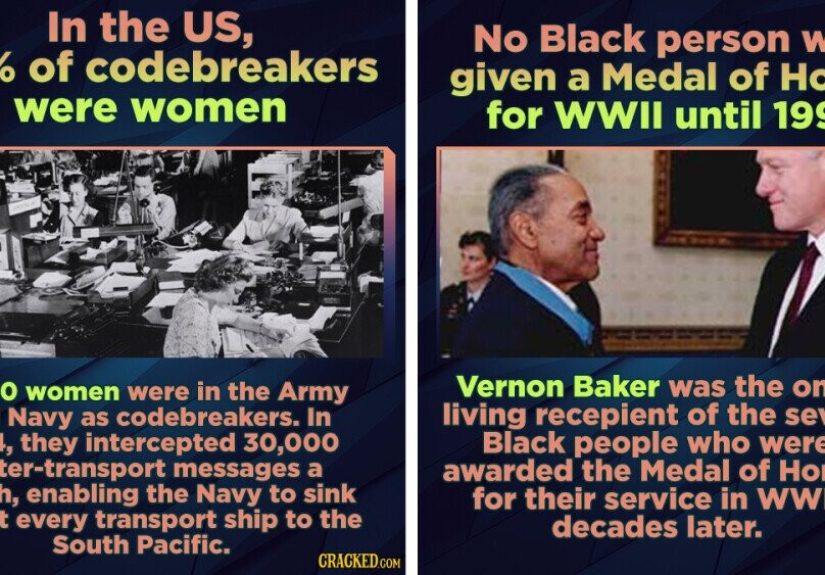
The Navajo Code Talkers are rightly celebrated for creating and using a code that Japanese intelligence never successfully broke. More than 400 Navajo Marines served in this role during World War II, helping transmit battlefield messages quickly and securely in the Pacific.
But the wider story is even bigger. Native speakers from other tribal nations also served as code talkers, building on a practice that had roots in World War I. Cherokee, Comanche, Choctaw, and other Native servicemen contributed to secure military communications. Their languageslong suppressed by U.S. assimilation policiesbecame powerful tools of national defense. That irony is hard to miss: languages once targeted for erasure helped protect the country that had tried to silence them.
3. Women Pilots Flew Millions of Miles but Were Not Treated as Full Military Veterans at the Time
The Women Airforce Service Pilots, or WASP, were civilian women pilots who flew military aircraft in the United States during WWII. They ferried planes, tested repaired aircraft, transported cargo, and towed targets for live-fire training. Their work freed male pilots for combat overseas.
These women flew more than 60 million miles, often in aircraft fresh from factories or repair shops. That was not exactly a gentle Sunday drive. Yet during the war, they were not granted full military status. If a WASP died in service, her family did not receive the same benefits given to military personnel. The program was disbanded in 1944, and it took decades for the women to receive fuller public recognition. Their story is a reminder that courage sometimes lands before equality does.
4. The Red Ball Express Kept the Allied Advance Moving
After D-Day, Allied armies pushed rapidly across France, but speed created a serious problem: tanks, trucks, and soldiers consume supplies at an astonishing rate. The answer was the Red Ball Express, a massive truck convoy system that carried fuel, food, ammunition, and medical supplies to the front.
Many of the drivers were African American servicemen, often serving in a segregated military that gave them dangerous responsibilities without equal respect. These men drove long hours over damaged roads, under blackout conditions, and sometimes through enemy fire. Without the Red Ball Express, the Allied advance would have slowed dramatically. Logistics may not sound glamorous, but no army wins by running out of gasoline. Even Patton’s tanks had to eat.
5. Weather Forecasting Helped Decide the Timing of D-Day
D-Day was not simply scheduled like a dentist appointment. The invasion required the right combination of tide, moonlight, visibility, wind, and sea conditions. Too rough, and landing craft could be wrecked. Too calm or too bright, and German defenders might spot the invasion more easily.
Allied meteorologists studied weather patterns across the Atlantic and Channel, then advised General Dwight D. Eisenhower on a narrow window of opportunity. The original date of June 5, 1944, was delayed because of poor weather. June 6 was still risky, but it offered enough of a break to proceed. That decision helped make Operation Overlord possible. The forecast was not a footnote; it was one of the most important intelligence tools of the invasion.
6. The War Came to American Soil in the Aleutian Islands
When Americans think of enemy attacks on U.S. territory during WWII, Pearl Harbor usually dominates the conversation. But Japanese forces also attacked Dutch Harbor in Alaska and occupied Attu and Kiska in the Aleutian Islands in 1942. The Aleutian campaign lasted more than a year and involved brutal weather, difficult terrain, and high casualties.
The campaign is sometimes called the “forgotten battle” because it happened far from the better-known Pacific island campaigns. Yet it mattered strategically and psychologically. It was one of the few times during the war that North American territory was occupied by enemy forces. The people of the Aleutians, especially Unangan communities, suffered deeply; many were forcibly removed and interned in harsh conditions. Their story deserves far more space in the national memory.
7. Japanese Balloon Bombs Reached the United States
Near the end of the war, Japan launched thousands of balloon bombs across the Pacific, using high-altitude winds to carry explosives toward North America. Most caused little or no damage, but some reached the United States and Canada. In May 1945, a balloon bomb killed six civilians in Oregon: a pregnant woman and five children.
This tragic incident is often described as the only fatal enemy attack on the U.S. mainland during World War II. The program also led to unusual defensive responses, including forest fire patrols and secrecy efforts designed to prevent Japan from learning whether the balloons were succeeding. The story sounds almost unbelievablepaper balloons crossing an ocean with bombs attachedbut WWII had a talent for making the unbelievable painfully real.
8. The 555th Parachute Infantry Battalion Became Smokejumpers
The 555th Parachute Infantry Battalion, nicknamed the Triple Nickles, was an all-Black airborne unit. During the war, its members hoped to serve overseas in combat, but segregation and military policy limited their opportunities. In 1945, they were sent to the American West for Operation Firefly, where they trained as smokejumpers to fight forest fires potentially started by Japanese balloon bombs.
They parachuted into remote areas, cut firebreaks, and helped protect forests and communities. Their mission combined military skill, emergency response, and civil defense. The 555th did not get the combat role many of its members wanted, but their service helped pave the way for future integration in airborne units and the U.S. military more broadly.
9. The Double V Campaign Connected WWII to the Civil Rights Movement
For many African Americans, World War II was a fight on two fronts: victory against fascism abroad and victory against racism at home. This idea became known as the Double V Campaign, promoted by the Black press, especially the Pittsburgh Courier.
The campaign exposed a painful contradiction. Black Americans were asked to defend democracy overseas while facing segregation, discrimination, and violence in the United States. Black soldiers served in uniform, Black women worked in defense industries, and Black communities bought war bonds and supported the war effort. At the same time, they demanded that the nation live up to its own ideals. The Double V Campaign helped lay intellectual and moral groundwork for the postwar Civil Rights Movement.
10. Japanese American Soldiers Fought While Families Were Incarcerated
After Executive Order 9066, more than 100,000 Japanese Americans were forcibly removed from the West Coast and incarcerated in camps. Yet many Japanese American men volunteered or were drafted into the U.S. military. The 442nd Regimental Combat Team, made up largely of second-generation Japanese Americans, fought in Europe and became one of the most decorated units in U.S. military history for its size and length of service.
The contradiction is staggering. Some soldiers risked their lives for a country that had imprisoned their parents, siblings, or grandparents. The 442nd’s rescue of the “Lost Battalion” in France remains one of the most dramatic examples of battlefield courage in WWII. Their motto, “Go for Broke,” was more than a slogan. It was a statement of loyalty made under impossible moral pressure.
11. Victory Gardens Produced a Huge Share of America’s Vegetables
On the home front, Americans were encouraged to plant Victory Gardens to supplement rationed food and reduce pressure on agricultural supply chains. These gardens appeared in backyards, vacant lots, schoolyards, rooftops, and even public parks. By the later years of the war, millions of gardens were producing a major share of the vegetables consumed in the United States.
Victory Gardens were practical, but they were also psychological. They gave civilians a daily way to feel useful. Pulling weeds may not look heroic, but when millions of families did it together, it became part of the national war effort. Also, if you have ever grown tomatoes, you know that fighting pests requires the patience of a general and the optimism of a comedian.
12. The Monuments Men Saved Art While Armies Were Destroying Cities
World War II threatened not only lives and nations but also cultural memory. Nazi forces looted paintings, sculptures, manuscripts, religious objects, and other treasures from across Europe. In response, the Allies created the Monuments, Fine Arts, and Archives program. Its members, often called the Monuments Men, worked to protect historic sites, recover stolen art, and return cultural objects to their rightful owners.
They were museum directors, curators, architects, professors, and art historians in uniform. Their work took them into damaged cities, salt mines, castles, and repositories filled with stolen masterpieces. The mission mattered because war does not only kill people; it can also erase the evidence of who people were. Saving art was not a luxury. It was a defense of civilization itself.
Why These Lesser-Known WWII Facts Matter
These stories expand our understanding of World War II. They show that victory was not one single event but a vast network of choices, sacrifices, failures, inventions, and acts of courage. Some people fought with rifles. Some fought with radios. Some fought with languages, steering wheels, weather charts, parachutes, typewriters, vegetable seeds, and museum catalogs.
They also complicate the clean version of history. The United States helped defeat tyranny abroad while practicing segregation and incarcerating Japanese Americans at home. Women carried enormous responsibilities while being denied equal recognition. Native languages became military assets after generations of cultural suppression. Black soldiers drove supply lines, jumped into forests, and demanded democracy in a country that still denied them full citizenship.
That is not a reason to reject the heroic story of WWII. It is a reason to tell it honestly. A fuller history is not weaker; it is stronger. It allows us to honor victory without sanding off the difficult edges.
Experiences and Reflections: Learning WWII Beyond the Big Headlines
Spending time with these lesser-known WWII stories changes the way we experience the past. Many people first learn World War II as a timeline: 1939, invasion of Poland; 1941, Pearl Harbor; 1944, D-Day; 1945, victory. Timelines are useful, but they can make history feel like a train schedule with explosions. The deeper experience begins when we slow down and look at individual lives.
Imagine standing in a museum and seeing a WASP flight jacket. At first, it is just fabric. Then you realize the woman who wore it may have flown a powerful military aircraft across the country, landed in bad weather, and returned to a society that still debated whether women belonged in such roles. Suddenly the jacket is not just an artifact. It is an argument.
Or picture reading about the Red Ball Express. A truck convoy sounds simple until you think about the driver. He is young, exhausted, possibly undertrained, and driving through a war zone in the dark. He knows the fuel in his truck may determine whether tanks move tomorrow. He also knows that when the war ends, he may return to a segregated America. That experience turns “logistics” from a dry word into a human story.
The same is true of Victory Gardens. It is easy to smile at old posters telling citizens to grow beans and carrots. But for families living with ration books, shortages, and anxiety, a garden was a small patch of control in a world that felt uncontrollable. A child watering cabbage in 1943 may not have understood global strategy, but that child understood helping. Sometimes morale grows in soil.
Learning about WWII this way also builds humility. The Ghost Army reminds us that intelligence can be creative. The Navajo Code Talkers remind us that cultural knowledge can become a strategic advantage. The Monuments Men remind us that protecting beauty matters even during catastrophe. The 442nd and the Double V Campaign remind us that patriotism can include criticism, especially when a nation fails to live up to its promises.
These experiences matter for modern readers because WWII is often used as a symbol of moral clarity. In many ways, it was a fight against monstrous regimes. But the people who fought it lived in a world full of contradictions, prejudice, fear, courage, and improvisation. That makes their achievements more impressive, not less. They did not serve in a perfect world. They served in the real one.
When we hear these stories, we become better readers of history. We learn to ask who is missing from the standard version. We learn to value supply lines as much as battle lines. We learn that a weather report can change an invasion, a garden can support a nation, and a language once dismissed can help win a war. Most importantly, we learn that history is not just what happened. It is what we choose to remember, retell, and finally understand.
Conclusion
The most powerful WWII history facts are not always the loudest ones. Sometimes they are hidden in classified files, family memories, museum storage rooms, or footnotes that deserve their own parade. The Ghost Army, the Triple Nickles, the WASP pilots, the Red Ball Express drivers, Native Code Talkers, Japanese American soldiers, Victory Gardeners, and Monuments Men all reveal a war far richer and more complicated than the familiar highlight reel.
World War II was fought by nations, but it was carried by people. Some wore uniforms. Some wore factory goggles. Some held steering wheels, radios, shovels, seed packets, or paintbrushes. Their stories remind us that history is not only made by famous leaders. It is made by everyone who does the necessary work when the world asks too much.