Table of Contents >> Show >> Hide
- How to Choose Bathroom Paint Colors Without Regret
- Calm & Spa-Like Palettes (Relaxing Without Going Boring)
- Bold & Moody Statements (Because Beige Isn’t Your Love Language)
- Playful & Unexpected Pops (For When “Fun” Is Part of Your Floorplan)
- 19. Butter Yellow + White Paneling
- 20. Turquoise + Sandy White + Wood Tones
- 21. Coral + Black
- 22. Mint + White + Silver
- 23. Dusty Rose + Walnut
- 24. Apricot + Cream + Brass
- 25. Half-and-Half Walls (Wainscoting Contrast)
- 26. Stripes That Cheat the Room Bigger
- 27. Color Drenching (One Color, Many Surfaces)
- Quick Pairing Rules That Make Any Bathroom Color Scheme Look Expensive
- Conclusion
- Real-World Bathroom Color Experiences (Extra of Bathroom Wisdom)
Bathrooms are tiny rooms with big opinions. Paint one the wrong color and it will judge you every morning like a
disappointed Victorian aunt. Paint it the right color and suddenly brushing your teeth feels like self-care and not
an administrative task.
The trick isn’t picking a “pretty” shadeit’s choosing a bathroom color scheme that plays nicely with hard-working
surfaces: tile, stone, mirrors, metal finishes, and lighting that can make “soft ivory” look like “leftover oatmeal”
by 7 a.m. Below are 27 bathroom color ideas with real design logic behind them, plus pairing tips so your room looks
intentional (and not like you panic-bought paint at 8:55 p.m.).
How to Choose Bathroom Paint Colors Without Regret
Before you fall in love with a color chip, take a quick reality check tour of your bathroom. Is it a windowless cave?
A bright, sunny jewel box? A steamy spa-in-training? Bathrooms are harsh environments for painthumidity, shadows, and
shiny fixtures are basically the ultimate stress test.
- Lighting is the boss. Test samples morning and night. Vanity lights can shift undertones fast.
- Tile and counters are your “fixed colors.” Match paint undertones to them, not the other way around.
- Small bathrooms can go light OR bold. Light opens up space; deep hues create a chic, cocoon effect.
- Choose the right sheen. Satin is a popular sweet spot; semi-gloss is wipeable but can highlight wall flaws.
- Use ventilation like it’s part of the palette. A good fan protects your finish and keeps color true over time.
Calm & Spa-Like Palettes (Relaxing Without Going Boring)
1. Warm White + Natural Wood
Warm whites feel clean but not clinical, especially next to oak or walnut vanities. This is the “nice hotel where the
towels are too fluffy” look.
Try it with: light wood, woven baskets, matte black or brushed nickel hardware.
2. Soft Greige + Crisp White Trim
Greige (gray-beige) is the peace treaty between warm and cool. It flatters stone tile and keeps your bathroom from
feeling too stark.
Best for: modern bathrooms, transitional homes, and anyone who fears “too much color.”
3. Misty Blue-Gray + Polished Nickel
A blue-gray reads like a breath of fresh air and looks instantly tailored with polished nickel or chrome.
It’s calming, but still has structure.
Pro move: echo the blue tone in towels or a subtle patterned shower curtain.
4. Seafoam Green + Cottage White
Seafoam is cheerful without being loud. Pair it with clean white surfaces for a fresh, airy bathroom color scheme
that leans “beachy” instead of “spring break.”
Works well with: white subway tile, glass knobs, and silver finishes.
5. Muted Sage + Warm Stone
Sage has become a go-to for spa bathrooms because it feels grounded and natural. It’s especially flattering with
travertine, limestone, or creamy porcelain tile.
Style tip: add aged bronze or brushed brass to warm up the green.
6. Pale Blush + Cream
Blush doesn’t have to be “princess.” When it’s soft and dusty, it reads as warm, modern, and surprisingly neutral.
Creamy whites keep it grown-up.
Try it with: unlacquered brass, warm oak, and ivory stone.
7. Lavender-Gray + White Marble
Lavender undertones can make a bathroom feel luminouslike your walls are filtering the light for you. Keep it subtle
and let marble (or marble-look tile) do the fancy work.
Avoid: pairing with super-yellow bulbs; choose warmer-but-balanced lighting.
8. Sand Beige + Linen + Soft Black Accents
Sand tones create a calm, hotel-lobby vibe. Add soft black accents (frames, hardware) for definition so the palette
doesn’t drift into “all one color, all the time.”
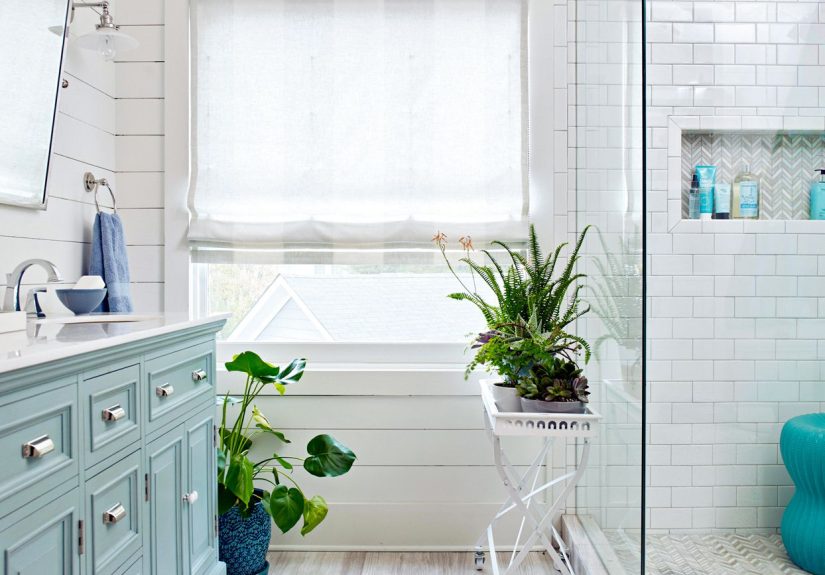
9. Light Pewter + White + Natural Greenery
A light pewter is a classic bathroom paint color that hides everyday splashes and still feels bright. Add a plant
(real or convincing) for a lived-in, fresh finish.
Bold & Moody Statements (Because Beige Isn’t Your Love Language)
10. Inky Navy + Bright White
Navy is the new neutral in bathroomscrisp, dramatic, and timeless when balanced with white tile or trim.
It makes a small bathroom feel like a “designed space,” not an afterthought.
Great with: brass, polished nickel, or a warm wood vanity.
11. Blue-Charcoal + Marble + Layered Lighting
Blue-charcoal has depth without the harshness of true black. With marble and layered lighting (sconces + overhead),
it’s moody in the best way.
12. Deep Forest Green + Creamy White
Forest green feels rich and restorative, especially with creamy whites that soften the contrast. Think “English
library,” but make it bathroom.
Tip: choose a warm white so the green doesn’t turn icy.
13. Black + Warm Metals
Black bathrooms can look shockingly elegantif you add warmth. Brass, copper, or bronze keeps black from feeling flat
and gives it that “boutique powder room” glow.
14. Chocolate Brown + Texture
Brown is back, and it loves texture. Think grasscloth-style wallpaper (rated for bathrooms), ribbed tile, or warm
wood. The result is cozy, not dated.
15. Teal + Cream + Gold
Teal brings energy and sophistication at the same time. Cream keeps it from going neon, and gold hardware makes it
feel intentional and luxe.
16. Aubergine (Deep Purple) + Black-and-White
A deep purple reads dramatic and editorialperfect for a powder room that’s meant to wow guests. Black-and-white art
or tile keeps the palette sharp.
17. Oxblood + Brass + Stone
Deep red tones can feel intimate and high-end, especially with brass and natural stone. Use it when you want your
bathroom to feel like a jewel box.
18. Slate Blue + Warm Wood
Slate blue is calmer than navy but still has personality. It pairs beautifully with warm woods and creamy whites,
creating a modern bathroom color scheme that doesn’t try too hard.
Playful & Unexpected Pops (For When “Fun” Is Part of Your Floorplan)
19. Butter Yellow + White Paneling
Butter yellow feels sunny and a little retroin a charming way. Keep it grounded with white paneling or wainscoting
so it reads bright, not loud.
20. Turquoise + Sandy White + Wood Tones
Turquoise is vacation energy in paint form. Pair it with sandy whites and wood tones to keep it modern and wearable,
like a great pair of jeansexcept on your walls.
21. Coral + Black
Coral is playful, black is serious. Together, they create the perfect “I have a personality” powder room. Add a
graphic mirror to make it feel curated.
22. Mint + White + Silver
Mint is fresh, clean, and works well in bathrooms with lots of chrome or polished nickel. Keep the mint soft (not
neon) for a timeless look.
23. Dusty Rose + Walnut
Dusty rose is blush’s cooler, moodier cousin. Walnut warms it up, and the combo feels modern, not sugary.
24. Apricot + Cream + Brass
Apricot adds warmth without turning your bathroom into a pumpkin. Cream and brass make it glow, especially in
low-light bathrooms that need a little help feeling welcoming.
25. Half-and-Half Walls (Wainscoting Contrast)
Paint the lower wall one shade and the upper wall another (or keep the top light). This trick adds architecture, and
it makes bathrooms feel more “finished.”
Easy pairings: charcoal + cream, navy + soft gray, mint + white.
26. Stripes That Cheat the Room Bigger
Horizontal stripes can make a narrow bathroom feel wider; vertical stripes can make the ceiling feel taller. Keep
the colors related (like sage + off-white) so it feels polished, not circus-themed.
27. Color Drenching (One Color, Many Surfaces)
Color drenching means committing: walls, trim, sometimes even the ceiling in the same family of color. It’s bold,
immersive, and surprisingly forgiving in small bathroomsbecause you stop seeing “edges” and start seeing “mood.”
Best choices: dusty blues, muted olives, deep charcoals, and warm clay tones.
Quick Pairing Rules That Make Any Bathroom Color Scheme Look Expensive
- Match undertones: cool paint with cool tile; warm paint with warm stone or creamy whites.
- Pick one “hero”: if the tile is bold, keep walls calmer; if walls are bold, simplify tile.
- Repeat materials: if you use brass on hardware, echo it in lighting or mirror frames.
- Don’t forget the ceiling: white is safe; a tinted ceiling can feel intentionally дизайнер-level.
- Balance shine: glossy tile + glossy paint can feel busy; mix matte and shine for depth.
Conclusion
The best bathroom paint colors aren’t just “pretty”they’re practical, flattering in your lighting, and friendly to
the surfaces you can’t easily change. Whether you go warm white and wood for spa vibes, navy and marble for drama, or
butter yellow for a hit of joy, the winning move is pairing the palette with the right finishes and a little design
restraint. (Yes, even if your heart wants to paint everything fuchsia. We can compromise. Probably.)
Real-World Bathroom Color Experiences (Extra of Bathroom Wisdom)
If bathrooms taught us anything, it’s that color looks different the moment you stop staring at a two-inch paint chip
and start living with four full walls of it. Many people learn this the hard way: a “clean white” that turns blue in
the morning, a “soft gray” that goes lavender at night, or a “calming green” that looks suspiciously like split-pea
soup under warm bulbs. The fix is boring but effective: sample first, and sample big. Paint a few poster boards,
tape them to different walls, and check them with lights on and off. It’s less exciting than scrolling inspiration
photos, but so is repainting a bathroom twice.
Another common surprise: small bathrooms don’t always want light colors. Sure, pale shades can make a room feel more
open. But a deep colornavy, forest green, blue-charcoalcan make a tiny space feel intentional and luxe, like a
fancy restaurant restroom where you suddenly stand up straighter. If you’re nervous, start with a powder room or a
vanity wall. Small commitments are underrated.
People also underestimate how much metal finishes “season” a color. Put brushed brass next to a muted green and it
looks warmer and richer. Put chrome next to the same green and it looks cooler and crisper. This is why hardware
swaps feel like magic: they’re basically color filters you can screw in. If your bathroom feels a little flat, try
changing the mirror frame or sconces before you repaint the whole room.
Then there’s the tile factor. Tile is bossy. A cool, bright white tile will bully warm paint into looking dingy. A
creamy tile can make cool paint feel stark. When you’re building a bathroom color scheme, choose the “fixed” elements
first (tile, countertops, vanity), then pull paint from their undertones. Your future selfstanding barefoot on a
cold floor at 6:30 a.m.will thank you for the harmony.
Finally: remember that bathrooms are emotional spaces. You start the day there and end it there. If butter yellow
makes you happy, that matters. If a moody teal makes you feel calm, that matters too. Design rules are helpful, but
they’re not the landlord of your personality. Pick a palette that suits your home and your mood, and the room
will feel like it fitsno matter how small it is.