Table of Contents >> Show >> Hide
- First: What Parody Is (and Isn’t)
- The 12 Steps to a Great Parody
- Step 1: Pick a target that’s famous enough to recognize
- Step 2: Decide your “why” (the comedic point of view)
- Step 3: Study the original like you’re about to impersonate it on stage
- Step 4: Identify the “signature ingredients” you must keep
- Step 5: Choose your parody type: “loving imitation” or “comic takedown”
- Step 6: Build a “comedy engine” (how the laughs will escalate)
- Step 7: Outline the beats before you write the punchlines
- Step 8: Imitate the form first, then replace the content
- Step 9: Write at least 30% “straight” so the funny has contrast
- Step 10: Make the joke understandable even for casual fans
- Step 11: Rewrite like your life depends on it (because the jokes do)
- Step 12: Do a quick ethics + legal sanity check (especially if you’ll publish)
- Mini Examples: Turning Technique into Actual Lines
- Common Parody Pitfalls (and How to Dodge Them)
- Conclusion: Your Parody Plan in One Sentence
- Experiences Writers Commonly Have When Learning Parody (and What They Teach You)
Parody is comedy with a very specific target: it imitates a particular work, voice, style, or creatorand then lovingly (or ruthlessly) bends that “DNA” until the funny falls out. The best parodies feel like the original got stuck in a funhouse mirror: recognizable, exaggerated, and weirdly insightful.
Done well, parody is more than a joke with a wig. It’s craft. It’s reading (or watching, or listening) closely enough to notice the tiny quirks, then remixing those quirks into a punchline that says, “I know exactly what this is… and here’s what’s secretly hilarious about it.”
This guide walks you through 12 practical steps to write a parody that actually landswhether you’re spoofing a hit song, a blockbuster franchise, an influencer’s “Hey guys!!” intro, or the sacred ritual of corporate emails that begin with “Hope this finds you well” (it never does).
First: What Parody Is (and Isn’t)
Parody vs. satire vs. spoof vs. pastiche
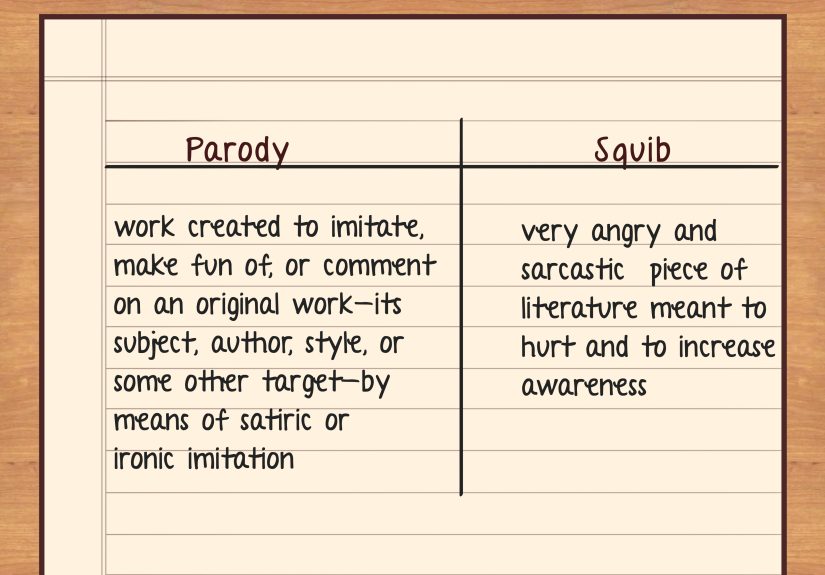
- Parody imitates a specific work or style for comic effect (often commenting on the original).
- Satire uses humor to criticize society, politics, or human behavior more broadly. Parody can be a tool of satire, but satire doesn’t require imitation.
- Spoof often plays with a broader genre or common tropes (“all horror movies,” not one exact film).
- Pastiche imitates as homagemore “love letter” than “roast.” It can be funny, but the intent is usually admiration.
In practice, these overlap. A parody can be satirical. A spoof can borrow parody techniques. The key is clarity: what exactly are you imitating, and why?
The 12 Steps to a Great Parody
Step 1: Pick a target that’s famous enough to recognize
Parody runs on recognition. If your audience doesn’t know the source, they can’t enjoy the twist. You don’t need “everyone on Earth” familiarity, but you do need “the people I’m writing for will get it.”
Quick test: if you mention your target and people respond, “Wait, who?” (or worse, “Is that a probiotic?”), consider choosing something more widely knownor add context so the parody still works without deep fandom.
Step 2: Decide your “why” (the comedic point of view)
A parody isn’t just imitation; it’s imitation with a perspective. Ask:
- What’s the funniest thing that’s true about this source?
- What does it overdo? What does it take seriously that maybe shouldn’t be?
- What’s the hidden rulebook it follows?
Example: If you parody a prestige crime drama, your “why” might be: “These shows treat brooding like cardio.” Then everything you write should prove that point.
Step 3: Study the original like you’re about to impersonate it on stage
Great parody begins as great observation. Re-watch. Re-read. Re-listen. Take notes on:
- Voice: sentence length, vocabulary, catchphrases, repeated structures.
- Rhythm: where it speeds up, slows down, pauses for “meaning.”
- Favorite moves: flashbacks, dramatic reveals, inspirational monologues, cliffhangers.
- Pet obsessions: motifs, buzzwords, the same emotional beat in different outfits.
This step is where most “meh” parodies fail. They parody what they remember, not what’s actually there.
Step 4: Identify the “signature ingredients” you must keep
Parody works when you preserve the recognizable skeleton while swapping the organs for something absurd. Pick 3–7 signature ingredients that must appear on the page (or screen, or stage).
Example: Parodying a superhero origin story? Your ingredient list might include: tragic backstory, training montage, dramatic costume reveal, a stern mentor, and a final battle that causes exactly $900 million in property damage.
Step 5: Choose your parody type: “loving imitation” or “comic takedown”
Not every parody has to be mean. In fact, many of the best ones feel like they were written by fans with a sharp eye. If you hate the source, you may write something that feels more like a rant than a joke.
Rule of thumb: If your piece could be summarized as “This is stupid,” it’s probably not parody yet. Parody is closer to “This is exactly what you are… turned up until it confesses.”
Step 6: Build a “comedy engine” (how the laughs will escalate)
A single clever imitation is a party trick. A great parody needs an engine that drives multiple jokes. Common engines include:
- Escalation: each beat raises the stakes in a ridiculous direction.
- Incongruity: the serious style applied to a trivial topic (or vice versa).
- Reversal: flipping roles, values, or expectations while keeping the style constant.
- Over-precision: obsessively specific details that reveal how weird the original’s logic is.
- Rule-of-three patterns: set up, reinforce, then surprise.
Example engine: “A fantasy epic narrated like a corporate quarterly report.” Once you choose that engine, jokes are easier: every heroic quest becomes a KPI.
Step 7: Outline the beats before you write the punchlines
Yes, outlines are sexy. Don’t fight it.
Map the structure you’re imitatingespecially if you’re parodying something formulaic like a rom-com, a true-crime podcast, or a self-help guru video. Identify the expected beats, then decide where you’ll:
- play it straight (to build credibility),
- twist it (for surprise),
- and escalate it (for payoff).
Step 8: Imitate the form first, then replace the content
One of the cleanest parody techniques is: keep the container, swap the liquid.
Examples:
- A “serious” documentary voiceover describing the mating habits of office printers.
- A recipe blog post that begins with a 1,400-word memoir about being betrayed by a potato.
- A motivational keynote cadence used to hype up… doing laundry.
The form gives your parody instant recognition; the swapped content supplies the joke.
Step 9: Write at least 30% “straight” so the funny has contrast
Parody needs a baseline. If everything is wild, nothing is wild. Include plenty of moments that feel exactly like the originalthen puncture them.
Tip: When you catch yourself adding joke-joke-joke in every sentence, pause. Ask: “Do I need a normal sentence here so the next joke lands harder?”
Step 10: Make the joke understandable even for casual fans
Deep cuts are deliciousbut only for people who are already seated at your table. Build multiple layers:
- Surface laughs (anyone can get it)
- Fan service (the faithful feel rewarded)
- Craft laughs (people who love writing/filmmaking/music enjoy the technique)
Example: If you parody a detective show, casual viewers laugh at the melodrama; fans laugh at the exact phrasing; writers laugh at the beat-by-beat structure.
Step 11: Rewrite like your life depends on it (because the jokes do)
Comedy is rewriting. Your first draft is you telling yourself the idea. Your later drafts are you telling the audienceefficiently.
Revision checklist:
- Cut throat-clearing. Start later than you think.
- Sharpen verbs. Comedy likes specificity.
- Trim extra words. Jokes are timing machines.
- Raise clarity. Confusion kills laughs faster than a “Reply all.”
- Test reads aloud. If it stumbles in your mouth, it’ll trip in a reader’s brain.
Step 12: Do a quick ethics + legal sanity check (especially if you’ll publish)
Parody often lives near copyright and reputation concerns. You don’t need to panicbut you do need to be thoughtful.
- Avoid punching down. If the joke targets vulnerable people rather than powerful institutions or ideas, it can sour fast.
- Don’t confuse parody with harassment. “Comedy” isn’t a hall pass.
- Understand fair use basics. In the U.S., fair use analysis weighs factors like purpose/character (transformative use matters), the nature of the original, how much you took, and market effect. Parody is often discussed as a use that can qualify, but it’s still fact-specific.
- Use only what you need. The goal is recognition, not replacement.
Note: This is general information, not legal advice. If you’re producing a commercial parody with significant borrowing, consider consulting an attorney.
Mini Examples: Turning Technique into Actual Lines
Example A: Parodying a serious true-crime podcast
Original DNA: ominous music, breathy seriousness, dramatic pauses, “evidence,” cliffhangers.
Parody angle: treating a trivial mystery like a national tragedy.
“On the morning of April 12th, the break room changed forever. The coffee was gone. Not ‘low.’ Not ‘needs refilling.’ Gone. And everyone had an alibi… except the intern, who claimed, quote, ‘I don’t even drink coffee.’ Which is exactly what a coffee-drinker would say.”
Example B: Parodying a self-help influencer
Original DNA: high confidence, vague wisdom, “you’ve got this,” product plug.
Parody angle: applying “mindset” language to ridiculous micro-problems.
“If your phone battery dies at 3%, that’s not a battery issue. That’s a boundaries issue. Your apps are taking and taking because you never told them ‘no.’ Anyway, use code INNERPEACE for 10% off my charger.”
Common Parody Pitfalls (and How to Dodge Them)
- Too vague: If you parody “movies,” it’s fog. Parody one franchise, one genre formula, or one filmmaker’s habits.
- Too mean: If the audience feels like they’re watching bullying, they stop laughing and start checking exits.
- Not enough original DNA: If it could be anyone, it’s not parodyjust a joke wearing generic sunglasses.
- All references, no story: Easter eggs don’t replace a structure. Build an arc.
- No escalation: One great premise still needs progression. Make it grow.
Conclusion: Your Parody Plan in One Sentence
Pick a recognizable target, study its signature moves, choose a sharp angle, and rewrite until the imitation is so accurateand the twist so surprisingthat your audience laughs before they even realize they’re impressed.
Experiences Writers Commonly Have When Learning Parody (and What They Teach You)
Most people start writing parody for the same reason they start karaoke: confidence that arrives before skill. The first attempt is often a greatest-hits pile of referencescatchphrases, character names, that one dramatic camera zoomstitched together with the enthusiasm of a golden retriever carrying six socks. That draft can be fun, but it’s also where many writers discover the first big lesson of parody: recognition isn’t the same as comedy. Simply pointing at the original and yelling “LOOK!” isn’t a joke; it’s a tour guide.
A common early experience is realizing you’ve been parodying your memory of the thing, not the thing itself. Writers who go back to the source and take notes often feel slightly betrayedlike, “Wait… the character doesn’t actually say that catchphrase that much.” This is a gift. The moment you start spotting what’s truly repeatedsentence rhythms, emotional beats, camera habits, musical patternsyou gain better targets. Parody rewards obsessive observation in a way that feels suspiciously like homework disguised as fun.
Another frequent experience: the “mean draft.” Many writers hit a phase where the parody becomes a complaint with punchlines stapled on. It’s understandablecomedy loves strong opinionsbut audiences can feel the difference between a roast that understands the original and a rant that just wants to win an argument. Writers often report that their best work arrived when they shifted from “This is dumb” to “This is fascinatingly weird.” The tone gets lighter, the jokes get sharper, and the piece starts sounding like the original againwhich makes the twists land harder.
Then comes the rewriting reality. In comedy classes and workshops, writers frequently learn that the funniest version is rarely Draft 1. The most productive “aha” moments tend to come from reading aloud (you hear the dead air), peer feedback (you learn what people actually understood), and cutting (you discover the joke was hiding behind a paragraph of warm-up). Many writers describe a specific pain: deleting a line they love because it slows the pace. That pain is the sound of skill developing.
Writers also commonly learn that parody works best with a simple engine. Without an engine, you run out of jokes and start panickingadding extra references like a chef dumping salt into a soup they forgot to stir. With an engine (escalation, serious style + trivial topic, reversal), the piece generates ideas on its own. The experience feels different: instead of hunting for random jokes, you’re building inevitability. The audience laughs because the next step is both surprising and, somehow, exactly what would happen in this weird logic world you created.
Finally, writers often develop a quiet professionalism about boundarieswhat to borrow, how to transform, when to soften a target, and how to avoid confusion with the original. If you plan to publish, you may find yourself doing a “sanity pass” where you ask: “Is this clearly my work? Is it transformative? Am I using only what I need?” That moment is when parody stops being a gag and becomes a craft. And the best part? Once you’ve built those muscles, you start seeing everything as parody-ablemovie trailers, workplace jargon, dating app bios, even your own past writing. Which is either creative growth… or the beginning of a delightful problem.