Table of Contents >> Show >> Hide
- Why Friends Swear So Much in the First Place
- Way #1: Talk to Your Friend Privately, Not Publicly
- Way #2: Use Clear, Calm Language and Make a Specific Request
- Way #3: Help Them Replace the Habit Instead of Just “Stopping” It
- What Not to Do
- When Swearing Signals a Bigger Issue
- Extra Experiences and Real-Life Scenarios Related to Making a Friend Stop Swearing
- Conclusion
- SEO Tags
If you have a friend who swears like their vocabulary was raised by late-night cable, you are not alone. Plenty of people use profanity as punctuation, comic relief, stress relief, or emotional confetti. The problem starts when those words land badly: around your kids, at school, at work, at dinner with your grandmother, or in situations where every third sentence sounds like it just lost a bar fight.
The good news is that you do not need to become the language police or carry around a giant jar labeled “Fine for Every F-Bomb.” If you want to make a friend stop swearing, the smartest approach is not humiliation, nagging, or a dramatic speech worthy of an awards show. It is a mix of timing, tact, and consistency.
In other words, if you want better language, you need better communication.
This guide breaks down three practical ways to make a friend stop swearing without starting a feud, sounding preachy, or making the whole thing weird. We will also cover what not to do, when to back off, and how to tell the difference between casual bad habits and a deeper issue with anger, stress, or self-control.
Why Friends Swear So Much in the First Place
Before you try to change anyone’s speech, it helps to understand why swearing happens. In many cases, profanity is less about rebellion and more about reflex. Some people swear when they are excited. Others do it when they are frustrated, surprised, nervous, or trying to be funny. For some, it is simply part of the social environment they learned from friends, siblings, coworkers, sports, or the internet.
That matters because you are not just trying to erase a few words. You are trying to interrupt a pattern. And patterns rarely disappear because someone hears, “Hey, stop it.” If your friend curses automatically, then the goal is not to shame them into silence. The goal is to help them notice the habit, understand the impact, and replace it with something more appropriate.
That is why the best solutions are specific, respectful, and easy to repeat.
Way #1: Talk to Your Friend Privately, Not Publicly
If you want your friend to stop swearing, do not call them out in front of a group unless your dream is to create instant defensiveness. Public correction often feels like embarrassment, and embarrassed people do not usually say, “Thank you for your thoughtful interpersonal guidance.” They usually get irritated, deny the issue, or swear more out of spite.
Pick the Right Moment
Timing matters. Do not bring it up when your friend is already upset, joking around loudly, or in the middle of an argument. Choose a calm, low-pressure moment when you can talk like actual humans instead of contestants on a reality show.
A simple private conversation works best. Think: after hanging out, during a walk, or while grabbing coffee. Keep the setting casual. The more natural the environment, the less your friend will feel ambushed.
Focus on the Impact, Not Their Character
This is where many people mess up. They say things like:
“You are so rude.”
“You always sound trashy.”
“Why do you talk like that?”
That kind of language attacks identity, not behavior. And when people feel judged as a person, they stop listening to the actual point. A better move is to describe what happens when they swear so much.
Try something like:
“Hey, can I mention something small? When there is a lot of swearing, especially around my family, it makes me uncomfortable. I’d really appreciate it if you toned it down when we’re together.”
That works because it is direct without being insulting. You are not accusing your friend of being a bad person. You are explaining the effect of the behavior.
Why Privacy Works Better
Private conversations reduce defensiveness. They also show respect, which makes cooperation more likely. When a friend feels safe instead of cornered, they are more willing to hear you out. And if your goal is to improve your friendship while reducing swearing, respect is not optional. It is the whole engine.
Way #2: Use Clear, Calm Language and Make a Specific Request
This is the step where you stop hinting and start communicating. Many people complain about swearing in vague ways:
“Can you be more respectful?”
“Watch your mouth.”
“Stop talking like that.”
Those lines may feel satisfying for two seconds, but they are not very useful. They do not tell your friend what you actually want them to do instead.
If you want change, you need to be specific.
Use an “I” Statement
A strong approach is the classic “I” statement. It keeps the conversation from sounding like an attack and helps you stay focused on the behavior you want changed.
A simple formula looks like this:
I feel… + when… + because… + I’d like…
For example:
“I feel tense when there is a lot of cursing around my niece because I don’t want her picking it up. I’d like you to keep it cleaner when we’re with family.”
Or:
“I know you don’t mean anything by it, but I feel awkward when every sentence has a swear word in it during work calls. Could you tone it down in those situations?”
Notice the difference. This is not a lecture. It is a request. And requests are easier to hear than accusations.
Be Calm, Brief, and Honest
You do not need a ten-minute TED Talk on verbal etiquette. In fact, shorter is usually better. Keep your tone calm. Keep your point clear. Keep your request specific.
A good conversation sounds like a friend talking to a friend, not a principal reading a suspension notice.
You can even soften the moment with humor if that fits your relationship:
“I love you, but your sentence structure is currently 40% verbs and 60% explosions.”
Used gently, humor can lower tension. Just make sure it does not become sarcasm. The goal is warmth, not mockery.
Ask for a Realistic Change
Do not demand perfection. If your friend swears constantly, asking them to “never swear again” is a great way to get zero progress. Ask for something practical:
- No swearing around your kids
- No swearing in public settings
- No swearing at people during arguments
- Less swearing when you hang out together
Small, clear goals are easier to remember and more likely to stick. You are not trying to redesign their entire personality. You are trying to improve one behavior in one relationship.
Way #3: Help Them Replace the Habit Instead of Just “Stopping” It
This is where real change happens. Swearing is often automatic, especially when tied to stress, surprise, pain, or excitement. That means your friend may genuinely want to stop and still blurt something out when they stub a toe, lose a game, or spill coffee on their shirt and soul.
So do not treat swearing like a simple on-off switch. Treat it like a habit loop that needs a substitute.
Suggest Replacement Words
Yes, this can feel slightly ridiculous at first. But replacement phrases work because they preserve the emotional release without using language that causes problems.
Examples:
- “Seriously?” instead of a harsher phrase
- “Come on” instead of cursing in frustration
- “What the heck” instead of a stronger expression
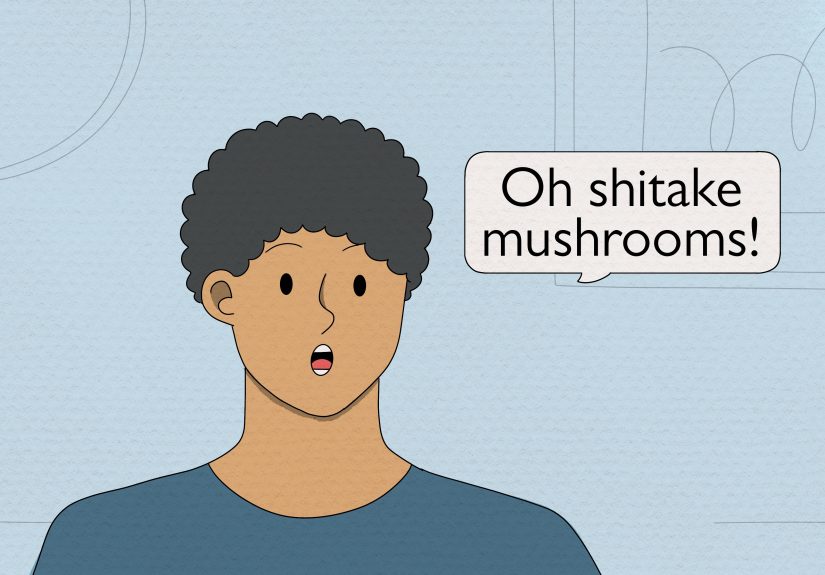
- Playful substitutes like “shoot,” “dang,” or “for the love of pizza”
The exact words matter less than the principle: give the habit somewhere else to go.
Create a Cue
If your friend is open to it, come up with a subtle reminder. Maybe you raise an eyebrow. Maybe you tap the table. Maybe you have a code word that means, “Language, my guy.”
This works best when it is agreed upon in advance and not delivered with attitude. The cue is not punishment. It is a helpful nudge.
Praise Progress, Not Just Perfection
One of the fastest ways to kill motivation is to only notice failure. If your friend makes an effort, acknowledge it.
Say:
“Hey, I noticed you toned it down around my family today. I appreciated that.”
That sentence is small, but powerful. Positive reinforcement makes new behavior feel worthwhile. People are more likely to repeat what gets noticed and appreciated.
Expect Slips
Habits rarely change in a straight line. There will probably be lapses. Your friend may do great for two days and then unload a full dictionary of profanity when traffic gets weird. That does not mean the conversation failed. It means they are human.
If they slip, keep your response steady. A quick reminder is better than a dramatic reaction. Consistency beats intensity almost every time.
What Not to Do
If you really want to make a friend stop swearing, avoid these common mistakes:
1. Do Not Shame Them
Saying they sound stupid, classless, or immature may feel satisfying in the moment, but it usually damages trust and makes change less likely.
2. Do Not Nag Constantly
If you correct every single word like a malfunctioning censorship app, your friend will tune you out. Save your energy for the bigger pattern.
3. Do Not Turn It Into a Power Struggle
If the conversation becomes about who is in charge, you have already lost the real point. This is about respect, not control.
4. Do Not Ignore Context
There is a difference between casual swearing while watching sports and swearing aggressively at people. Do not flatten every situation into the same problem.
When Swearing Signals a Bigger Issue
Sometimes profanity is just a habit. Sometimes it is a clue. If your friend swears heavily when they are angry, stressed, anxious, or emotionally overwhelmed, the language may be riding on top of something deeper.
In those cases, the better question may not be, “How do I make them stop swearing?” It may be, “What is going on with them lately?”
If you notice they are snapping at everyone, picking fights, or using profanity in cruel or aggressive ways, lead with concern. You can still set boundaries, but it may help to ask whether they are stressed, burned out, or dealing with something bigger.
Compassion and boundaries can absolutely exist in the same sentence.
Extra Experiences and Real-Life Scenarios Related to Making a Friend Stop Swearing
One of the most common experiences people have with this issue starts small. Maybe you have a funny, loyal friend who swears a lot, but at first it does not seem like a big deal. Then one day they do it at the wrong moment: at dinner with your parents, around your child, during a group project, in a rideshare, or at a public event where everyone suddenly goes quiet. That is when a harmless quirk starts to feel like a social problem.
A common mistake is waiting too long to say anything. People often stay silent because they do not want to sound uptight. Then the annoyance builds until they finally snap with something like, “Can you stop swearing for five minutes?” Usually that comes out sharper than intended, and the friend gets defensive. The better experience, almost every time, is when someone addresses it early and calmly. A short private conversation prevents a giant irritated explosion later.
Another relatable scenario happens when swearing is part of the friend group culture. Maybe everyone jokes around, teases each other, and uses rough language. Then one person starts wanting a little more restraint in certain settings. That can feel awkward because no one wants to be the person who “changed the vibe.” But this is exactly where clear boundaries matter. You are allowed to say, “I know we all joke like this, but can we keep it cleaner when my little brother is with us?” That is not a personality betrayal. That is situational maturity.
There is also the experience of realizing your friend does not even notice how often they swear. Some people are genuinely surprised when it gets pointed out. They are not trying to offend anyone; the words just come out automatically. In those cases, the conversation usually goes better than expected. Once they become aware of it, they may start catching themselves, laughing, and trying again. That is a good sign. Awareness is the first crack in any habit.
Of course, not every experience is smooth. Some friends joke about it, ignore the request, or treat it like censorship. If that happens, you learn something important: the issue may not be language alone. It may be respect. A friend who cares about you does not need to agree with your preference in every setting, but they should be willing to make reasonable adjustments in situations that matter to you. If they refuse every small request, the real problem may be their attitude toward your boundaries.
On the positive side, many people see improvement once they shift from criticism to teamwork. Maybe you and your friend invent ridiculous substitute words. Maybe you use a hand signal. Maybe you both decide to keep conversations cleaner in certain places. The process becomes less about punishment and more about shared effort. That makes success much more likely, and honestly, much less annoying.
The biggest lesson from real-life experience is simple: most people respond better to respect than to correction. If you stay calm, make your point clear, and ask for a realistic change, you have a strong chance of improving both the language and the friendship.
Conclusion
If you want to know how to make a friend stop swearing, start with this: do not try to win by force. The best results usually come from a private conversation, a calm and specific request, and a simple replacement strategy that makes the habit easier to change.
So the three best ways to make a friend stop swearing are:
- Talk to them privately and respectfully
- Use clear “I” statements and ask for a specific change
- Help them replace the habit instead of just trying to erase it
That approach protects the friendship while still protecting your comfort level. And that is the sweet spot. You are not trying to turn your friend into a Victorian poet. You are just trying to help them read the room before the room starts reading them.