Table of Contents >> Show >> Hide
- Why SaaStr Europa Matters for SaaS Founders
- The Real Value of 190+ Top VCs in One Place
- What Kinds of VCs Attend SaaStr Europa?
- How the VC Market Has Changed
- How Founders Should Prepare Before the Event
- What Investors Will Be Looking For
- How to Make the Most of SaaStr Europa Networking
- Specific Examples of Smart Founder Moves
- Why SaaStr Europa Is Bigger Than Fundraising
- Founder Experience Notes: What It Feels Like to Work the Room
- Conclusion
If you are a SaaS founder, there are conference announcementsand then there are conference announcements that make you quietly open your pitch deck, fix three slides, and wonder whether your shoes say “venture-backable.” SaaStr Europa’s headline that 190 of the top VCs are attending next week is one of those announcements.
Why? Because a dense room of venture capital investors changes the math for founders. It turns a normal SaaS event into a live marketplace for ideas, capital, partnerships, hiring referrals, and the occasional “wait, you should meet my portfolio company” moment. SaaStr Europa has long been known for bringing together founders, executives, operators, and investors in a format that is practical rather than fluffy. When hundreds of VCs show up, the event becomes more than a conference. It becomes a founder opportunity engine with coffee, name badges, and surprisingly serious hallway conversations.
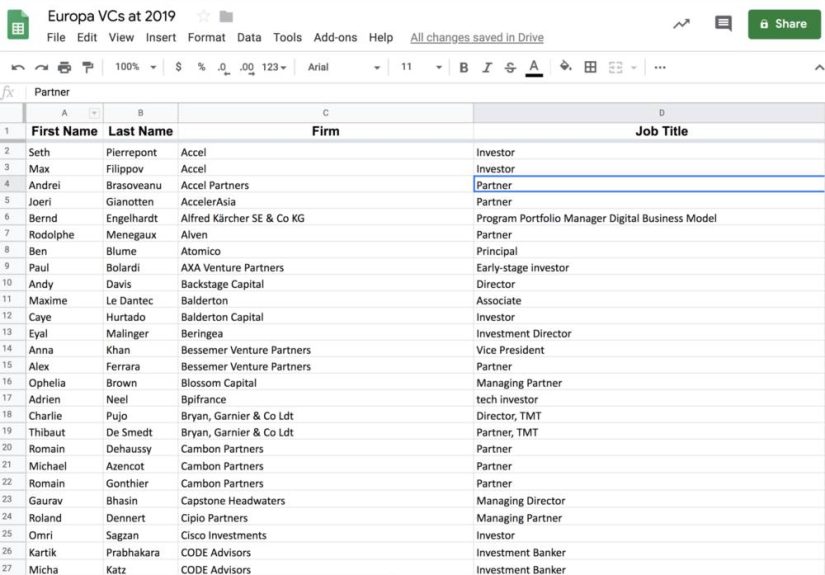
The original SaaStr Europa announcement highlighted a remarkable investor turnout: a packed venue, a founder-friendly VC ratio, and firms ranging from Accel, Bessemer, Index, and Atomico to corporate venture teams like Salesforce Ventures, Workday Ventures, and Unilever Ventures. In plain English, that means founders were not just walking into a room with “investors.” They were walking into a room with people who understand SaaS, enterprise software, cloud, AI, revenue models, product-led growth, and the beautiful chaos of building from zero to something real.
Why SaaStr Europa Matters for SaaS Founders
SaaStr Europa stands out because it attracts a highly specific crowd: B2B SaaS founders, cloud executives, AI builders, revenue leaders, and venture investors who actually know the difference between ARR, NRR, GRR, CAC payback, and “we have a lot of users but no revenue yet.” That specificity matters. A general tech conference can be exciting, but a SaaS-focused event helps founders avoid explaining the basics before getting to the good stuff.
For founders raising capital, SaaStr Europa can shorten the distance between cold outreach and real conversation. Instead of sending 70 emails into the void and refreshing Gmail like it owes you money, founders can meet investors in person, ask pointed questions, get fast feedback, and build trust. Even if a conversation does not become a term sheet, it can become a warm intro, a sharper fundraising narrative, or a better understanding of what the market expects right now.
The Real Value of 190+ Top VCs in One Place
A long list of venture capital firms is impressive. But the deeper value is density. When many investors attend the same event, three things happen.
1. Founders Can Compare Investor Fit Quickly
Not every VC is right for every startup. Some focus on seed. Others prefer Series A, growth equity, infrastructure, vertical SaaS, AI-native software, fintech, cybersecurity, healthcare technology, or enterprise automation. At SaaStr Europa, founders can quickly learn which investors understand their category, stage, geography, and business model.
That matters because fundraising is not just about finding money. It is about finding the right kind of money. A great SaaS investor can help with pricing, hiring a VP of Sales, expanding into the United States, moving upmarket, improving retention, and avoiding the classic founder mistake of celebrating bookings while churn quietly steals the snacks.
2. Investors Can Spot Patterns Across the Market
VCs attend events like SaaStr Europa not only to meet companies, but also to read the room. What are founders building? Which AI use cases are moving from demo to budget? Which go-to-market motions are working? Are buyers still cautious? Are sales cycles getting shorter? Are CFOs still guarding spend like a dragon sitting on a pile of gold coins?
When hundreds of SaaS founders and executives gather, investors get a real-time signal. That signal often influences what they want to fund next.
3. Operators, Founders, and VCs Create Better Conversations
The best venture conversations are rarely one-way pitches. They are working sessions. A founder explains the company, an investor challenges the assumptions, an operator adds practical context, and suddenly the discussion is about pipeline quality, customer concentration, pricing power, or whether AI features are truly defensible.
That is the magic of a strong SaaS event. It creates collisions between people who can help each other think better.
What Kinds of VCs Attend SaaStr Europa?
The investor mix at SaaStr Europa has historically included global venture firms, European SaaS specialists, U.S. investors looking for transatlantic opportunities, and corporate venture capital teams. Firms mentioned around SaaStr Europa have included major names such as Accel, Bessemer Venture Partners, Index Ventures, Atomico, Notion Capital, Salesforce Ventures, Workday Ventures, Threshold, Shasta Ventures, Point Nine, Partech, Blossom Capital, Dawn Capital, Sapphire Ventures, and others.
That range is important. A founder may want a seed investor who can help with the first million in ARR. Another may need a Series B investor who understands international expansion. A later-stage company may be looking for strategic capital, channel partnerships, or a corporate venture investor with customer access. SaaStr Europa gives all of those conversations a place to start.
How the VC Market Has Changed
The modern VC market is not the same market founders saw during the funding frenzy of 2020 and 2021. Investors are still active, but they are more selective. AI has pulled a huge share of attention and capital. SaaS companies are still fundable, but the bar is higher: stronger retention, clearer monetization, faster product velocity, efficient growth, and a convincing answer to the question, “Why now?”
For traditional SaaS founders, this means the pitch must go beyond “we built a useful workflow tool.” Investors want to know whether the company can become a category leader, whether AI improves the product or merely decorates the homepage, and whether customers expand over time. The strongest founders will arrive at SaaStr Europa ready to discuss growth quality, not just growth quantity.
In 2025 and beyond, top SaaS investors increasingly look at the combination of retention, customer acquisition efficiency, revenue per employee, burn multiple, and competitive moat. A startup growing fast but leaking customers may struggle. A startup growing moderately but with excellent retention, low churn, and expanding accounts may earn a deeper conversation. The days of “growth at all costs” have mostly left the building. They did not even leave a forwarding address.
How Founders Should Prepare Before the Event
Walking into SaaStr Europa without a plan is like walking into a grocery store hungry: technically allowed, but financially dangerous. Founders should prepare carefully before trying to meet investors.
Sharpen the One-Sentence Pitch
Your one-sentence pitch should explain who you serve, what urgent problem you solve, and why your solution is different. Avoid jargon soup. “We are an AI-powered, next-generation platform for enterprise transformation” sounds important but says almost nothing. A better pitch might be: “We help mid-market finance teams close their books 40% faster by automating reconciliation across fragmented ERP systems.”
Update the Investor Deck
A strong deck should cover the problem, market, product, traction, customers, business model, go-to-market strategy, team, financials, and fundraising ask. It should also answer the quiet investor questions: Why this team? Why now? Why will this become big? Why will competitors not crush it? And, perhaps most importantly, why should anyone believe the numbers?
Know Your Metrics Cold
For SaaS startups, investors will expect clear answers on ARR, growth rate, gross retention, net revenue retention, churn, CAC payback, gross margin, pipeline, sales cycle, ACV, burn rate, runway, and expansion revenue. If you do not know the numbers, bring someone who does. Preferably not a person who starts every answer with “I think.”
Research the Investors
Do not pitch every VC the same way. Review firm focus, portfolio companies, stage preference, geography, and recent investments. If an investor focuses on developer tools, do not open with a consumer wellness app unless there is a very strong enterprise angle. Personalization shows respect. It also saves everyone from awkward badge-staring.
What Investors Will Be Looking For
Top VCs at SaaStr Europa will likely be looking for founders who combine ambition with evidence. Big vision matters, but so does proof. A compelling SaaS company should show that customers care, budgets exist, usage is growing, and the product has a credible path to becoming hard to replace.
In AI-enabled SaaS, investors will ask whether AI is central to the value proposition or just sprinkled on top like parsley. Founders should be ready to explain model advantage, data access, workflow integration, cost structure, customer ROI, and how the product improves over time. “We use AI” is not a moat. In 2026, that is basically saying, “We use Wi-Fi.”
For B2B SaaS more broadly, the strongest pitches will connect product value to business outcomes: revenue growth, cost reduction, compliance, productivity, risk reduction, faster decision-making, or better customer retention. The more directly a product ties to budget and measurable results, the easier it is for investors to understand why customers will keep paying.
How to Make the Most of SaaStr Europa Networking
SaaStr has also promoted structured ways for founders to connect with investors, including Meet-a-VC style programming and event networking tools. These formats can help founders move beyond random hallway luck. Still, the founder’s job is to make the interaction useful.
Start with a clear ask. Are you raising now? Looking for feedback? Seeking category insight? Wanting introductions to design partners? Hoping to understand what milestones matter before a Series A? A focused ask makes it easier for investors to help.
Follow up quickly after the event. Keep the message short, specific, and connected to the conversation. Include the deck only if appropriate. Remind the investor what you discussed and suggest one concrete next step. Good follow-up is not needy. It is professional. Bad follow-up is sending a 900-word essay with five attachments and the subject line “Checking in again again.”
Specific Examples of Smart Founder Moves
A seed-stage founder building AI support software might use SaaStr Europa to meet investors focused on customer experience, automation, and vertical SaaS. Instead of pitching only the product, the founder could bring two customer stories showing ticket deflection, faster response time, and measurable savings.
A Series A founder selling cybersecurity compliance software could target investors who understand regulated industries. The pitch should emphasize retention, expansion, sales cycle discipline, and why compliance budgets remain durable even when the economy gets weird.
A European founder planning U.S. expansion could use the event to meet U.S.-based VCs and operators who have helped SaaS companies cross the Atlantic. That conversation might not immediately produce capital, but it could produce advice on pricing, hiring, legal setup, enterprise sales, and which mistakes are expensive enough to deserve their own documentary.
Why SaaStr Europa Is Bigger Than Fundraising
The investor list may grab attention, but SaaStr Europa is not only about raising money. Founders can learn from experienced operators, compare notes with peers, recruit future leaders, meet partners, and pressure-test strategy. In many cases, the best outcome from the event is not a check. It is clarity.
Clarity helps founders decide whether to raise now or wait. It helps them understand which metrics are weak. It reveals whether their category is heating up or cooling down. It can even show that the company does not need venture capital at all, at least not yet. That is not a failure. That is wisdom wearing a conference badge.
Founder Experience Notes: What It Feels Like to Work the Room
Imagine arriving at SaaStr Europa with a clean deck, a half-charged phone, and the emotional range of a person who has checked ARR dashboards too many times before breakfast. The room is buzzing. Founders are everywhere. Investors are moving between sessions, meetings, coffee lines, and quick conversations that somehow last 22 minutes even though both people said they only had five.
The first lesson is simple: energy matters. A founder who can explain the company with calm confidence will stand out. You do not need to perform like a game-show host. You do need to sound like someone who understands the customer, the market, and the next milestone. Investors meet hundreds of founders. The memorable ones are clear, prepared, and honest about what is working and what still needs work.
The second lesson is that the best conversations often happen outside formal meetings. A session question can lead to a hallway chat. A hallway chat can lead to a coffee. A coffee can lead to a partner meeting two weeks later. Conferences reward thoughtful presence. Do not spend the whole event hiding behind your laptop adjusting slide six. Slide six will survive. Go talk to humans.
The third lesson is to treat every investor conversation as market research, not just a fundraising attempt. If three investors ask the same question about churn, pricing, or differentiation, that is a signal. If several investors light up when you explain one customer segment but go politely quiet during another, that is useful. SaaStr Europa gives founders the rare chance to gather concentrated feedback from people who see hundreds of companies a year.
The fourth lesson is that peers are just as valuable as VCs. Another founder may introduce you to an investor, share a hiring mistake, recommend a pricing consultant, or warn you that your dream sales motion is actually a swamp with a CRM login. Founder-to-founder honesty can be priceless because it is usually delivered without theater.
The fifth lesson is to follow up while the memory is fresh. After the event, send crisp notes. Mention the conversation. Include one useful detail. Suggest a next step. Do not send generic “great to connect” messages to 47 people and call it strategy. Personal follow-up converts event energy into real momentum.
Finally, remember that SaaStr Europa is not a magic vending machine where founders insert a badge and receive a term sheet. It is a leverage point. The founders who benefit most are the ones who arrive prepared, listen carefully, build relationships, and keep moving after the event ends. The real win is not collecting business cards. The real win is leaving with sharper positioning, better investor targets, stronger confidence, and a few conversations worth continuing.
Conclusion
“Check Out 190 of the Top VCs Attending SaaStr Europa Next Week!!” is more than an exciting headline. It captures what makes SaaStr Europa powerful: a concentrated gathering of SaaS founders, serious investors, and experienced operators who care about building better B2B companies. For founders, the opportunity is not simply to meet VCs. It is to learn how investors think, test the strength of the company story, discover where the market is moving, and build relationships that may matter months or even years later.
The smartest founders will not treat SaaStr Europa like a badge-collecting marathon. They will arrive with clear metrics, a sharp pitch, thoughtful investor research, and a willingness to learn. They will ask better questions. They will listen for patterns. They will follow up with precision. And, yes, they may even find the right VC in the right hallway at the right time. Stranger things have happened in SaaSlike a pricing page that everyone agrees on.