Table of Contents >> Show >> Hide
- Why Studying Gets Boring in the First Place
- How to Study Without Getting Bored: 15 Steps
- 1. Start with a tiny, clear goal
- 2. Use short study sprints instead of endless sessions
- 3. Replace rereading with active recall
- 4. Break big topics into smaller chunks
- 5. Mix subjects or task types to keep your brain alert
- 6. Turn your notes into questions
- 7. Try the Cornell Notes approach
- 8. Build a distraction-proof study space
- 9. Stop multitasking
- 10. Make studying more active and physical
- 11. Use breaks as rewards, not escape hatches
- 12. Study with someone who actually wants to study
- 13. Teach the material out loud
- 14. Track progress where you can see it
- 15. Protect your sleep like it is part of your study plan
- Common Mistakes That Make Studying Feel Miserable
- What This Looks Like in Real Life: of Study Experience
- Conclusion
- SEO Tags
Studying can feel noble for about seven minutes. Then suddenly your water bottle becomes fascinating, your desk needs “urgent” cleaning, and you somehow develop a deep emotional attachment to checking your phone. If that sounds familiar, good news: the problem usually is not that you are lazy or “bad at studying.” More often, your study routine is just too passive, too long, too vague, or too boring for a brain that wants movement, challenge, and a clear reward.
If you want to know how to study without getting bored, the answer is not to force yourself to stare harder at a textbook like it insulted your family. The answer is to make studying more active, more structured, and more human. Strong study sessions are not endless marathons. They are built around short bursts of focus, clear goals, retrieval practice, real breaks, and methods that keep your mind engaged instead of half-asleep.
This guide walks you through 15 practical steps that can help you stay interested, remember more, and stop treating every study session like a prison sentence with snacks. Whether you are in high school, college, or just trying to learn something new without your soul leaving your body, these tips can help.
Why Studying Gets Boring in the First Place
Before fixing the problem, it helps to name it. Studying usually gets boring for a few common reasons:
- You are rereading instead of actively using the material.
- Your study goal is too vague, like “do biology.”
- You sit too long without a real break.
- Your phone keeps whispering, “Just one quick check.”
- You are tired, hungry, stressed, or trying to study in a distraction carnival.
- You do not see progress, so the work feels endless.
In other words, boredom is often a design problem. Fix the design, and studying becomes much easier to stick with.
How to Study Without Getting Bored: 15 Steps
1. Start with a tiny, clear goal
Never begin with a foggy plan. “Study history” is too big, too vague, and too easy for your brain to reject. Instead, set one small mission: “Review Chapter 4 and answer 10 recall questions,” or “Memorize 15 vocabulary words and use each in a sentence.”
Clear goals reduce resistance. They also make it easier to start, which is often the hardest part. A small win gives your brain momentum. Momentum is magical. Not actual magic, unfortunately, but close.
2. Use short study sprints instead of endless sessions
Long, unstructured study blocks sound impressive, but they often turn into low-quality time. Try working in short, focused rounds instead. A classic approach is 25 minutes of work followed by a 5-minute break, though many students prefer 30/5, 40/10, or another rhythm.
The exact timer matters less than the principle: focus hard, stop briefly, repeat. Short rounds keep mental fatigue from building too fast. They also make studying feel manageable. “I can do 25 minutes” is much easier to accept than “I guess I live at this desk now.”
3. Replace rereading with active recall
If you only remember one strategy from this article, make it this one. Active recall means pulling information out of your brain instead of just looking at it again. That can mean self-quizzing, using flashcards, covering your notes and reciting from memory, or writing down everything you remember about a topic before checking your accuracy.
This feels harder than rereading because it is harder. That is exactly why it works. When you make your brain retrieve information, you strengthen learning and keep yourself more engaged. Passive review is boring because it asks very little from you. Active recall turns studying into a challenge, and challenges are usually more interesting than silent highlighting.
4. Break big topics into smaller chunks
Trying to swallow an entire subject at once is a fantastic way to feel overwhelmed. Break your material into units you can actually handle: one concept, one chapter section, one formula type, one reading, one question set.
Chunking helps in two ways. First, it reduces the “this is impossible” feeling. Second, it gives you more frequent moments of completion, which can be surprisingly motivating. Checking off “understood photosynthesis steps” feels much better than vaguely suffering through “science.”
5. Mix subjects or task types to keep your brain alert
Studying the same exact thing for hours can flatten your attention. A smarter move is to rotate task types or subjects. For example, you might spend one round doing math problems, another reviewing vocabulary, and a third outlining a history essay.
This kind of variation can reduce monotony and help you stay mentally fresh. The trick is to switch with purpose, not randomly. You are rotating your work, not fleeing from it in different outfits.
6. Turn your notes into questions
Notes are useful, but question-based notes are even better. After class or reading, rewrite key ideas as questions. Instead of “Mitosis has four stages,” write, “What are the four stages of mitosis, and what happens in each?”
This method keeps you engaged because your study materials start talking back to you. It also makes review easier later, since you already have ready-made prompts for self-testing. Your notes stop being a pile of information and become a training tool.
7. Try the Cornell Notes approach
If your notes currently look like a panic attack in pen form, a more structured format can help. The Cornell Notes system divides the page into areas for notes, cues or questions, and a summary. That setup encourages you to organize information while learning and review it more actively later.
Even if you do not use the format perfectly, the big idea is powerful: take notes in a way you can actually study from. Good notes are not decorations. They are working tools. Pretty notes are nice, but useful notes are the real heroes.
8. Build a distraction-proof study space
Boredom gets worse when distractions are one tap away. Put your phone out of reach. Close extra tabs. Silence notifications. Keep only the materials you need on your desk. If background noise helps, choose music or ambient sound that does not hijack your attention.
Your environment shapes your behavior more than you think. If your study area is full of temptations, staying focused becomes a constant battle. Make the good choice easy and the distracting choice annoying. That is strategy, not weakness.
9. Stop multitasking
Multitasking sounds efficient, but studying while texting, scrolling, watching videos, and replying to three group chats is really just task-switching in a fancy coat. Every switch costs attention. It also makes studying feel more fragmented and less satisfying.
Single-tasking may seem less exciting in the moment, but it is usually faster, calmer, and more effective. One task. One timer. One goal. Your brain will thank you, probably not in writing, but still.
10. Make studying more active and physical
Sitting still for too long can make your brain feel like old soup. Add movement where you can. Stand for part of a review session. Walk while reciting flashcards. Pace while explaining a concept out loud. Stretch during breaks. Do a few minutes of movement before you start.
Physical activity can wake up attention and reduce that sluggish feeling that often gets mislabeled as boredom. You do not need to turn studying into a boot camp. A little movement goes a long way.
11. Use breaks as rewards, not escape hatches
Breaks help. Accidental 47-minute “breaks” that begin with one notification do not. Plan your breaks before you start. Decide what counts as a break and how long it will last. Stand up, drink water, stretch, step outside, or grab a snack. Then come back on time.
Good breaks refresh you. Bad breaks scatter your focus so badly that restarting feels like dragging a sofa uphill. Be kind to your future self and keep the break truly short.
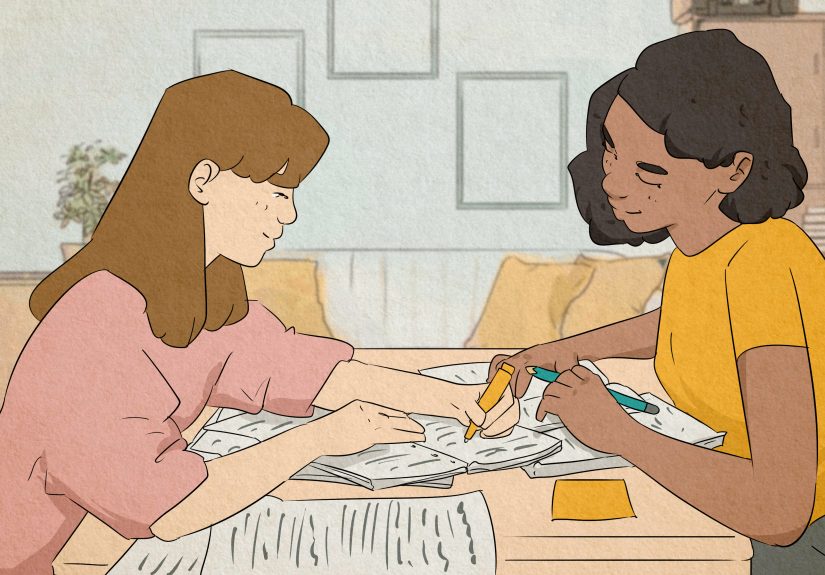
12. Study with someone who actually wants to study
A good study partner or small study group can make learning less boring and more effective. You can quiz each other, explain hard concepts, compare notes, and stay accountable. The key phrase here is good study partner. If your group turns into snack commentary and meme analysis, it is not a study group. It is a social event with notebooks nearby.
Set one goal for each group session. Decide who brings questions, who explains what, and when the session ends. Structure keeps the group useful and prevents the chaos from taking over.
13. Teach the material out loud
One of the fastest ways to discover whether you understand something is to teach it. Explain the topic out loud as if you were tutoring a friend, teaching a younger student, or making a short video lesson. Use simple language. If you cannot explain it simply, you probably need to review it more deeply.
This method is great for fighting boredom because it turns silent review into performance. Suddenly, you are not just staring at a page. You are doing something with the knowledge.
14. Track progress where you can see it
Boredom often hides a motivation problem. When you cannot see progress, effort feels endless. Keep a simple study tracker: number of sessions completed, chapters reviewed, flashcards mastered, practice sets finished, or concepts learned.
You do not need a perfect planner system with seventeen pastel markers unless that genuinely makes you happy. A basic checklist works. Visible progress helps studying feel finite, and finite work is much less depressing than “I still have everything left.”
15. Protect your sleep like it is part of your study plan
Because it is. If you are exhausted, almost every study method becomes harder, duller, and less effective. Sleep supports attention, memory, and learning. That means all-night cram sessions may feel dramatic and heroic, but they are often a bad trade.
Try to review earlier, keep a consistent sleep schedule when possible, and avoid turning every exam into a showdown between your brain and 3:00 a.m. You want your memory working with you, not filing a complaint.
Common Mistakes That Make Studying Feel Miserable
- Studying only by rereading: It feels familiar, but familiar is not the same as learned.
- Waiting until you “feel motivated”: Motivation often shows up after you begin, not before.
- Studying too long without breaks: Attention fades faster than people like to admit.
- Trying to do everything in one day: Spacing your review usually feels better and works better.
- Keeping your phone nearby: Even the possibility of distraction can pull at your attention.
- Ignoring basics: Sleep, food, hydration, movement, and stress all affect focus.
What This Looks Like in Real Life: of Study Experience
In real life, the students who stop getting bored with studying are not usually the ones with the fanciest supplies or the most dramatic “rise and grind” speeches. They are often the ones who make a few practical changes and repeat them consistently.
A common experience goes like this: a student sits down planning to study for three hours straight, opens the textbook, reads the same paragraph four times, checks messages twice, watches one “quick” video, and ends the night convinced they have no discipline. Then they switch to 25-minute study rounds, turn headings into questions, and begin quizzing themselves after each section. Suddenly, the material feels less like wallpaper and more like a game they can play. The boredom drops because their brain has a job to do.
Another very typical experience happens with note-taking. Many students assume that copying everything neatly means they are learning. But when they later try to study from those notes, they feel sleepy and detached. Once they start adding cue questions, summaries, or blank-space recall tests, the same notes become much more interesting. Instead of simply admiring information, they interact with it.
Students also often notice that boredom gets worse when they study in the wrong place. A bed is cozy, but it is not always a productivity masterpiece. A room with constant noise, open apps, and nonstop phone alerts can make even short assignments feel painful. When students move to a cleaner workspace, silence notifications, and keep only one task visible, they often report that studying feels easier almost immediately. Not magically fun, perhaps, but much less irritating.
Group study offers another revealing experience. In weak groups, one person talks too much, another never prepared, and someone always says, “Wait, before we start, look at this meme.” In strong groups, people come with questions, divide topics, quiz each other, and explain difficult ideas out loud. The difference is huge. Good study groups reduce boredom because they add structure, accountability, and social energy without turning the session into chaos.
Many students also discover that boredom is sometimes really fatigue in disguise. They think they hate the subject, but what they actually hate is trying to learn while underslept, stressed, dehydrated, and running on crumbs. After improving sleep, adding short movement breaks, and studying earlier instead of later, they often find that the same subject feels much more manageable. The work did not change. Their brain state did.
One of the most useful real-world lessons is that studying becomes more interesting when progress is visible. A checklist, flashcard count, completed practice questions, or short review log can make effort feel real. Without that, students often feel stuck even when they are improving. With it, they can see momentum building session by session.
So if you have been telling yourself, “I just get bored too easily,” it may be more accurate to say, “My current study method is not engaging me.” That is fixable. Very fixable. And once you start using methods that require action, variety, and clear goals, studying stops feeling like endless punishment and starts feeling like something you can actually handle.
Conclusion
If you want to learn how to study without getting bored, do not wait for perfect motivation to float down from the heavens. Build a study system that keeps you awake, involved, and moving forward. Use short sessions, active recall, clear goals, better notes, fewer distractions, smart breaks, and enough sleep to give your brain a fighting chance.
The truth is that studying does not have to be thrilling every second. It just has to be engaging enough that you can stay with it. When you stop relying on passive review and start using methods that make your brain work, boredom loses a lot of its power. And that is when studying starts to feel less like torture and more like progress.