Table of Contents >> Show >> Hide
- Why Everyday American Habits Feel So Obvious Only After Leaving
- The 21 Things She Didn’t Realize Were So American
- 1. Pharmaceutical Ads Everywhere
- 2. Buying Cigarettes at the Pharmacy
- 3. Calculating Sales Tax at Checkout
- 4. The Ice Obsession
- 5. Halloween as a Full-Scale Season
- 6. Bathroom Stall Gaps
- 7. Pumpkin Spice Everything
- 8. Root Beer and Dr Pepper
- 9. Ranch Dressing on Everything
- 10. Currency That Looks Very Similar
- 11. Sorority Girls, Fraternities, and College Party Culture
- 12. Garbage Disposals
- 13. 24-Hour Diners
- 14. Red Solo Cups
- 15. College Sports as a Major Industry
- 16. Putting Cheese on Everything
- 17. The Big Gulp Mentality
- 18. Calling Adults Mr. and Mrs.
- 19. Grocery Shopping at Target
- 20. Cheap Breakfast Combos
- 21. Canned Whipped Cream and Canned Everything
- What These Observations Say About American Culture
- Extra Experiences: What It Feels Like to Discover Your Own “Americanness” Abroad
- Conclusion
Note: This article is an original, web-ready synthesis inspired by real public cultural observations about American habits abroad, with added context about everyday life in the United States, Australia, and other countries.
Moving abroad is a funny little magic trick. One day you are a completely normal person who expects ice in every drink, ranch with every snack, and a cashier to reveal the final price only after a surprise math quiz. The next day, you are standing in a foreign supermarket whispering, “Wait… is this an American thing?”
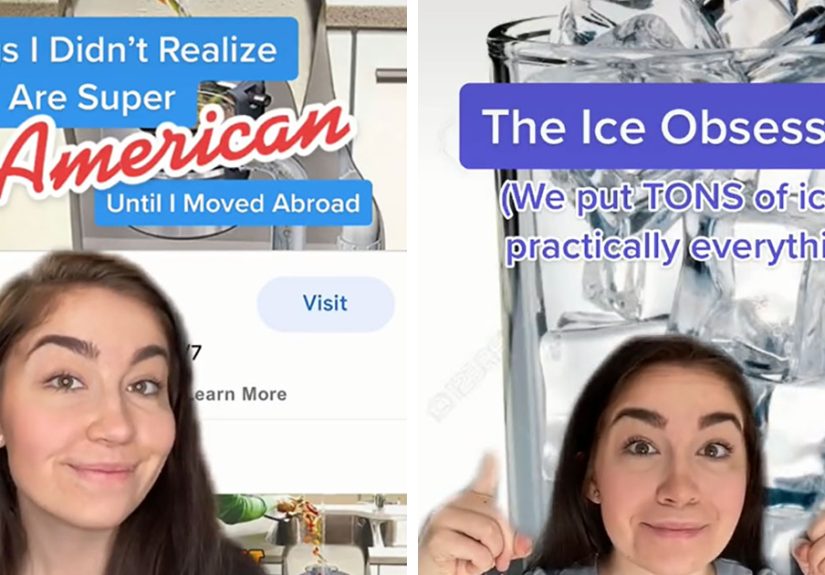
That is exactly the kind of culture shock that made Kaymie Wuerfel’s observations so relatable. After moving from Florida to Sydney, Australia, she began sharing the everyday habits, products, foods, and social customs she never realized were strongly tied to American life. Not giant patriotic symbols like bald eagles or Fourth of July fireworksalthough, yes, those qualifybut smaller things: bathroom stall gaps, Halloween intensity, 24-hour diners, pharmacy cigarette sales, and the national emotional support condiment known as ranch dressing.
The result is a delightful reminder that “normal” is often just “what I grew up around.” When people move abroad, they do not only learn about another country. They also learn, with great emotional force, that their own country has been doing some very specific things the whole time.
Why Everyday American Habits Feel So Obvious Only After Leaving
Culture is sneaky because it hides in routines. Americans usually do not wake up and think, “Today I will participate in a uniquely national beverage-size tradition.” They simply grab a large soda, fill the cup with enough ice to preserve a fish, and move on with life. But abroad, those small habits suddenly stand out. A smaller drink, a tax-inclusive price tag, a pharmacy that does not sell cigarettes, or a Halloween display that does not begin in August can feel oddly shocking.
That is why these 21 “American” things are so fun to discuss. They are not all exclusive to the United States, and they are not meant to suggest one country is better than another. Many of them exist elsewhere in some form. But in America, they often appear bigger, louder, more commercialized, or more woven into daily life. In other words: America does not just have ice. America has an ice lifestyle.
The 21 Things She Didn’t Realize Were So American
1. Pharmaceutical Ads Everywhere
One of the most striking differences for many Americans abroad is the lack of prescription drug commercials. In the U.S., it is normal to watch cheerful people hiking, gardening, or dancing at a picnic while a calm voice lists side effects that sound like the plot of a medical thriller. Many countries restrict direct-to-consumer prescription drug advertising, so the American TV experience can feel unusually medication-heavy once you have lived somewhere else.
2. Buying Cigarettes at the Pharmacy
The idea of buying medicine and cigarettes in the same store can confuse people from countries where pharmacies are treated more strictly as health-focused spaces. Some U.S. pharmacy chains have stopped selling tobacco, but the broader retail-pharmacy model has long mixed prescriptions, snacks, cosmetics, greeting cards, and sometimes tobacco under one fluorescent roof. It is convenient, yes. It is also a little like buying running shoes from a couch store.
3. Calculating Sales Tax at Checkout
In many countries, the price on the shelf is the price you pay. In much of the United States, the shelf price is more like the opening bid. Sales tax varies by state, city, county, and product category, so the final total often appears at the register. Americans grow up doing this tiny checkout calculation without thinking about it. Abroad, tax-inclusive pricing can feel almost luxurious, like the cashier has decided not to assign homework.
4. The Ice Obsession
Americans love ice in drinks. Not a polite cube or two. A glacier. A drink in the U.S. often arrives so packed with ice that the beverage itself seems to be renting space. This habit is tied partly to restaurant culture, free refills, fountain drinks, and the national preference for beverages that are cold enough to make your teeth file a complaint.
5. Halloween as a Full-Scale Season
In the U.S., Halloween is not merely a day. It is a retail season, a decorating sport, a candy economy, a costume runway, and an emotional state. In some countries, Halloween is mainly for children or is celebrated more lightly. Americans, meanwhile, may start planning costumes weeks ahead and decorate their lawns with skeletons large enough to challenge zoning laws.
6. Bathroom Stall Gaps
American public bathroom stalls are infamous for the gaps around doors. Visitors often wonder why privacy appears to have been designed by someone who had only heard rumors of privacy. While the reasons usually involve cost, ventilation, cleaning access, and safety checks, the result is still deeply awkward. Abroad, more enclosed stalls can feel like a five-star upgrade.
7. Pumpkin Spice Everything
The pumpkin spice latte helped turn fall into a flavor profile. In America, autumn arrives not with a calendar date but with cinnamon, nutmeg, clove, whipped cream, and a marketing department wearing a scarf. Pumpkin spice has expanded far beyond coffee into cereal, cookies, candles, snacks, and things that probably never asked to taste like pie.
8. Root Beer and Dr Pepper
Root beer is deeply nostalgic for many Americans, but to some people abroad it tastes suspiciously medicinal. Dr Pepper also has a strong U.S. identity, even though it is available in other markets. These drinks reveal how flavor memories are cultural. One person’s childhood soda is another person’s “why does this taste like a pharmacy?”
9. Ranch Dressing on Everything
Ranch began as a salad dressing, but America looked at it and said, “Dream bigger.” It became a dip for wings, fries, vegetables, pizza, chips, sandwiches, and almost any food that can physically support sauce. Ranch is creamy, tangy, familiar, and aggressively versatile. In American food culture, it is less a condiment than a national handshake.
10. Currency That Looks Very Similar
U.S. paper money is iconic, but compared with the colorful notes used in many other countries, American bills can look surprisingly similar. The size is uniform, the color palette is restrained, and the design language is traditional. For visitors and Americans abroad, handling colorful foreign currency can make U.S. cash feel like it was created by a very serious committee in a room with no confetti.
11. Sorority Girls, Fraternities, and College Party Culture
Greek life exists at many American universities and has become famous through movies, TV shows, and social media. Sororities, fraternities, rush week, themed parties, and campus rituals can seem larger-than-life to people from countries where university social life is less formalized around these organizations. Even many Americans find the whole thing mysterious, which is fair. Matching shirts can only explain so much.
12. Garbage Disposals
The garbage disposal is one of those kitchen appliances many Americans treat as standard. In other countries, it may be uncommon, discouraged, or absent due to plumbing systems, waste policies, or environmental concerns. Americans know the terrifying spoon-in-the-disposal sound. People without disposals have been spared this particular horror movie soundtrack.
13. 24-Hour Diners
The American diner is more than a restaurant. It is a late-night refuge, a pancake provider, a road-trip landmark, and sometimes a place where coffee appears before you have fully formed a sentence. While not every American town has endless 24-hour options, the idea of getting breakfast food at 2 a.m. is strongly associated with U.S. roadside and city culture.
14. Red Solo Cups
Red plastic cups became a visual shorthand for American parties. They show up at tailgates, barbecues, college gatherings, backyard birthdays, and countless movie scenes. Other countries have disposable cups, of course, but the red cup has achieved pop-culture status in the U.S. It is basically party equipment with a screen credit.
15. College Sports as a Major Industry
Many countries enjoy university sports, but the scale of American college athletics is unusual. Football stadiums can hold tens of thousands of fans, March basketball can dominate national conversation, and student-athletes can become household names. For outsiders, it may be surprising that a university team can inspire the loyalty usually reserved for professional clubs or family recipes.
16. Putting Cheese on Everything
Americans did not invent cheese, but they did enthusiastically invite it to almost every meal. Burgers, fries, eggs, broccoli, potatoes, nachos, sandwiches, casserolescheese is everywhere. Sometimes it improves the dish. Sometimes it is there because the menu panicked and needed a personality. Either way, cheese is a major comfort-food language in the United States.
17. The Big Gulp Mentality
Large fountain drinks are a classic example of American abundance culture. Convenience stores and fast-food restaurants helped normalize oversized cups, free refills, and the idea that a beverage should be large enough to require cup-holder engineering. Abroad, smaller drink portions can make Americans feel confused, thirsty, and emotionally under-refilled.
18. Calling Adults Mr. and Mrs.
In many parts of the U.S., especially in the South, children are taught to address adults as Mr., Mrs., Miss, or Ms. followed by a first or last name. It is meant as a sign of respect. In other cultures, the rules may be more formal, less formal, or completely different. What feels polite in one place can feel oddly distant in another.
19. Grocery Shopping at Target
Target is a particularly American retail experience because it blends groceries, clothes, home goods, beauty products, electronics, toys, seasonal decor, and impulse buys into one dangerously cheerful store. You enter for milk and leave with throw pillows, trail mix, mascara, a candle, and no memory of who authorized the cart.
20. Cheap Breakfast Combos
American breakfast can be generous: eggs, bacon, pancakes, toast, hash browns, coffee, and possibly a side dish that could feed a second person. Diners and chain restaurants helped make the big breakfast combo feel normal. In other countries, breakfast may be lighter, later, smaller, or less likely to involve enough syrup to waterproof a canoe.
21. Canned Whipped Cream and Canned Everything
Canned whipped cream is fun, fast, and extremely American in spirit: convenient, theatrical, and capable of turning pie into a tiny celebration. The broader U.S. pantry also leans heavily on canned soups, vegetables, beans, sauces, and ready-to-use ingredients. Convenience has shaped American home cooking for generations, from weeknight dinners to holiday shortcuts.
What These Observations Say About American Culture
The funniest part about this list is that none of these things are strange when you are surrounded by them. They become strange only when the background changes. In the United States, large portions, abundant retail choices, heavy convenience culture, casual dining, and seasonal marketing are part of the rhythm of life. Abroad, those same habits can look oversized, overly casual, surprisingly commercial, or charmingly enthusiastic.
America tends to scale things up. Drinks get bigger. Halloween becomes a neighborhood production. College sports become a television empire. A salad dressing becomes a pizza dip, a chip flavor, and a lifestyle. Even convenience stores become snack kingdoms where you can assemble a full meal, a road-trip survival kit, and a questionable beverage decision in under five minutes.
But the point is not to mock American life. It is to notice it. Cultural comparison works best when it is curious rather than judgmental. Every country has habits that seem invisible at home and hilarious abroad. Australians shorten words with Olympic-level commitment. The British can make tea feel like public infrastructure. The French have bread standards that would send some supermarket baguettes into witness protection. America has ice, ranch, and bathroom stall gaps. Fair is fair.
Extra Experiences: What It Feels Like to Discover Your Own “Americanness” Abroad
The first stage of moving abroad is usually excitement. New streets, new supermarkets, new accents, new menus, new coins, new rules for crossing the street, and a new sense that everyone else received a handbook you somehow missed. Then the second stage arrives: you realize that you are not just learning a new culture. You are suddenly carrying your own culture around like a backpack full of noisy snacks.
For many Americans, food is where this realization hits hardest. You may walk into a cafe and ask for iced coffee, only to receive something smaller, stronger, less sweet, or simply different from the giant cup you had imagined. You may order a soda and wonder where the ice went. You may search for ranch dressing and discover that the local supermarket treats it like an exotic import instead of a basic human right. At that moment, you learn that taste is not universal. It is memory with seasoning.
Shopping abroad can be equally revealing. In the U.S., big-box stores are designed for one-stop convenience. Need groceries, socks, allergy medicine, birthday candles, dog treats, storage bins, and a seasonal wreath shaped like a ghost? Easy. Abroad, shopping may be more specialized, more walkable, or more neighborhood-based. You might visit a butcher, bakery, pharmacy, produce shop, and grocery store separately. At first, this feels inefficient. Later, it can feel calmer, more personal, and less likely to result in buying decorative baskets you did not need.
Social habits also shift. Americans are often known for friendliness, directness, and casual conversation. In some places, chatting with strangers is welcome; in others, it can seem unusually energetic. An American may compliment a cashier, wave at neighbors, or explain their life story to someone in line for coffee. Abroad, they may slowly realize that not every silence needs to be filled, and not every stranger is waiting for a weather-based friendship audition.
Then there are holidays. American holidays can be spectacularly commercial, but also emotionally powerful. Halloween abroad may feel quiet if you are used to haunted lawns and candy aisles the size of airport terminals. Thanksgiving can feel even stranger because it is so tied to family, food, and national tradition. Living overseas often turns these holidays into DIY events. You learn to make substitutions, explain dishes, invite new friends, and accept that cranberry sauce may not be available unless you become the kind of person who plans ahead in September.
Over time, the shock softens. You stop expecting everything to work the American way. You learn the local brands, the local jokes, the local pace, and the local definition of “large.” You may even return to the U.S. and experience reverse culture shock. Suddenly the drinks look enormous, the stores look endless, the ads seem intense, and the bathroom stall gaps feel even more dramatic than before. Home becomes familiar and strange at the same time.
That is the gift hidden inside these funny observations. Moving abroad makes people more aware, not only of other cultures but of their own assumptions. It teaches humility through grocery stores, patience through public transportation, and self-knowledge through the devastating absence of a favorite condiment. You begin to understand that every country is a collection of tiny habits. Some are practical, some are historical, some are commercial, and some are just weird traditions everyone agreed not to question too loudly.
So yes, Americans may love ice, ranch, giant drinks, college sports, and pumpkin spice with unusual passion. But those quirks are part of a larger story about comfort, abundance, convenience, friendliness, and spectacle. They are the small cultural fingerprints people leave on everyday life. And sometimes it takes moving halfway around the world to see those fingerprints clearly.
Conclusion
“American” does not always mean flags, fireworks, or national anthems. Sometimes it means doing mental math at checkout, expecting free refills, dipping pizza in ranch, or wondering why a bathroom stall door appears to be making eye contact with the hallway. The 21 things Kaymie Wuerfel noticed after moving abroad are funny because they are ordinary. They remind readers that culture is not only found in museums or history books. It lives in grocery carts, coffee orders, sports Saturdays, pharmacy aisles, and the suspiciously powerful seasonal pull of pumpkin spice.
For Americans, the list is a mirror. For non-Americans, it is a field guide. For everyone, it is a reminder that the world becomes more interesting when we stop assuming our habits are universal. Sometimes the best travel lesson is not “look how different they are.” It is “wow, I have been doing a very specific thing my whole life.”