Table of Contents >> Show >> Hide
- 1. Ahsoka Was Created to Show a New Side of Anakin Skywalker
- 2. Her Original Name Was Not Ahsoka
- 3. Ahsoka Is a Togruta From the Planet Shili
- 4. She Became Anakin’s Padawan at Only 14
- 5. Her Nickname “Snips” Came From Anakin
- 6. Ahsoka Was Not Loved by Everyone at First
- 7. Her Fighting Style Is Instantly Recognizable
- 8. She Walked Away From the Jedi Order
- 9. Ahsoka Played a Major Role in the Siege of Mandalore
- 10. Captain Rex Is One of Her Most Important Friends
- 11. Her White Lightsabers Have Special Meaning
- 12. She Became the Rebel Agent Known as Fulcrum
- 13. Her Duel With Darth Vader Is Heartbreaking
- 14. Ahsoka Successfully Jumped From Animation to Live Action
- Why Ahsoka Tano Matters So Much to Star Wars
- Experience Section: Watching Ahsoka’s Journey as a Fan
- Conclusion
Ahsoka Tano may have entered the Star Wars galaxy as “Anakin Skywalker’s apprentice,” but she did not stay tucked neatly under that label for long. She arrived with a snappy attitude, two head-tails, one very patient Jedi Masterokay, maybe “patient” is generousand a destiny big enough to make the Jedi Archives need an extra shelf.
First introduced in Star Wars: The Clone Wars, Ahsoka grew from a brave young Padawan into one of the most layered characters in modern Star Wars. She survived the Clone Wars, walked away from the Jedi Order, helped the early Rebellion, faced Darth Vader, guided younger heroes, and eventually stepped into live action as a wandering Force-user with serious samurai energy. Not bad for a character some fans originally thought was just “Anakin’s kid sidekick.” The galaxy loves a plot twist.
This guide explores 14 cool facts about Ahsoka Tano, from her creation behind the scenes to her white lightsabers, her connection with Anakin Skywalker, and why she has become such a major figure in Star Wars canon.
1. Ahsoka Was Created to Show a New Side of Anakin Skywalker
Ahsoka Tano was not added to Star Wars just to give Anakin someone to boss around between space battles. Her role was much more interesting. George Lucas and Dave Filoni used Ahsoka as a storytelling bridge between the reckless Anakin of Attack of the Clones and the more controlled Jedi Knight seen in Revenge of the Sith.
By giving Anakin a Padawan, the story forced him to become responsible for someone else. That is hilarious in a tragic way, because Anakin Skywalker teaching emotional balance is a little like asking a malfunctioning droid to lead a meditation retreat. Still, Ahsoka brought out his loyalty, protectiveness, humor, and impatience. Their master-apprentice bond became one of the most meaningful relationships in the Clone Wars era.
2. Her Original Name Was Not Ahsoka
Before she became Ahsoka Tano, the character was developed under the name “Ashla.” Early concepts for The Clone Wars were very different from the final version. Dave Filoni originally imagined a story about a small crew of characters working around the edges of the war, but the focus shifted toward Anakin Skywalker, Obi-Wan Kenobi, and the front lines of the galactic conflict.
That change transformed Ashla into Ahsoka, Anakin’s Padawan. It was a smart move. Instead of being a side character in a separate adventure, Ahsoka became directly connected to the main tragedy of the prequel era. She could witness the Republic’s decline, the Jedi Order’s flaws, and Anakin’s contradictions up close.
3. Ahsoka Is a Togruta From the Planet Shili
Ahsoka belongs to the Togruta species, known for colorful skin patterns, montrals, and lekku. These features are not just a cool character design choice; they make her instantly recognizable. In a franchise full of helmets, robes, capes, and mysterious hoods, Ahsoka’s silhouette stands out immediately.
Her homeworld is Shili, where she was born before being discovered as Force-sensitive. Jedi Master Plo Koon found her when she was very young and brought her to the Jedi Temple for training. That detail matters because Plo Koon remained one of the few Jedi for whom Ahsoka showed deep personal affection. In a galaxy where parental figures have a suspicious habit of being complicated, Plo Koon was refreshingly decent.
4. She Became Anakin’s Padawan at Only 14
Ahsoka was only 14 years old when she was assigned to Anakin Skywalker during the Clone Wars. That is young enough to still be figuring out homework, snacks, and why adults keep making terrible decisionsexcept Ahsoka’s homework involved battle droids, Separatist generals, and learning how not to annoy Obi-Wan Kenobi before lunch.
Yoda assigned her to Anakin partly because Anakin struggled with attachment and control. The idea was that training a student would help him learn to let go. It almost worked. Almost. Ahsoka became independent, capable, and wise beyond her years, but her journey also made Anakin’s fear of loss even sharper.
5. Her Nickname “Snips” Came From Anakin
Ahsoka and Anakin did not begin as a perfectly polished Jedi duo. Their early relationship was full of bickering, sarcasm, and the kind of energy you get when two stubborn people are placed in the same spaceship and told to save civilization.
Anakin called her “Snips” because of her sharp remarks. Ahsoka called him “Skyguy,” which is exactly the kind of nickname that would make a heroic Jedi Knight pretend not to smile. These nicknames helped make their bond feel personal. They were not just Master and Padawan; they were family in the messy, teasing, “please stop improvising the battle plan” sense.
6. Ahsoka Was Not Loved by Everyone at First
Today, Ahsoka Tano is one of the most beloved Star Wars characters. But when she first appeared in the 2008 Clone Wars movie, the reaction was mixed. Some viewers found her too young, too bold, or too talkative. In other words, she was a teenager. Truly shocking behavior.
What changed was character development. Across The Clone Wars, Ahsoka made mistakes, learned from them, became more disciplined, and developed a strong moral compass. Fans who watched her grow saw her become more than a sidekick. She became a survivor, a leader, and eventually a symbol of what the Jedi could have been at their best.
7. Her Fighting Style Is Instantly Recognizable
Ahsoka’s lightsaber style is one of her coolest trademarks. As a Padawan, she often used a reverse grip, holding her lightsaber backward in a way that made her movements look fast, flexible, and unpredictable. Later, she added a shorter shoto-style lightsaber, giving her a dual-blade combat style that matched her agility.
Her fighting style reflects her personality: direct, quick, daring, and hard to pin down. She does not move like Obi-Wan, who fights with elegant patience. She does not fight exactly like Anakin, who tends to bring “aggressive negotiation” to a whole new level. Ahsoka blends training, instinct, and creativity into something uniquely hers.
8. She Walked Away From the Jedi Order
One of Ahsoka’s most important moments came when she left the Jedi Order. After being falsely accused of a crime and put on trial, Ahsoka was eventually cleared. But the damage was done. She had seen how quickly the Order could doubt her, and she chose to walk away.
This decision shaped everything that followed. Ahsoka did not reject compassion, justice, or the light side of the Force. She rejected an institution that had lost its way. That made her one of the most interesting Force-users in Star Wars: not a Sith, not officially a Jedi, but still deeply committed to helping people. Basically, she quit the organization but kept the values. Many adults call that “setting healthy boundaries.” The Jedi Council called it awkward.
9. Ahsoka Played a Major Role in the Siege of Mandalore
The Siege of Mandalore is one of Ahsoka’s defining chapters. No longer a Jedi, she returned to lead Republic forces alongside Captain Rex in an effort to capture Maul and free Mandalore from his control. Her duel with Maul became one of the most memorable battles in The Clone Wars.
What makes this arc powerful is timing. While Ahsoka fights on Mandalore, the events of Revenge of the Sith unfold elsewhere. Order 66 erupts, the Republic collapses, and the clones turn against the Jedi. Ahsoka survives not because the galaxy is kind, but because she is smart, brave, and refuses to abandon Rex. Their escape is emotional without needing to be loud. The silence says enough.
10. Captain Rex Is One of Her Most Important Friends
Ahsoka’s friendship with Captain Rex is one of the strongest relationships in the Clone Wars storyline. Rex begins as a loyal clone officer serving the Republic, while Ahsoka begins as a young Padawan learning how to lead. Over time, they develop mutual trust and respect.
That bond becomes essential during Order 66. Ahsoka refuses to treat Rex as disposable, even when the inhibitor chip forces him to turn against her. She risks everything to save him. Their friendship is a reminder that Star Wars is not only about chosen ones, royal bloodlines, and dramatic cape entrances. Sometimes it is about two soldiers choosing loyalty in the worst possible moment.
11. Her White Lightsabers Have Special Meaning
Ahsoka’s white lightsabers are among the most striking weapons in Star Wars. As a Padawan, she used green blades, and during the Siege of Mandalore, Anakin returned her lightsabers with blue blades. Later, during the Rebellion era, she carried white-bladed sabers.
The white blades symbolize her independent path. She is not aligned with the Sith, and she is no longer formally part of the Jedi Order. Visually, the white sabers say exactly what Ahsoka’s story says: she stands in the light, but she refuses to be boxed in by old labels. Also, let’s be honest, they look fantastic. If lightsabers had fashion awards, Ahsoka would not merely attend the ceremony; she would host it.
12. She Became the Rebel Agent Known as Fulcrum
After the fall of the Republic, Ahsoka helped the early Rebellion under the codename Fulcrum. In Star Wars Rebels, she works behind the scenes, guiding rebel cells and supporting the Ghost crew, including Hera Syndulla, Kanan Jarrus, Ezra Bridger, Sabine Wren, and Zeb Orrelios.
This role shows how much Ahsoka matured. She no longer rushes into every fight just to prove herself. Instead, she becomes strategic, careful, and deeply aware of the Empire’s danger. As Fulcrum, she is part spy, part mentor, part walking reminder that the Empire should really improve its hiring process because its enemies keep getting cooler.
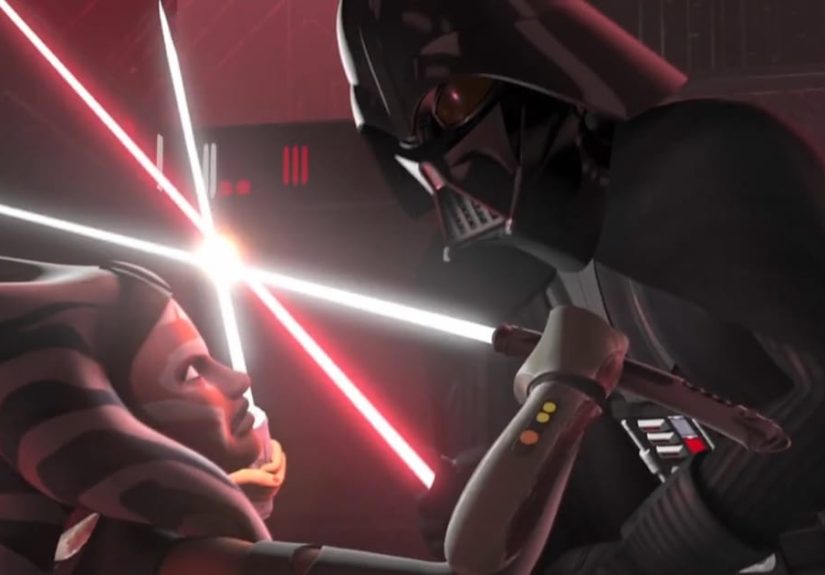
13. Her Duel With Darth Vader Is Heartbreaking
Ahsoka eventually discovers the terrible truth: Darth Vader is Anakin Skywalker. Their confrontation in Star Wars Rebels is one of the most emotional moments in the franchise. Ahsoka is not just fighting a Sith Lord. She is facing her former Master, the person who trained her, protected her, teased her, and helped shape her into a warrior.
The tragedy works because Ahsoka knew Anakin before he became Vader. She remembers the hero, the mentor, and the friend. When she says she will not leave him, the line carries years of history. It is not melodrama; it is grief with a lightsaber.
14. Ahsoka Successfully Jumped From Animation to Live Action
For years, Ahsoka lived mainly in animation, voiced by Ashley Eckstein. Eckstein’s performance gave the character warmth, humor, pain, and resilience. Later, Rosario Dawson brought Ahsoka into live action in The Mandalorian, then continued the role in The Book of Boba Fett and Ahsoka.
That transition could have been risky. Animated characters do not always survive the jump into live action with their personality intact. Ahsoka did. Dawson’s version feels older, quieter, and more burdened, while still carrying the same moral fire. She is not the teenager who once called Anakin “Skyguy,” but the person she became because of those years.
Why Ahsoka Tano Matters So Much to Star Wars
Ahsoka matters because her story challenges the idea that Star Wars heroes must fit neatly into ancient categories. She is trained by the Jedi but leaves the Order. She fights with soldiers but questions war. She loves Anakin but survives his fall. She helps the Rebellion but does not need a throne, title, or medal ceremony to prove her worth.
Her arc also gives viewers a long-form character journey rarely seen in the franchise. We meet her as a teenager, watch her stumble, see her grow through war and betrayal, and follow her into adulthood. That kind of development makes her feel real. She changes because life changes her, and the galaxy gives her plenty of reasons to update her emotional software.
Experience Section: Watching Ahsoka’s Journey as a Fan
Following Ahsoka Tano’s story feels different from watching many other Star Wars characters because her growth happens gradually. She is not introduced as a flawless legend. She begins as a young learner with confidence, impatience, and a talent for getting into trouble faster than a battle droid can say “roger roger.” That makes her easier to connect with. She is brave, but she is not perfect. She talks back, misjudges situations, and sometimes charges ahead before thinking through the consequences.
As a viewer, that slow development becomes the magic trick. One episode, Ahsoka is the energetic Padawan trying to prove she belongs. A few seasons later, she is making choices that expose the weaknesses of the Jedi Order itself. By the time she walks away from the Council, the moment feels earned. It is not rebellion for rebellion’s sake. It is a young person realizing that loyalty should not require ignoring the truth.
The most memorable experience of watching Ahsoka is seeing how her relationship with Anakin changes meaning over time. In early episodes, their banter is funny and fast. They act like siblings, teammates, and occasionally two disasters sharing one cockpit. But once viewers know Anakin’s future, every lesson he teaches her becomes heavier. His protectiveness looks loving, but also frightening. His confidence looks heroic, but also dangerous. Ahsoka survives him because she learned from him, but she also survives because she becomes strong enough to disagree with him.
Her friendship with Rex adds another emotional layer. Their bond shows the human cost of the Clone Wars better than almost anything else. Rex is not just a soldier in matching armor; he is her friend. When Order 66 happens, Ahsoka’s choice to save him instead of simply escape says everything about who she is. She values people over systems. That is why fans trust her.
Watching Ahsoka in live action adds a new feeling: reflection. The older Ahsoka is calmer, more guarded, and clearly shaped by loss. She carries history in her silence. For longtime fans, seeing her stand in live action is not just “cool cameo” excitement. It feels like watching someone you grew up with walk into the room after surviving a lifetime of storms. She is still Ahsoka, but not frozen in nostalgia.
That is why Ahsoka Tano remains so powerful. She represents growth without losing compassion, independence without bitterness, and wisdom without smug lectures. She is proof that a character can begin as a sidekick and become a pillar of the entire saga. Also, she has two white lightsabers, which is not the whole pointbut it certainly does not hurt.
Conclusion
Ahsoka Tano’s journey from Anakin Skywalker’s Padawan to independent Force-user is one of the richest stories in Star Wars. She brings together the tragedy of the Clone Wars, the fall of the Jedi, the rise of the Rebellion, and the search for identity after betrayal. Her story is cool because of the lightsabers, yes, but it lasts because of her choices.
She is not defined only by who trained her. She is defined by what she learned, what she questioned, and what she chose to protect. Ahsoka Tano began as Anakin’s apprentice, but she became something larger: a survivor, a mentor, a rebel, and one of the clearest examples of hope in a galaxy that often forgets where it parked the hope.