Table of Contents >> Show >> Hide
- Who Is Samuel Shem, MD?
- The Heart of Shem’s Message: Isolation Hurts, Connection Heals
- Why Connection Disappeared From Medicine
- Connection Is Not “Soft.” It Is Clinical.
- How to Put the Connection Back Into Medicine
- What Medical Leaders Can Learn From Samuel Shem
- What Patients Can Do, Too
- Putting the Human Back Into High-Tech Medicine
- Specific Examples of Connection in Practice
- Experiences Related to Putting Connection Back Into Medicine
- Conclusion: Connection Is the Oldest Innovation in Medicine
Modern medicine can replace a knee, edit a genome, scan a brain in dazzling detail, and remind you through three different portals that you are twelve minutes late for an appointment you logged into five minutes ago. And yet, somewhere between the electronic health record, the insurance form, the rushed hallway consult, and the waiting room television murmuring about “wellness,” a simple question keeps tapping on the exam-room door: where did the human connection go?
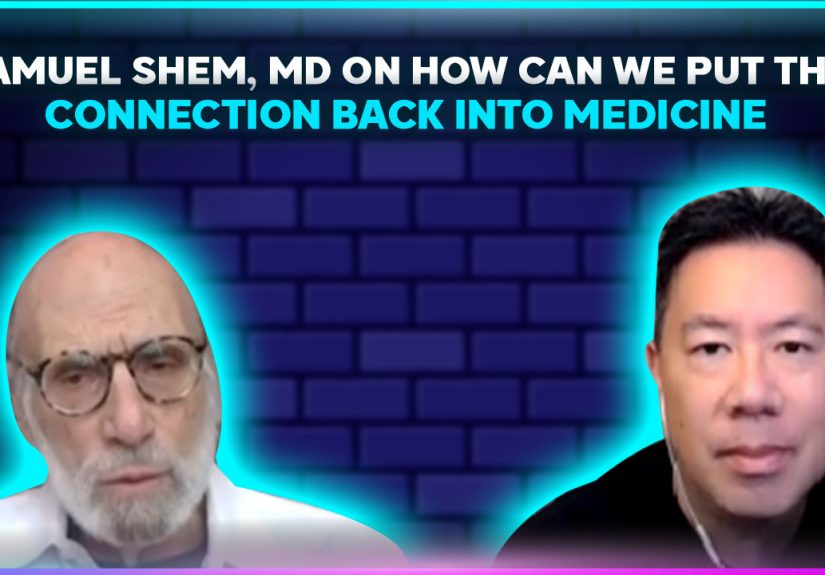
Samuel Shem, MDthe pen name of physician, psychiatrist, novelist, playwright, and medical humanist Stephen Bergmanhas spent decades asking that question with satire, compassion, and a stethoscope pressed firmly against the soul of medicine. Best known for The House of God, his legendary novel about internship, Shem exposed the emotional cost of medical training long before “burnout” became a conference keynote, a dashboard metric, or a wellness email sent at 11:47 p.m.
His message has sharpened over time into a deceptively simple prescription: connection comes first. Not after the lab results. Not after the billing code. Not after the physician answers six portal messages and eats lunch over a keyboard. First. Because when connection is missing, even brilliant care can feel cold; when connection is present, even frightening care can become bearable.
Who Is Samuel Shem, MD?
Samuel Shem is the literary name of Dr. Stephen Bergman, a Harvard-educated physician with graduate training at Oxford and Harvard Medical School. His career bridges medicine, psychiatry, literature, theater, activism, and medical humanities. He is associated with NYU Grossman School of Medicine and has written works that explore the inner life of clinicians, patients, families, and institutions.
His most famous book, The House of God, was published in 1978 and became a cultural landmark in American medicine. It followed exhausted interns through a fictionalized Boston hospital and used outrageous humor to reveal something painfully serious: doctors in training were often being dehumanized while they were expected to deliver humane care. The novel was scandalous, funny, uncomfortable, and, for many clinicians, embarrassingly accurate. It became the kind of book passed from resident to resident like contraband wisdom wrapped in paperback covers.
But Shem is not merely the author of a famous medical satire. His later writing, speeches, and interviews have expanded the conversation from survival in training to healing the system itself. His work argues that medicine loses its moral center when it isolates clinicians from one another, separates doctors from patients, and turns human beings into tasks.
The Heart of Shem’s Message: Isolation Hurts, Connection Heals
One of Shem’s best-known ideas is that isolation is deadly and connection heals. That phrase sounds like something you might find embroidered on a throw pillow in a therapy office, but in Shem’s work it is not sentimental. It is a survival principle.
In medical training, isolation can look like the intern who is too ashamed to admit confusion. It can look like the resident who sees a patient die and is expected to keep moving as if grief were a software bug. It can look like the attending who wants to be kind but has been rewarded for speed, productivity, and emotional armor. It can look like a patient surrounded by monitors yet feeling unseen.
Shem’s insight is that disconnection does not merely make medicine unpleasant; it makes medicine unsafe. When clinicians cannot speak honestly, mistakes hide. When patients do not feel heard, they may withhold symptoms, skip medications, or disappear from follow-up. When nurses, doctors, pharmacists, social workers, and families operate in separate silos, care becomes a game of telephone played with lab values and discharge instructions. Nobody wins, except possibly the fax machine, which refuses to retire.
Why Connection Disappeared From Medicine
To put connection back into medicine, we first need to understand how it slipped out. It did not vanish because doctors woke up one morning and decided empathy was inefficient. Most clinicians entered health care because they wanted to help people. The trouble is that many systems make the helping part harder than it should be.
1. The Screen Moved Between Doctor and Patient
Electronic health records have benefits: legible notes, medication lists, lab tracking, data sharing, and fewer mysteries caused by handwriting that resembles a spider tap-dancing in ink. But the screen can also become a third party in the room. When a clinician spends the visit clicking boxes, hunting for the correct template, or typing while the patient speaks, the human signal weakens.
Shem has warned that technology can cool the relationship when it pulls attention away from the person. The problem is not the computer itself. The problem is when the computer becomes the main character and the patient becomes a supporting actor in their own appointment.
2. Productivity Became a Moral Substitute
Health systems often measure what is easy to count: visits completed, relative value units, length of stay, documentation closure, and patient throughput. These things matter, but they are not the whole story. A clinic can run “efficiently” while everyone inside feels spiritually flattened, like a pancake under a hospital bed wheel.
Connection requires time, but not always much time. Sometimes it takes ten seconds of eye contact, one sincere question, or a pause before touching the doorknob. The larger challenge is cultural: systems must treat relational care as real care, not as decorative frosting on the medical cupcake.
3. Medical Training Can Reward Emotional Distance
Medical learners are often taught compassion in orientation and detachment by experience. They may absorb the message that vulnerability is weakness, uncertainty is incompetence, and asking for help is dangerous. Shem’s work pushed back against this long before wellness committees had logos. He showed that doctors do not become better healers by becoming less human.
Healthy professionalism is not emotional numbness. It is the ability to stay present, skillful, and grounded without pretending that suffering is ordinary paperwork.
Connection Is Not “Soft.” It Is Clinical.
Some people hear “connection” and imagine warm lighting, herbal tea, and someone whispering about vibes. But in medicine, connection is practical. It affects diagnosis, adherence, safety, trust, and outcomes.
A patient who trusts a clinician may mention the chest pressure they were embarrassed to bring up. A family member who feels included may catch a medication discrepancy. A nurse who feels respected may speak up before a preventable error. A doctor who feels connected to colleagues may ask for help before exhaustion becomes harm.
Relationship-centered care does not reject science. It makes science usable. Evidence-based medicine still needs a human being to explain the evidence, understand the patient’s values, and help choose what makes sense in real life. After all, no randomized controlled trial can fully capture Mrs. Johnson’s fear of surgery because her husband never came home from one, or Mr. Lee’s reluctance to start insulin because his work schedule makes refrigeration difficult.
How to Put the Connection Back Into Medicine
Shem’s philosophy can be translated into practical habits for clinicians, leaders, medical educators, and patients. The goal is not to turn every appointment into a fireside chat. The goal is to make human connection reliable, repeatable, and protected from the machinery around it.
1. Begin With Presence
Before opening the chart, open the relationship. A simple greeting, the correct pronunciation of a name, and a few seconds of undivided attention can change the emotional temperature of a visit. Patients notice whether a clinician seems present or merely physically located in the room.
Presence does not require theatrical tenderness. It can be as straightforward as: “Before we look at the test results, tell me what you are most worried about.” That sentence is small, but it turns the visit from a transaction into a partnership.
2. Use “We” Carefully and Honestly
Shem has often emphasized moving from “I” and “you” toward “we.” In medicine, “we” can be powerful when it is sincere. “We’ll figure this out together” tells the patient they are not being abandoned with a diagnosis and a printout. “We need to decide what matters most to you” makes room for shared decision-making.
But “we” must not become a trick. It should not mean, “We have decided that you will do what I say.” A true “we” respects the patient’s knowledge of their own life. The clinician brings medical expertise; the patient brings lived expertise. Good care needs both.
3. Practice Shared Decision-Making
Shared decision-making is not a slogan; it is a structure for respect. It means discussing options, benefits, harms, uncertainties, and patient preferences. It is especially important when there is more than one medically reasonable path.
For example, a patient considering a preventive screening test may need more than a recommendation. They may need to understand the chance of benefit, the risk of false positives, the burden of follow-up, and how those factors fit their values. Connection turns information into a decision the patient can own.
4. Use Teach-Back Without Making Patients Feel Tested
Teach-back is one of the simplest tools for safer communication. Instead of asking, “Do you understand?”a question that often produces a polite yes even when confusion is tap-dancing in the cornerthe clinician asks the patient to explain the plan in their own words.
The key is to frame it as a test of the explanation, not the patient. For instance: “I know I covered a lot. To make sure I explained it clearly, can you tell me how you’ll take this medicine when you get home?” That small shift protects dignity while improving understanding.
5. Design Clinics Around Relationships, Not Just Appointments
Connection cannot depend entirely on heroic individuals. A compassionate doctor trapped in a chaotic system can only do so much before becoming a very kind candle in a wind tunnel. Health systems need workflows that support relationship-centered care: team-based communication, adequate staffing, continuity when possible, interpreter services, thoughtful scheduling, and documentation tools that do not devour the visit.
Patients should not have to retell their story from scratch every time they meet a new person. Care teams should not need detective-level skills to discover what happened at the last appointment. A system that remembers is a system that connects.
6. Care for the Caregivers
One of the most powerful lines associated with Shem’s work is the question: how can clinicians care for patients if nobody cares for them? This is not self-pity. It is arithmetic. Exhausted, unsupported, morally injured clinicians cannot endlessly manufacture empathy out of fumes.
Burnout remains a major concern in American medicine, even as some recent measures show improvement. Addressing it requires more than yoga discounts and inspirational posters near the elevator. It requires reducing administrative burden, improving staffing, supporting mental health, creating psychological safety, and giving clinicians a voice in how care is delivered.
What Medical Leaders Can Learn From Samuel Shem
Shem’s work is often funny, but the humor carries a warning: systems that mock humanity eventually damage everyone inside them. Leaders who want to restore connection should start by examining what their organization rewards.
If a hospital praises compassion but schedules visits too tightly for listening, the schedule is the real mission statement. If a residency program tells trainees to speak up but punishes vulnerability, silence becomes the curriculum. If a clinic claims to value patient-centered care but measures only speed, then speed will win.
Leaders can put connection back into medicine by asking practical questions: Do our clinicians have time to listen? Do our teams know one another? Can nurses and residents question decisions safely? Are patients and families included in quality improvement? Does the EHR serve the visit, or does the visit serve the EHR? Are we measuring trust, continuity, and communication with the same seriousness that we measure throughput?
What Patients Can Do, Too
The responsibility for fixing medicine should not be dumped on patients, who already have enough to manage, especially when they are ill. Still, patients can help create connection by preparing questions, bringing medication lists, asking for clarification, and speaking up about what matters most to them.
A useful phrase is: “Can I tell you what I’m most worried about?” Another is: “Can you explain that in plain language?” And one of the best is: “Here’s what would make this plan hard for me.” These statements invite partnership. They help clinicians see the person behind the diagnosis.
Medicine works best when patients are not passive recipients and clinicians are not distant authorities. The best care often sounds like a conversation between people who respect each other enough to be honest.
Putting the Human Back Into High-Tech Medicine
The future of medicine will almost certainly include more artificial intelligence, remote monitoring, genomic tools, wearable devices, digital triage, and automated reminders. None of these is automatically bad. A good tool can reduce suffering. A bad workflow can turn a good tool into a tiny bureaucratic goblin.
The question is not whether medicine should use technology. It should. The question is whether technology will protect or replace the human relationship. A well-designed system can free clinicians to spend more time listening. A poorly designed system can bury them under alerts, clicks, and copy-pasted notes that say everything except what matters.
Shem’s message gives modern medicine a compass: use the machine, but do not become the machine. Let data inform care, but let relationship guide it. Let algorithms assist, but let human judgment, humility, and compassion remain at the center.
Specific Examples of Connection in Practice
Imagine a primary care visit for uncontrolled diabetes. In a disconnected model, the clinician sees the A1C, increases medication, tells the patient to improve diet, and leaves. The note is complete. The billing is correct. The plan is medically reasonable. It may also fail completely.
In a connected model, the clinician asks what has been hardest. The patient explains that they work night shifts, eat from vending machines, and are afraid of needles because of a childhood hospitalization. Now the plan changes. The team discusses medication options, connects the patient with nutrition support that fits their schedule, uses teach-back, and sets one realistic goal. Same disease. Better medicine.
Or consider a hospital discharge. A disconnected discharge is a stack of papers and a hurried signature. A connected discharge includes the patient and family, reviews warning signs, confirms medications, checks transportation, and asks the patient to repeat the plan. The difference may determine whether the patient heals at home or returns confused and frightened two days later.
Experiences Related to Putting Connection Back Into Medicine
Anyone who has spent time around hospitals knows that connection often appears in small, almost invisible moments. It is the nurse who notices that a patient keeps staring at the phone and asks, “Are you waiting for someone to call?” It is the resident who sits down for ninety seconds and somehow makes the room feel less like a factory. It is the medical assistant who remembers that the patient’s daughter just had a baby. No billing code fully captures these moments, but patients remember them with astonishing clarity.
In one common clinic scenario, a patient arrives angry because the appointment started late. The easy response is defensiveness: the schedule is packed, the lab was delayed, three people needed urgent attention, and the printer has chosen violence. But a connection-first response sounds different: “I’m sorry you had to wait. I know your time matters. Let’s make sure we use the time we have well.” That does not magically fix the schedule, but it repairs the relationship enough for care to begin.
Another experience many clinicians recognize is the emotional weight of the “doorknob question.” The visit is nearly over. The clinician’s hand is practically on the door. Then the patient says, “One more thing…” and reveals the real concern: chest pain, depression, domestic fear, a new lump, or the inability to afford medication. In a purely productivity-driven system, the doorknob question feels like disaster wearing shoes. In a connection-centered system, it is understood as a signal: the patient needed trust before truth. The challenge is to build visits where the real concern can come earlier, not because patients are rushed, but because they feel safe.
Connection also matters among clinicians. A resident who can say, “I’m not okay after that code,” is safer than one who jokes cruelly and disappears into silence. A nurse who can challenge an order without being humiliated protects the patient. A pharmacist who is treated as a partner, not a medication vending machine with credentials, can prevent harm. Shem’s emphasis on “we” applies here with force. The patient is cared for by a network, and the strength of that network depends on whether people trust one another enough to speak.
Families also teach medicine about connection. A daughter at the bedside may know that her father nods politely even when he understands nothing. A spouse may recognize the first sign of delirium. A parent may know that a teenager will not mention pain unless asked privately. When health care teams include families appropriately, they do not weaken medical authority; they strengthen reality. The chart contains data, but loved ones often hold context.
There is also a lesson in apology. When something goes wrong, many institutions instinctively retreat into guarded language. But patients and families usually want honesty, accountability, and a human being willing to stay in the room. Connection does not mean perfection. It means not abandoning people when perfection fails. In that sense, connection is not merely bedside manner. It is moral courage with eye contact.
The most hopeful experience is that connection is contagious. One physician who sits down may inspire a trainee to do the same. One leader who listens seriously to nurses may change the tone of a unit. One clinic that redesigns refill requests, inbox coverage, and team huddles may give clinicians enough breathing room to rediscover why they entered medicine. The work is not glamorous. It is practical, repetitive, and deeply humanlike washing hands, except for the soul of the system.
Conclusion: Connection Is the Oldest Innovation in Medicine
Samuel Shem, MD has spent a lifetime reminding medicine of something it already knows but keeps forgetting: healing is relational. The best medicine does not ask clinicians to choose between science and humanity. It insists that science works better when delivered through trust, attention, humility, and partnership.
Putting connection back into medicine does not mean returning to a nostalgic past. The past had plenty of hierarchy, silence, and harm. It means building a better future where technology supports relationships, training protects humanity, leaders reward collaboration, and patients are treated as people rather than problems to process.
Shem’s prescription is simple enough to fit on a sticky note and demanding enough to redesign a health system: connection comes first. In the exam room, that means listening before clicking. In the hospital, it means teams that speak honestly. In leadership, it means measuring what matters to human beings. And in the heart of medicine, it means remembering that no machine, metric, or form can replace the healing force of one person truly showing up for another.