Table of Contents >> Show >> Hide
- First: What Is “…” in the Actual Punctuation Sense?
- In Texts, “…” Becomes a Tone Marker (Not Just Grammar)
- What Does “…” Mean in Text? Common Meanings (With Real-World Examples)
- 1) “I’m trailing off / I don’t know what to say”
- 2) “Pause for effect” (a.k.a. suspense mode)
- 3) “I’m hesitant / I’m being careful”
- 4) “This is awkward”
- 5) “I’m annoyed” (the famous ‘ominous dots’)
- 6) “I’m implying something I’m not saying out loud”
- 7) “I’m trying to be gentle” (softening a blunt message)
- 8) “I’m thinking” / “I’m processing”
- 9) “I’m flirting (or teasing)”
- 10) “I’m continuing this thought in another message”
- Why “…” Can Feel Passive-Aggressive (Even If It Isn’t)
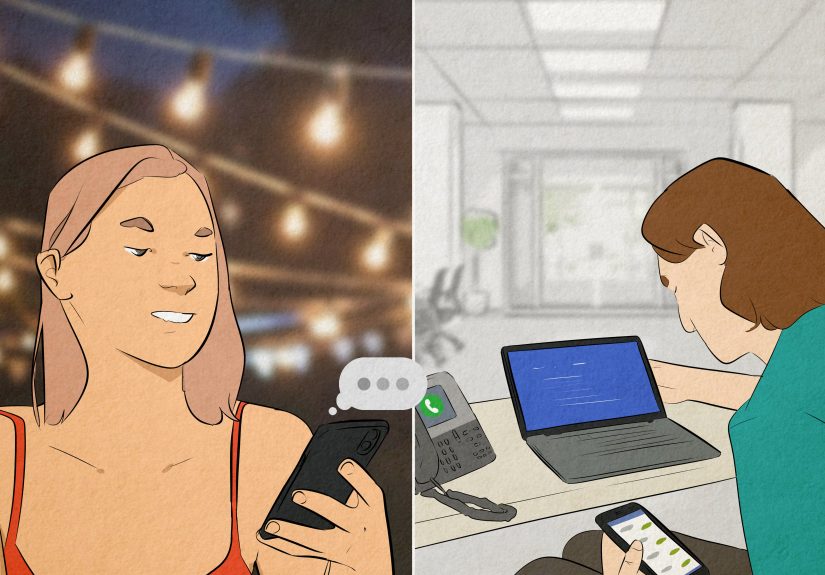
- “…” vs the Typing Indicator (They Look Similar, But They’re Not)
- How Many Dots Is Normal? (And Does It Change the Meaning?)
- Generational and Personal Style Differences: One Person’s “Friendly Pause” Is Another’s “Uh Oh”
- Quick “…” Translation Chart (So You Don’t Spiral)
- How to Use “…” Without Sounding Weird (Unless You Want To)
- What to Use Instead of “…” (If You Want Clarity)
- How to Respond When Someone Sends “…”
- “…” in Formal Writing vs Texting: The Same Dots, Different Rules
- So What Does “…” Represent in a Text?
- of Real-Life “Dot Dot Dot” Experiences (Because Yes, This Happens All the Time)
- Conclusion
Three tiny dots. One giant emotional rollercoaster. If you’ve ever received a text that ends with “…” and immediately thought, “Uh oh… what did I do?”you’re not alone. In modern messaging, dot dot dot isn’t just punctuation. It’s tone. It’s timing. It’s sometimes suspense… and sometimes a tiny passive-aggressive gremlin wearing a cardigan.
This guide breaks down what “…” (also called an ellipsis) can mean in texts, how it’s different from the formal writing version, why people interpret it so differently, and how to use it without accidentally starting a friendship-ending Cold War.
First: What Is “…” in the Actual Punctuation Sense?
In traditional writing, an ellipsis is a set of three dots used mainly for two jobs:
- Omitting words from a quote (to shorten it without changing meaning)
- Showing a pause or trailing off (to indicate unfinished thought or hesitation)
That’s the classroom version. It’s tidy. It behaves. It uses an indoor voice. Texting, however, is where punctuation goes to develop a personality.
In Texts, “…” Becomes a Tone Marker (Not Just Grammar)
When people talk face-to-face, tone comes from voice, pauses, facial expressions, and timing. In a text message, you’re stuck with letters, emojis, and punctuation doing the heavy lifting. So the ellipsis often becomes a nonverbal cuea little “pause button” that signals emotion.
The tricky part is that “…” doesn’t have one universal meaning. It changes based on: the relationship, the context, the sender’s age and habits, and what happened in the conversation five minutes ago.
What Does “…” Mean in Text? Common Meanings (With Real-World Examples)
Here are the most common ways people use three dots in texting, plus what the receiver often hears. (Sometimes those are not the same thing. At all.)
1) “I’m trailing off / I don’t know what to say”
This is the closest to the classic writing meaning: an unfinished thought.
Example: “I just… I don’t even know…”
Often reads as: overwhelmed, emotional, speechless, unsure.
2) “Pause for effect” (a.k.a. suspense mode)
Ellipses can create dramatic timing, like a comedian waiting for the laughor a friend about to drop news.
Example: “So I talked to your ex…”
Often reads as: something big is coming. Brace yourself.
3) “I’m hesitant / I’m being careful”
Sometimes the dots soften a statement, signaling uncertainty or delicacy.
Example: “I mean… maybe we should leave a little earlier?”
Often reads as: trying not to offend, tiptoeing into a suggestion.
4) “This is awkward”
A standalone “…” or a sentence ending in it can signal silence that feels… loud.
Example: “…”
Often reads as: uncomfortable pause, “I have no words,” or “you really said that?”
5) “I’m annoyed” (the famous ‘ominous dots’)
This is where the ellipsis gets its reputation. Ending a short message with “…” can feel like a side-eye.
Example: “Okay…”
Often reads as: disbelief, irritation, judgment, or “we’ll talk later (and it won’t be fun).”
6) “I’m implying something I’m not saying out loud”
The dots can hint at subtext: “You can connect the dots… because I’m not writing them.”
Example: “Sure, go ahead and do that…”
Often reads as: sarcasm, skepticism, or a warning wrapped in politeness.
7) “I’m trying to be gentle” (softening a blunt message)
Some people use ellipses like verbal cushioningespecially if they avoid exclamation points.
Example: “Hey… can we talk later?”
Often reads as: serious but not aggressive, careful tone.
8) “I’m thinking” / “I’m processing”
Dots can signal a mental pauselike someone looking up at the ceiling mid-conversation.
Example: “Let me see… what time did you say?”
Often reads as: reflective, searching memory, calculating.
9) “I’m flirting (or teasing)”
In the right context, “…” can add playful tension.
Example: “Oh really…”
Often reads as: teasing, intrigued, “tell me more.”
10) “I’m continuing this thought in another message”
Some people use “…” as a “to be continued” signespecially if they text in short bursts.
Example: “And then he said…”
Often reads as: a story is unfolding, wait for the next text.
Why “…” Can Feel Passive-Aggressive (Even If It Isn’t)
Short messages carry more “tone weight.” If someone texts “Thanks.” that period can feel firm or cold. Add ellipses“Thanks…” and the brain often starts filling in invisible emotion: “Thanks… I guess.” “Thanks… for nothing.” “Thanks… we need to talk.”
That doesn’t mean the sender intended drama. It means texting forces us to interpret tiny cues as if they were facial expressions. In other words: in messaging, punctuation can become “paralinguistic” (tone without voice).
“…” vs the Typing Indicator (They Look Similar, But They’re Not)
On many apps, you’ll see three bouncing dots in a speech bubble to show someone is typing. That’s a system indicator, not punctuation. It can still cause anxietybecause it screams, “something is coming”but it isn’t the same as someone sending a literal “…”
Fun fact: the typing indicator has basically turned suspense into a user interface feature. Sometimes people type, erase, retype, and disappearleaving you with emotional cliffhanger credits rolling in your head.
How Many Dots Is Normal? (And Does It Change the Meaning?)
In formal writing, it’s typically three dots (or sometimes four when combined with a sentence-ending period). In texting, people may use 3, 4, 7, 12, or an entire dotted runway depending on mood.
- “…” = standard ellipsis vibe (pause, trailing off, subtext)
- “…..” = stronger silence, heavier emotion, or bigger dramatic pause
- “..” = often accidental, or a quick “wait”
More dots usually amplify whatever emotion is already thereespecially awkwardness or disbelief.
Generational and Personal Style Differences: One Person’s “Friendly Pause” Is Another’s “Uh Oh”
One reason the three dots meaning in text gets messy is that people learn digital tone rules at different times. Some texters grew up using ellipses as casual separatorsalmost like commas or line breaks. Others learned that ellipses signal tension, sarcasm, or ominous silence.
Translation: you might be reading someone’s “thinking pause” as “I’m mad,” while they’re just typing the way they’ve always typed.
Quick “…” Translation Chart (So You Don’t Spiral)
| Text You See | Common Interpretation | What It Might Actually Mean | Low-Drama Reply |
|---|---|---|---|
| “Okay…” | Annoyed or skeptical | Uncertain / processing | “All goodwant to decide on a time?” |
| “Sure…” | Passive-aggressive yes | Reluctant yes | “If that doesn’t work, we can do something else.” |
| “…” | Judgmental silence | Speechless / distracted | “You okay?” |
| “I mean…” | About to criticize | Hesitant / choosing words | “Tell me what you’re thinking.” |
How to Use “…” Without Sounding Weird (Unless You Want To)
If you like ellipses, you don’t have to give them up. You just need to use them with intentionlike hot sauce. Great in small amounts. Dangerous when you pour the whole bottle into the group chat.
Use “…” when you want to:
- Show a genuine trailing thought: “I was thinking… maybe a movie?”
- Create suspense for good news: “Guess what…I got the job!”
- Signal hesitation: “I’m not sure… can we talk?”
- Make playful tension (with people who get your vibe): “Oh really…”
Avoid “…” when you’re:
- Writing professionally (unless you’re intentionally softening tone)
- Responding to conflict (it can read sarcastic even if you mean calm)
- Ending short statements like “Thanks…” or “Fine…” (these often land ominous)
What to Use Instead of “…” (If You Want Clarity)
If your goal is “don’t accidentally sound mad,” here are safer swaps:
- Use a complete sentence: “Okaysounds good to me.”
- Add a context clue: “Okay… I’m thinking it through.”
- Use an emoji sparingly: “Okay 🙂” (softens tone, but don’t overdo it)
- Use a question: “Okaydo you want to do 7 or 8?”
- Use a line break instead: “Okay.
Let’s do it.”
How to Respond When Someone Sends “…”
Before assuming doom, check the context:
- Is the topic emotional? Dots may signal speechlessness or careful wording.
- Is this how they always text? If yes, it might just be their style.
- Did you just ask a big question? A pause may mean they’re thinking.
When in doubt, reply with clarity instead of mirroring the ambiguity. Try:
- “I’m not sure how to read thatare you okay with the plan?”
- “No pressure. Want to think on it and get back to me?”
- “All good either wayjust tell me what you prefer.”
“…” in Formal Writing vs Texting: The Same Dots, Different Rules
In formal writing, ellipses have style-guide rules: spacing, placement, and whether to use them for omitted text or trailing thoughts. In texting, the “rules” are social and emotionaland much less consistent.
A useful mental model: In formal writing, ellipses show missing words or a pause. In texting, ellipses show missing tone.
So What Does “…” Represent in a Text?
Most of the time, “…” represents a pause with meaning: hesitation, suspense, discomfort, implied subtext, gentle softening, or annoyance. The dots aren’t the messagethey’re the tone of the message.
If you want the safest summary, here it is: “…” usually means “there’s something else hereemotion, context, or continuation.”
of Real-Life “Dot Dot Dot” Experiences (Because Yes, This Happens All the Time)
Most people learn the power of “…” the same way they learn the power of “K”: by accidentally receiving it at 10:47 p.m. and immediately reviewing every life decision they’ve made since 2009.
A classic experience: the friend who texts, “We need to talk…” with no follow-up. You stare at your phone like it’s a ticking bomb, replaying your last conversation, wondering if you forgot a birthday, insulted their dog, or committed a crime in a group chat. Meanwhile, they meant: “We need to talk… about which pizza place is open.” The ellipsis wasn’t a threatit was a dramatic pause accidentally set to “soap opera.”
Then there’s the family-group-chat ellipsis, often used as a sentence separator: “Hi honey… did you eat… call me… love you…” Some relatives use dots the way others use commas or line breaks. The sender thinks they’re being warm and conversational. The receiverespecially if they grew up in faster-paced texting normsmay read it as ominous or disappointed. Nobody is wrong. They’re just operating on different punctuation dialects.
Work messages add another layer. Imagine getting, “Can you send that file…” from a manager. If you’re already stressed, those dots can feel like unspoken criticism: “Can you send that file… that you should have sent earlier… that I’m annoyed about…” The manager might simply be multitasking, typing quickly, or softening a request to avoid sounding too demanding. In professional spaces, ellipses are often a substitute for tone: “I’m asking politely, not ordering you.” But because they’re ambiguous, they can backfire.
Dating app conversations are practically an ellipsis theme park. “So… what are you looking for?” can be flirty curiosity, cautious probing, or “I have concerns.” The same three dots can signal playful tension or emotional distance depending on what came before. People also use ellipses to slow the pace, adding a sense of anticipation. But if overused, it can feel like someone is constantly half-saying things and making you do the emotional math.
And yes, the single most confusing “…” moment for many people is receiving it alone as a reply. No words. Just dots. That can mean: “I’m speechless,” “I’m disappointed,” “I’m thinking,” “I’m busy,” or “my cat stepped on my phone.” The healthiest response is usually a clarifier instead of a spiral: “Heydid you mean to send that?” or “What’s up?” Clear language beats punctuation mind-reading every time.
Conclusion
The meaning of dot dot dot in text isn’t fixed, but the pattern is: it signals a pause that carries emotion or subtext. Used thoughtfully, “…” can add warmth, suspense, or softness. Used carelessly, it can sound annoyed, awkward, or ominous. If you’re ever unsure, the best move is simple: add one extra sentence of clarity. Three dots can start confusion. Five extra words can end it.