Table of Contents >> Show >> Hide
- What Is the Magnus Effect, Exactly?
- Why a Magnus Effect Drone Looks So Wrong to the Human Brain
- The Big Clarification: Magnus Rotor vs. Cyclocopter
- What Real Research Says About This Strange Category of Flight
- Why Engineers Keep Coming Back to These Drones
- So Why Isn’t Everybody Flying One Already?
- Could Magnus Effect Drones Have a Real Future?
- What “Looks Impossible” Really Means in Aerodynamics
- Extended Experience Section: What It Feels Like to Watch, Build, and Test a Magnus-Style Drone
- Conclusion
Note: This article is based on real aerospace research and engineering reporting. Source links are intentionally omitted for clean web publishing.
Every so often, the internet coughs up a flying machine that makes people stare at the screen, squint a little, and quietly ask, “That thing is airborne… why?” A Magnus effect drone is exactly that kind of machine. It does not look like a normal quadcopter. It does not look like a normal airplane. In some cases, it does not even look like a machine that has made peace with gravity. And yet, when the geometry is right and the airflow cooperates, it flies.
That visual weirdness is exactly why the idea keeps coming back. Engineers love it because it challenges familiar assumptions about lift and thrust. Hobbyists love it because it feels like cheating. Viewers love it because it looks as if someone gave a physics textbook a soldering iron and an attitude problem.
But here is the important part: a so-called Magnus effect drone is not magic. It is fluid dynamics, pressure differences, spin, and control. Sometimes it uses a true Magnus-lift concept built around a spinning cylinder or rotating body. Sometimes it borrows the spirit of Magnus-driven lift but is technically closer to a cyclocopter or cyclorotor aircraft, where blades rotate around a horizontal axis and change pitch as they move. Those categories are related, but they are not identical. That distinction matters if you want to understand why these drones look impossible, why some of them really can fly, and why so many prototypes still behave like a caffeinated shopping cart in a wind tunnel.
What Is the Magnus Effect, Exactly?
The Magnus effect is the aerodynamic force produced when a spinning object moves through a fluid such as air. If one side of the spinning body speeds the airflow up while the other side slows it down, pressure changes develop around the body. The result is a force that pushes the object sideways relative to the oncoming flow. That same basic principle helps explain why curveballs bend, why golf balls hang in the air longer with spin, and why engineers have spent more than a century wondering whether spinning cylinders might be useful for aircraft too.
In plain English, spin messes with the air in a useful way. A wing generates lift by shaping and turning airflow. A spinning cylinder or spinning body can also turn airflow, just in a stranger, more theatrical manner. That is why Magnus-based aircraft concepts have always lived in the fun little overlap between “serious aerodynamics” and “this looks like a dare.”
For a drone, the idea is seductive. If a spinning surface can create lift, then maybe flight does not have to rely only on conventional propellers. Maybe it can come from rotating drums, cylinders, off-center wings, or paddlewheel-like rotor systems. That is where the impossible-looking part begins.
Why a Magnus Effect Drone Looks So Wrong to the Human Brain
It breaks the propeller habit
Most people have learned what “flying hardware” looks like. Airplanes have wings. Helicopters have big rotors. Quadcopters have four smaller rotors that buzz like angry kitchen appliances. A Magnus effect drone often has none of those familiar visual cues. Instead, it may have a spinning cylinder, a rotating wing around a shaft, or a pair of barrel-like cyclorotors that resemble paddle wheels from a riverboat that wandered into aerospace engineering.
Your brain sees it and says, “That is not a wing.” Physics replies, “Close enough.”
Lift is coming from spin and airflow interaction
With a conventional propeller, the lifting logic is easy to picture: blades push air down, craft goes up. With Magnus-based systems, the airflow pattern is less obvious. The spinning body alters the pressure field around it, and the resulting force is not visually intuitive. It can feel like the aircraft is being held up by a trick rather than a mechanism.
It is not a trick. It is just less photogenic physics.
Some designs vector thrust in weird directions
Cyclocopters are especially guilty of making flight look fake. Their blades rotate around a horizontal axis, and the blade pitch changes throughout the rotation. That lets the aircraft point thrust in different directions almost instantly. So instead of tilting its whole body forward like a helicopter, a cyclocopter can redirect thrust more directly. To an observer, that looks deeply suspicious, like the drone skipped a few chapters in the beginner’s guide to aviation.
The Big Clarification: Magnus Rotor vs. Cyclocopter
Online, these ideas are often mixed together. That is understandable because both families of aircraft use spinning structures and both can look gloriously absurd. Still, there is a useful difference.
A true Magnus-effect drone
A true Magnus-lift craft leans on the aerodynamic force created by a rotating body moving through airflow. Think spinning cylinders, rotating shells, or experimental monocopters that use spin itself as a major source of lift. In these machines, the “curveball effect” is doing real aerodynamic work.
A cyclocopter or cyclorotor drone
A cyclocopter uses several blades arranged around a rotating frame. As those blades travel around the circle, their pitch changes so they create net thrust in the direction the designer wants. That is not the same thing as simply spinning a cylinder and harvesting Magnus lift. It is a more controlled, mechanically involved concept. But because the rotors are cylindrical and the craft often looks like a flying paddlewheel, people commonly associate it with Magnus-effect flight anyway.
Why the confusion persists
Because both designs look as though they escaped from a lab after hours. Also because both force people to rethink what a rotor can be. The naming gets sloppy, but the engineering question stays sharp: can these unconventional systems fly efficiently, controllably, and usefully enough to matter?
What Real Research Says About This Strange Category of Flight
The answer is more encouraging than skeptics might expect. University research in the United States has shown that cyclocopters are far more than doodles in a notebook margin. The University of Maryland’s rotorcraft researchers demonstrated stable cyclocopter micro air vehicle flight in 2011, later achieved successful hover with a palm-sized cyclocopter, and eventually built a multi-modal version capable of moving through air, land, and water. That is not “cool concept art.” That is a real development path.
Texas A&M researchers pushed the scale down even further, developing an ultralight micro cyclocopter weighing just 29 grams. At that size, every fraction of a gram becomes a full-blown engineering drama. Blade construction, frame stiffness, and control integration all matter. When the total aircraft weighs about as much as a small snack, bad design decisions are not minor. They are gravity with paperwork.
Research and engineering coverage also point to several reasons cyclocopters remain attractive. They can provide nearly instantaneous thrust vectoring. They can transition from hover to forward flight without the same kind of large-body pitch motion helicopters often need. At very small scales, some studies suggest they may compare favorably with conventional small rotors because the aerodynamic environment is different and because unsteady effects can be exploited rather than feared.
That does not mean they are automatically better than quadcopters. It means the design space is real, promising, and still very much under active exploration.
Why Engineers Keep Coming Back to These Drones
1. Maneuverability
A conventional rotorcraft often has to tilt to produce horizontal motion. A cyclocopter can redirect thrust more directly by changing blade pitch through the rotation. That can create unusually agile motion, especially in tight spaces. For small reconnaissance drones or compact urban aircraft concepts, that is a serious advantage.
2. Small-scale potential
When aircraft shrink, conventional solutions do not always scale gracefully. Researchers studying micro air vehicles have repeatedly noted that tiny flight comes with nasty aerodynamic compromises. Cycloidal propulsion has been attractive in part because it offers a different path at low Reynolds numbers, where small aircraft start behaving like the universe has a personal grudge against simplicity.
3. Compact footprint
Texas A&M researchers have pointed out that cyclocopters can use available 3-D space well and may require a smaller footprint than conventional helicopters at small scales. That matters for drones intended to launch from a hand, operate near obstacles, or move through cluttered environments.
4. Historical persistence for a reason
The cycloidal propeller idea is not new. University of Washington historical material traces significant work on it back to the 1920s, including development linked to William Boeing. If an idea survives that long in aerospace without dying of embarrassment, it usually means there is something there. Maybe not immediate commercial dominance, but enough aerodynamic promise to keep researchers curious.
So Why Isn’t Everybody Flying One Already?
Weight is brutal
Unconventional rotors are mechanically demanding. Spinning structures must be strong enough to survive centrifugal loads while remaining light enough to leave some weight budget for motors, batteries, controls, and actual usefulness. That tradeoff becomes uglier as scale increases. A design that looks clever in CAD can become very rude in hardware.
Control is hard
Early cyclocopter efforts struggled with stability. Modern sensors, processors, and autopilots have changed the game, but control remains one of the central challenges. The aircraft does not just need lift. It needs predictable, repeatable, stable lift across changing speeds, gusts, and transitions. “It flew once in the garage” is not the same thing as “it is a viable aircraft.”
Drag can ruin the party
Magnus-based and cycloidal systems can create lift and thrust, but they are not immune to aerodynamic penalties. Rotating cylinders and paddlewheel-like structures can bring significant drag and structural complexity. In other words, yes, the craft may fly. The harder question is whether it flies better than the boring thing with propellers. Aerospace history is full of brilliant machines that lost that comparison.
Internet demos can oversimplify the mechanism
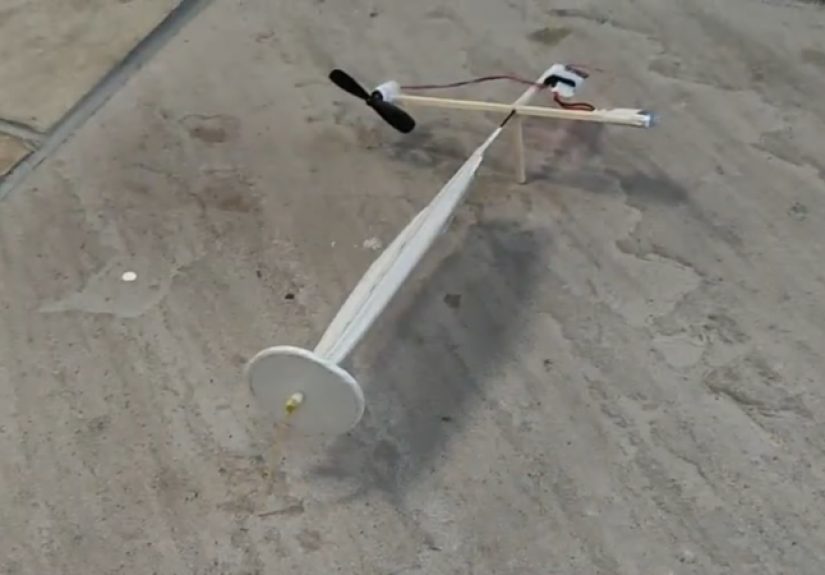
Recent DIY experiments have revived public interest in “Magnus effect drones,” including monocopter-style builds that appear to use one motor and a spinning off-center lifting element. They are fascinating proof-of-concept machines. But even robotics observers have noted that the exact source of lift in some of these projects can be debatable. That is a healthy reminder that a wild-looking flight video is not the same thing as a fully settled aerodynamic explanation.
Could Magnus Effect Drones Have a Real Future?
Possibly, yes. Not because they will replace every quadcopter on Earth, but because they may excel in niches where their strange advantages matter. Small reconnaissance drones, high-agility urban flyers, compact VTOL systems, and experimental aircraft all stand to benefit from thrust vectoring, tight-space maneuverability, and unconventional rotor behavior.
There is also the simple fact that aerospace progress often comes from ideas that look silly until materials, control systems, and manufacturing catch up. Helicopters were once ridiculous. Multirotors were once hobby curiosities. A cyclocopter or Magnus-lift drone may still be early, awkward, and occasionally chaotic, but that does not mean it is wrong. It may just be arriving before the market knows what to do with it.
And let’s be honest: engineers are not likely to stop building aircraft that make other engineers lean closer to the screen and say, “Okay, hold on… run that back.”
What “Looks Impossible” Really Means in Aerodynamics
When people say a Magnus effect drone looks impossible, they usually mean one of three things. First, the lifting surface does not resemble a conventional wing. Second, the motion of the craft does not match the body-tilt logic people expect from helicopters and quadcopters. Third, the aircraft often seems to generate useful force from spin in a direction that is not visually obvious.
But impossible is the wrong word. Unfamiliar is better. Counterintuitive is even better. Aerodynamics has always been full of machines that looked wrong until somebody measured the airflow, mapped the pressures, and proved otherwise. The Magnus effect itself sounded like a parlor trick before it became standard classroom material. The same may happen, in more specialized form, with future unconventional drones.
So the next time one of these odd flying machines appears online, wobbling into the air like a science project with confidence issues, do not dismiss it too quickly. It might be a dead end. It might be a brilliant niche solution. Or it might be the early awkward phase of a design that later becomes completely normal. Aerospace has a long history of that exact plot twist.
Extended Experience Section: What It Feels Like to Watch, Build, and Test a Magnus-Style Drone
Watching a Magnus-style drone fly for the first time is a very specific kind of engineering joy. The reaction is rarely a calm, scholarly nod. It is usually a laugh, a pause, and then a flood of questions. The machine looks wrong before it looks impressive. That is part of the appeal. A quadcopter lifting off feels expected now. A spinning-cylinder craft or a tiny cyclocopter lifting off feels like the laws of physics briefly changed their dress code.
For builders and researchers, the experience is even more intense. Everything starts with doubt. On paper, the idea can be elegant. In the workshop, elegance meets vibration, slop in the mechanism, motor imbalance, flex in the frame, and the unpleasant discovery that “lightweight” and “stiff enough” are not automatically friends. That is why so many teams obsess over blade materials, tiny carbon rods, film coverings, custom frames, and awkward little control linkages. Before the aircraft becomes impressive, it becomes annoying. Every unconventional drone earns its personality through debugging.
The first tests are often humbling. Instead of a triumphant hover, the craft may skid, hop, yaw violently, or flip over like it suddenly remembered another appointment. That does not necessarily mean the concept is broken. It often means the control authority is off, the mass distribution is bad, or the spinning structure is not doing exactly what the model assumed. Small changes matter a lot. Move one component a little farther from center, stiffen a blade root, tweak the pitch schedule, alter rotor inertia, and a machine that behaved like a blender with ambitions can suddenly start acting like an aircraft.
There is also a sensory difference with these drones. Conventional propeller craft have a familiar buzzing sound. A Magnus-style or cyclorotor machine often produces a more unusual acoustic signature, with pulsing, fluttering, or rhythmic spinning sounds that make it feel mechanical in a more visible way. You do not just hear propulsion. You hear the mechanism thinking out loud.
As an observer, the most memorable moment is usually not the longest flight. It is the first stable one. The craft rises, hesitates, and then holds itself together just long enough to make the whole idea believable. In that instant, the weirdness changes categories. It stops being a curiosity and becomes a technology. That is a small but important emotional shift. A machine that looked impossible now looks difficult, and difficult is a much more exciting word because difficult can be improved.
That is why these drones keep attracting attention. They turn flight back into a visible experiment. They remind people that aerospace is not finished, that “normal” aircraft are only normal because decades of design made them feel inevitable. Magnus-effect and cyclocopter drones pull the curtain back a little. They show that the air is still full of strange possibilities, and some of them really do fly.
Conclusion
A Magnus effect drone flies because spin changes airflow, airflow changes pressure, and pressure creates force. A cyclocopter flies because cyclically pitched blades moving around a horizontal axis can generate controlled thrust in surprising directions. Both can look impossible. Neither is imaginary. The best way to think about them is not as gimmicks, but as unconventional aircraft exploring a part of the design map that standard propellers do not fully cover.
That does not guarantee a Magnus-style drone will become the next mainstream UAV platform. It does guarantee something more interesting: engineers will keep testing these weird machines because the underlying physics is real, the control possibilities are intriguing, and the occasional successful flight is too compelling to ignore. Some aircraft win you over with elegance. These win you over by looking like they should fail, then flying anyway.