Table of Contents >> Show >> Hide
- What Amazon Actually Announced
- Why the Fire HD 8 Still Matters
- The Biggest Upgrades in the New Fire HD 8 Family
- What Makes the Fire HD 8 Plus Different?
- The Fire HD 8 Kids and Kids Pro Are the Real Strategy Play
- Accessibility and Fire OS: Quietly Important Upgrades
- The Catch: Fire Tablets Are Still Very Much Fire Tablets
- Who Should Actually Buy One?
- Experience in the Real World: Where These Tablets Fit Best
- Final Verdict
Amazon did not roll into town with a flashy, tablet-shaped spaceship. Instead, it did something much more Amazon-like: it quietly took one of its most popular budget devices, gave it a practical upgrade, and launched four new versions designed to keep shoppers, streamers, readers, parents, and kids firmly inside the Fire universe. In other words, the company did not try to out-iPad the iPad. It tried to make the Fire HD 8 more useful, more portable, and just tempting enough to toss into a cart while buying paper towels and batteries.
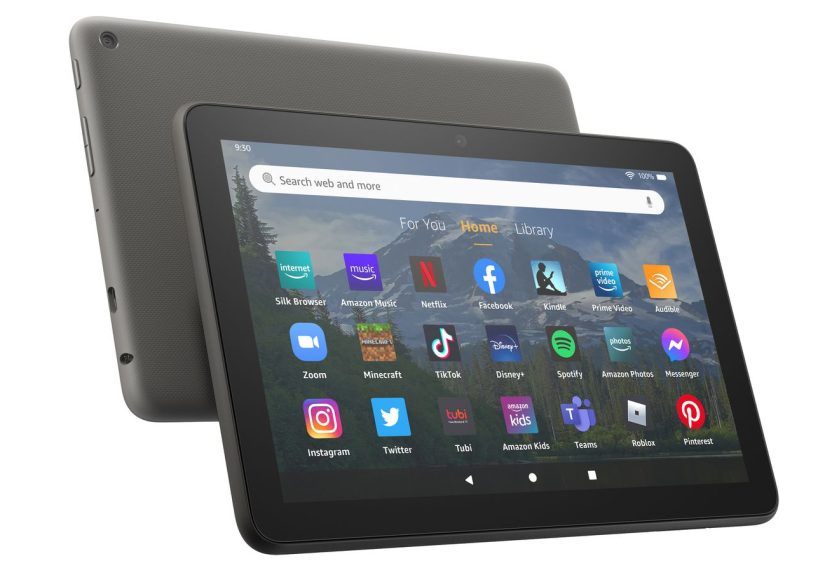
That strategy explains the buzz around the Fire HD 8 refresh. The lineup added four new tablets: the standard Fire HD 8, the Fire HD 8 Plus, the Fire HD 8 Kids, and the Fire HD 8 Kids Pro. On paper, the upgrades sounded modest but meaningful: a faster processor, longer battery life, thinner and lighter hardware, USB-C charging, expandable storage, and more kid-focused options. On the premium side of this very un-premium family, the Plus model added extra RAM, wireless charging, and a sharper rear camera. For families, Amazon doubled down with child-friendly cases, parental controls, bundled content, and even Disney-themed options.
So, is this a big deal? In the budget tablet world, yes. In the “drop everything and cancel your dinner plans” sense, probably not. But that is the point. Amazon knows exactly what Fire buyers want: affordable entertainment, easy access to Prime Video, Kindle, Audible, Alexa, and just enough performance to keep the tablet from feeling like it belongs in a museum. The Fire HD 8 refresh is not a revolution. It is a calculated, family-friendly tune-up that makes Amazon’s middle tablet more competitive in the only arena that really matters for it: value.
What Amazon Actually Announced
The headliner was simple: Amazon refreshed the Fire HD 8 family with four new tablets. The standard Fire HD 8 remained the entry point, starting at a price that kept it squarely in impulse-buy territory. The Fire HD 8 Plus sat one rung above it for buyers who wanted a bit more breathing room for multitasking and charging convenience. Then came the two kid-focused variants, which took the same general hardware philosophy and wrapped it in parental controls, rugged cases, curated content, and age-specific design choices.
The four new Fire HD 8 tablets
- Fire HD 8 the mainstream budget model for streaming, reading, browsing, and everyday couch duty.
- Fire HD 8 Plus the slightly more capable version with more RAM, wireless charging, and a better rear camera.
- Fire HD 8 Kids aimed at younger children, with a chunky protective case, a year of Amazon Kids+, and a two-year worry-free guarantee.
- Fire HD 8 Kids Pro built for older kids, with a slimmer case, more grown-up interface, and parent-approved access to a digital storefront.
That four-tablet approach was not random. It was Amazon being Amazon: one base product, multiple lanes, and a gentle but persistent nudge to spend a little more. Not enough to cause sticker shock, just enough to make the Plus or Kids edition seem like the smart “while I’m here” choice.
Why the Fire HD 8 Still Matters
In a market ruled by iPads, Galaxy Tabs, and productivity-minded tablets with keyboard cases and lifestyle ambitions, the Fire HD 8 remains stubbornly practical. It is the tablet for people who want something smaller than a laptop, cheaper than an iPad, and more comfortable than holding a phone for two straight hours while watching a cooking video or reading a mystery novel. It is also, frankly, the tablet for people who hear “premium aluminum chassis” and respond, “That is nice, but I am trying to spend under $150.”
The 8-inch size is a huge part of the appeal. Reviewers and retailers alike have long treated this format as the sweet spot between too-small bargain slates and larger 10-inch models that are better for productivity but less cozy for travel. The Fire HD 8 is portable enough for airplanes, kitchen counters, backpacks, bedside tables, and back seats. It is the kind of device that fits into real life without demanding a separate sleeve, a careful carrying ritual, or a dramatic speech about screen technology.
Amazon clearly understands that. The company positioned the updated Fire HD 8 not as a work machine or creative powerhouse, but as a compact entertainment hub. That means Prime Video, Kindle books, Audible audiobooks, casual games, web browsing, Zoom calls in a pinch, and Alexa features baked right in. It is not glamorous. It is useful. And useful is how budget tablets win.
The Biggest Upgrades in the New Fire HD 8 Family
1. A faster processor, even if nobody is calling it a speed demon
Amazon said the new Fire HD 8 family used a hexa-core processor that was up to 30% faster than the previous generation. That sounds impressive, and to be fair, it is a welcome improvement for a line that has sometimes felt one open tab away from a small panic attack. Everyday tasks like jumping between streaming apps, browsing the web, reading, and running split-screen features should feel smoother than before.
That said, several reviews made it clear that “faster” does not mean “fast-fast.” This is not the tablet you buy to juggle demanding apps, edit video, or prove anything to an iPad owner. It is the tablet you buy because you want a reasonably responsive screen for media and casual use without paying premium-tablet money. Think less “sports car” and more “reliable hatchback with decent cup holders.”
2. Better battery life and more portable hardware
Amazon rated the new models for up to 13 hours of battery life, which is one of the most important upgrades in this lineup. Budget tablets get a lot of forgiveness if they last all day, and the Fire HD 8 has always lived or died by that equation. For streaming, reading, browsing, or keeping kids occupied on a road trip, battery life matters more than benchmark bragging rights.
The refreshed hardware was also thinner and lighter than before, with an 8-inch HD display protected by strengthened aluminosilicate glass. Amazon even leaned into durability claims, saying the Fire HD 8 tested as twice as durable as the iPad mini in tumble tests. That is the kind of sentence designed to reassure parents, travelers, and anyone whose tablet occasionally meets the floor in a very intimate way.
3. Expandable storage and USB-C remain smart choices
The standard Fire HD 8 offered 32GB or 64GB of storage, and like the rest of the family, it supported microSD expansion up to 1TB. That is a big deal in a world where expandable storage has become weirdly rare. For budget-minded buyers, the ability to add storage later is often more valuable than squeezing into a higher-priced configuration on day one.
USB-C charging also stuck around, which should not be revolutionary in the 2020s, but here we are. It makes charging easier, reduces cable nonsense, and keeps the device from feeling unnecessarily dated out of the box.
What Makes the Fire HD 8 Plus Different?
The Fire HD 8 Plus is where Amazon tries to whisper, “Come on, it is only a little more.” And to be fair, the extra features are not meaningless.
The Plus model added 3GB of RAM for better multitasking, a 5MP rear-facing camera, faster charging with the included adapter, and Qi wireless charging support. It could also work with Amazon’s wireless charging dock to slip into Show Mode and act a bit like a countertop smart display with hands-free Alexa. For people who already live in Amazon’s ecosystem, that is a clever little bonus.
Still, the Plus is not a giant leap above the standard model. Reviews generally treated it as the better version for Amazon fans, not a category killer. The extra RAM helps, but it does not magically transform the tablet into a productivity beast. The camera upgrade is nice, but nobody is buying a Fire tablet because they dream of becoming a tablet photographer. The bigger question is whether the added convenience is worth the extra cost. For many Prime-heavy households, the answer is yes. For everyone else, maybe not.
The Fire HD 8 Kids and Kids Pro Are the Real Strategy Play
If the standard Fire HD 8 is the value play, the kid-focused models are the sticky-business play. These devices are not just tablets. They are content funnels, subscription vehicles, and family-tech training wheels wrapped in foam cases and parental dashboards.
Fire HD 8 Kids
The Fire HD 8 Kids is aimed at younger children, generally ages 3 to 7. It comes bundled with a kid-proof case, a one-year subscription to Amazon Kids+, and a two-year worry-free guarantee. Parents get controls over screen time, educational goals, and content management, while kids get access to books, games, apps, and videos from brands like Disney, Nickelodeon, and PBS Kids. Amazon even introduced Disney Design bundles with Mickey Mouse and Disney Princess cases, because apparently tablets now need wardrobe options too.
Fire HD 8 Kids Pro
The Fire HD 8 Kids Pro is pitched at older kids, roughly ages 6 to 12. It still includes Amazon Kids+ and the two-year guarantee, but the hardware bundle and interface are more mature. The case is slimmer, the design feels less toddler-proof and more “I am basically a tech CEO in fourth grade,” and the experience gives older kids access to a digital store where they can discover apps and eBooks, then ask parents for approval.
This is where Amazon’s family strategy gets especially sharp. The company is not just selling a tablet. It is selling parents peace of mind and kids a feeling of independence. That combination is hard to beat in the kid-tech market, and it helps explain why Amazon’s kids tablets keep showing up in buying guides and recommendations.
Accessibility and Fire OS: Quietly Important Upgrades
One of the more meaningful additions to the Fire HD 8 family was not about entertainment at all. It was about accessibility. Amazon expanded Tap to Alexa to Fire tablets, allowing users to interact with Alexa through touch instead of voice. The tablets also supported features like Text to Speech, Switch Access, VoiceView, screen magnification, and display size adjustments.
That may sound like a niche footnote, but it is not. For users with speech or mobility disabilities, touch-based Alexa controls can make a tablet far more practical. It also gives the Fire HD 8 family a broader sense of purpose beyond passive media consumption. This is one of those improvements that may not dominate flashy headlines, but it matters in the real world.
On the software side, the new lineup ran Fire OS 8, bringing features like split screen and scalable picture-in-picture behavior for apps. That helped make the tablets feel a bit more modern, even if the overall Fire experience still revolved around Amazon services first and everything else second.
The Catch: Fire Tablets Are Still Very Much Fire Tablets
No honest article about the Fire HD 8 lineup can pretend the drawbacks disappeared in a puff of corporate optimism. The biggest limitation remains the same: Fire OS is tightly tied to Amazon’s ecosystem, and Google Play support is not part of the default experience. If you want the broad freedom of a regular Android tablet, this is not it.
Reviewers also pointed out that the display was acceptable rather than amazing. The 1280 x 800 resolution is fine for basic streaming and reading, but it is not the kind of panel that makes your eyeballs write fan mail. Some reviews praised the value and durability, while others were less impressed by the speed, the ad-heavy software, and the limited app selection. More than one reviewer basically landed on the same verdict: great if you know what it is, disappointing if you expect it to become something else.
That is the Fire HD 8 in one sentence. It is good at being a cheap Amazon tablet. It is not trying to be your everything device. If that sounds obvious, congratulations: you understand Amazon’s hardware strategy better than many marketing departments do.
Who Should Actually Buy One?
Buy the Fire HD 8 if…
You want a compact, affordable tablet for streaming, reading, web browsing, and casual use. It is especially appealing if you already use Prime Video, Kindle, Audible, Alexa, or Amazon Photos.
Buy the Fire HD 8 Plus if…
You want a little more flexibility, especially for multitasking, wireless charging, and lighter smart-display use in the kitchen or around the house.
Buy the Fire HD 8 Kids or Kids Pro if…
You are shopping for a child and care about durability, parental controls, curated content, and warranties that acknowledge the simple truth that kids drop things with Olympic enthusiasm.
Skip the lineup if…
You need full Google Play access, faster productivity performance, a sharper screen, or a more open tablet experience. In that case, the Fire HD 10, a Samsung Galaxy Tab, or an iPad may make more sense.
Experience in the Real World: Where These Tablets Fit Best
What makes the new Fire HD 8 lineup interesting is not some dramatic technical breakthrough. It is how neatly these tablets slip into everyday routines. The standard Fire HD 8 feels built for the ordinary moments that do not make it into product commercials: propping it on a kitchen counter to stream a recipe, loading a few shows before a flight, reading in bed without balancing a heavier 10-inch slab, or handing it to a relative who wants “something simple” and definitely does not want a lecture about app ecosystems.
In that role, the Fire HD 8 makes a lot of sense. The size is comfortable, the battery life is strong enough for long stretches of use, and the performance is usually good enough for the basic stuff people actually do on budget tablets. The experience is not luxurious, but it is practical. It is the digital equivalent of sweatpants that have deep pockets: not glamorous, but immediately appreciated.
The Fire HD 8 Plus is a little more interesting around the house. Wireless charging and Show Mode make it feel like it can live two lives: one as a handheld tablet, another as a stationary screen for Alexa, smart-home controls, timers, weather, or background music. That makes it especially appealing for kitchens, family rooms, and bedside setups where convenience matters more than raw performance. It is not trying to replace an Echo Show, but it borrows enough from that idea to feel clever.
The kids models may be where the lineup becomes most compelling. The Fire HD 8 Kids clearly targets parents who want fewer arguments, fewer cracked screens, and fewer accidental trips to the wrong corner of the internet. The big case, one-year Kids+ subscription, and two-year worry-free guarantee all work together to lower the stress level. The Fire HD 8 Kids Pro, meanwhile, feels more tuned to that tricky age when kids want independence but still need guardrails. The slimmer case and more mature interface help it feel less babyish, which is no small thing once children begin ranking electronics on the very scientific scale of “cool” and “absolutely not.”
There is also an underappreciated experience angle in the accessibility features. Tap to Alexa and Text to Speech make the Fire HD 8 more than just a cheap media screen. For some users, those tools can make the tablet easier to interact with in meaningful ways. That adds practical value that does not show up in a simple spec chart.
Of course, living with a Fire tablet still means living with Amazon’s worldview. The software pushes Amazon content hard, the app store is more limited than what many Android users are used to, and the ad-supported versions can feel a bit too eager to monetize every glance. But for buyers who understand that trade-off, the Fire HD 8 family delivers a very specific kind of success: low-cost, dependable, family-friendly entertainment that knows exactly what it is and mostly sticks to it.
Final Verdict
Amazon lit a fresh flame under the Fire HD 8 by doing what it does best: improving the fundamentals without blowing up the price. The four-tablet lineup gave shoppers clear options, from a basic entertainment tablet to a slightly better Plus model to kid-focused versions that remain some of the strongest family tablet choices in the budget market.
No, these tablets are not going to embarrass the iPad. No, they are not the final answer to mobile productivity. And no, the software limitations have not wandered off into the sunset. But for affordable streaming, reading, family use, parental control features, and Amazon-first convenience, the new Fire HD 8 lineup made a strong case for itself. Amazon did not reinvent the tablet. It simply made its budget workhorse harder to ignore. Sometimes that is more than enough.