Table of Contents >> Show >> Hide
- What Was Amazon Go, Really?
- The Convenience Is Realand That’s Why It Works
- The Scary Part: Shopping Becomes a Data Event
- Surveillance Pricing: The Future Nobody Asked For
- Privacy Notices Are Not Enough
- The Human Cost: What Happens to Retail Jobs?
- Accuracy Problems Can Become Trust Problems
- Amazon’s Pivot Shows the Model Is Not Perfect
- Why Small Stores Are the Perfect Testing Ground
- Security Is a Real Benefitbut Also a Risk
- What Consumers Should Demand From Cashierless Retail
- The Bigger Question: Do We Want Every Space to Become Smart?
- Final Analysis: The Store of the Future Needs Rules
- Experience Section: What Shopping in an Amazon Go-Style Store Feels Like
- Conclusion
At first glance, Amazon Go sounded like a tiny miracle in a world where everyone has stood behind someone buying seventeen lottery tickets, asking for cigarettes by color, and paying with exact change from a mysterious pocket galaxy. Walk into a store, grab a sandwich, pick up a drink, and leave without waiting in line? Beautiful. Elegant. Almost suspiciously convenient.
And that is exactly why the “Amazon Go” convenience store has scary implications. Not because buying a salad without speaking to another human is inherently evilmany introverts would call that “Tuesday.” The concern is what sits behind the frictionless experience: cameras, sensors, artificial intelligence, payment data, app-based identity, behavioral tracking, and a retail model where the store does not merely sell you snacks. It studies you while you snack-shop.
Amazon Go and its related Just Walk Out technology became one of the most famous examples of cashierless retail. The idea was simple: customers enter, take what they want, and get charged automatically after leaving. But simple experiences often require complex systems. In this case, the magic trick involved computer vision, shelf sensors, machine learning, app accounts, payment credentials, and a lot of trust. The store said, “Just walk out.” The bigger question was: “What else walks out with youyour privacy, your data, or even a piece of the retail workforce?”
What Was Amazon Go, Really?
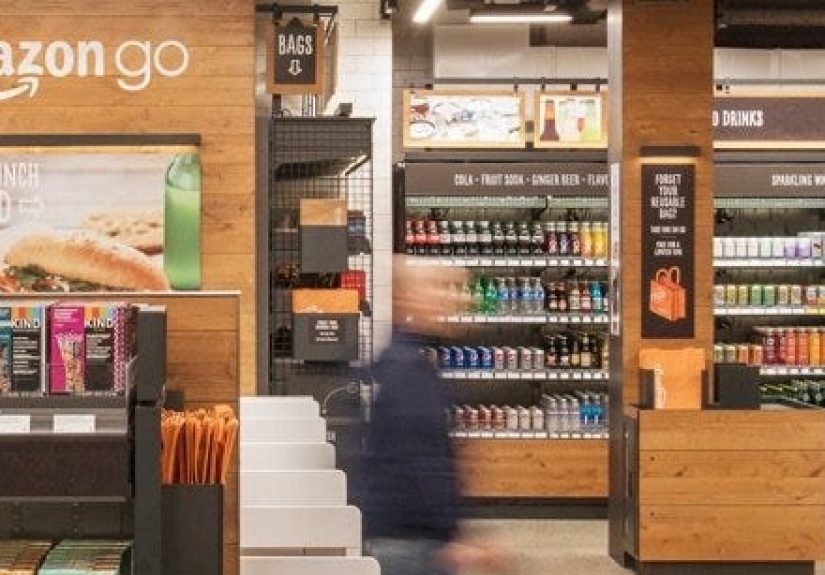
Amazon Go was a cashierless convenience-store concept designed around speed. Instead of traditional checkout lanes, shoppers used an app, card, or supported payment method to enter the store. Once inside, the system tracked which items were picked up, returned to shelves, or taken out of the store. After the shopper left, the purchase was processed automatically.
The public saw a store without lines. The technology industry saw a showcase for artificial intelligence in physical retail. Retail competitors saw a warning shot. Privacy advocates saw something else: a store where surveillance was not an add-on security feature but the operating system.
Amazon described Just Walk Out as a technology that uses artificial intelligence, computer vision, sensors, and, in some deployments, RFID to identify what customers take. The company also promoted it beyond Amazon-branded stores, offering cashierless checkout to third-party retailers, stadiums, airports, campuses, and other small-format locations. In other words, Amazon Go was not just a store. It was a preview of how shopping itself could be redesigned.
The Convenience Is Realand That’s Why It Works
To be fair, the appeal is obvious. Nobody wakes up excited to wait in a checkout line under fluorescent lights while holding a lukewarm burrito. Cashierless stores promise speed, reduced friction, and fewer bottlenecks during busy hours. For airports, stadiums, office buildings, and urban lunch spots, that can be genuinely useful.
Imagine running between flights. You need water, gum, and a snack that pretends to be healthy because it contains almonds. A cashierless store lets you grab those items and leave without worrying about whether the person in front of you is about to dispute a 30-cent coupon. That is not a small convenience. In high-traffic environments, it changes the entire shopping rhythm.
Retailers also see benefits. Fewer checkout lines can mean more usable floor space, smoother operations, and potentially lower labor costs. Inventory systems can become more responsive. Theft detection may improve. Receipts can be digital. Data can reveal which shelves perform best, which items get picked up and put back, and how shoppers move through the store.
But that last sentence is where the pleasant music stops and the horror-movie violin begins.
The Scary Part: Shopping Becomes a Data Event
Traditional shopping already produces data. Loyalty cards, credit card transactions, online orders, delivery apps, coupons, and store cameras all collect pieces of the customer puzzle. Amazon Go-style retail takes this further by turning the entire visit into a continuous stream of behavioral information.
In a cashierless environment, the system may need to know when you entered, where you walked, what you touched, what you returned, what you bought, and how that trip connects to your account or payment method. Even when a company says it does not use facial recognition or does not store certain biometric identifiers in a particular system, the broader issue remains: shoppers are being translated into patterns.
That matters because patterns can be valuable. A store might learn that you buy energy drinks every Monday morning, hesitate near protein bars, avoid certain prices, or always choose private-label snacks when inflation is biting your wallet like a raccoon in a trash can. On its own, that may sound harmless. Combined with online shopping history, location data, ad profiles, payment records, and loyalty programs, it becomes much more powerful.
Surveillance Pricing: The Future Nobody Asked For
One of the biggest long-term worries is surveillance pricing. This is the idea that companies could use personal data to estimate what a specific shopper is willing to pay and adjust offers, discounts, or prices accordingly. The concern is not limited to Amazon Go, but cashierless retail creates a rich environment for this kind of data-driven personalization.
Think of it this way: old-fashioned stores had price tags. Everyone saw the same number. Digital commerce changed that with personalized recommendations, dynamic pricing, and targeted promotions. A sensor-packed store could bring that logic into the physical world. The store might not only know what you bought; it might know what tempted you, what you almost bought, and what you ignored.
That information could be used responsiblyfor better inventory, smarter layouts, and less food waste. It could also be used in ways that feel manipulative. If a system learns that you always buy medicine, baby formula, or late-night comfort food regardless of price, should it be allowed to use that knowledge against you? Convenience becomes less charming when the store knows your weak spots better than your best friend.
Privacy Notices Are Not Enough
Companies often respond to privacy concerns by pointing to notices, policies, and consent screens. Legally, those matter. Practically, they often fail ordinary people. Most shoppers do not read a long privacy policy before buying coffee. They want caffeine, not a graduate seminar in data retention.
The problem is not merely whether a privacy policy exists. The problem is whether people understand what is collected, why it is collected, how long it is stored, who can access it, whether it can be combined with other data, and whether they have a realistic alternative. If the only nearby store requires app-based entry and automated tracking, “choice” starts to look a little decorative.
Biometric and identity-linked systems raise even sharper concerns. Amazon’s palm-recognition payment system, Amazon One, drew questions from U.S. senators about biometric data collection practices. That does not mean every cashierless store uses the same biometric tools, but it shows why lawmakers and privacy advocates are paying attention. A credit card can be replaced. A password can be changed. Your palm, face, or walking pattern is not exactly something you can reset by clicking “Forgot password?”
The Human Cost: What Happens to Retail Jobs?
Amazon Go also raised a familiar question: what happens to workers when checkout is automated? Companies often argue that technology shifts jobs rather than eliminates them. Cashiers may become stockers, customer assistants, food-prep workers, or technical support staff. Sometimes that is true. But the broader economic concern is still real.
Cashier jobs have historically provided entry-level work, part-time income, and employment for people who may not have advanced degrees or specialized technical training. If cashierless retail spreads widely, some of those roles could shrink. New jobs may appear, but they may require different skills, different schedules, or fewer total workers.
The transition matters. A worker cannot pay rent with a press release about innovation. If stores save money by reducing front-end staff, society needs to ask who benefits and who absorbs the shock. The future of retail should not be designed only for executives, investors, and customers in a hurry. It should also consider the people whose labor made shopping work long before cameras learned to count sandwiches.
Accuracy Problems Can Become Trust Problems
Another implication is accuracy. A cashierless store must correctly identify what shoppers take. That sounds easy until real life enters the building wearing a backpack and holding a toddler. People pick up items and put them back. Friends shop together. Kids move things. Packages look similar. Shelves get messy. Someone grabs the wrong drink, changes their mind, and returns it to the wrong spot. Retail is chaos with price tags.
Amazon has said its Just Walk Out technology has improved with more advanced AI models. That may be true, and the technology has clearly become more capable over time. But even small errors can feel personal when money is involved. If a receipt arrives late or includes the wrong item, the customer may not know how to dispute it quickly. With a human cashier, mistakes can often be fixed immediately. With an invisible checkout system, the shopper is negotiating with software after the fact.
That may sound minor until it happens repeatedly or affects people on tight budgets. A $4 error is annoying for some shoppers and serious for others. Trust is fragile in automated systems because most customers cannot inspect how the decision was made. The store becomes a black box that says, “Trust me, you bought this.”
Amazon’s Pivot Shows the Model Is Not Perfect
Amazon’s physical grocery strategy has changed several times. The company removed Just Walk Out technology from many Amazon Fresh stores in the United States and shifted toward Dash Carts, which let shoppers see spending as they shop. Amazon also announced major changes to its physical grocery footprint, including closing Amazon Go and Amazon Fresh locations while focusing more on Whole Foods and delivery.
This does not mean cashierless technology is dead. In fact, Amazon continues to offer Just Walk Out technology for smaller third-party venues where fast grab-and-go shopping makes more sense. But the shift is important. It suggests that even one of the world’s most powerful technology companies found that fully automated shopping is not always the best fit for every grocery environment.
Customers want speed, yes. But they also want transparency. They want to know what they are spending before they leave. They want receipts that make sense. They want deals, substitutions, and grocery decisions that feel under their control. A supermarket is not a vending machine with walls. It is a place where people compare prices, check produce, change their minds, and occasionally stare at twelve kinds of yogurt like they are solving a legal dispute.
Why Small Stores Are the Perfect Testing Ground
The scary implications are especially clear in convenience stores because the format is compact, fast, and data-rich. People buy routine items: coffee, snacks, drinks, toiletries, medicine, lunch, and emergency chocolate. These purchases can reveal habits, schedules, health needs, stress patterns, and income pressures.
A cashierless convenience store can observe these patterns with unusual precision. It knows not only that someone bought coffee but that they entered at 8:07 a.m., walked straight to the refrigerator, picked up two drinks, returned one, grabbed a breakfast sandwich, and left in under three minutes. That may help the store improve operations. It may also contribute to an intimate commercial profile of everyday life.
Small stores also normalize the technology. Once people accept surveillance-heavy shopping for quick purchases, they may accept it in pharmacies, campuses, entertainment venues, and workplaces. The creepiness fades through repetition. Yesterday it felt dystopian. Today it is where you buy sparkling water.
Security Is a Real Benefitbut Also a Risk
Retailers face theft, fraud, and safety issues. It is reasonable for stores to use technology to protect workers, customers, and inventory. AI-assisted retail systems may reduce shoplifting, identify suspicious behavior, and help manage stock. For small businesses with thin margins, loss prevention matters.
But security tools can expand beyond their original purpose. A camera installed to prevent theft can become a tool for tracking behavior. A system built to identify products can become a system that identifies people. A database designed for receipts can become a valuable target for hackers, data brokers, or overly curious internal teams.
The risk is not that every company will behave badly every time. The risk is that powerful data systems tend to attract new uses. Once the infrastructure exists, someone will ask what else it can do. That is why rules, transparency, audits, data minimization, and real consumer rights matter before the technology becomes too common to question.
What Consumers Should Demand From Cashierless Retail
Cashierless stores do not have to be creepy by default. The technology could be built with privacy protections. Customers should expect clear signage, simple explanations, easy access to receipts, fast dispute resolution, and options that do not require surrendering unnecessary personal data.
Retailers should collect the minimum data needed to complete the transaction. They should avoid using sensitive data for advertising or price discrimination. They should publish retention policies in plain English. Independent audits should test accuracy, bias, security, and privacy claims. Customers should be able to delete data where legally possible and understand whether their shopping behavior is linked across platforms.
Most importantly, there should be meaningful alternatives. A store that says “you consented” after making surveillance the only practical way to buy lunch is not respecting choice. It is just decorating the trapdoor.
The Bigger Question: Do We Want Every Space to Become Smart?
Amazon Go is part of a larger trend: smart homes, smart cars, smart offices, smart cities, smart refrigerators, and smart everything else. Smart can be useful. Smart can also mean “connected to a company that would very much like more data.”
The more everyday spaces become automated, the more life becomes measurable. Walking into a store, browsing a shelf, picking up a product, changing your mindthese used to be ordinary private actions in public places. In a sensor-rich store, they become data points.
That shift deserves public debate. People should not sleepwalk into a future where every casual action is recorded, analyzed, and monetized simply because the checkout line was annoying. A shorter wait is nice. A society where buying a bag of chips requires being studied by artificial intelligence is a bigger bargain than most people realize.
Final Analysis: The Store of the Future Needs Rules
The “Amazon Go” convenience store has scary implications because it makes surveillance feel frictionless. That is the genius of the model and the danger of it. The customer experiences less hassle. The company receives more information. The trade feels invisible.
To be clear, cashierless retail is not automatically bad. It can save time, improve accessibility for some shoppers, reduce checkout stress, and help businesses operate efficiently. But without strong privacy protections, it could also normalize constant tracking, weaken consumer choice, pressure retail jobs, and open the door to manipulative pricing or data use.
The future of shopping should not be a choice between wasting time in line and being quietly analyzed by a ceiling full of cameras. There is a better path: technology that is useful, limited, transparent, accountable, and optional. If retailers want customers to “just walk out,” they should also let them walk in with dignity, privacy, and control.
Experience Section: What Shopping in an Amazon Go-Style Store Feels Like
The first emotional reaction to an Amazon Go-style store is usually delight. There is something almost mischievous about walking out without stopping at a register. Your brain has been trained since childhood that leaving a store with unpaid items is how sitcom characters get tackled by security. So when the system says, “No, really, just go,” it feels like getting permission to break a tiny social rule.
The experience is smoothest when buying only a few items. You enter, scan, grab, and leave. For a bottle of water, a sandwich, or a pack of gum, the system makes traditional checkout feel wildly outdated. It is the retail version of skipping the opening credits on a streaming show. Once you do it, waiting can feel primitive.
But after the novelty fades, a second feeling appears: awareness. You start noticing the ceiling. You notice the cameras, sensors, gates, screens, and the absence of a normal checkout conversation. You become aware that the store is watching the entire process. It is not necessarily judging you for buying cookies at 9:15 a.m.although spiritually, perhaps the cookies knowbut it is observing.
That observation changes behavior. Some shoppers may feel more careful. They may avoid picking up items unless they are sure. They may worry about being charged incorrectly. They may wonder whether the system understands when two people are shopping together or when a child moves something. Instead of casually browsing, they act like they are performing for a very polite robot manager.
The receipt experience is also different. In a regular store, payment is a moment. You see the total, approve it, and leave. In a cashierless store, payment may feel delayed or abstract. You trust that the receipt will arrive and match reality. When it does, the experience feels impressive. When it does not, even slightly, the magic becomes customer service homework.
There is also a social difference. Some people love avoiding small talk. Others miss the human presence. A cashier can answer a question, fix a price issue, point to the restroom, or simply provide a sense that a person is in charge. In a highly automated store, the atmosphere can feel efficient but strangely empty, like the snacks are being guarded by a spaceship.
The most realistic takeaway is mixed. The technology can be genuinely helpful for quick trips. It is fast, clever, and impressive when it works. But it also makes shoppers feel the bargain underneath the convenience. You save time, but the store gains visibility into your behavior. You skip the line, but you enter a system that depends on tracking. You enjoy the future, but you may wonder who wrote the terms and conditions.
That is why Amazon Go-style retail is fascinating and unsettling at the same time. It solves a real problem, but it introduces bigger questions. The store of the future should not only ask whether checkout can disappear. It should ask what should not disappear with it: privacy, transparency, human jobs, consumer choice, and the simple comfort of buying a snack without feeling like you accidentally joined a data experiment.
Conclusion
Amazon Go gave the world a glimpse of cashierless convenience, and it was undeniably impressive. But the same systems that make shopping faster can also make it more invasive. Cameras, sensors, AI, payment profiles, and behavioral data create a retail environment where convenience and surveillance can become difficult to separate.
The scary implications are not about one store or one company alone. They are about the direction of modern retail. If the future is automated, it must also be accountable. If stores become smarter, consumer protections must become stronger. And if shoppers are invited to “just walk out,” they should not have to leave their privacy behind.