Table of Contents >> Show >> Hide
- Why Stupid App Reviews Are Weirdly Perfect Internet Content
- What Makes a Stupid Review Actually Funny?
- How to Create a Stupid Review Without Becoming the Villain
- How to Find a Stupid Review for an App
- Why These Reviews Are More Than Just a Joke
- The Thin Line Between Funny, Fake, and Flat-Out Useless
- How to Make Your Stupid Review Better Than Everyone Else’s
- Final Thoughts: The Internet’s Dumbest Review Genre Might Be Its Most Human
- Extra Experiences From the App Review Circus
- SEO Tags
Note: Body-only HTML for publishing. Source links are intentionally omitted, and the SEO tags appear at the end in JSON format.
The internet has given us many gifts: cat videos, recipes that start with a life memoir, and app reviews so gloriously silly they deserve a museum wing. Somewhere between “this calculator app changed my bloodline” and “one star because I forgot my password,” a strange little art form was born. And that art form is the stupid app review.
But here’s the twist: funny reviews are not just random digital litter. They sit in the same ecosystem as serious reviews, trusted ratings, and real feedback that can make or break an app. That means if you want to create a stupid review or go hunting for one, there is a right way to do it and a very dumb way to do it. The right way is playful, obviously fake, and entertaining. The dumb way is deceptive, misleading, or posted as though it were real feedback on an actual app store. Nobody needs that kind of chaos before lunch.
So let’s talk about why absurd app reviews are so magnetic, what makes them funny, how to write one without crossing into fake-review nonsense, and where this whole weird genre fits into modern internet culture. Think of this as part comedy workshop, part internet anthropology, and part public service announcement for people tempted to leave a one-star review because the moon phase felt hostile.
Why Stupid App Reviews Are Weirdly Perfect Internet Content
Reviews matter because people actually read them. Long before someone downloads a budgeting app, meditation app, game, dating app, or weather app that somehow thinks every day is “partly optimistic,” they usually check the stars first. Ratings suggest trust. Reviews suggest personality. And when those two things collide, magic happens.
A serious review says, “The interface is clean, but the subscription wall appears too early.” A stupid review says, “Downloaded this app to fix my life. It only fixed my screen brightness. Betrayal.” One is helpful. The other is hilarious. Sometimes, somehow, both are useful.
Funny app reviews work because they compress emotion into a tiny space. They dramatize minor inconvenience like it is a Shakespearean tragedy. They blame an app for things no app could possibly control. They use the language of outrage to describe problems like “the button was slightly to the left of where my soul expected it.” That mismatch is the joke.
There is also something wonderfully democratic about this form of humor. You do not need a studio, a podcast mic, or a verified account to write a ridiculous review. You just need a keyboard, a tiny grievance, and the confidence of a person who thinks a coupon app personally ruined Thanksgiving.
What Makes a Stupid Review Actually Funny?
Not every silly review lands. Some are just loud. Some are mean. Some read like they were generated by a haunted toaster. The best stupid app reviews usually have one or more of these ingredients:
1. Total Misplaced Blame
This is the gold standard. The app did one small thing, and the reviewer responds as if civilization has fallen. Example: “Used this map app once and now my sandwich tastes different.” Completely irrational. Instantly funny.
2. Dramatic Overreaction
Good silly reviews treat an inconvenience like a federal emergency. “This sleep app told me to relax. I have never been more insulted in my life.” The contrast between problem and reaction does the heavy lifting.
3. Hyper-Specific Weirdness
Vague nonsense is forgettable. Specific nonsense is comedy. “This productivity app sent a reminder while I was hiding from my responsibilities in the pantry.” Now we have a scene, a mood, and probably a snack.
4. Accidental Self-Own
Sometimes the reviewer reveals they are the problem, not the app. “One star. It said my password was weak, which I found judgmental.” Friend, your password was probably “password.”
5. Dead-Serious Delivery
The best stupid reviews do not wink at the audience too much. They commit. They stand in the middle of the digital street and declare, with full dignity, “This grocery app knows too much about me and not enough about grapes.”
How to Create a Stupid Review Without Becoming the Villain
Here is the big rule: keep it clearly fictional, clearly satirical, and clearly separate from real consumer feedback. Real app stores depend on authentic reviews. If you post made-up praise or fake complaints as though they came from genuine product use, you are not being funny. You are just tossing confetti into the engine.
So if you want to create a stupid review for laughs, do it as a joke post, a social caption, a meme, a community prompt, or a parody exercise. Make sure anyone reading it can tell you are doing comedy, not trying to manipulate ratings or mislead actual users.
A Simple Formula for Writing One
Start with a normal app category. Then add one absurd expectation, one tiny disappointment, and one wildly inappropriate emotional consequence.
Template:
“Downloaded this [type of app] because I wanted [reasonable goal]. Instead, it [minor issue or absurd non-issue], and now [ridiculous fallout]. One star.”
Examples
“Downloaded this fitness app to improve my stamina. It asked me to exercise. Uninstalled for harassment.”
“This weather app said there was a 12% chance of rain. It drizzled on one eyebrow. Explain yourself.”
“Used this budgeting app for three days and discovered the real issue was my relationship with online shopping. I miss who I was before the graphs.”
“This note-taking app autosaved my bad ideas. I expected more discretion.”
Tips for Better Comedy
Make the voice distinct. A stupid review written like an exhausted dad, a suspicious grandma, a medieval king, or a melodramatic theater kid is instantly more memorable than generic sarcasm.
Also, keep it short enough to punch. Funny reviews usually work because they hit fast. Drag the joke too long and suddenly your fake review starts sounding like an actual cry for help.
How to Find a Stupid Review for an App
If writing one feels like work and you would rather enjoy the nonsense made by others, you are in luck. The internet is an all-you-can-eat buffet of bizarre review drama. Some of the best stupid app reviews show up in:
- App store screenshots shared for laughs
- Community threads about ridiculous one-star reviews
- Humor roundups featuring dramatic customer complaints
- Social posts where people collect their favorite examples of digital overreaction
The trick is learning to spot the funny stuff without rewarding the fake stuff. A review is entertaining when it is obviously absurd, obviously personal, or obviously misplaced. A review is suspicious when it sounds mass-produced, overly promotional, too polished, or weirdly obsessed with keywords like it is auditioning for search results.
In other words, “This game restored my faith in destiny” might be a joke. “Best free secure ultra-fast premium app no bugs great customer support amazing quality highly recommend” sounds like marketing escaped from its cage.
Why These Reviews Are More Than Just a Joke
Here is the sneaky part: even the dumbest reviews often reveal something useful. If dozens of people are joking that a meditation app sends too many notifications, that is not just comedy. That is product feedback wearing clown shoes.
Silly reviews can expose:
- Confusing onboarding
- Push notifications with no chill
- Subscription prompts that appear too soon
- Login systems that make users question their ancestry
- Updates that “improve performance” by terrifying everyone
Developers ignore that kind of signal at their own risk. Humor has a way of smuggling honesty past people’s defenses. A user may never write, “The friction in your first-time user flow erodes trust.” But they will absolutely write, “This app asked me for six permissions before it told me what it does, and frankly that felt clingy.”
That is the beautiful chaos of review culture. The joke is the wrapper. The user experience complaint is the candy center.
The Thin Line Between Funny, Fake, and Flat-Out Useless
This is where the grown-up part of the conversation barges in wearing sensible shoes. Online reviews are now a serious trust signal, which means fake reviews are a serious problem. Platforms want feedback to be authentic and relevant. Regulators care when reviews are deceptive. Consumers are increasingly wary of review manipulation, and for good reason.
So yes, create a stupid review. Just do it in the right venue and with obvious comic framing. Post it as a parody. Share it in a humor thread. Turn it into a caption, a skit, or a “Hey Pandas” style prompt. But do not throw fake experiences into a real rating system where people are trying to make actual decisions.
Think of it this way: a fake five-star review is digital litter. A parody review that says, “This flashlight app did not illuminate my future, only my kitchen,” is harmless fun. Same ingredients. Very different meal.
How to Make Your Stupid Review Better Than Everyone Else’s
Since we are already here, let’s aim for excellence in nonsense.
Use Contrast
Pair a tiny problem with an enormous emotional response. That is where the laugh lives.
Choose a Clear Character Voice
Write like an overcaffeinated professor, a suspicious aunt, a pirate, or someone who thinks every software bug is personal. Character makes the joke feel alive.
Avoid Cruelty
Punching down is lazy. Mock the situation, the overreaction, or your fictional reviewer’s chaos. Do not use humor as an excuse to be gross.
Let the App Stay Mostly Normal
The app should be the straight man in the comedy duo. The review gets funnier when the app seems fine and the reviewer seems magnificently unprepared for reality.
End Strong
A good closing line matters. “One star,” “do better,” “my family will hear of this,” or “I expect compensation in the form of emotional closure” can seal the bit nicely.
Final Thoughts: The Internet’s Dumbest Review Genre Might Be Its Most Human
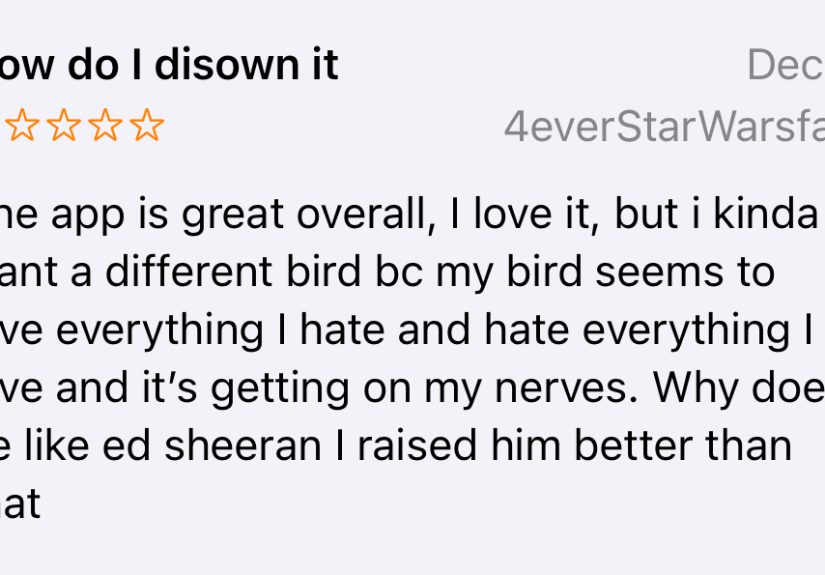
“Hey Pandas, Create A Stupid Review/Find A Stupid Review For An App” sounds like a throwaway internet challenge, but it taps into something surprisingly real. People use reviews to vent, perform, joke, exaggerate, and occasionally confess that they do not know how passwords work. It is messy, funny, and very online.
The best stupid app reviews succeed because they understand a truth about digital life: people do not just interact with apps. They form petty grudges against them. They project hopes onto them. They expect weather apps to control weather, alarm apps to negotiate with sleep, and productivity apps to replace self-discipline with vibes.
That is why the genre works. It turns everyday tech frustration into comedy. It gives us a tiny stage where inconvenience becomes theater. And when it is done well, it reminds us that behind every rating is a person trying, failing, laughing, and occasionally blaming a map app for their emotional damage.
So go ahead. Create a stupid review. Find a stupid review. Just keep it funny, keep it obvious, and for the love of all things digital, do not post fake praise for a meditation app that made you angrier.
Extra Experiences From the App Review Circus
One of the funniest things about stupid app reviews is that they often begin with completely normal expectations. A person downloads a meal planner, a reminder app, or a photo editor thinking they are about to become the upgraded version of themselves. Ten minutes later, they are leaving feedback that reads like a public breakup letter. That arc alone is comedy. The app barely had time to open, and suddenly it is being accused of ruining somebody’s evening, marriage, or zodiac alignment.
A classic experience goes like this: someone installs a fitness app full of sincere hope. The app asks for a goal. The user selects “lose weight,” “gain strength,” or “stop pretending stairs are fine.” Then the app has the nerve to suggest movement. The review appears soon after: “This app kept reminding me to work out. I downloaded it for motivation, not accountability.” That is the magic formula right there. The app delivered exactly what it promised, and the user still acted like it keyed their car.
Another familiar review experience comes from budgeting apps. These are comedy factories because they do not create financial problems; they merely reveal them. A user connects their accounts, sees a chart, and suddenly realizes that “little treats” have formed a hostile government. That kind of revelation often produces a review that is half joke, half spiritual emergency. Something like, “Great app, but I did not appreciate seeing visual evidence of my snack decisions.” Ridiculous, yes. Also deeply relatable.
Weather apps generate a different flavor of stupidity. People treat them like tiny meteorological wizards instead of probability tools. If the forecast says light rain and one dramatic cloud rolls through at the wrong moment, the review arrives swinging. “You said partly cloudy. My sandals disagree.” The best part is that weather itself is chaotic, but the blame lands squarely on the app, as if the developer personally scheduled the drizzle out of spite.
Then there are note apps, calendar apps, and reminder tools, which routinely get roasted for exposing human disorganization. A reminder app will quietly say, “Pay bill today,” and the user reacts like they have been insulted at a family reunion. The resulting review is often hilarious because it reveals the real conflict: not user versus software, but user versus reality. The app becomes the messenger, and the messenger gets dramatically booed offstage.
What ties all these experiences together is the emotional overreach. People expect apps to be helpers, therapists, assistants, trainers, and mind readers all at once. When an app is merely functional, some users feel personally abandoned. That gap between expectation and reality creates the perfect environment for a stupid review. And honestly, that is why the whole genre remains so funny. It is not just about bad takes. It is about very human frustration colliding with very ordinary software in the most theatrical way possible.