Table of Contents >> Show >> Hide
- Why Turn Harry Potter Characters Into Toddlers?
- How I Built the AI Image Prompts
- Harry Potter as a Toddler: Brave, Tiny, and Already Tired
- Hermione Granger as a Toddler: The Boss of Story Time
- Ron Weasley as a Toddler: Snacks, Sweaters, and Panic
- Draco Malfoy as a Toddler: Tiny, Fancy, and Deeply Offended
- Albus Dumbledore as a Toddler: Baby Wisdom in Pajamas
- Severus Snape as a Toddler: The World’s Smallest Grudge
- Hagrid as a Toddler: Gentle Giant, Mini Edition
- Voldemort as a Toddler: The Dark Lord of Nap Time
- Luna Lovegood as a Toddler: Dreamy, Odd, and Perfect
- What This Experiment Revealed About AI Image Generation
- AI Art, Fan Creativity, and Responsible Publishing
- How to Create Better AI Toddler Character Art
- My Extra Experience: What It Felt Like to Build a Tiny Hogwarts With AI
- Conclusion
What happens when the most dramatic people in the wizarding world are handed sippy cups, tiny sneakers, and the emotional range of a preschooler denied a cookie? Naturally, I had to find out. I used an AI image generator to imagine Harry Potter characters as toddler versions of themselves, and the results were equal parts adorable, chaotic, and suspiciously ready to start a juice-box rebellion.
This project was not about replacing the original Harry Potter books, films, actors, artists, or official Wizarding World visuals. It was a fan-made creative experiment: a playful look at how generative AI can reinterpret familiar character traits through age transformation, costume cues, facial expression, color palette, and storytelling prompts. Think of it as “Hogwarts daycare,” but with better lighting, softer blankets, and at least one tiny villain who still looks like he would demand a throne.
AI image generators have become surprisingly capable at transforming written descriptions into polished visuals. Modern tools can interpret mood, camera angle, clothing details, lighting, facial expressions, illustration style, and even consistent character references. But creating toddler versions of iconic characters is not as simple as typing “make them small” and hoping magic happens. The best results came from careful prompt writing, ethical boundaries, and a little creative mischief.
Why Turn Harry Potter Characters Into Toddlers?
Because some ideas are too silly not to test. The Harry Potter universe is full of instantly recognizable personalities: Harry’s brave-but-confused energy, Hermione’s intense “I read the instructions twice” confidence, Ron’s loyal snack-loving panic, Draco’s tiny aristocratic pout, Snape’s permanent thundercloud expression, and Voldemort’s theatrical commitment to being everyone’s worst group project partner.
Turning those traits into toddler versions creates a funny contrast. A character known for danger suddenly becomes a grumpy child clutching a plush snake. A wise professor becomes a tiny wizard with oversized glasses and a beard that looks like it belongs in a costume box. A brave hero becomes a round-cheeked kid holding a toy broom like it is the most important object in the universe.
The Creative Goal
The goal was not to copy movie stills or reproduce actor likenesses. Instead, I focused on recognizable character-inspired elements: colors, symbols, personality traits, magical objects, and emotional vibes. That approach made the experiment more imaginative and safer from a creative standpoint. It also gave the AI more room to produce original fan-art-style results rather than direct imitations.
How I Built the AI Image Prompts
The biggest lesson? AI image generation is only as good as the instructions you give it. A vague prompt often leads to vague results. A detailed prompt, however, can turn a simple idea into a tiny cinematic masterpiece with pudding on its robes.
I used a consistent prompt structure for each character:
- Character essence: brave, clever, nervous, mysterious, mischievous, dramatic, gentle, or villainous.
- Toddler age cue: chubby cheeks, tiny hands, oversized clothes, soft facial features, playful posture.
- Wizarding detail: toy wand, tiny robe, broomstick, potion bottle, scarf colors, magical nursery setting.
- Art direction: whimsical storybook illustration, soft lighting, cinematic fantasy atmosphere.
- Ethical note: inspired by character traits, not an exact actor likeness or official artwork copy.
That final point matters. AI tools are powerful, but responsible creators should avoid presenting fan-made generated images as official art. It is also smart to clearly label AI-assisted visuals when publishing them online, especially in entertainment content where readers may scroll fast and assume anything polished is official.
Harry Potter as a Toddler: Brave, Tiny, and Already Tired
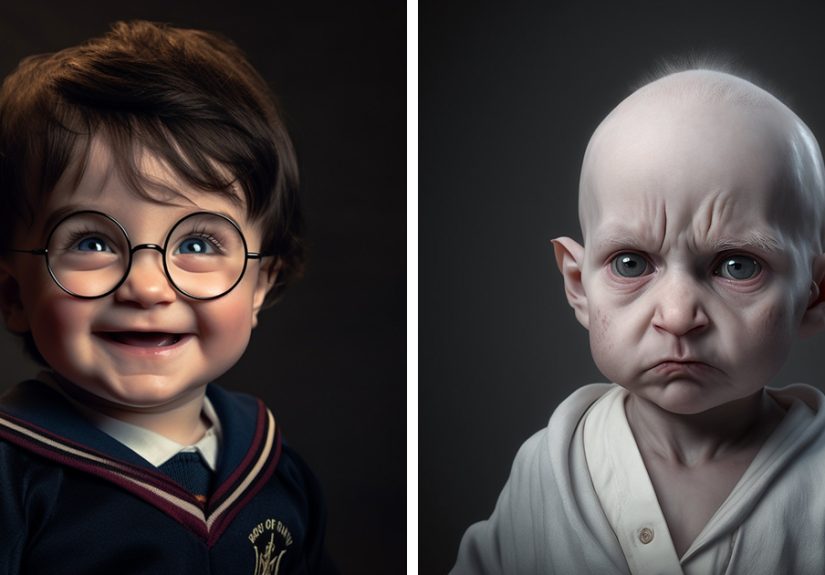
The toddler version of Harry was the easiest to imagine. The prompt focused on a small child with messy dark hair, round glasses, a lightning-inspired detail, and a tiny robe that looked two sizes too big. Instead of making him look like a film actor, I described him as a brave little wizard boy in a cozy magical hallway, clutching a toy broom with the seriousness of someone preparing for a very important nap-time Quidditch match.
The best result captured Harry’s core personality: brave, curious, and slightly overwhelmed. Toddler Harry looked like he had just discovered he was famous and immediately wanted applesauce. The oversized glasses did a lot of work, but the expression mattered more. A tiny frown, raised eyebrows, and a “why is everyone staring at me?” posture made the image feel emotionally true.
Prompt Lesson From Harry
For hero characters, do not just describe clothing. Describe the emotional moment. “A brave toddler wizard standing in a glowing school corridor, curious but unsure” works better than “small Harry Potter.” The AI needs a scene, not just a name.
Hermione Granger as a Toddler: The Boss of Story Time
Toddler Hermione was pure comedy gold. I imagined her surrounded by picture books, flashcards, tiny parchment scrolls, and a toy wand she absolutely knew how to use better than everyone else. Her expression needed to say, “I am three years old, and I have concerns about your lesson plan.”
The prompt emphasized bushy hair, bright eyes, a neat little cardigan, a stack of books, and a magical preschool corner. The most charming result made her look like she had organized the entire daycare by reading level. There was no chaos in toddler Hermione’s world, only “structured learning time” and perhaps a strongly worded complaint about finger-painting technique.
Prompt Lesson From Hermione
Props can define personality. Books, notes, labeled jars, and a carefully arranged desk told the AI more about Hermione than any single physical detail. For smart characters, surroundings are just as important as facial features.
Ron Weasley as a Toddler: Snacks, Sweaters, and Panic
Ron as a toddler needed warmth, humor, and a little nervous energy. I pictured a red-haired child in a handmade sweater, holding a cookie in one hand and a toy rat in the other. His expression had to be somewhere between “I am loyal to my friends” and “I heard there are spiders in the playroom.”
The AI captured Ron best when the prompt included family-style coziness: a warm kitchen, knitted clothes, mismatched socks, toy chess pieces, and a snack plate. Ron’s toddler version did not need to be polished. In fact, he became funnier when he looked slightly rumpled, like he had just survived a dramatic battle with a juice pouch.
Prompt Lesson From Ron
Do not over-perfect lovable characters. Small imperfectionsmessy hair, crooked sweater sleeves, crumbs, surprised expressionsmake an AI-generated image feel more alive.
Draco Malfoy as a Toddler: Tiny, Fancy, and Deeply Offended
Toddler Draco may have been my favorite. The prompt was simple: a very small, very fancy child in pale robes, standing in a grand nursery, looking personally insulted by the existence of sharing. The challenge was making him recognizable by attitude rather than direct imitation.
The AI leaned beautifully into the comedy. Toddler Draco had sleek blond hair, a tiny silver-trimmed outfit, and a facial expression that screamed, “My father will hear about this snack schedule.” He did not need a wand to seem dangerous. He needed a tiny velvet cape and a look of dramatic superiority.
Prompt Lesson From Draco
For proud or arrogant characters, body language matters. A raised chin, folded arms, polished shoes, and a slightly exaggerated pout can communicate more than a long description.
Albus Dumbledore as a Toddler: Baby Wisdom in Pajamas
Dumbledore as a toddler is an inherently ridiculous concept, which is exactly why it worked. I described a tiny child with twinkling eyes, a long pajama robe, half-moon glasses, and a fake costume beard that was much too large. He sat in a magical nursery filled with glowing stars, candy jars, and soft golden light.
The result felt like a baby wizard who somehow knew everyone’s destiny but still needed help tying his slippers. It was adorable and mildly unsettling. The AI seemed to understand that Dumbledore’s charm comes from calm confidence, gentle mystery, and just enough eccentricity to make you wonder if the lemon drops are part of a larger plan.
Prompt Lesson From Dumbledore
When transforming older characters into toddlers, preserve their symbolic traits rather than trying to preserve age-specific features. Glasses, robes, stars, warm light, and a wise expression did the heavy lifting.
Severus Snape as a Toddler: The World’s Smallest Grudge
Of all the toddler transformations, Snape required the most restraint. The temptation was to make him comically gloomy, but too much exaggeration turned him into a Halloween decoration. The better prompt described a serious toddler in dark clothes, standing near a tiny potion table, frowning at a spilled bottle as if betrayal itself had occurred.
Toddler Snape looked like he had already developed strong opinions about classroom discipline. The AI gave him a dramatic little cape, dark bangs, and the expression of a child who would absolutely deduct points from a stuffed animal. It was funny because the mood was so intense while the character was so small.
Prompt Lesson From Snape
Use contrast. A serious expression on a toddler face is instantly funny. The more dramatic the lighting and setting, the funnier the tiny person becomes.
Hagrid as a Toddler: Gentle Giant, Mini Edition
Hagrid was tricky because his defining trait is his size. Turning him into a toddler meant keeping the spirit, not the scale. I prompted for a big-hearted little child with wild hair, a tiny coat, muddy boots, and a nursery full of plush magical creatures. He needed to look like the kind of toddler who would sneak a baby dragon into daycare and insist it was “just a lizard.”
The best result was sweet rather than silly. Toddler Hagrid had kind eyes, a huge smile, and a stuffed creature tucked under one arm. The room was messy, warm, and full of animal toys. It felt true to the character because Hagrid’s magic has always been less about polished spells and more about enormous affection.
Voldemort as a Toddler: The Dark Lord of Nap Time
Yes, I tried it. No, I was not emotionally prepared.
The challenge with toddler Voldemort was avoiding anything too creepy while keeping the theatrical villain energy. The prompt described a tiny fantasy villain in a soft dark onesie, sitting on a miniature throne, holding a plush snake, surrounded by dramatic but playful nursery lighting. The goal was “cartoonishly ominous,” not genuinely frightening.
The result looked like a child who had been told bedtime was at 7:30 and immediately began plotting a century-long revenge plan. It was hilarious because the threat level was undercut by the round cheeks and tiny socks. The plush snake helped keep the image playful rather than sinister.
Prompt Lesson From Voldemort
When working with villain characters, adjust the tone carefully. Words like “playful,” “storybook,” “soft,” and “whimsical” help keep the image appropriate and fun.
Luna Lovegood as a Toddler: Dreamy, Odd, and Perfect
Luna’s toddler version almost wrote itself. I imagined a dreamy little girl wearing mismatched socks, oversized colorful glasses, and a whimsical outfit covered in stars and moons. She stood in a glowing garden with imaginary creatures, looking completely at peace with the fact that nobody else could see what she was seeing.
The AI produced a gentle, magical result with soft colors and an expression full of wonder. Luna worked especially well because her character already feels like a walking daydream. As a toddler, that quality became even more natural. She looked less like she was pretending to be magical and more like she had never considered the possibility of a non-magical world.
What This Experiment Revealed About AI Image Generation
This project showed me that AI image generators are excellent at remixing visual concepts, but they still need human direction. The machine can create the pixels, but the creator shapes the idea. Strong prompts, clear boundaries, and thoughtful editing make the difference between a generic image and a fun piece of visual storytelling.
It also revealed that recognizable characters are not just faces. They are color schemes, habits, props, settings, expressions, and emotional patterns. Harry is not only glasses and a scar; he is bravery mixed with bewilderment. Hermione is not only books; she is confidence, structure, and relentless curiosity. Ron is not only red hair; he is warmth, loyalty, humor, and snack-based survival instincts.
AI Art, Fan Creativity, and Responsible Publishing
Using AI to create fan-inspired images can be fun, but it should be done with care. Harry Potter is an established intellectual property connected to books, films, games, theater, merchandise, theme parks, and official Wizarding World platforms. Fan-made AI art should not be presented as official material, sold as licensed merchandise, or used in a way that confuses readers about its source.
There is also a broader conversation around AI-generated content and copyright. In the United States, copyright protection generally depends on human authorship and creative contribution. AI-assisted works may raise different questions depending on how much human creativity shaped the final output. For everyday bloggers and creators, the practical takeaway is simple: be transparent, avoid copying official artwork, add your own creative direction, and do not claim an AI-generated fan concept is official.
Transparency tools are also becoming more common. Some platforms attach content credentials or invisible watermarks to AI-generated media. These labels help audiences understand how an image was made. For web publishers, adding a short note under AI-assisted images is a good habit. It builds trust and prevents confusion.
How to Create Better AI Toddler Character Art
After experimenting with multiple prompt styles, I found that the best results came from being specific without being rigid. You want to guide the AI, not handcuff it.
Use Character Traits Instead of Exact Copying
Instead of asking for an exact replica, describe the personality. Try “a brave toddler wizard with round glasses and a toy broom” or “a clever toddler witch surrounded by books and glowing letters.” This creates a fresh image while preserving the fun of the reference.
Add a Setting That Tells a Story
A plain background makes the image feel flat. A magical nursery, potion playroom, cozy kitchen, moonlit garden, or miniature castle hallway gives the AI context. It also makes the final image more shareable because viewers can instantly understand the joke.
Control the Mood
Words like “soft,” “storybook,” “whimsical,” “cozy,” “cinematic,” and “gentle fantasy” help avoid overly harsh or uncanny results. For toddler transformations, cuteness depends on warmth and softness. Even toddler Snape deserves good lighting. Probably.
Iterate Like a Real Creative Director
The first image is rarely the best image. I had to revise prompts several times, changing expressions, props, lighting, and background details. Sometimes the AI made characters too realistic. Sometimes it made them too generic. The sweet spot was a stylized fantasy illustration with clear personality and playful exaggeration.
My Extra Experience: What It Felt Like to Build a Tiny Hogwarts With AI
The most enjoyable part of this experiment was realizing how much storytelling happens before the image appears. I started with simple curiosity, but the process quickly became a creative puzzle. Every character forced me to ask: what makes this person recognizable if you remove age, actor likeness, and the exact movie costume?
Harry taught me that vulnerability is part of heroism. If I made him too confident, he stopped feeling like Harry. The best toddler version looked brave but uncertain, as if he had been handed a destiny and would rather be handed a chocolate frog. Hermione taught me that intelligence can be visualized through environment. A toddler with books is cute; a toddler who appears to have alphabetized the books and corrected the teacher is Hermione.
Ron reminded me not to polish away the charm. Some AI images become too smooth, too symmetrical, and too perfect. Ron needed crumbs, warmth, and a little awkwardness. Draco needed the opposite: neatness, posture, and dramatic entitlement. It was funny how small adjustments changed everything. A raised eyebrow made him snobby. A tiny cape made him royal. A toy dragon made him suspiciously pleased with himself.
Snape was the hardest because gloom can become parody quickly. I had to balance darkness with cuteness, giving him a serious little face without making the image unpleasant. The result worked only when the setting softened him: tiny potion bottles, a safe classroom corner, warm candlelight, and a frown that looked more like toddler frustration than adult bitterness.
Voldemort was the clearest reminder that tone matters. A toddler villain can be funny, but only if the image stays playful. The plush snake, tiny throne, and soft nursery shadows kept the idea humorous rather than disturbing. That experience made me more aware of how prompt language controls emotional safety. “Whimsical” and “storybook” were not decorative words; they changed the entire direction.
By the end, the project felt less like pressing a magic button and more like directing a tiny animated cast. AI handled the rendering, but the human work was choosing the concept, refining the scene, rejecting weak versions, and shaping the final story. That is where the fun lives. The tool generated images, but the humor came from character knowledge, timing, contrast, and the absurd mental picture of Hogwarts needing a nap schedule.
Would I do it again? Absolutely. I would try toddler versions of magical professors, Quidditch players, pets, and maybe even the Sorting Hat as a grumpy baby bonnet. AI image generation is at its best when it helps people explore harmless, imaginative “what if?” ideas. And “what if the wizarding world needed diaper bags?” is apparently the kind of question my brain was waiting years to ask.
Conclusion
Using an AI image generator to turn Harry Potter characters into toddler versions of themselves was funny, surprisingly thoughtful, and creatively revealing. The experiment worked best when I focused on personality instead of direct imitation: Harry’s brave confusion, Hermione’s tiny scholarship, Ron’s cozy chaos, Draco’s polished pout, Dumbledore’s baby wisdom, Snape’s miniature gloom, Hagrid’s gentle heart, Voldemort’s dramatic nap-time villainy, and Luna’s dreamy wonder.
AI did not replace imagination; it amplified it. The strongest images came from detailed prompts, careful tone control, and respect for the original franchise. For bloggers, fan artists, and curious creators, this kind of project can be a delightful way to explore character design, visual storytelling, and the strange joy of seeing famous fictional personalities reimagined with toddler cheeks and tiny shoes.
Note: This article describes a fan-made AI image concept inspired by well-known fictional characters. It is not official Harry Potter, Wizarding World, Warner Bros., or J.K. Rowling content. Any AI-assisted images created from similar ideas should be clearly labeled as fan-made and AI-generated.