Table of Contents >> Show >> Hide
- Why LEGO Belongs in a Serious Conversation About Tires
- Lesson 1: The Future Tire Starts With Better Materials, Not Better Marketing
- Lesson 2: Tires Need to Be Designed for EVs, Not Just Bolted Onto Them
- Lesson 3: Airless Tires Are Not Crazy Anymore
- Lesson 4: Tire Intelligence Will Be Just as Important as Tread Pattern
- Lesson 5: Reducing Waste Is No Longer Optional
- What Car Manufacturers Should Steal From LEGO Right Now
- The Bottom Line
- Experiences From the Garage, the Toy Box, and the Test Loop
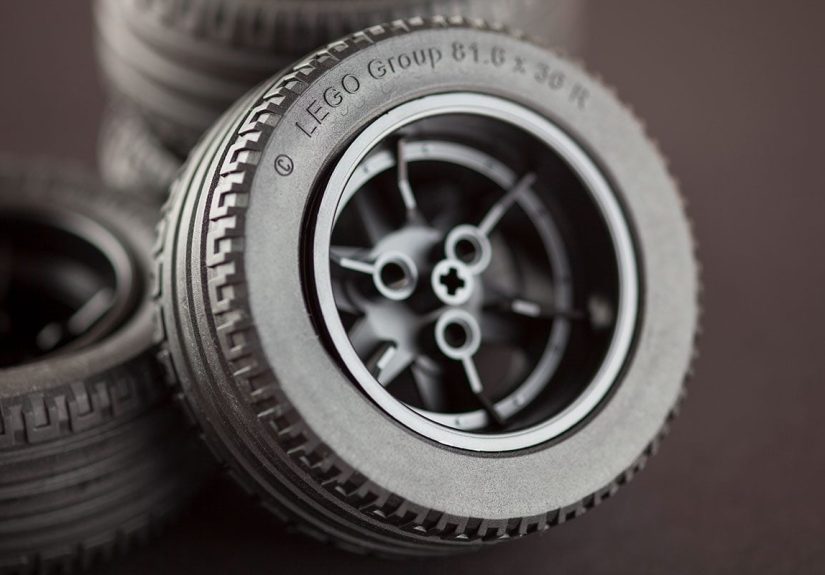
At first glance, LEGO and car tires seem about as connected as a toy box and a Formula 1 pit lane. One lives in the living room. The other lives in road grime, potholes, and the occasional questionable gas-station air pump. But here’s the twist: LEGO has become famous for producing an astonishing number of tiny tires every year, enough to make the world’s giant tire brands look over and mutter, “Well, that’s awkward.”
And that strange little fact is more than trivia. It is a clue. LEGO’s success with tires is not about outmuscling Michelin or Goodyear in the passenger-car market. It is about something more useful for the future of mobility: designing at scale, testing relentlessly, improving materials without ruining the user experience, and treating even a small, humble component like it matters. Car manufacturers should pay attention, because the next era of tires will not be defined by one magic invention. It will be defined by smarter materials, better data, lower waste, more durability, and a willingness to rethink assumptions that have been rolling around since disco was on the radio.
In other words, the future of tires may look less like a dramatic sci-fi leap and more like a very LEGO-like process: build, test, tweak, repeat, and only ship when the part still clicks into place.
Why LEGO Belongs in a Serious Conversation About Tires
LEGO matters here because it shows what happens when a company treats a seemingly small part as a major engineering challenge. A tire is not just a ring of rubber. It is a performance part. It changes how a vehicle grips, brakes, turns, rides, sounds, and sips energy. It affects range in an EV, confidence in the rain, and whether your wallet gets ambushed three years earlier than expected.
LEGO also offers another useful lesson: customers do not care how noble your materials strategy sounds if the product gets worse. Kids do not want “slightly more sustainable but also a little weird” tires on their toy cars. They want the same feel, the same fit, the same fun. The same rule applies to real cars. Drivers are not shopping for a lecture. They are shopping for safety, comfort, longevity, efficiency, and price. Sustainability only scales when it arrives without a downgrade attached to it like a sad little disclaimer.
That is exactly why LEGO’s move toward more sustainable tire materials is so interesting. Instead of making a grand speech and hoping nobody checks the results, it has moved selected tire parts into recycled-content materials while keeping performance expectations intact. That is how real change usually works: not with a parade, but with a product that still does the job.
Lesson 1: The Future Tire Starts With Better Materials, Not Better Marketing
If carmakers borrow one thing from LEGO, it should be this: material innovation has to leave the customer with no reason to complain. That sounds obvious, but it is surprisingly rare. In automotive history, the industry has a habit of announcing future breakthroughs like they are arriving tomorrow afternoon, then quietly discovering that chemistry, physics, cost, and mass manufacturing are all undefeated.
LEGO’s recent tire work points in a more grounded direction. Instead of chasing a flashy headline, it has been moving selected tire pieces toward recycled-content compounds. The big idea is not that toy tires will save the planet by themselves. The real lesson is that even one of the most tactile, high-friction, high-use parts in a product can evolve if the company is patient enough to test the material properly.
That same mindset is already showing up across the real tire industry. Goodyear has demonstrated tires that use soybean oil, rice husk ash silica, recycled polyester, renewable resins, and higher-recycled-content steel. Continental has used recycled PET bottles in tire construction. Bridgestone has worked with recycled and renewable materials, including alternative rubber sources like guayule. None of this is fantasy. The industry is actively replacing older ingredients piece by piece, because the future tire will not be made from one miracle substance. It will be a carefully engineered mix of many better inputs.
That is a very LEGO lesson. Don’t wait for perfection. Improve the brick. Improve the axle. Improve the tiny tire. Then scale the win.
Lesson 2: Tires Need to Be Designed for EVs, Not Just Bolted Onto Them
Electric vehicles have changed the tire conversation in a hurry. EVs are often heavier than comparable gas vehicles. They deliver instant torque. They are quieter, which means tire noise becomes more obvious. And their owners care a lot about range, which makes rolling resistance a bigger deal than ever. In plain English, EVs are picky. Their tires have to do more jobs at once.
That is why the old “a tire is a tire” thinking is going flat. Future tires need to balance grip, tread life, low noise, efficiency, and durability in ways that are harder than they sound. Make the tread too aggressive and you may hurt range. Make the tire too efficiency-focused and you may disappoint drivers in wet or cold conditions. Make it quiet and long-lasting, and you still have to keep it fun enough that the vehicle does not feel like it is wearing orthopedic shoes.
This is where LEGO’s example becomes useful again. LEGO never assumes one wheel fits every build. Monster trucks, race cars, construction rigs, and city cars all get different proportions, different tread looks, and different functions. That sounds simple, but it reflects a more important design truth: the tire should match the mission.
Carmakers need more of that thinking. An urban EV commuter, a heavy electric SUV, a performance sedan, and an autonomous shuttle should not all be treated like they merely need slightly different versions of the same old rubber donut. The future of tires is application-specific engineering, not one-size-fits-most compromise.
Lesson 3: Airless Tires Are Not Crazy Anymore
For years, airless tires sounded like the sort of thing you’d see at an auto show next to a concept car with no door handles and no chance of production. But they have kept hanging around, which usually means engineers think there is real value there.
Michelin’s UPTIS project is a perfect example. The idea is simple and radical at the same time: remove the compressed air, remove the risk of flats and many pressure-related failures, and reduce maintenance headaches. Michelin has pitched this especially for fleets and newer forms of mobility, and it has also tested the concept in real-world delivery use. That matters, because fleets care deeply about downtime, tire loss, and predictable operating costs. They are often the first real customers for technology that later trickles into consumer vehicles.
NASA has taken the idea even further. Its superelastic tire research uses shape-memory alloys and non-pneumatic structures that can deform dramatically without permanent damage. Bridgestone has also been pushing air-free ideas and lunar rover tire concepts for extreme environments. Space is a harsh teacher. If a tire concept makes sense on the Moon, parts of that logic may eventually make sense in a warehouse yard, on a delivery route, or under a specialized road vehicle.
Will every family crossover be on airless tires next year? No. But that is the wrong question. The right question is where airless or non-pneumatic designs make the most sense first. Fleets, last-mile delivery, industrial vehicles, specialty mobility, and extreme-environment machines are the likely training grounds. Once again, that is a LEGO-style lesson: test the weird idea where it solves the clearest problem, then expand from there.
Lesson 4: Tire Intelligence Will Be Just as Important as Tread Pattern
The future tire is not only about rubber and reinforcement. It is also about information. Tires are the only part of a car that actually touches the road, which makes them a gold mine of real-time data about traction, temperature, wear, load, and surface conditions. If the car can understand that data faster and more accurately, safety systems get smarter.
Goodyear has been especially vocal here. Its tire-intelligence work suggests that tire and road-condition data can help braking systems make better decisions, especially in low-friction conditions such as wet roads or ice. That is a major shift in thinking. The tire stops being a passive part and becomes an active input into the vehicle’s safety brain.
This matters even more as cars become more automated. A human driver can sometimes feel the road getting greasy before the electronics do. But advanced driver-assistance systems and future autonomous systems need clean, reliable signals. They need the tire to report what is happening where the rubber meets the road. The smartest tire of the future may not be the one with the fanciest tread block. It may be the one that helps the car know what kind of world it is driving through.
LEGO, oddly enough, hints at the same principle. Its best systems work because every part is predictable, measurable, and repeatable. That is what the future tire needs to become: not just a consumable, but a dependable piece of the vehicle’s wider operating system.
Lesson 5: Reducing Waste Is No Longer Optional
Tires have a pollution problem, a waste problem, and a maintenance problem. Government agencies and researchers have been paying more attention to tire wear particles in waterways and the broader environmental footprint of the tire life cycle. On top of that, basic maintenance failures still waste money and materials every day. Underinflation hurts fuel economy, shortens tire life, and raises emissions. Poor wear means earlier replacement. Early replacement means more raw material demand. It is a very expensive circle.
This is where the LEGO approach feels surprisingly modern. The company’s more recent sustainability efforts suggest a willingness to fix the part itself, not just write a nice paragraph about climate in an annual report and hope everybody gets sleepy before the hard questions start.
Car manufacturers should do the same. The future tire cannot only be “more sustainable” in the brochure. It has to reduce material use, reduce preventable scrap, reduce wear-related waste, and work with the vehicle in ways that encourage better maintenance. Lower rolling resistance, longer life, smarter monitoring, better compound choices, and more durable construction all matter. None are glamorous. All are useful.
And honestly, that may be the biggest LEGO lesson of all: the future is often built by improving the boring part everyone overlooked.
What Car Manufacturers Should Steal From LEGO Right Now
1. Treat tires as a strategic product, not a supplier afterthought
Automakers love to obsess over screens, software interfaces, and ambient lighting. Very nice. Meanwhile, the tire is out here doing the actual touching of the earth. Carmakers should bring tire strategy closer to core vehicle development, especially for EVs and automated platforms.
2. Roll out material changes in stages
Do not wait for a moonshot compound that fixes everything at once. Move one material stream at a time. Validate performance. Expand. That is how sustainable materials become industrial reality instead of PowerPoint folklore.
3. Build around real use cases
Fleet vans, urban EVs, long-range commuters, heavy SUVs, and autonomous shuttles should each get tire solutions tuned to their real operating needs. Future tires will be more specialized, not less.
4. Make tire data useful to the driver and the car
Pressure warnings are the bare minimum. The next step is better integration with braking, efficiency management, predictive maintenance, and traction systems. Tires should help the vehicle think.
5. Design for circularity from the start
Use more recycled and renewable inputs where performance allows. Reduce premature wear. Cut scrap. Make supply chains cleaner. The greenest tire is not just one with better ingredients. It is one that lasts longer and wastes less.
The Bottom Line
LEGO is not secretly about to replace every tire giant on Earth with a bucket of tiny black wheels. But it is demonstrating something the auto industry desperately needs to remember: innovation does not always arrive with fireworks. Sometimes it arrives as disciplined iteration, boring-seeming material science, careful testing, and a refusal to ship something worse just because the sustainability team really wants a press release.
The future of tires will likely be shaped by five big trends: better materials, EV-specific design, airless or semi-airless applications, smarter sensor-driven integration, and relentless pressure to reduce waste and wear. LEGO’s tire story touches nearly all of them in miniature. That is why it matters.
So yes, the toy company belongs in the room. And if car manufacturers are smart, they will stop laughing at the tiny tires long enough to learn from them.
Experiences From the Garage, the Toy Box, and the Test Loop
One of the most revealing experiences related to this topic comes from something almost everyone has seen: a child pushing a LEGO car across the floor. If the tiny tires grip too little, the model feels cheap. If they are too stiff, it feels wrong. If they do not fit the wheel well or hold up after repeated use, the illusion breaks instantly. That sounds trivial until you realize full-size vehicles work the same way. The tire is the part that makes the machine feel believable.
A second experience is familiar to any adult driver: the moment you swap worn tires for a fresh set and your car suddenly feels younger, quieter, and less dramatic over broken pavement. Nothing else changed. Same steering wheel. Same brakes. Same suspension. But the vehicle feels transformed because the tire quietly edits every sensation that reaches the driver. That is why the future of tires matters so much. Better tires do not just improve specs; they improve the daily experience of owning a car.
Then there is the EV-owner experience, which has become its own category. Many drivers discover that an electric vehicle can be wonderfully smooth and hilariously quick, but also surprisingly demanding on tires. The weight, the torque, and the hunt for maximum range all turn the tire into a balancing act. Drivers want low noise, long tread life, strong grip, and minimal range loss. That is a tough cocktail. It is also exactly the kind of engineering puzzle LEGO has always been good at in spirit: make a part do several jobs at once without making it miserable to use.
Fleet operators have another perspective. For them, a flat tire is not just an inconvenience; it is lost time, missed routes, and an invoice with bad manners. That is why airless tires and intelligent tire monitoring get real attention in delivery, service, and industrial applications. The experience here is practical, not romantic. If a vehicle can avoid a flat, stay in service longer, and tell the system when grip is deteriorating, the technology pays for itself. Suddenly the future of tires is not an abstract innovation story. It is an operations story.
And finally, there is the engineering experience itself: test, fail, revise, repeat. That may be the most LEGO-like part of all. Whether the product is a toy tire made with recycled content or a next-generation EV tire tuned for range and wet braking, the work is iterative. Nobody nails it in one shot. The companies that win are the ones willing to prototype obsessively, measure everything, and keep improving the part people usually ignore. That is the real experience hidden inside this whole topic. Tires may look round and simple, but the future of mobility will ride on how intelligently we redesign them.