Table of Contents >> Show >> Hide
- What Is Recurrent Herpes Simplex Labialis?
- Why Do Cold Sores Keep Coming Back?
- Symptoms and Stages of a Recurrent Outbreak
- How Recurrent Herpes Simplex Labialis Spreads
- How It Is Diagnosed
- Treatment for Recurrent Herpes Simplex Labialis
- Prevention Tips That Actually Make Sense
- When to See a Doctor
- Everyday Experiences With Recurrent Herpes Simplex Labialis
- Final Thoughts
Cold sores have a talent for showing up at the worst possible moment: before a date, before a job interview, before vacation photos, or basically anytime your confidence was having a nice day. The medical name for those repeat offenders is recurrent herpes simplex labialis, a mouthful of a phrase for a condition most people know as recurrent cold sores. While the condition is common, the questions around it are surprisingly persistent. Why does it keep coming back? Why does it always pick the lip like it paid rent there? And what actually helps?
This guide breaks down recurrent herpes simplex labialis in plain American English. We will cover what it is, what triggers it, how it spreads, what treatment options make sense, and when a cold sore stops being an annoyance and starts being a reason to call a clinician. No drama, no fearmongering, and no miracle-cure nonsense from the internet’s sketchy back alley.
What Is Recurrent Herpes Simplex Labialis?
Recurrent herpes simplex labialis is the repeat appearance of painful or irritating blisters on or around the lips, usually caused by herpes simplex virus type 1 (HSV-1). In some cases, HSV-2 can be involved, but HSV-1 is the classic culprit. After the first infection, the virus does not pack its bags and leave. Instead, it settles into nearby nerve tissue, stays quiet for a while, and then can reactivate later.
That is why people often say, “I only get it when I’m stressed,” or “I always get one after too much sun.” They are not imagining things. The virus can remain latent and then reactivate when the body is under certain kinds of strain. The result is another outbreak in a familiar area, usually the lip border or skin around the mouth.
In everyday language, recurrent herpes simplex labialis and recurrent cold sores are basically talking about the same thing. If you are writing for SEO, it helps to use both terms naturally because readers search in both styles: the formal medical phrase and the very human phrase, “Why do I keep getting cold sores?”
Why Do Cold Sores Keep Coming Back?
The virus goes quiet, not gone
Once HSV-1 enters the body, it can establish lifelong latency in sensory nerve ganglia. Translation: the virus goes into hiding instead of disappearing. When it reactivates, it travels back to the skin or mucosa and causes the familiar tingling, burning, blistering routine that nobody invited.
Common triggers for recurrent herpes simplex labialis
Not every outbreak has an obvious trigger, but several patterns show up over and over again. Common triggers include:
- Emotional stress and poor sleep
- Fever or another illness, including colds and flu-like infections
- Sun exposure or ultraviolet light
- Hormonal shifts, such as menstruation for some people
- Skin irritation or trauma, including dental work or chapped lips
- Immune suppression or a weakened immune system
If your outbreaks seem random, start tracking them anyway. A tiny pattern often hides behind the chaos. Maybe it is a beach weekend without SPF lip balm. Maybe it is finals week. Maybe it is a one-two punch of too little sleep and too much caffeine. The cold sore may be rude, but it is not always mysterious.
Symptoms and Stages of a Recurrent Outbreak
Most recurrent outbreaks are milder than the first infection. They also tend to follow a fairly predictable sequence:
1. Prodrome
This is the warning stage. You may feel tingling, itching, burning, tightness, or tenderness before anything is visible. This phase matters because treatment works best when started early. If a cold sore had a trailer before the movie, this would be it.
2. Blister stage
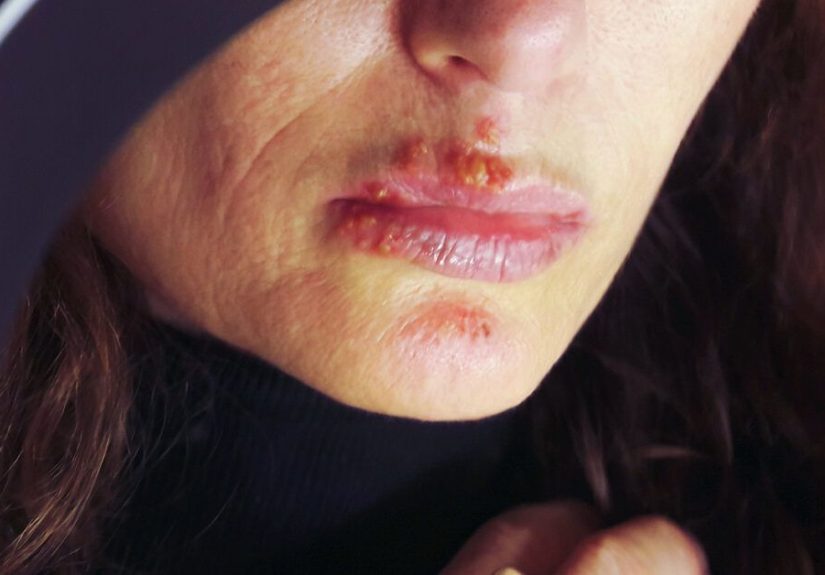
Small fluid-filled blisters appear, often in clusters, on or near the lip. These can be painful, especially when eating salty, spicy, or acidic foods.
3. Ulcer and crust stage
The blisters may break open, ooze, and then crust over. This is often the most annoying stage cosmetically and physically. Smiling can feel like your lip is filing a complaint.
4. Healing
Most cold sores heal on their own within about one to two weeks, though some last longer. Recurrent lesions usually improve faster than a severe first episode.
Cold sores are often confused with canker sores, but they are not the same thing. Cold sores usually appear on the lips or around the mouth and start as blisters. Canker sores usually occur inside the mouth and are not caused by HSV. Mixing them up is common. Treating them as if they are identical is not helpful.
How Recurrent Herpes Simplex Labialis Spreads
HSV-1 spreads through close contact with saliva, skin, or oral secretions. Kissing is a common route. Sharing lip balm, razors, utensils, or towels is not a fabulous idea during an outbreak either. Oral sex can also spread oral HSV to a partner’s genital area.
One of the trickier facts about oral herpes is that it can sometimes spread even when a person does not have an obvious blister. That means “I do not see anything” is not a perfect safety system. The risk is highest when symptoms are active, especially when blisters are present, but invisible does not always mean noncontagious.
If you have an active cold sore, skip kissing, skip oral sex, and skip sharing anything that touches the mouth. Also wash your hands after touching the area or applying medication. This is especially important around babies, people with eczema, and anyone with a weakened immune system.
How It Is Diagnosed
In many cases, clinicians diagnose recurrent herpes simplex labialis by simply looking at the lesion and hearing the history. When the appearance is classic, the diagnosis is often straightforward. If the sore is unusual, severe, or not healing as expected, a clinician may swab the lesion for testing. In some situations, blood testing may also be used, though it does not always answer the practical question of whether a current lip lesion is causing the problem.
The main reason diagnosis matters is that not every sore around the mouth is herpes. Impetigo, angular cheilitis, aphthous ulcers, contact dermatitis, shingles, and other conditions can mimic parts of the picture. If your “cold sore” keeps behaving like a rebel with no respect for the usual script, get it checked.
Treatment for Recurrent Herpes Simplex Labialis
Start early or lose some of the benefit
The golden rule of cold sore treatment is simple: the earlier, the better. Antiviral medicines work best when started during the prodrome or very early in the outbreak. Waiting until the lesion has fully settled in and unpacked all its luggage usually means less benefit.
Prescription antiviral options
Common prescription treatments include:
- Acyclovir
- Valacyclovir
- Famciclovir
- Penciclovir cream
These medicines do not cure HSV-1 permanently, but they can shorten healing time, reduce pain, and make the outbreak less intense. Oral antivirals are often more convenient and more effective than topical therapy for many people, especially when started quickly.
Over-the-counter treatment and self-care
For milder outbreaks, supportive care can still help:
- Docosanol cream may modestly shorten symptoms if used early
- Cold compresses can ease pain
- Petroleum jelly or lip emollients can reduce cracking
- Pain relievers such as acetaminophen or ibuprofen may help if appropriate for you
- Avoiding spicy, salty, and acidic foods may make eating less miserable
Topical numbing products may reduce discomfort, but they do not erase the outbreak like some marketing copy would love you to believe. Be skeptical of any product that acts like it can bully HSV into retirement overnight.
When daily suppressive therapy makes sense
If you have frequent, severe, or especially disruptive outbreaks, a clinician may recommend suppressive antiviral therapy. This means taking antiviral medication regularly to reduce how often cold sores come back. This approach may be worth discussing if your outbreaks are happening often, interfering with work or relationships, or consistently following certain unavoidable triggers such as sun exposure or medical procedures.
Prevention Tips That Actually Make Sense
You may not be able to guarantee zero future outbreaks, but you can absolutely make them less likely. Prevention is where smart habits beat internet folklore.
Protect your lips from the sun
Ultraviolet exposure is a real trigger for some people. Use a broad-spectrum lip balm with SPF 30 or higher, especially if you ski, run, hike, go to the beach, or basically exist outdoors for more than five minutes in summer.
Respect the prodrome
If you know your warning signs, act early. Keep prescribed medication on hand if your clinician recommends episodic treatment. Waiting until the blister is fully developed is like calling the fire department after the toast has already become a charcoal sculpture.
Reduce friction and irritation
Dry, cracked lips can become a perfect little landing pad for an outbreak. Stay hydrated, use lip moisturizer, and avoid picking at lesions. Your lip is trying to heal, not audition for a disaster documentary.
Manage your triggers
Stress reduction is not a magical cure, but it matters. Sleep, hydration, exercise, and basic illness prevention can all play a role. No, wellness is not glamorous. Yes, your immune system still appreciates it.
Prevent spread to others
- Do not kiss anyone during an active outbreak
- Do not perform oral sex during an active outbreak or prodrome
- Do not share lip products, razors, utensils, or towels
- Wash hands after touching the area
- Be extra cautious around infants and people with eczema or weakened immunity
When to See a Doctor
Most recurrent cold sores are annoying, not dangerous. But there are clear times to get medical advice:
- The sore is severe, unusually painful, or keeps returning frequently
- It does not heal within about two weeks
- You have a weakened immune system
- You develop eye pain, redness, light sensitivity, gritty eyes, or vision changes
- You have widespread skin involvement or concern for eczema herpeticum
- A newborn or young infant may have been exposed
Eye symptoms matter because herpes can affect the cornea and threaten vision. That is not the moment for “Let me see what happens by next Tuesday.” That is the moment for urgent medical evaluation.
Everyday Experiences With Recurrent Herpes Simplex Labialis
Living with recurrent herpes simplex labialis is not only about virology, lesions, and prescriptions. It is also about timing, confidence, routines, and all the tiny social calculations people make when a cold sore appears. For many people, the experience starts with a strange little sensation: a tingle on the lip that feels almost too small to matter. Then comes the internal bargaining. Maybe it is just dry skin. Maybe it is irritation. Maybe if you drink water, apply balm, and avoid looking directly at it, the universe will spare you this one time. Usually, the universe declines.
Once the blister appears, people often describe two problems at the same time: physical discomfort and self-consciousness. The physical side can include burning, tightness, throbbing, or pain with eating and talking. The emotional side is sneakier. A visible cold sore sits right in the middle of the face, which is a rude place for any medical condition to set up shop. People may feel embarrassed at work, hesitant in relationships, or tired of explaining that yes, it is a cold sore, and no, they are not thrilled about it either.
Many patients also talk about the frustration of predictability. They know the trigger before the lesion even arrives. Some get an outbreak after a beach trip. Others notice it during high-stress weeks, after getting sick, or after several nights of terrible sleep. There is something uniquely irritating about recognizing the pattern and still not being able to stop every recurrence. It can feel like your own body is sending calendar invites for inconvenient inflammation.
Social life can get awkward, too. A person with recurrent cold sores may suddenly avoid kissing, pull back from intimacy, skip oral sex, or become hyperaware of how often they touch their face. Parents and relatives may become especially anxious around infants, which is appropriate but emotionally draining. Even routine habits change. People keep separate towels, replace lip products, wash their hands more carefully, and become extremely invested in the location of antiviral cream. Nothing says adulthood quite like having a “cold sore drawer.”
Work and school are not immune to the experience either. Talking all day can hurt. Smiling can crack the crust. Eating lunch in public can feel weird when the sore is obvious. Video calls somehow make everything both blurrier and more emotionally intense. Some people become experts in camera angles and strategic mugs. Others just go full honesty and say, “It’s a cold sore, not a mystery.” Both approaches are understandable.
What many people find most helpful over time is not panic, but preparation. They learn their prodrome symptoms. They keep medication nearby if prescribed. They use SPF lip balm, try to sleep like functioning humans, and stop pretending that stress has no physical consequences. The condition may still recur, but it feels less like chaos and more like something manageable. That shift matters. Recurrent herpes simplex labialis can be annoying, inconvenient, and occasionally confidence-shaking, but for most people it becomes easier to handle once they understand the pattern, respect the triggers, and act early instead of hoping the tingling is just “bad lip vibes.”
Final Thoughts
Recurrent herpes simplex labialis is common, stubborn, and usually manageable. The key ideas are simple: HSV-1 tends to stay for life, outbreaks can be triggered by stress, illness, sun, and other stressors, and early treatment works better than late treatment. For people with frequent recurrences, a clinician can help decide whether episodic therapy, suppressive therapy, or a prevention-focused routine makes the most sense.
If there is one practical takeaway, it is this: take the prodrome seriously. That subtle tingling is often your best chance to act quickly, shorten the outbreak, and reduce the amount of havoc a cold sore gets to cause. Your lip may never send a thank-you note, but it will probably appreciate the effort.