Table of Contents >> Show >> Hide
- Why “Wuhan Coronavirus” Became COVID-19
- How the Outbreak Became a Global Crisis
- What COVID-19 Actually Does to the Body
- How the Virus Spreads and Why Prevention Evolved
- Vaccines Changed the Story
- Treatments, Testing, and Better Clinical Care
- Variants Proved the Pandemic Was Not Static
- Long COVID and the Pandemic’s Long Tail
- What the Wuhan Coronavirus Era Taught the World
- Experiences from the Wuhan Coronavirus Era
- Conclusion
The phrase “Wuhan coronavirus” was widely used in the earliest days of the outbreak, when the world was still trying to figure out what, exactly, was crashing the global party. Today, the medically accurate terms are COVID-19 for the disease and SARS-CoV-2 for the virus that causes it. That distinction matters because language shapes understanding, and understanding shapes everything from public policy to whether your uncle still thinks hand sanitizer is optional.
Still, the history behind the title is real. The outbreak was first identified in Wuhan, China, in late 2019, and within months it had transformed from a cluster of unusual pneumonia cases into one of the most disruptive health events in modern history. It changed the way people worked, learned, traveled, shopped, socialized, and thought about public health. It also turned ordinary words like “mask,” “variant,” “booster,” and “quarantine” into the vocabulary of daily life.
This article looks at what the Wuhan coronavirus story actually means in historical and scientific terms: where the outbreak entered global awareness, how the virus spreads, why COVID-19 hit some people mildly and others severely, what vaccines and treatments accomplished, and why the pandemic’s long shadow still matters. Because while the panic-buying of toilet paper may be mostly a museum exhibit now, the lessons are still very much alive.
Why “Wuhan Coronavirus” Became COVID-19
At the start of any outbreak, names tend to be messy. Journalists, health agencies, governments, and regular people all reach for the fastest label they can find. In early 2020, many people referred to the new illness as the “Wuhan coronavirus,” “novel coronavirus,” or “2019-nCoV.” Those terms reflected uncertainty, not precision.
Once scientists learned more, the official terminology became clearer. COVID-19 is the disease, and SARS-CoV-2 is the virus. That may sound like a small technical correction, but it helped standardize research, public communication, diagnosis, treatment, and surveillance. It also reduced reliance on geographic shorthand, which can be inaccurate, stigmatizing, and not especially useful once a virus is circulating across continents like it owns the place.
From an SEO perspective, the phrase “Wuhan coronavirus” still appears in legacy searches because it reflects the public’s earliest curiosity. From a health perspective, however, it is better to frame the subject through current terminology. That gives readers something much more valuable than clickability: clarity.
How the Outbreak Became a Global Crisis
From a Local Health Mystery to a Worldwide Emergency
The earliest public concern centered on reports of a new respiratory illness tied to Wuhan in late 2019. At first, the story felt distant to many Americans, like one of those international news items people read between weather updates and sports scores. That changed quickly. By early 2020, the virus had crossed borders, overwhelmed health systems in multiple countries, and triggered a worldwide effort to understand transmission, risk, and prevention.
One reason the crisis escalated so fast is that SARS-CoV-2 proved highly contagious. It spread efficiently through respiratory droplets and smaller airborne particles, especially in crowded, poorly ventilated indoor spaces. It also had a frustrating habit of moving through people who felt only mildly sick, or not yet sick at all. In other words, it was the kind of virus that thrives when humans behave like humans: gathering, talking, traveling, singing, eating together, and assuming “it’s probably nothing.”
The U.S. Experience
In the United States, COVID-19 reshaped nearly every institution. Hospitals faced surges. Schools moved online. Offices discovered video meetings, and the world discovered that nobody looks truly happy on a webcam before coffee. Families canceled weddings, postponed funerals, and learned how strange it feels to celebrate birthdays through a screen.
But the story was never just about disruption. It was also about adaptation. Scientists sequenced the virus quickly. Public-health agencies built surveillance systems. Clinicians improved treatment strategies. Researchers accelerated vaccine development at a pace that would have seemed almost impossible before 2020. The pandemic revealed deep vulnerabilities, but it also revealed what modern medicine, research collaboration, and public-health infrastructure can do under pressure.
What COVID-19 Actually Does to the Body
Common Symptoms and Early Confusion
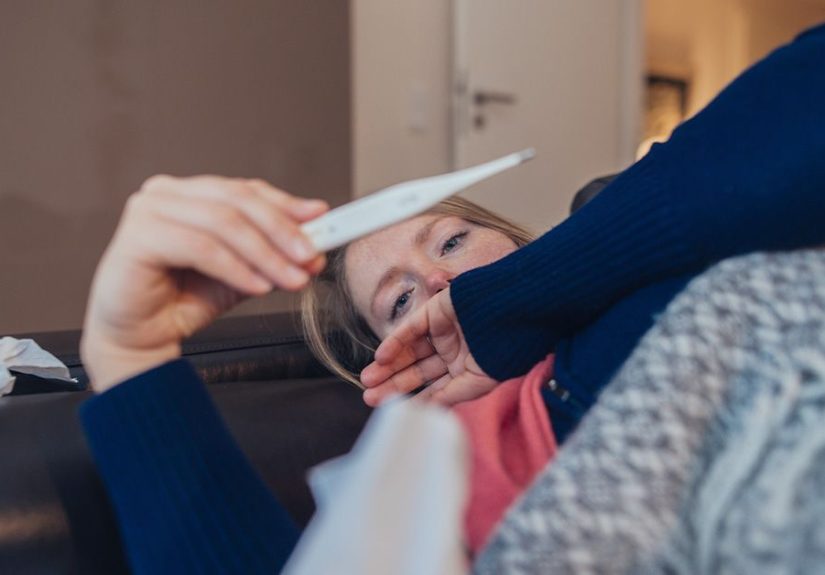
COVID-19 can range from barely noticeable to life-threatening. Common symptoms have included fever, cough, fatigue, sore throat, congestion, headache, body aches, and shortness of breath. Some people also experienced gastrointestinal symptoms such as nausea or diarrhea. One of the most talked-about early warning signs was the sudden loss of taste or smell, which felt so bizarre that many people knew something was off before they even saw a positive test.
Part of the challenge was that COVID-19 could look like many other illnesses. Sometimes it resembled a cold. Sometimes it looked like the flu. Sometimes it felt like allergies with attitude. That overlap made testing and clinical judgment especially important, because guessing based on symptoms alone was about as reliable as predicting the weather from one suspicious cloud.
Why Some Cases Became Severe
Although many people recovered at home, others developed serious disease, including pneumonia, dangerously low oxygen levels, and complications affecting the lungs, heart, brain, and other organs. Older adults and people with certain underlying medical conditions faced higher risk of severe illness, hospitalization, and death. That made COVID-19 more than just a respiratory nuisance. It was a systemic threat, capable of triggering inflammation and complications far beyond a cough.
Doctors also learned that timing mattered. Early recognition, supportive care, oxygen management, and later antiviral treatment for eligible patients improved outcomes. The difference between “I’ll just wait this out” and “I should call my doctor today” could be significant, especially for higher-risk individuals.
How the Virus Spreads and Why Prevention Evolved
SARS-CoV-2 spreads mainly through the air when an infected person breathes, talks, coughs, sneezes, sings, or otherwise launches tiny respiratory particles into shared space. Early public messaging focused heavily on droplets and surfaces, which made people wipe groceries like they were defusing a bomb. Over time, the evidence increasingly emphasized airborne transmission, particularly indoors with poor ventilation.
That shift helped explain why some prevention strategies worked better than others. Good ventilation, staying home when sick, masking in higher-risk settings, testing when symptoms appeared, and vaccination all became important tools. No single measure was magic. Public health worked best as a layered strategy, more Swiss cheese than superhero cape.
This was one of the pandemic’s biggest communication challenges. Guidance changed as evidence changed, and many people interpreted that as incompetence rather than science doing exactly what science is supposed to do: update when new information arrives. In reality, evolving guidance was often a sign of learning, not failure. Messy? Yes. Suspicious? Not necessarily.
Vaccines Changed the Story
A Scientific Breakthrough in Real Time
The development of COVID-19 vaccines marked one of the most important achievements of the pandemic era. Vaccines did not create an impenetrable force field around every human on Earth, but they significantly reduced the risk of severe illness, hospitalization, and death. That mattered enormously, especially for older adults, medically vulnerable people, and health systems that had already spent far too much time in crisis mode.
The vaccine rollout also introduced millions of Americans to concepts that used to live mostly inside immunology textbooks: mRNA platforms, emergency use authorization, boosters, waning protection, and updated formulas. Suddenly, people who had never once wondered how vaccine strain selection works were discussing it in grocery store lines.
Why Boosters and Updated Formulas Matter
Because SARS-CoV-2 kept evolving, vaccine strategy also had to evolve. Variants and subvariants changed the viral landscape, and updated vaccines were designed to better match circulating strains. That does not mean earlier vaccination was pointless. It means viral evolution is relentless, and public-health tools have to keep up.
This is similar to how public-health systems approach other respiratory viruses: immunity changes over time, viruses mutate, and vaccine recommendations adjust accordingly. Annoying? Sure. But so is pretending a virus will politely stop changing because everyone is tired of hearing about it.
Treatments, Testing, and Better Clinical Care
In the first months of the pandemic, treatment options were limited and uncertainty was high. Over time, clinicians gained more effective tools, including antiviral medications for eligible patients at risk of severe illness. Health systems also improved supportive care, hospital workflows, oxygen strategies, and triage protocols. Survival outcomes improved in part because medicine got better at recognizing what worked, what did not, and when intervention mattered most.
Testing also became a major part of the COVID-19 story. PCR tests were crucial early on, and later home antigen tests gave people a practical way to check symptoms and make everyday decisions. At-home testing was not perfect, but it made infectious disease surveillance much more personal. Suddenly the bathroom cabinet held thermometers, cold medicine, and a tiny plastic reminder that microbiology had entered domestic life.
Variants Proved the Pandemic Was Not Static
One of the defining features of the Wuhan coronavirus era was that the virus did not stay the same. SARS-CoV-2 accumulated mutations over time, producing variants with different transmission patterns and immune-evasion characteristics. Some variants surged and faded. Others displaced earlier strains and became globally dominant.
This kept the pandemic dynamic. A strategy that seemed effective in one phase might need revision in another. It also affected reinfection risk, public-health messaging, vaccine updates, and clinical expectations. For the average person, this constant change felt exhausting. For virologists, it was expected. Viruses mutate. That is not dramatic storytelling. That is Tuesday.
The lesson here is that infectious diseases are moving targets. Surveillance matters because what is circulating now may not behave exactly like what circulated last year. That is why public-health agencies continue to monitor trends and why clinicians still pay attention to updates even after the worst emergency phase has passed.
Long COVID and the Pandemic’s Long Tail
Even after the acute crisis eased, COVID-19 continued to affect many people through what is commonly called long COVID or post-COVID conditions. These symptoms can persist for weeks, months, or longer after the initial infection. Common complaints have included fatigue, brain fog, shortness of breath, sleep disruption, changes in smell or taste, exercise intolerance, and a frustrating sense that one’s body is no longer reading from the old instruction manual.
Long COVID became one of the most important reasons the pandemic could not be measured only in deaths or hospitalizations. A person might survive the acute infection and still face serious disruption to work, school, exercise, concentration, or daily life. That shifted the conversation from “Did you recover?” to “What does recovery actually mean?”
Researchers are still working to understand why long COVID happens, who is most at risk, and which treatments or management strategies help most. What is clear is that the condition is real, varied, and significant. The pandemic did not simply create a wave of short-term illness. It also left many people navigating chronic, sometimes invisible consequences.
What the Wuhan Coronavirus Era Taught the World
Public Health Is Infrastructure, Not Decoration
Before 2020, many people barely thought about ventilation, disease surveillance, supply chains for protective equipment, or how hospitals handle surge capacity. COVID-19 changed that. It showed that public health is not a background prop. It is infrastructure, as essential as roads, electricity, or clean water.
Clear Communication Saves Trouble
The pandemic also proved that communication matters almost as much as medicine. Confusing messages breed mistrust. Oversimplified messages age badly. Mixed incentives create confusion. In a fast-moving outbreak, people need guidance that is honest about uncertainty while still giving practical direction. That balance is difficult, but it matters.
Preparedness Is Personal, Too
On an individual level, the Wuhan coronavirus era taught many people to think differently about risk. Staying home when sick, respecting respiratory symptoms, keeping up with vaccines, and protecting vulnerable family members all became more normalized. Society did not become perfect at any of this, obviously. Humanity remains deeply committed to the tradition of saying, “It’s probably fine.” But the baseline awareness shifted.
Experiences from the Wuhan Coronavirus Era
The experiences tied to the Wuhan coronavirus were never identical, but they shared a strange emotional weather. For many people, the first phase was disbelief. News alerts popped up, maps lit up, and suddenly an outbreak that seemed far away became the reason a grocery shelf was empty, a flight was canceled, or a school district closed. Daily routines did not collapse all at once. They unraveled piece by piece, until ordinary life felt like a machine missing several important screws.
For health care workers, the experience was often defined by intensity, uncertainty, and endurance. Many worked long shifts while guidance changed in real time. They treated patients with a disease that was new, unpredictable, and sometimes devastatingly fast. Protective equipment was not just equipment; it became a symbol of fear, duty, and survival. For these workers, the pandemic was not an abstract historical event. It was a series of faces, alarms, exhausted colleagues, and decisions made under pressure.
For families, the experience could be both intimate and surreal. Grandparents met grandchildren through phone screens. College students moved home. Parents tried to become teachers, employees, cooks, and morale officers all at once. Some households grew closer, while others felt the strain of too much stress in too little space. Kitchens became offices. Bedrooms became classrooms. Living rooms became gyms, or at least places where yoga mats went to be ignored.
Small business owners often lived through a different kind of emergency. Restaurants, shops, salons, and service providers had to reinvent themselves almost overnight. Some switched to delivery, curbside pickup, or remote services. Others could not adapt fast enough and closed permanently. Behind every statistic about economic disruption was a real person recalculating payroll, rent, supplies, and hope.
Students experienced a version of history that felt especially disorienting. Milestones were postponed or flattened into virtual substitutes. School changed from a place to a login. Some students thrived in flexible environments, but many struggled with motivation, isolation, unequal internet access, or the absence of structure. Education did not stop, but for a while it certainly looked like it had been assembled in a hurry with duct tape and optimism.
Then there were the people who became sick and recovered physically, yet never fully returned to normal. Many described long COVID as a confusing second act: the fever was gone, but fatigue lingered; the test turned negative, but concentration did not come back; the infection ended, but daily life stayed altered. Their experiences reminded the public that survival is not always the same as restoration.
In the broadest sense, the Wuhan coronavirus experience taught people how fragile normal life can be and how adaptable people can be under pressure. It revealed fear, generosity, selfishness, creativity, grief, resilience, misinformation, scientific brilliance, and everyday kindness all at once. It was a public-health crisis, but it was also a human storyone told in hospitals, homes, schools, workplaces, and quiet moments when people realized the world had changed and they would have to change with it.
Conclusion
The story behind the phrase “Wuhan coronavirus” is really the story of COVID-19’s earliest public identity and the enormous global event that followed. What began as a localized outbreak became a worldwide test of science, medicine, communication, and social resilience. Over time, the language changed, the knowledge improved, the tools got better, and the world learned hard lessons about preparedness, airborne illness, and the long consequences of infection.
Today, the best way to write about the Wuhan coronavirus is not to freeze it in the panic of early 2020, but to understand it in full context. This was not just an outbreak with a dramatic origin story. It was a disease that reshaped public health, accelerated vaccine innovation, exposed structural weaknesses, and left a lasting mark through long COVID and collective memory. The headline may begin in Wuhan, but the meaning stretches far beyond one city, one season, or one phase of the pandemic.