Table of Contents >> Show >> Hide
- Understanding the Basic Conversion: Pounds to Ounces
- Quick Answer: How Many Ounces Are in One Tenth of a Pound?
- Method 1: Multiply the Decimal Pound Value by 16
- Method 2: Convert Tenths into Fractions, Then Multiply
- Method 3: Use a Tenths-of-a-Pound to Ounces Conversion Chart
- Common Mistakes When Converting Tenths of a Pound to Ounces
- How to Convert Mixed Pounds and Tenths to Ounces
- How to Convert Ounces Back to Tenths of a Pound
- Real-Life Examples of Tenths of a Pound to Ounces
- Tips for Fast Mental Conversion
- Experience-Based Notes: What People Learn After Doing This Conversion Often
- Conclusion
- SEO Metadata
Converting tenths of a pound to ounces sounds like the kind of math problem that quietly waits in a kitchen, a shipping room, a gym, or a grocery scale until you are holding a notebook and wondering why numbers suddenly have decimals. The good news is that this conversion is not difficult. In fact, once you remember one simple fact, the whole process becomes almost suspiciously easy: 1 pound equals 16 ounces.
That means every tenth of a pound is a slice of those 16 ounces. Since one tenth is 0.1, one tenth of a pound equals 1.6 ounces. From there, you can convert any number of tenths by multiplying, using a fraction, or checking a simple chart. No wizard robe required. A calculator helps, but your brain can handle it just fine after a little practice.
This guide explains three practical ways to convert tenths of a pound to ounces, with examples, shortcuts, a conversion table, common mistakes, and real-life experience-based tips. Whether you are measuring ingredients, calculating postage weight, checking a food label, weighing craft supplies, or trying to decode a digital scale, this article will help you move from “Wait, what is 0.7 lb?” to “Easy, that is 11.2 ounces.”
Understanding the Basic Conversion: Pounds to Ounces
Before jumping into the three methods, let’s build the foundation. In the U.S. customary system, pounds and ounces are both units used to measure weight. A pound is larger, and an ounce is smaller. The relationship is fixed:
1 pound = 16 ounces
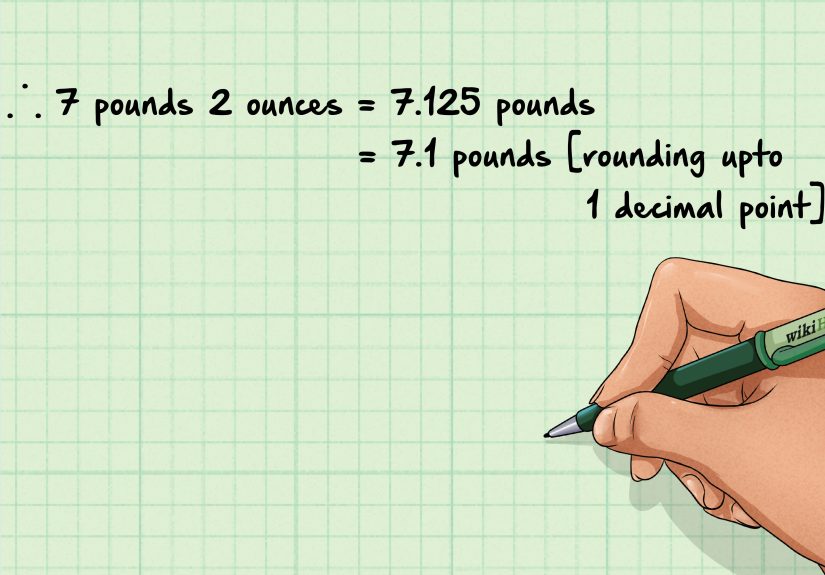
So, if you have 2 pounds, you multiply 2 by 16 and get 32 ounces. If you have half a pound, you multiply 0.5 by 16 and get 8 ounces. If you have one tenth of a pound, you multiply 0.1 by 16 and get 1.6 ounces.
The key phrase here is tenths of a pound. Tenths are decimal parts of a pound. A digital scale might show 0.1 lb, 0.2 lb, 0.3 lb, and so on. These are not ounces yet. They are decimal pounds. To turn them into ounces, you must convert the decimal pound value into ounces.
Quick Answer: How Many Ounces Are in One Tenth of a Pound?
One tenth of a pound is written as 0.1 lb. Since 1 pound equals 16 ounces:
0.1 × 16 = 1.6
So, one tenth of a pound equals 1.6 ounces.
That single result is the shortcut behind the entire topic. Every additional tenth adds another 1.6 ounces. Two tenths equals 3.2 ounces. Three tenths equals 4.8 ounces. Four tenths equals 6.4 ounces. You see the pattern: just keep adding 1.6, or multiply the number of tenths by 1.6.
Method 1: Multiply the Decimal Pound Value by 16
The most direct and reliable way to convert tenths of a pound to ounces is to multiply the decimal pound amount by 16. This method works for any decimal pound value, not just tenths.
The Formula
Ounces = Pounds × 16
For tenths of a pound, your pound value will usually look like 0.1, 0.2, 0.3, 0.4, and so on. You simply multiply that decimal by 16.
Examples
Example 1: Convert 0.1 lb to ounces
0.1 × 16 = 1.6
Answer: 0.1 lb = 1.6 oz
Example 2: Convert 0.4 lb to ounces
0.4 × 16 = 6.4
Answer: 0.4 lb = 6.4 oz
Example 3: Convert 0.75 lb to ounces
0.75 × 16 = 12
Answer: 0.75 lb = 12 oz
This method is especially useful when a scale gives you a decimal reading. For example, if a package weighs 1.3 lb, you can separate the whole pound from the decimal portion. One pound is 16 ounces, and 0.3 lb is 4.8 ounces. So 1.3 lb equals 20.8 ounces total.
Why This Method Works
Multiplication works because pounds are being converted into a smaller unit. Since each pound contains 16 ounces, you are finding out how many groups of 16 ounces fit into the decimal pound amount. In plain English: you are chopping a pound into 16 ounce-sized pieces, then counting the part you actually have.
This is the best method when accuracy matters. If you are cooking, shipping, calculating product weight, or filling out a form that expects ounces, multiplying by 16 gives a clean answer.
Method 2: Convert Tenths into Fractions, Then Multiply
Some people understand decimals better when they turn them into fractions first. If that sounds like you, this method may feel more natural. A tenth means one part out of ten. So 0.1 lb is the same as 1/10 of a pound.
The Fraction Method
Start with this idea:
1/10 of a pound = 1/10 × 16 ounces
Now divide 16 by 10:
16 ÷ 10 = 1.6
So, one tenth of a pound equals 1.6 ounces.
For more tenths, multiply the number of tenths by 1.6. For example, 6 tenths of a pound means 6 × 1.6, which equals 9.6 ounces.
Examples
Example 1: Convert 3/10 lb to ounces
3/10 × 16 = 48/10 = 4.8
Answer: 3/10 lb = 4.8 oz
Example 2: Convert 7/10 lb to ounces
7/10 × 16 = 112/10 = 11.2
Answer: 7/10 lb = 11.2 oz
Example 3: Convert 9/10 lb to ounces
9/10 × 16 = 144/10 = 14.4
Answer: 9/10 lb = 14.4 oz
When This Method Is Helpful
The fraction method is helpful for students, teachers, and anyone who wants to understand the “why” behind the conversion. It also makes the relationship between tenths and ounces clearer. One tenth is not one ounce. That is a common mistake. One tenth of a pound is 1.6 ounces because the full pound contains 16 ounces, not 10 ounces.
Think of a pound like a pizza cut into 16 equal slices. A tenth of the pizza is not one slice. It is 1.6 slices. Slightly awkward for pizza, very useful for math.
Method 3: Use a Tenths-of-a-Pound to Ounces Conversion Chart
If you need fast answers, a conversion chart is the easiest method. This is especially useful if you often work with decimal weights and do not want to calculate the same values over and over. Many kitchen scales, postal scales, farm records, fitness logs, and product labels use decimal pounds, so a chart can save time.
Tenths of a Pound to Ounces Chart
| Tenths of a Pound | Decimal Pounds | Ounces |
|---|---|---|
| 1 tenth | 0.1 lb | 1.6 oz |
| 2 tenths | 0.2 lb | 3.2 oz |
| 3 tenths | 0.3 lb | 4.8 oz |
| 4 tenths | 0.4 lb | 6.4 oz |
| 5 tenths | 0.5 lb | 8 oz |
| 6 tenths | 0.6 lb | 9.6 oz |
| 7 tenths | 0.7 lb | 11.2 oz |
| 8 tenths | 0.8 lb | 12.8 oz |
| 9 tenths | 0.9 lb | 14.4 oz |
| 10 tenths | 1.0 lb | 16 oz |
The chart works because each tenth adds 1.6 ounces. If you remember that 0.5 lb equals 8 ounces, you already know the halfway point. That can help you estimate quickly. For instance, 0.6 lb is just one tenth more than half a pound, so it is 8 + 1.6 = 9.6 ounces.
Best Uses for a Conversion Chart
A chart is ideal when you need speed more than mental math. If you run a small online shop, weigh ingredients for meal prep, record animal feed portions, measure craft materials, or check grocery weights, keeping a small chart nearby can prevent mistakes. It is also great for students who are learning unit conversions and need repeated exposure before the formula becomes automatic.
Common Mistakes When Converting Tenths of a Pound to Ounces
Although the conversion is simple, a few mistakes show up again and again. The first is assuming that 0.1 lb equals 1 ounce. It does not. A pound has 16 ounces, so 0.1 lb equals 1.6 ounces.
The second mistake is confusing ounces by weight with fluid ounces. Ounces measure weight. Fluid ounces measure volume. A food scale showing ounces is measuring weight, while a measuring cup showing fluid ounces is measuring volume. Eight ounces of flour by weight is not the same thing as eight fluid ounces of flour by volume. That little difference has ruined many recipes and probably a few brownies with big dreams.
The third mistake is rounding too early. For example, 0.7 lb equals 11.2 ounces. If you round 1.6 ounces to 2 ounces too early, then 7 tenths would become 14 ounces, which is wrong. Round only at the end, and only when the situation allows it.
The fourth mistake is mixing decimal pounds with pounds-and-ounces notation. A scale reading of 1.5 lb means one and a half pounds, or 24 ounces total. It does not mean 1 pound and 5 ounces. Decimal numbers are base ten; ounces in a pound are base sixteen. They are friendly neighbors, but they do not share the same mailbox.
How to Convert Mixed Pounds and Tenths to Ounces
Sometimes you will not be converting only 0.1 lb or 0.6 lb. You may see values like 2.3 lb, 4.8 lb, or 10.5 lb. The same formula still works:
Ounces = Pounds × 16
Examples of Mixed Decimal Pound Conversions
2.3 lb to ounces
2.3 × 16 = 36.8
Answer: 2.3 lb = 36.8 oz
4.8 lb to ounces
4.8 × 16 = 76.8
Answer: 4.8 lb = 76.8 oz
10.5 lb to ounces
10.5 × 16 = 168
Answer: 10.5 lb = 168 oz
You can also break the number apart. For 2.3 lb, two full pounds equal 32 ounces. The remaining 0.3 lb equals 4.8 ounces. Add them together: 32 + 4.8 = 36.8 ounces. This method is useful when you want to check your answer mentally.
How to Convert Ounces Back to Tenths of a Pound
It is also helpful to understand the reverse conversion. To convert ounces back to pounds, divide by 16.
Pounds = Ounces ÷ 16
For example, 8 ounces divided by 16 equals 0.5 pounds. That means 8 ounces is half a pound, or 5 tenths of a pound.
Another example: 12.8 ounces divided by 16 equals 0.8 pounds. That means 12.8 ounces is 8 tenths of a pound.
This reverse method is useful if a recipe, package, or product label gives weight in ounces, but your scale or record sheet uses decimal pounds.
Real-Life Examples of Tenths of a Pound to Ounces
Cooking and Baking
Imagine a recipe calls for 0.5 lb of cheese. You know 0.5 lb equals 8 ounces. If your cheese package is labeled in ounces, you can measure 8 ounces and move on with your life, hopefully toward nachos.
Shipping Packages
Shipping weights often matter because postage rates can change based on total weight. If your package weighs 0.9 lb, that equals 14.4 ounces. Depending on the carrier’s rules, that may be rounded up for pricing. The math gives you the true conversion, but shipping policies may decide how the weight is billed.
Food Portions
If a meal plan uses decimal pounds for meat, seafood, or produce, conversion helps. A 0.25 lb portion equals 4 ounces because 0.25 × 16 = 4. A 0.75 lb portion equals 12 ounces. These values are common in grocery stores and kitchens.
Fitness and Body Weight Tracking
Some scales show body weight in decimal pounds. If a person’s weight changes by 0.2 lb, that is 3.2 ounces. For most health and fitness tracking, tiny ounce-level changes are normal and can be affected by hydration, food, clothing, and time of day. The conversion may be mathematically exact, but the interpretation should stay practical.
Tips for Fast Mental Conversion
If you do not want to pull out a calculator every time, memorize a few anchor points. These make mental conversion much faster:
- 0.1 lb = 1.6 oz
- 0.25 lb = 4 oz
- 0.5 lb = 8 oz
- 0.75 lb = 12 oz
- 1.0 lb = 16 oz
Once you know these, estimating becomes easier. For example, 0.6 lb is a little more than half a pound, so it must be a little more than 8 ounces. Specifically, it is 9.6 ounces. Likewise, 0.8 lb is close to a full pound, but not quite there. Since one full pound is 16 ounces, 0.8 lb equals 12.8 ounces.
Experience-Based Notes: What People Learn After Doing This Conversion Often
After working with tenths of a pound for a while, most people discover that the hardest part is not the math. The hardest part is noticing what format the weight is in. A digital scale may show 0.4 lb, while a recipe may say 6 ounces, and a product label may use both pounds and ounces. The numbers look familiar, so it is easy to rush. But a quick pause can prevent the most common error: treating decimal pounds as if they were already ounces.
One practical experience is that half-pound values become second nature first. People quickly remember that 0.5 lb equals 8 ounces because half of 16 is 8. From there, they learn quarters: 0.25 lb is 4 ounces, and 0.75 lb is 12 ounces. Tenths take a little more practice because they move by 1.6 ounces at a time, which is not as neat as counting by 1 or 2. Still, once you repeat the pattern a few times, it sticks.
In kitchens, this conversion often appears when ingredients are sold by the pound but recipes use ounces. Cheese, meat, butter, nuts, chocolate, and produce may all require quick conversions. If a package says 0.3 lb, knowing that it equals 4.8 ounces can help you decide whether you have enough for a recipe. This is especially helpful when baking, where small differences can affect texture. Cooking is forgiving; baking keeps receipts.
In shipping, the lesson is slightly different. The exact conversion is important, but so is rounding. A package weighing 15.2 ounces may be treated differently from a package weighing 16.1 ounces, depending on the shipping service and pricing rules. That means converting 0.95 lb to 15.2 ounces can help you understand the actual weight, but you still need to check how the carrier handles billing weight. Math gives the measurement; the shipping counter gives the final bill.
For students, the best experience-based tip is to write the unit next to every number. Do not write only “0.6 × 16 = 9.6.” Write “0.6 lb × 16 oz per lb = 9.6 oz.” This makes the units cancel clearly and helps prevent confusion. It may feel slow at first, but it builds strong habits. Unit conversion is not just about getting the answer; it is about knowing why the answer makes sense.
Another helpful habit is to estimate before calculating. If you are converting 0.8 lb, you know the answer should be less than 16 ounces but more than 8 ounces. If your calculator gives 128 ounces, you know something went sideways, probably a decimal point trying to escape. Estimation is like a seat belt for math: you hope you do not need it, but you are glad it is there.
People who work with scales also learn to check the scale setting. Some scales can switch between pounds, ounces, grams, and kilograms. If the display says “lb,” you are seeing pounds. If it says “oz,” you are already seeing ounces. If it says “g,” you are in grams and need a different conversion. Many wrong answers happen because the scale was set to a different unit than expected.
The final experience-based lesson is to keep a small chart handy if you use these numbers often. Memorization is great, but a chart is faster when you are busy. A simple tenths-to-ounces table taped inside a kitchen cabinet, saved on a phone, or printed near a shipping scale can eliminate repeated calculation. It is not cheating. It is efficiency wearing sensible shoes.
Conclusion
Converting tenths of a pound to ounces is simple once you remember the core rule: 1 pound equals 16 ounces. From there, you can use three easy methods. Multiply decimal pounds by 16, convert tenths into fractions, or use a conversion chart for quick reference. The most important shortcut is that one tenth of a pound equals 1.6 ounces.
For everyday use, the multiplication method is the most flexible. For learning, the fraction method makes the logic clear. For speed, the chart is hard to beat. Whether you are measuring food, calculating shipping weight, helping with homework, or reading a digital scale, these methods make the conversion accurate and stress-free.
The next time you see 0.7 lb, you do not need to stare at it like it just sent you a mysterious text message. Multiply by 16, get 11.2 ounces, and move on confidently.