Table of Contents >> Show >> Hide
- 1. Prioritize Fit Over Everything Else
- 2. Use Tailoring Like a Secret Weapon
- 3. Choose Colors, Fabrics, and Patterns That Work for You
- 4. Get the Shirt, Tie, Shoes, and Details Right
- 5. Wear the Suit Well: Posture, Grooming, and Confidence Matter
- Common Mistakes That Instantly Make a Suit Look Worse
- Real-World Experience: What Actually Changes When You Start Wearing Suits Better
- Conclusion
Note: This article is a freshly written editorial piece based on real menswear guidance and cleaned for web publishing. No source links are included by request.
A good suit can make you look sharp, capable, and like you definitely know what “business casual” means. A bad suit can make you look like you borrowed it from a cousin who is either much taller, much shorter, or secretly a jazz magician. The difference is rarely the price tag. It usually comes down to fit, proportion, styling, and the small finishing moves that separate “guy wearing a suit” from “guy who actually looks great in a suit.”
If you want to look better in tailoring without falling into the trap of shiny lapels, overstuffed pockets, or trousers pooling around your shoes like sad fabric puddles, start with the fundamentals. The best-dressed men in suits are not always the ones wearing the most expensive garments. They are the ones who understand how a suit should sit on the body, how to choose colors and fabrics that flatter them, and how to finish the look without turning into a walking necktie advertisement.
Here are five practical, style-smart ways to look good in a suit, whether you wear one every weekday, once a year for weddings, or only when your family starts saying things like, “Please dress like an adult.”
1. Prioritize Fit Over Everything Else
If you remember only one thing from this article, make it this: fit matters more than brand, trend, or price. A modest suit that fits beautifully will almost always look better than an expensive one that sags, pinches, or hangs off your frame like a curtain.
Start with the shoulders
The shoulders are the foundation of the jacket. If they are too wide, the suit looks sloppy. If they are too tight, the jacket will pull and create wrinkles you do not want. Since shoulder alterations are difficult and costly, this is the area you need to get right from the start. The shoulder line should follow your natural frame cleanly, without overhang or bunching.
Check the collar, chest, and waist
The jacket collar should sit neatly against your shirt collar instead of floating away from it. Around the chest and torso, the jacket should gently shape the body without straining at the button. When you fasten the jacket, it should feel secure, not like the opening scene of a wardrobe malfunction documentary. A little waist suppression adds shape and makes the whole look cleaner.
Pay attention to sleeves and trousers
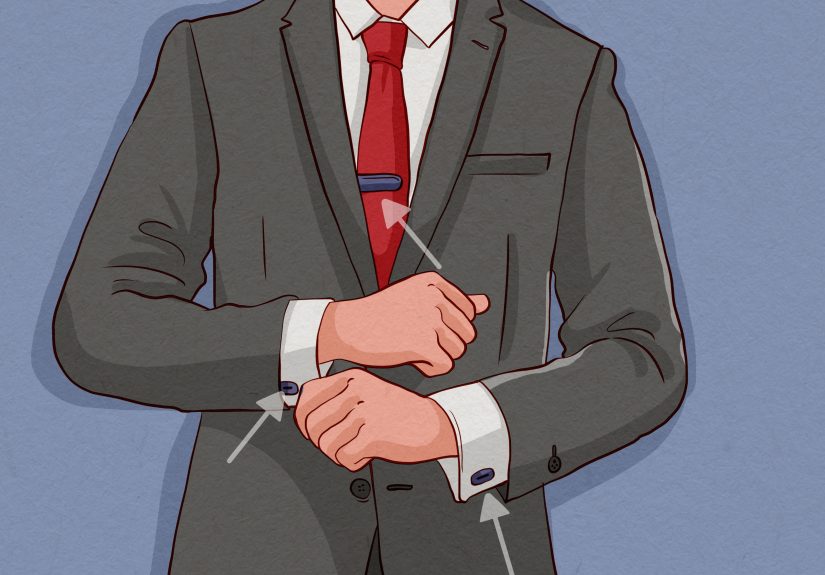
Your jacket sleeves should usually end around the wrist bone, allowing a small amount of shirt cuff to show. That little strip of cuff is one of those tiny details that quietly says, “Yes, I meant to do this.” Trousers should break cleanly over the shoe, not collapse into accordion folds. Too much extra length makes even a nice suit look lazy. Too little can look accidental unless the rest of the styling is clearly intentional.
The takeaway is simple: when shopping for a suit, forget the romance of the label for a minute. Look at the mirror, not the hanger. If the suit fits your shoulders, sits properly at the collar, and creates a clean line through the body and legs, you are already most of the way to looking good.
2. Use Tailoring Like a Secret Weapon
Off-the-rack suits are made for averages. Human bodies, however, are deeply committed to being inconveniently specific. That is why tailoring is not a luxury flourish. It is often the move that makes a decent suit look custom.
Even a few small alterations can make a huge difference. Sleeves can be shortened. Trouser hems can be adjusted. The waist can be taken in. The jacket body can be cleaned up so it follows your frame instead of hovering around it like it is unsure whether to commit. These changes do not just improve the fit; they improve your posture, confidence, and overall silhouette.
What a tailor can fix well
- Sleeve length
- Trouser length and break
- Waist suppression in the jacket
- Pant taper through the leg
- Shirt sleeve and trouser seat refinements
What a tailor cannot fix easily
- Bad shoulder fit
- A jacket that is dramatically too small or too large
- Severely off proportions
Think of tailoring as editing. A good editor does not rewrite the whole book; they make the strong parts stronger and remove what is distracting. That is exactly what a tailor does for a suit. The sleeves stop flopping. The pants stop bunching. The waist stops ballooning. Suddenly, you look like you own the suit instead of merely renting space inside it.
If you wear suits regularly, build a relationship with a good tailor. If you wear one only occasionally, it is still worth spending a little extra to get the fit cleaned up before a major event. Nothing photographs better than a suit that actually fits the person wearing it.
3. Choose Colors, Fabrics, and Patterns That Work for You
Looking good in a suit is not only about shape. It is also about choosing the right suit in the first place. Color, fabric, and pattern determine whether your outfit reads timeless, flashy, approachable, formal, or “my friend said velvet was a power move.” Sometimes your friend is wrong.
Start with versatile colors
If you want one suit that works almost everywhere, navy and charcoal are the heavy hitters. They are flattering, versatile, and easy to pair with shirts, ties, and shoes. Medium gray is also excellent, especially if you want something that feels polished without being severe. Black has its place, but it can look a little harsh in daytime business settings and often works best for formal events, evening wear, or minimalist styling.
Match fabric to the season and occasion
Wool is the all-star fabric for suits because it drapes well, resists wrinkles reasonably well, and works across many seasons. For hot weather, lighter constructions, breathable weaves, and less lining help a lot. Linen and cotton suits can look fantastic in warm climates, though they come with a more relaxed personality. Translation: wrinkles will happen, and that is part of the charm, not a crime.
Go easy on bold patterns
Pinstripes, checks, and plaids can look great, but they are not always the best first choice. If you are still building your style confidence, start with solids or subtle textures. They are easier to wear, easier to accessorize, and much harder to get wrong. A well-fitted navy suit with a crisp white or light blue shirt beats an overly ambitious pattern experiment nine times out of ten.
The goal is not to dress “safe” forever. The goal is to build from a strong base. Once you have that, you can play with windowpane checks, textured weaves, seasonal browns, or a bolder tie. Style works best when the foundation is solid.
4. Get the Shirt, Tie, Shoes, and Details Right
A suit does not exist in a vacuum. It is only as polished as the pieces surrounding it. You can ruin a great suit with the wrong shirt, clunky shoes, or accessories that all seem to be arguing with each other.
Keep shirt choices smart and simple
The easiest winning combinations are classics for a reason. A white dress shirt is crisp, sharp, and nearly impossible to beat. A light blue shirt is close behind and often a little softer and friendlier. These shades work with navy, gray, and charcoal suits without making you overthink things before coffee.
Choose ties with proportion in mind
Your tie should generally match the visual weight of your lapels and the formality of the outfit. An ultra-skinny tie with broad lapels looks confused. A massive tie knot with a tiny collar looks like it lost a bet. Solid ties, subtle patterns, grenadine textures, and classic stripes are easy wins. If your suit and shirt are already doing a lot, keep the tie calmer. If the suit is simple, the tie can bring in some personality.
Wear the right shoes and take care of them
Good dress shoes do more than finish the outfit. They anchor it. Black cap-toe Oxfords are excellent with charcoal and black suits. Dark brown shoes pair beautifully with navy and many gray tones. Loafers, derbies, and monk straps can also work depending on the setting, but the key is that they should be polished, appropriate, and not visibly begging for retirement.
Do not over-accessorize
A pocket square can add elegance. A nice watch can sharpen the look. A tasteful belt, if your trousers call for one, should coordinate with your shoes. But once you start stacking bracelets, novelty socks, oversized tie bars, and a lapel pin shaped like a swordfish, the suit stops being the star. Let the tailoring do most of the talking.
The best styling details feel intentional, not crowded. Think “refined” instead of “I got dressed inside a menswear gift shop.”
5. Wear the Suit Well: Posture, Grooming, and Confidence Matter
Here is the uncomfortable truth: even the best suit in the world cannot fully rescue bad posture, poor grooming, or visible discomfort. Clothes are part of the picture, but how you carry yourself finishes the frame.
Stand like the suit belongs to you
Good posture changes everything. Stand upright, keep your shoulders relaxed, and let the jacket fall the way it was meant to. Slouching causes pulling, collapsing, and bunching in all the wrong places. Standing well makes the suit look more expensive because it allows the silhouette to work properly.
Mind the grooming basics
If you are wearing a suit, details become more noticeable. Make sure your shirt is pressed, your collar sits cleanly, your shoes are polished, and your grooming is intentional. That does not mean you need to look like you have a personal glam team hiding in the coat closet. It just means the suit should not be the only thing making an effort.
Dress for the occasion, not for applause
A suit looks best when it suits the setting. That sounds obvious, but people still miss it. A three-piece peak-lapel power suit at a casual daytime garden wedding can feel overcooked. A wrinkled linen number at a formal board meeting may read too relaxed. When your suit matches the environment, you look comfortable and appropriate. That combination always reads well.
And finally, confidence matters. Not fake swagger. Not “I watched one mob movie and now I point with two fingers.” Real confidence comes from knowing your clothes fit, your choices make sense, and you are not tugging at your cuffs every 30 seconds. When you stop fussing with the suit, you start wearing it naturally. That is when it looks best.
Common Mistakes That Instantly Make a Suit Look Worse
Before you head off looking like a tailored legend, avoid these common mistakes:
- Wearing a jacket that is too big in the shoulders
- Letting trouser hems puddle over the shoes
- Buttoning every button without understanding the jacket style
- Pairing formal tailoring with scuffed, neglected shoes
- Choosing a shirt collar that collapses under the jacket
- Stuffing your pockets until the jacket bulges
- Trying too many trends at once
Style rarely fails because of one dramatic mistake. It usually falls apart through small distractions. Fix the little things, and the whole outfit improves fast.
Real-World Experience: What Actually Changes When You Start Wearing Suits Better
The biggest surprise about learning how to look good in a suit is that the transformation is often less dramatic than people expect and more practical than they imagine. It is not usually about becoming flashy or fashion-forward overnight. It is about noticing how a handful of smart choices completely change the way you look and feel.
For example, many men first assume the answer is buying a more expensive suit. Then they try on one that costs more but still fits poorly, and nothing magical happens. The shoulders still droop. The sleeves are still too long. The pants still stack up over the shoes like they are preparing for winter. Then they get a simpler navy suit adjusted by a good tailor, and suddenly the mirror starts cooperating. The shape looks sharper. The body looks more balanced. Photos look better. Even walking into a room feels different.
Another common experience is realizing that comfort and style are not enemies. A properly fitted suit does not have to feel stiff or theatrical. In fact, when the proportions are right, it often feels easier to wear because you are no longer distracted by pulling fabric, sliding trousers, or cuffs swallowing your hands. A suit that fits well lets you forget about the suit and focus on everything else, which is exactly what good clothing is supposed to do.
There is also the confidence factor, and no, it is not just a cliché invented by menswear catalogs. When you know the jacket sits correctly, the shirt and tie work together, and your shoes are clean, you tend to move differently. You stop adjusting. You stop second-guessing. You stop feeling like you are in costume. Instead, the suit becomes part of your presentation rather than the whole performance.
People also tend to discover that subtle upgrades make a bigger impression than loud ones. Swapping a huge shiny tie for a well-proportioned textured one. Hemming the trousers. Pressing the shirt. Choosing dark brown shoes instead of the pair that has clearly survived several emotional seasons. These are not headline-making changes, but together they create a polished look that reads as intentional and put together.
And perhaps the most useful lesson of all is that looking good in a suit is not about chasing one rigid formula. It is about understanding principles. Once you know what clean fit, balanced proportions, and smart coordination look like, you can adapt them to your style, build, age, workplace, and budget. That is why some men look incredible in a classic navy business suit, while others look equally strong in a soft gray suit with knitwear instead of a tie. The rules matter, but the point is not to become robotic. The point is to become better at making choices.
So yes, experience teaches that a great suit can upgrade your appearance. But more importantly, it teaches that the upgrade usually comes from discipline, not drama. Fit the shoulders. Tailor the rest. Choose solid colors. Keep the details clean. Stand up straight. In other words: look good in a suit by making the suit work for you, not by asking it to perform miracles.
Conclusion
If you want to look good in a suit, do not start by chasing trends. Start by getting the fit right. Then tailor the details, choose colors and fabrics that flatter you, coordinate the supporting pieces with some restraint, and wear the whole thing with calm confidence. That is the formula. It is not flashy, but it works.
A suit should make you look more like yourself on your best day, not like a character you are auditioning to play. When the fit is sharp, the styling is clean, and the details are thoughtful, a suit becomes one of the most flattering things a man can wear. And unlike a lot of fashion advice floating around online, this is one upgrade that actually shows up in real life, in photos, and in first impressions.