Table of Contents >> Show >> Hide
- What Makes a Sports Meltdown “Spectacular”?
- 1. Oliver McCall vs. Lennox Lewis II: The Heavyweight Fight That Turned Into a Crisis
- 2. Martina Hingis vs. Steffi Graf: When the French Open Crowd Became the Final Boss
- 3. Angel Matos at the 2008 Olympics: One Furious Kick, a Lifetime Ban
- 4. Jean Van de Velde at the 1999 Open Championship: Golf’s Most Polite Disaster Movie
- Why Fans Can’t Look Away From Sports Meltdowns
- Experience-Based Reflections: What These Meltdowns Teach Anyone Under Pressure
- Conclusion: The Thin Line Between Legend and Meltdown
Editor’s note: In this article, the phrase “mental breakdowns” is used as a cultural shorthand for unforgettable sports meltdowns under pressure. It is not meant as a clinical diagnosis or a joke about mental health. Elite athletes are human beings operating inside a pressure cooker that most of us would not survive without turning into emotional soup.
Sports are supposed to be simple: train hard, follow the rules, try to win, avoid becoming a meme. Easy, right? Not exactly. The great lie of sports fandom is that athletes should stay calm forever while millions of people judge their work in real time, cameras zoom into their nostrils, and one tiny mistake becomes a documentary segment for the next 30 years.
The most spectacular sports meltdowns are not always the loudest. Some arrive as silence. Some show up as a furious argument with an official. Some happen on a golf hole where the safest choice was sitting right there, waving politely, while the athlete chose chaos with a sand wedge. These moments become legendary because they expose the fragile machinery behind greatness: confidence, rhythm, pride, fear, fatigue, and the strange human ability to make the worst possible decision at the exact worst possible time.
Below are four of the most unforgettable mental breakdowns in sports history, chosen not because the athletes should be mocked, but because each case reveals something dramatic about pressure, ego, public judgment, and the thin line between heroic control and total sporting combustion.
What Makes a Sports Meltdown “Spectacular”?
A truly spectacular sports meltdown needs more than a bad performance. Everyone has bad days. A basketball player misses free throws. A quarterback throws interceptions. A golfer dunks a ball into water and briefly considers moving to a cabin with no television. That is normal sports pain.
A historic meltdown is different. It has a few ingredients: enormous stakes, visible emotional unraveling, consequences that change the result, and a replay that never seems to retire. It is the moment when the athlete is no longer just competing against an opponent. They are competing against noise, memory, identity, and the terrifying realization that the body can keep playing after the mind has left the building.
That is why these four moments still fascinate fans. They are dramatic, uncomfortable, strangely educational, and very human.
1. Oliver McCall vs. Lennox Lewis II: The Heavyweight Fight That Turned Into a Crisis
Boxing is already one of the most psychologically demanding sports on earth. There is no bench to hide on, no teammate to cover your assignment, no “we’ll get them next inning” pause. If your concentration goes, your opponent is still right there, wearing gloves and bad intentions.
That is what made the 1997 rematch between Oliver McCall and Lennox Lewis so unforgettable. McCall had shocked the boxing world in 1994 by stopping Lewis and taking the WBC heavyweight title. Their rematch, held in Las Vegas, was supposed to settle unfinished business. Instead, it became one of the strangest scenes ever witnessed in a heavyweight championship ring.
During the fight, McCall’s behavior shifted from competitive to disconnected. He stopped engaging consistently, lowered his output, wandered away from exchanges, and appeared emotionally overwhelmed. Referee Mills Lane repeatedly tried to determine whether McCall could continue. By the fifth round, with McCall not defending or responding in a normal competitive way, Lane stopped the bout and awarded Lewis the victory.
Why It Was So Shocking
Fans expected violence, strategy, revenge, and heavyweight drama. What they got was something far more unsettling: a world-class fighter seemingly unable or unwilling to participate in the very fight he had trained for. The crowd did not know how to react. Commentators did not have a neat category for it. Lewis himself looked caught between winning the title and watching an opponent unravel in front of him.
The McCall episode remains powerful because it stripped away the usual sports language. This was not simply “choking.” It was not a missed putt or a double fault. It looked like a human being under visible distress in a place where distress is usually hidden behind bravado.
The Bigger Lesson
The fight is a reminder that toughness is not an unlimited resource. Combat sports often sell the myth that champions are made of iron. McCall’s collapse showed that even a fighter with a granite chin and elite experience could be overwhelmed by forces that had nothing to do with punch statistics. In that sense, the most memorable thing about the fight was not Lewis winning. It was the uncomfortable realization that mental readiness is not a motivational poster. It is a real part of athlete safety.
2. Martina Hingis vs. Steffi Graf: When the French Open Crowd Became the Final Boss
The 1999 French Open final between Martina Hingis and Steffi Graf began like a coronation for the teenage world No. 1. Hingis had the talent, the ranking, the timing, and the first set. She was fast, clever, and precise, the kind of player who could make tennis look like chess played at sprint speed.
Then came the line call.
Hingis believed a ball had landed in. The call went against her. She argued, crossed to the other side of the net to make her case, and received a penalty. In tennis, crossing the net to dispute a mark is not exactly the same as setting the stadium on fire, but at Roland-Garros that day, it might as well have been. The Paris crowd turned on her with the collective enthusiasm of people who had just discovered a villain in their afternoon entertainment.
Graf, one of the greatest players in history, did what champions do: she stayed in the match. Hingis, meanwhile, had to battle Graf, the scoreboard, the umpire, the crowd, and the emotional avalanche rolling downhill inside her own head. The final shifted dramatically. Graf came back to win 4-6, 7-5, 6-2, claiming what would become the final Grand Slam singles title of her career.
Why It Was So Spectacular
This meltdown was not one explosive action. It was a slow leak. Hingis did not suddenly forget how to play tennis; she lost the emotional structure around her tennis. Her frustration fed the crowd. The crowd fed her frustration. Every boo seemed to add another brick to the backpack she was carrying around the clay.
What makes the match so fascinating is that Hingis was not some unprepared amateur. She was already a champion, a prodigy, and the best player in the world. Yet in that final, the social pressure of the arena became as important as footwork or shot selection. The stadium itself became an opponent.
The Bigger Lesson
Hingis’ French Open collapse shows how quickly control can slip when an athlete starts arguing with the environment instead of playing within it. The call may have been debatable. The reaction was costly. In high-pressure sports, being right is not always as useful as being ready for the next point.
That is a brutal truth, but also a useful one. Great athletes do not avoid unfairness; they survive it. The 1999 final remains one of tennis’s clearest examples of how a single emotional spark can turn a winning position into a career-defining heartbreak.
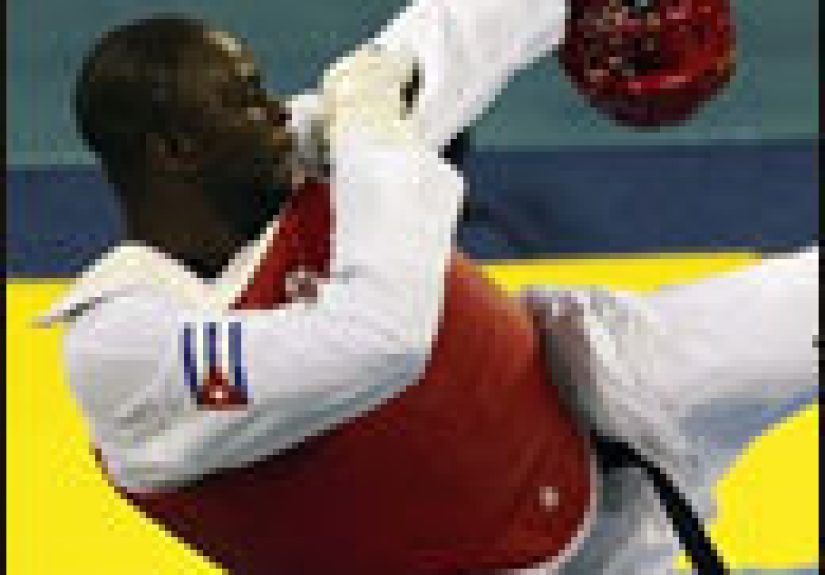
3. Angel Matos at the 2008 Olympics: One Furious Kick, a Lifetime Ban
Olympic taekwondo is built on discipline, control, timing, and respect for officials. In theory, it is one of the last places you would expect a match dispute to become an international incident. In practice, the 2008 Beijing Olympics delivered one of the most stunning athlete-official confrontations in modern Olympic history.
Cuba’s Angel Matos was not an unknown competitor. He was an Olympic gold medalist from the 2000 Sydney Games and an experienced athlete. During the bronze medal match in Beijing, Matos was leading Kazakhstan’s Arman Chilmanov when he took an injury timeout. Under the rules, he had limited time to resume competition. When the timeout expired, the referee ruled that Matos could not continue and awarded the match to Chilmanov.
Matos reacted with fury. After arguing the decision, he kicked the referee. The World Taekwondo Federation responded quickly and severely, banning Matos and his coach for life from sanctioned events.
Why It Became Infamous
There are bad reactions, and then there are reactions that instantly rewrite the last sentence of your athletic biography. Matos went from Olympic medal contender to cautionary tale in seconds. The incident was replayed not because it was a tactical mistake, but because it violated the basic structure that makes sport possible: the official’s authority.
Athletes disagree with referees every day. They point. They complain. They use facial expressions that say, “I hope your parking meter expires.” But physical retaliation against an official crosses a line that sports cannot tolerate. Without that boundary, competition collapses into street theater with uniforms.
The Bigger Lesson
Matos’ meltdown is the most extreme example on this list because the consequences were immediate and permanent. It also demonstrates how anger can shrink the future. In the moment, rage feels powerful. Five minutes later, it often looks like a tiny match that burned down a whole career.
The sad part is that Matos had already built a serious legacy. He did not need one more bronze medal to prove he was an elite athlete. But the meltdown became the headline. That is the danger of losing control in the most public possible setting: the worst moment can become the first thing people remember.
4. Jean Van de Velde at the 1999 Open Championship: Golf’s Most Polite Disaster Movie
Golf meltdowns are special because they happen slowly enough for everyone to suffer in high definition. In faster sports, disaster arrives like lightning. In golf, disaster walks down the fairway wearing a visor, taking practice swings, and giving the audience plenty of time to whisper, “Wait, is this really happening?”
Jean Van de Velde’s collapse at the 1999 Open Championship at Carnoustie is perhaps the most famous final-hole meltdown in golf history. Standing on the 18th tee, Van de Velde had a three-shot lead. In simple terms, he did not need brilliance. He needed caution. He needed boring golf. He needed the sporting equivalent of putting the car in the garage and not testing whether it could jump a river.
Instead, the 18th hole became a chaos parade. Van de Velde found trouble, then more trouble, then the kind of trouble that makes golf commentators sound like they are narrating a natural disaster. At one point, he removed his shoes and socks near the Barry Burn, considering a shot from the water before thinking better of it. He eventually made a triple-bogey seven, falling into a playoff with Paul Lawrie and Justin Leonard. Lawrie won the playoff and the championship.
Why It Still Haunts Golf Fans
Van de Velde’s meltdown is unforgettable because it was avoidable in such obvious ways. That is not meant cruelly. It is what makes the moment dramatic. Fans watching from couches around the world could see safer choices. Commentators could see safer choices. Golf history itself seemed to be waving a giant sign that said, “Please stop choosing adventure.”
But pressure changes the shape of decisions. A player who has spent his life attacking shots may struggle to suddenly become a defensive accountant on the most important hole of his career. Van de Velde’s collapse was not just technical. It was strategic, emotional, and psychological. He was trying to win while also trying not to lose, and those two thoughts do not always share a brain peacefully.
The Bigger Lesson
The Van de Velde story is not only about failure. It is also about grace. In later years, he handled the memory with humor and perspective, which may be the most impressive recovery shot of all. The 1999 Open remains a warning about course management, but also a reminder that public failure does not have to destroy a person. Sometimes the worst hole of your life becomes the thing you learn to carry lightly.
Why Fans Can’t Look Away From Sports Meltdowns
Sports meltdowns are compelling because they reveal the hidden emotional cost of elite performance. Fans love clutch moments, but a meltdown is the dark twin of clutch. It is the same pressure, the same audience, the same stakes, but with the ending reversed.
There is also a strange comfort in watching the world’s best athletes struggle. Not because we want them to suffer, but because it proves that pressure is democratic. It visits champions, teenagers, legends, favorites, underdogs, golfers, boxers, tennis stars, and Olympians. Nobody is completely immune.
Modern sports psychology has helped explain some of this. Under pressure, athletes may overthink skills that normally run automatically. A golfer may become too conscious of mechanics. A tennis player may hear the crowd more than the ball. A fighter may lose the emotional organization needed to compete safely. Stress can narrow attention, disrupt timing, and make simple choices feel strangely complicated.
That is why “just calm down” is one of the least useful phrases in sports. Calm is not a button. It is a trained skill, supported by routines, breathing, coaching, preparation, recovery, and sometimes professional mental health care. The athletes in these stories did not fail because they were weak. They failed in public because the pressure system overloaded.
Experience-Based Reflections: What These Meltdowns Teach Anyone Under Pressure
You do not need to be standing in a boxing ring, serving in a Grand Slam final, fighting for an Olympic medal, or trying to survive Carnoustie’s 18th hole to understand these stories. Most people have experienced a smaller version of the same thing. A presentation goes wrong. A test question freezes your brain. A business meeting turns hostile. A simple task becomes impossible because too many eyes are watching. Suddenly, your skills are still inside you, but someone has misplaced the instruction manual.
One lesson from these sports meltdowns is that pressure rarely creates a brand-new person. More often, it exaggerates what is already there. If an athlete is proud, pressure can turn pride into stubbornness. If an athlete is angry, pressure can turn anger into a decision they cannot undo. If an athlete is anxious, pressure can turn a routine motion into a complicated math problem. The same is true outside sports. Under stress, we usually do not become mysterious strangers. We become louder versions of our habits.
That is why preparation has to include more than technique. Van de Velde knew how to hit a golf ball. Hingis knew how to play tennis. McCall knew how to fight. Matos knew how to compete. The missing piece was not basic skill. It was the ability to stay connected to the next useful action when emotion tried to take over the steering wheel.
A practical takeaway is to build reset rituals before they are needed. Athletes use routines for a reason. A tennis player bounces the ball. A golfer steps back and breathes. A basketball player repeats a free-throw rhythm. These little rituals are not superstition; they are mental handrails. In everyday life, the same idea works. Before answering an angry email, pause. Before reacting to criticism, breathe. Before making a high-stakes decision, ask, “What is the next useful move?” That question is boring, which is exactly why it helps. Meltdowns love drama. Recovery loves boring.
Another lesson is that public failure feels permanent while it is happening, but it rarely is. Hingis remained one of the most gifted players of her era. McCall continued to be remembered as more than one painful night by serious boxing followers. Van de Velde became almost beloved for the way he handled the aftermath. Even infamous moments can become part of a larger story if the person keeps living, learning, and showing up.
The final experience-based lesson is compassion. Fans often talk about athletes as if they are video game characters with salary figures attached. But pressure does not care how talented you are. It does not care how much money is on the line. It does not care how many trophies are in the cabinet. When the mind overloads, the results can be messy, strange, and unforgettable.
So yes, these are spectacular sports breakdowns. They are dramatic enough to be replayed forever and strange enough to make fans say, “I still cannot believe that happened.” But they are also reminders that control is a skill, not a guarantee. The best athletes in the world are not great because they never feel pressure. They are great because, most of the time, they find a way to keep pressure from grabbing the microphone.
Conclusion: The Thin Line Between Legend and Meltdown
The 4 most spectacular mental breakdowns in sports history are not just blooper-reel material. They are pressure studies with scoreboards. Oliver McCall showed how emotional distress can become visible in the most unforgiving arena imaginable. Martina Hingis showed how a hostile crowd and a disputed call can turn a winning position into a spiral. Angel Matos showed how one uncontrolled reaction can erase years of achievement from the conversation. Jean Van de Velde showed how strategy can dissolve when victory is almost close enough to touch.
Sports fans remember these moments because they are shocking. But we should also remember them because they are human. Every athlete on this list reached an elite level that most people can barely imagine. Their meltdowns were spectacular not because they were uniquely flawed, but because their flaws appeared under stadium lights.
That is the strange beauty of sports history. It records the triumphs, but it never loses the receipts for the disasters. And sometimes, the disasters teach us more.