Table of Contents >> Show >> Hide
- What Is Macco di Fave e Finochietto?
- Ingredients for Sicilian Fava Bean and Fennel Soup
- How to Make Macco di Fave e Finochietto (Step-by-Step)
- How to Serve Macco di Fave e Finochietto
- Nutrition Benefits of Fava Bean and Fennel Soup
- Variations on Macco di Fave e Finochietto
- Make-Ahead, Storage, and Freezing Tips
- Frequently Asked Questions
- Experiences and Stories Around Macco di Fave e Finochietto
- Conclusion
If soups had personality types, macco di fave e finochietto would be
“soft-spoken, secretly jacked.” It looks like a simple, pale-green purée,
but it’s packing plant protein, fiber, and centuries of Sicilian food
history all in one cozy bowl. This traditional Sicilian fava bean and
fennel soup is rustic, silky, and deeply aromatic thanks to wild fennel
(or the best fennel substitute you can find).
In Sicily, macco di fave is classic cucina povera:
peasant food created to be cheap, filling, and nourishing enough to fuel
a day’s work in the fields. Today, it feels like a luxury comfort dish
that also happens to be naturally vegetarian (and easy to make vegan).
Whether you’re chasing a taste of Sicily, looking for a hearty fava bean
recipe, or just want a new “big pot of soup for the week” meal,
this macco di fave e finochietto recipe belongs in your rotation.
What Is Macco di Fave e Finochietto?
Macco di fave e finochietto is a thick Sicilian soup or
purée made from dried fava beans simmered until they collapse into a silky
cream, then scented with wild fennel (finocchietto selvatico).
The name “macco” comes from the Latin macero, meaning “to soften”,
which is exactly what happens to the fava beans as they slowly cook down.
Historically, macco was eaten at the end of winter and around
St. Joseph’s Day (March 19), when fava beans helped save
Sicilian communities from famine. The dish is still associated with
abundance and gratitude, but now it shows up on family tables year-round:
as a simple weeknight dinner, a cozy first course, or a “I made too much
but that’s fine because leftovers are amazing” meal.
Depending on the village, macco might be served:
- as a smooth, spoon-coating purée with a drizzle of olive oil,
- with sautéed greens like chicory or Swiss chard on top,
- with broken spaghetti stirred in, turning it into
pasta e macco, - or finished with ricotta, breadcrumbs, or a sprinkle of chili flakes.
Ingredients for Sicilian Fava Bean and Fennel Soup
Core Ingredients
For a traditional, home-style macco di fave e finochietto, you’ll need:
- Dried fava beans (split or crushed if possible) –
the star of the dish. They create the thick, creamy base. - Wild fennel (finocchietto selvatico) – tender fronds
and leaves add a gentle anise aroma that’s very Sicilian. - Onion – yellow or white onion, finely chopped, to
build sweetness and flavor in the soffritto. - Garlic – just enough to add depth without overpowering
the fennel. - Extra-virgin olive oil – for sautéing and for finishing
the soup with a luscious, peppery drizzle. - Bay leaf – optional but common; it gives a subtle
herbal note while the fava beans simmer. - Water or vegetable broth – for simmering the beans
into a thick, spoonable soup. - Salt and freshly ground black pepper – to season the
macco at the end, once the beans are soft.
If You Can’t Find Wild Fennel
Outside Sicily, true wild fennel can be tricky to hunt down. Don’t panic:
your soup will still be fantastic if you:
- Use the fronds from a regular bulb of fennel, finely
chopped. - Add a small pinch of fennel seeds, lightly crushed,
to boost the aroma. - Balance with fresh herbs like parsley or
dill for a bright, green finish.
Optional Add-Ins and Toppings
- Potato, diced – adds extra creaminess and body.
- Broken spaghetti – stirred in toward the end for a
more filling meal. - Ricotta (sheep’s milk if possible) – served as a spoonful
on top for richness. - Sautéed chicory or other bitter greens – a classic,
earthy counterpoint to the sweet beans. - Toasted breadcrumbs – Sicilian “poor man’s cheese”
for crunch. - Red pepper flakes – if you like a gentle kick.
How to Make Macco di Fave e Finochietto (Step-by-Step)
1. Prep and Soak the Fava Beans
Dried fava beans are tougher than many other legumes, so soaking helps
them cook evenly and more quickly.
-
Rinse the beans: Place about 1 pound (450 g) dried fava
beans in a colander and rinse under cool water until it runs clear. -
Soak overnight: Transfer the beans to a large bowl, cover
with plenty of water (at least 3–4 inches above the beans), and soak
for 8–12 hours. -
Drain and rinse again: The beans will have plumped up;
drain off the soaking water and give them a quick rinse.
If your dried favas still have tough outer skins and you want an ultra-smooth
macco, you can slip off the skins after soaking. It’s a bit of a zen task,
but your future self, eating silky soup, will thank you.
2. Start the Soffritto
-
Sauté aromatics: In a large heavy pot, warm 3–4 tablespoons
of extra-virgin olive oil over medium heat. Add 1 finely chopped onion
and a small pinch of salt. -
Cook low and slow: Sauté the onion until it’s soft,
translucent, and just beginning to turn golden at the edges, about
8–10 minutes. Add 2–3 minced garlic cloves and cook 1–2 minutes more,
just until fragrant. -
Add bay leaf and fennel stems: If you’re using tougher
fennel stems, you can add a few pieces now so they soften during the
long simmer.
3. Simmer the Fava Beans
-
Add beans and liquid: Tip in the soaked, drained fava
beans. Add enough water or vegetable broth to cover them by about
2 inches (5 cm). -
Bring to a boil, then reduce: Bring the pot to a gentle
boil, then immediately lower the heat to maintain a bare simmer. -
Skim and stir: Foam may rise to the top at first; skim
it off with a spoon. Stir occasionally to prevent sticking. -
Cook until falling apart: Continue simmering for
1½–2½ hours (depending on your beans), adding more hot water as needed
to keep them submerged. They should break down easily when pressed
against the side of the pot.
The right texture for macco is thicker than a standard soup but looser than
mashed potatoes. Think: a velvety purée that slowly slumps off the spoon.
4. Add the Fennel and Finish the Purée
-
Stir in the fennel: When the beans are very tender, add
a generous handful (or more) of chopped wild fennel fronds or fennel
greens. Simmer for another 10–15 minutes to infuse the soup. - Remove bay leaf and any tough stems before blending.
-
Purée the soup: For a very smooth macco di fave, use an
immersion blender directly in the pot and blend until creamy. For a
more rustic texture, mash with a wooden spoon or potato masher and
leave a few pieces of bean intact. -
Adjust thickness: If it’s too thick, add a splash of
hot water or broth. If it’s too thin, simmer gently, stirring, until it
thickens to your liking. -
Season well: Only now add salt and plenty of freshly
ground black pepper. Fava beans soak up flavor, so don’t be shy.
5. Optional: Turn It into Pasta e Macco
If you want to make this soup extra hearty:
-
Cook pasta separately: Boil a small handful of broken
spaghetti or short pasta shapes in salted water until al dente. -
Stir into the macco: Drain the pasta and fold it into
the hot soup right before serving, loosening the macco with a little
pasta water if needed.
How to Serve Macco di Fave e Finochietto
Macco is the kind of dish that loves a good garnish. To serve it in
classic Sicilian fashion:
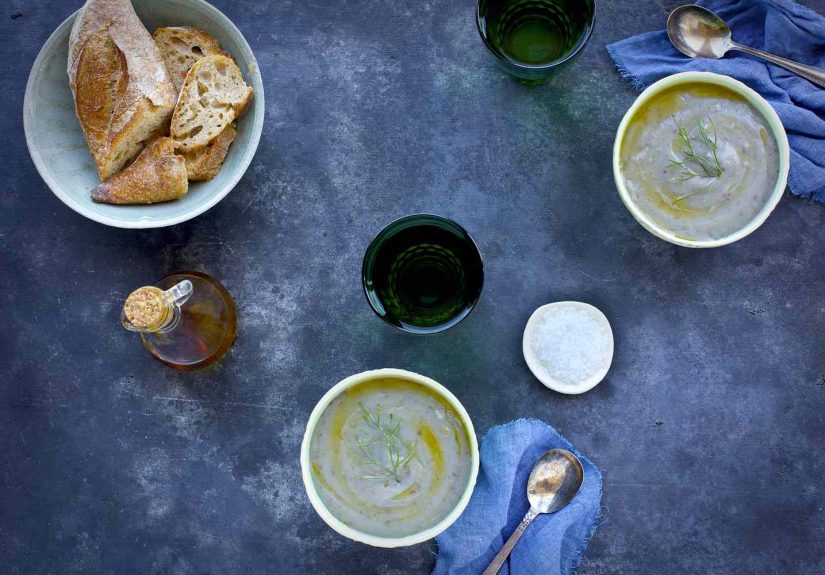
- Ladle the hot macco into warm bowls.
- Finish with a generous drizzle of extra-virgin olive oil.
- Scatter a few extra fennel fronds on top.
- Add a spoonful of ricotta or a handful of sautéed greens if you like.
- Sprinkle with toasted breadcrumbs or a pinch of red pepper flakes
for contrast.
Serve with thick slices of crusty bread or grilled sourdough. It’s
technically “just” soup, but with good bread and maybe a simple salad,
macco di fave e finochietto easily becomes a complete meal.
Nutrition Benefits of Fava Bean and Fennel Soup
Fava beans were a survival food for a reason: they’re incredibly
nutrient-dense. Per typical serving, macco di fave offers:
- High-quality plant protein – to help keep you full and
support muscle maintenance. - Plenty of fiber – good for digestion, blood sugar
balance, and long-lasting energy. - Minerals like iron, magnesium, and phosphorus – important
for energy, bone health, and overall metabolism. - B vitamins – especially folate and thiamine, which help
your body use food for fuel.
The fennel brings its own perks, too. It’s naturally rich in antioxidants
and provides a light, digestive quality that helps this hearty soup feel
comforting rather than heavy. It’s a perfect example of
cucina povera recipes that are accidentally very on-trend
for modern, plant-forward eating.
Note: People with favism (a genetic condition linked to
G6PD deficiency) must avoid fava beans entirely. If that applies to you,
skip this dish and choose a different legume-based soup instead.
Variations on Macco di Fave e Finochietto
With Greens
A very traditional pairing is macco with bitter greens like chicory,
dandelion, or Swiss chard. You can:
- Blanch the greens in salted water.
- Sauté them with garlic, olive oil, and a pinch of chili flakes.
- Serve them piled on top of each bowl of macco.
With Ricotta or Cheese
While macco di fave is naturally vegan, many Sicilian families love to add
a dollop of sheep’s milk ricotta or a sprinkle of grated pecorino on top.
It turns the soup into an even more luxurious comfort dish.
Smoky or Meaty Version
Some non-traditional versions include bits of pancetta or guanciale in the
soffritto for a smoky depth. If you’re not keeping it vegetarian or vegan,
this twist makes the soup feel extra rustic and cozy.
Make-Ahead, Storage, and Freezing Tips
- Refrigerator: Store cooled macco in an airtight
container for up to 4 days. It will thicken as it sits; thin with a bit
of water or broth when reheating. - Freezer: This soup freezes well. Portion into containers
and freeze for up to 3 months. Thaw in the fridge overnight before
reheating. - Reheating: Warm gently over low heat, stirring often
and adding liquid as needed. Finish with fresh fennel fronds and a
drizzle of olive oil to wake it up.
Frequently Asked Questions
Can I use fresh or frozen fava beans instead of dried?
Yes, but the texture will change slightly. Dried beans give a thicker,
more “creamy” macco. Fresh or frozen fava beans cook faster and have a
brighter green color and flavor. If using them, reduce the cooking time
significantly and add less liquid; you may still need to blend to achieve
that signature puréed texture.
Do I have to soak dried fava beans?
Soaking is highly recommended. It shortens the cooking time, helps the
beans cook more evenly, and can make them easier to digest. If you’re in a
rush and skip soaking, expect a longer simmer and keep a close eye on the
pot so the beans don’t catch on the bottom.
How thick should macco be?
Traditional macco di fave e finochietto is thick. It should coat
the spoon and hold gentle waves on the surface. If you prefer a looser
soup, simply add more liquid at the end to reach your ideal consistency.
What should I serve with Sicilian fava bean and fennel soup?
Crusty bread is almost mandatory. Beyond that, a simple green salad or
plate of roasted vegetables is all you need. Macco is hearty enough to be
a main course, especially if you’ve stirred in pasta or topped it with
sautéed greens.
Experiences and Stories Around Macco di Fave e Finochietto
One of the most charming things about macco di fave e finochietto
is that almost every Sicilian family has “their” way of making it. Ask
around, and you’ll quickly discover that the right thickness, the exact
amount of fennel, and whether or not to add pasta are all topics worthy of
passionate debate preferably conducted over a table already covered in
bread, wine, and multiple steaming bowls of soup.
In many coastal villages, older generations still remember macco as the
dish that marked the turning of seasons. As winter winds started to die
down and fresh wild fennel began to appear along dusty paths and hillside
terraces, the first pot of macco di fave signaled that spring wasn’t just
a rumor anymore. Children would be sent out with baskets to gather fennel
fronds, and they’d come back smelling like anise and sunshine, their hands
stained with plant sap.
Home cooks often describe the process of making macco as a kind of
meditation. The steps themselves are simple: soak, simmer, stir, blend.
Nothing flashy, nothing complicated. But as the hours pass, the fava beans
transform from hard, pale pebbles into something completely different
a creamy, comforting base that fills the whole kitchen with a nutty,
herbal aroma. It’s the kind of slow, hands-off cooking that lets you go
about your day, checking in occasionally, like you’re keeping an eye on
an old friend.
For some Sicilian families who emigrated abroad, macco di fave e
finochietto became a nostalgic anchor. Even in modern city apartments
thousands of miles from the Mediterranean, a pot of macco on the stove
can instantly make a space feel like home. The wild fennel might be
swapped for supermarket fennel fronds, and the beans might be bought in
a bag instead of dried on a rooftop, but the spirit of the dish stays the
same: frugal ingredients, cooked with care, shared generously.
There are also those “first taste” stories that stick with people. Maybe
it’s a traveler who thought “fava bean soup” sounded plain and was
surprised by how complex the flavor turned out to be: subtly sweet beans,
a whiff of licorice from the fennel, a peppery hit of olive oil at the
end. Or someone who grew up eating only clear broths and discovered they
actually love thick puréed soups once they tried macco, especially with
toasted breadcrumbs for crunch.
In modern kitchens, cooks experiment with macco in playful ways. Some
serve it in small cups as an elegant starter at dinner parties, topped
with tiny fennel fronds and a few drops of chili oil. Others spread a
thicker version on grilled bread and treat it almost like a hummus-style
dip, adding roasted cherry tomatoes or marinated olives as a garnish.
It turns out that this humble Sicilian fava bean and fennel soup adapts
effortlessly to different settings from simple weekday bowl to
low-key showstopper.
The common thread through all these experiences is that macco di fave e
finochietto is more than just a recipe. It’s a reminder that a short list
of ingredients, treated with respect and a little patience, can create
something that feels both deeply comforting and surprisingly special. The
next time you stir a pot of macco, you’re participating in a long, quiet
tradition one that has warmed kitchens and fed generations, one creamy
spoonful at a time.
Conclusion
Macco di fave e finochietto is simple, nourishing, and infinitely
adaptable the kind of dish that proves you don’t need expensive
ingredients to eat well. With dried fava beans, fennel, olive oil, and a
bit of time, you can create a silky Sicilian fava bean and fennel soup
that works as a cozy weeknight dinner, a make-ahead meal prep hero, or
an impressive starter for guests.
Whether you keep it vegan, crown it with ricotta, or turn it into pasta
e macco, this recipe brings a touch of Sicilian warmth to your table.
Drizzle on a little extra olive oil, add a few fennel fronds, and enjoy
a bowl of honest, satisfying comfort cucina povera at its
finest.