Table of Contents >> Show >> Hide
- The back of the school bus: a world with its own rules
- Why speed bumps felt like roller coasters
- What nostalgia does to our brains (and hearts)
- School bus memories across generations
- Okay but… was this actually safe?
- Recreating that “back-of-the-bus” feeling as an adult
- Real stories from the back of the bus (extra-awesome edition)
- Conclusion: honoring the bounce
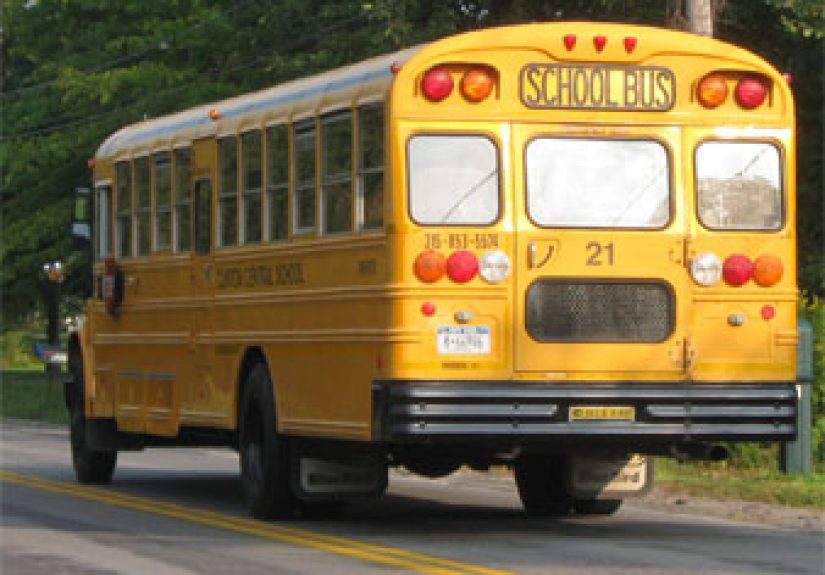
If you ever sat in the very back row of a yellow school bus, you already know: that wasn’t just a seat. That was the launch pad.
The speed bump loomed ahead. The driver didn’t slow down quite as much as the rulebook probably suggested. You and your friends locked eyes, grabbed the edge of the vinyl seat, and thenwhoompyour stomach floated, your butt lifted, and the entire back row bounced like a low-budget amusement park ride. For half a second, you weren’t a kid going to math class. You were an astronaut in a backpack.
That tiny moment is exactly what the original “1000 Awesome Things” list is about: the little flashes of joy most people forget to notice. One of those entries, #160, celebrates “going really fast over speed bumps in the back of a school bus,” a strangely specific but instantly recognizable memory for anyone who grew up around big yellow buses and bigger childhood imaginations.
The back of the school bus: a world with its own rules
The back of the bus has always felt like a different country. Up front, the driver keeps the peace, the front-row kids sit quietly, and the classroom mood still lingers. But the farther you walk down that narrow aisle, the more the rules seem to loosen.
In the back you had:
- Unspoken social codes – Only certain kids “earned” those last seats: the older grade, the class clown, the kid who always knew the newest songs.
- Vinyl-seat playgrounds – Seats became forts, boundaries for games, and makeshift pillows on those early-morning rides.
- Ongoing stories – Inside jokes and running gags lived back there for years, passed down like legends to younger riders.
Now add speed bumps to that mix and things got interesting. As the bus rattled down neighborhood streets, every pothole and painted bump became a tiny theme park attraction. The front half of the bus simply went “ka-thunk.” The back half? That’s where you briefly lost contact with Earth.
Why speed bumps felt like roller coasters
The tiny physics lesson behind a giant bounce
You didn’t know it at the time, but basic physics was doing you a favor. The longer the bus, the more exaggerated the motion at the back. When the front wheels crept up over the bump, the rear was still low. Then as the back wheels slammed over, the tail of the bus dipped and popped you up just enough to make your stomach flipbut not enough (usually) to be dangerous.
That little “air time” was just enough to feel thrilling without requiring a waiver and a safety harness. It cost nothing, it lasted a second, and yet you might still remember it years later, as clearly as any official field trip or big school event.
Shared laughter and instant bonding
Part of what made those bumps so awesome wasn’t the jump itself, but the reaction after. Everyone who bounced looked around to see who else had been lifted off the seat. Someone would shout, “Do it again!” Another would fake a dramatic “We have lift-off!” And boomsuddenly a random Tuesday morning felt special.
Those tiny shared adventures are social superglue. A few seconds of bouncing and laughing could turn classmates into bus-friends, and bus-friends sometimes became real-life friends. You might not remember who sat two desks over in science class, but you probably remember who sat next to you in that back row.
What nostalgia does to our brains (and hearts)
On the surface, we’re just talking about driving over a speed bump a bit too quickly. But the reason this memory still makes adults smile isn’t really about suspension systems and road designit’s about nostalgia.
Psychologists today see nostalgia as a mostly positive, emotionally rich state that can boost mood, strengthen our sense of identity, and make us feel more connected to others. Research has linked nostalgic memories to increased feelings of meaning in life, more gratitude, and even better emotional well-being in daily life. When people are prompted to recall warm memories from childhood, they often report more positive emotions and less loneliness afterward.
Think about what happens when you remember that bus moment:
- You see your younger self, with the too-big backpack and scuffed sneakers.
- You remember the faces of friends you maybe haven’t seen in years.
- You can almost hear the hum of the engine, the squeak of the doors, the chatter of kids.
That little mental time-travel trip gives your brain a quick hit of “This was good. I belonged somewhere.” And that feeling is powerful, especially on grown-up days that feel heavy or complicated.
School bus memories across generations
One of the coolest things about school buses is how long they’ve been part of everyday life. Baby boomers can still recall the thrill of hopping on the bus with metal lunchboxes and corduroy pants. Gen Xers remember mixtapes, Walkmans, and scratched-up backpack doodles. Millennials and Gen Z might think of early smartphones, earbuds, or saving seats for best friends.
Across all those eras, a few things barely changed:
- The yellow bus itself – The classic color, the tall windows, the big folding door.
- The pre-school butterflies – That mix of nerves and excitement about who will sit with you today.
- The secret bus culture – Games, jokes, crushes, and tiny rebellions that never made it into report cards.
Speed bumps were just one of the rituals. There were also seat swaps, silly songs, fogging up the windows in winter, shouting “Truck!” every time one passed, and dramatically ducking when you passed the principal’s car. All of it adds up to a kind of unofficial curriculum: how to make your own fun in a boring situation.
Okay but… was this actually safe?
Let’s be honest: from an adult perspective, going “really fast” over speed bumps in a bus full of kids is not exactly a recommended safety practice. Modern transportation guidelines emphasize slower speeds in school zones, seatbelts on newer buses where available, and smoother driving overall.
So when we celebrate this memory, we’re not cheering on reckless driving or telling anyone to rocket over speed bumps today. We’re honoring the feeling we had back thenthe feeling of surprise, weightlessness, and freedom in a life mostly ruled by bells and hall passes.
These days, the safer approach is simple: enjoy the nostalgia in your mind, not by recreating questionable stunts on real roads. There are plenty of better options for controlled thrillsroller coasters, trampolines, zip linesthat don’t involve scaring the school district’s insurance department.
Recreating that “back-of-the-bus” feeling as an adult
What do you do when you can’t actually be twelve again, bouncing over speed bumps at sunrise? You look for the grown-up version of that same joy.
Here are a few ways to channel that “awesome thing” into your current life:
1. Embrace tiny, harmless thrills
You don’t need a full-blown adventure vacation to feel alive. Short, safe bursts of excitement can give you the same spark:
- Take the slightly bumpier trail on your bike ride.
- Ride a small roller coaster you would have dismissed as “for kids.”
- Try a new route home that has a few hills and curves.
The goal isn’t danger. It’s that half-second when your stomach flips and your brain says, “Whoa, we’re really doing this.”
2. Let nostalgia be intentional, not accidental
Instead of waiting for a random bus sighting to trigger nostalgia, build it into your life on purpose:
- Look up an old yearbook or class photo and actually spend a few minutes with it.
- Play songs you loved on those ridesboy bands, punk rock, or whatever filled your headphones.
- Text an old friend and say, “Remember when we used to hit that speed bump on Maple Street and fly?”
Those small acts can tap into the same emotional benefits researchers see when people revisit meaningful memories: more gratitude, more connection, a better mood.
3. Spot the “awesome things” in your current commute
If the 1000 Awesome Things project teaches anything, it’s that the magic is rarely in giant life eventsit lives in the little stuff. Even your daily commute has potential:
- That one intersection where the sunset always looks ridiculous.
- The barista who starts your drink the moment they see you walk in.
- The playlist that lines up just right with each red light and green light.
Back then, the highlight was a speed bump in a school bus. Today, it might be a parking spot you never thought you’d find. Different setting, same skill: noticing what could easily be ignored.
Real stories from the back of the bus (extra-awesome edition)
To really stretch out this memoryand because it’s way more fun to linger on itlet’s dive into some lived (and very relatable) experiences inspired by that moment of bouncing over speed bumps in the back of a school bus.
The Maple Street Launch Pad
Every town had its version of “that street.” For one group of kids, it was Maple Streetthree perfectly spaced speed bumps on the route to middle school. By October, they had it down to a science. The kids in the back row knew exactly when to count down:
“Three… two… one…”
The driver, who definitely pretended not to hear, kept a steady pace. The first bump gave a tiny hop. The second delivered a clear “whoa!” The third? That was the grand finale. Backpacks lifted, ponytails bounced, and someone’s math worksheet shot into the air like confetti.
No one ever admitted it, but on days when the driver took a different route and skipped Maple Street, the whole bus felt just a little disappointedas if the morning was missing its opening act.
The accidental air-time champion
Then there was the quiet kid who always sat alone with a book, halfway down the bus. One rainy morning, all the usual back-row crowd had to sit closer to the front because of damp seats. Our bookworm ended up taking the very last spot.
When the bus rolled over a familiar bump a bit faster than usual, she shot straight upbook, backpack, and allwith a startled yelp. The entire bus burst into laughter, but in the kind, “we’ve all been there” way. Someone called out, “Welcome to the back!”
For the rest of the year, she still brought her book, but now she also brought a grin. Every time they neared that bump, she’d mark her page, brace herself, and bounce with everyone else. That silly airborne moment turned strangers into allies.
When the cool kids couldn’t stop laughing
Back-of-the-bus culture often came with a side of teenage coolnessleaning into the window, acting unimpressed, pretending nothing surprised you. But speed bumps don’t care how cool you think you are.
One high school group liked to pretend they were too old for that “kid stuff.” They’d roll their eyes at the younger riders in front. But then the driver took a parking-lot shortcut with a set of sneaky speed humps. The entire back row launched, one kid’s hat flew down the aisle, and another landed halfway in the next seat.
There was one second of stunned silence, then total meltdown laughter. Phones came out, someone tried to recreate the bounce in slow motion, and suddenly the “too cool” kids were just… kids. No one escaped the laws of physics, and no one wanted to.
The bus driver who was secretly on your side
Not every driver was oblivious, either. Some knew exactly what those bumps did to the back seats. One veteran driver in a suburban district had a reputation: she drove carefully, followed the rules, and always kept kids safebut she also had a sense of humor.
On the last day of school, the route “accidentally” took them past a familiar bump. She slowed down enough to keep it safe but fast enough for a gentle lift. After the collective “whoa!”, she glanced in the mirror with a tiny smile and said, “Guess that one grew since last year.”
The kids talked about that ride for ages. It wasn’t wild or recklessit was just a small, shared wink at the unspoken tradition of back-of-the-bus bump jumps.
Why these stories still matter
Taken one by one, these moments don’t sound like much. A little bounce here, some laughter there, a lost hat, a flying worksheet. But put together, they form something big: proof that ordinary days are secretly packed with highlight reels.
That’s why #160 on “1000 Awesome Things” lands so perfectly. It reminds you that your life is full of small, ridiculous, beautiful moments that you may not have recognized as special at the time. The awkward years, the too-early mornings, the bumpy ridesthey all quietly trained you to find joy in places no one thought to label “important.”
Conclusion: honoring the bounce
Going really fast over speed bumps in the back of a school bus is one of those oddly specific memories that acts like a key. Turn it, and a whole door opens: to childhood, to friendships, to early-morning skies out foggy bus windows, and to that feeling that lifeno matter how routinestill has surprises left.
We don’t need to repeat the exact stunt to feel its magic again. Nostalgia lets us replay the scene safely from the present, gather up its warmth, and carry it into today. The real awesome thing is not just the bump; it’s our ability to remember it, laugh about it, and let it remind us to look for the next tiny moment that makes our stomachs flipin the very best way.