Table of Contents >> Show >> Hide
- When “Help” Isn’t Help
- The Real Problem: The Mental Load
- Why Women “Finally Snap”
- Is It Always Weaponized Incompetence?
- The Red Flags That a Marriage Has Slipped Into a Parent-Child Dynamic
- What Happens After the Snap
- How Couples Fix This Before Resentment Becomes the Main Character
- 1. Stop talking about chores like favors
- 2. List the invisible tasks, not just the obvious ones
- 3. Assign categories, not tiny requests
- 4. Let consequences teach what reminders never will
- 5. Address the emotional layer
- 6. Use clear language instead of sarcastic explosions
- 7. Get support if the pattern is deeply entrenched
- What Men Need to Understand About This Dynamic
- What Women Need to Hear, Too
- Real Experiences That Sound Uncomfortably Familiar
- Final Thoughts
Every marriage has its little annoyances. One person squeezes the toothpaste from the middle. The other leaves exactly one chip in the bag like a raccoon with plausible deniability. But there is a major difference between quirky habits and a full-grown adult quietly outsourcing the responsibility of adulthood to their spouse.
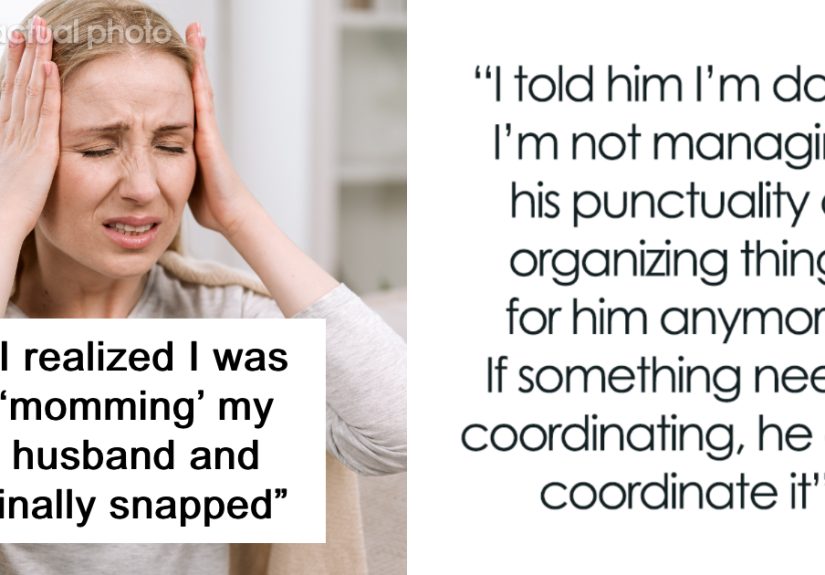
That is the nerve this story hits. A woman reaches the point where she no longer feels like a wife or equal partner. She feels like the household manager, the reminder app, the emotional support hotline, the default parent, and somehow also the person expected to clap when her husband “helps” by doing one dish and wandering off like he completed a military tour.
And then, one day, she finally snaps.
The phrase “stops being a mom to her husband” resonates because so many people instantly understand it. It describes a relationship dynamic in which one partner takes ownership of the invisible work of life: remembering appointments, noticing the empty milk carton, planning meals, managing kids’ schedules, tracking birthdays, replacing toilet paper, following up on bills, and anticipating problems before they become disasters. The other partner may not be evil, lazy all the time, or even intentionally manipulative. But the end result is the same: one person becomes the manager, and the other becomes the supervised employee who somehow still wants a gold star.
This article digs into why that dynamic becomes so corrosive, what “finally snapped” really means, and how couples can stop sliding into a parent-child relationship before resentment burns the whole thing down.
When “Help” Isn’t Help
One of the biggest traps in modern relationships is the language of helping. On the surface, it sounds polite. “He helps with the kids.” “She helps with the bills.” Nice. Teamwork. Very wholesome. Except the word help quietly suggests that one person is the real owner of the task and the other is merely an assistant.
That is where frustration starts to simmer. If one partner is mentally responsible for making sure dinner happens, school forms are signed, the dog gets groomed, the pantry gets restocked, and the in-laws get called back, then the other partner is not truly sharing the load by stepping in occasionally. They are visiting the load. Like a tourist. Taking photos.
In many relationships, especially after kids enter the picture, this imbalance becomes normalized. The spouse carrying the greater load starts doing what efficient, tired people often do: they take over. It feels faster. Easier. Less stressful than explaining things for the seventh time. But that short-term efficiency creates a long-term disaster. The more one person manages everything, the less the other person learns to notice, plan, and fully own adult responsibilities.
And suddenly the marriage does not feel like a partnership. It feels like project management with kissing.
The Real Problem: The Mental Load
Most people understand physical chores. Trash goes out. Laundry gets folded. Groceries appear. Floors become less crunchy. What gets overlooked is the mental load: the invisible planning, remembering, anticipating, and coordinating that keeps a household functional.
The mental load is not just doing the thing. It is remembering that the thing exists. It is knowing the pediatrician’s office closes at 5 p.m., realizing the last clean soccer uniform is still in the washer, checking whether the birthday gift is wrapped, noticing the dishwasher tabs are almost gone, and understanding that “we should do that sometime” usually means “I will eventually handle it unless proven otherwise.”
That is why so many women say they are not angry about one forgotten task. They are angry about being the human operating system for the entire home.
When a husband waits to be told what needs doing, asks where everything is, performs a task badly enough to avoid getting it again, or assumes his wife will track the details, the burden does not disappear. It simply shifts. And once the burden shifts often enough, the emotional tone of the marriage changes. What once looked like cute absentmindedness starts to feel like disrespect.
Why Women “Finally Snap”
People rarely explode over one sponge left in the sink or one school pickup nearly forgotten. The snap usually happens after months or years of accumulated micro-burdens.
1. She is tired of being the default adult
Someone has to notice what needs attention before it becomes a crisis. If that person is always her, exhaustion becomes a lifestyle. She is not just doing chores; she is constantly on call.
2. She feels unseen
Invisible labor is cruel that way. If you do it well, nobody notices. The fridge stays stocked, appointments stay made, and life appears to “just work.” But behind that smooth surface is a person who is often overfunctioning and underappreciated.
3. She starts to feel like his mother, not his partner
Very few things kill attraction faster than having to remind a grown adult to do basic life tasks. Desire struggles to survive in an environment where one partner is chasing the other with a metaphorical permission slip.
4. Conflict goes nowhere
Many couples do talk about this. Repeatedly. The problem is that the conversations often turn into defensiveness, scorekeeping, or technicalities. “Just tell me what to do.” “I was going to do it.” “You’re better at it.” “You care more than I do.” Translation: the problem remains standing in the kitchen, fully alive.
5. The imbalance leaks into everything else
Household inequality is never just about dishes. It affects rest, respect, emotional intimacy, sex, patience, and how safe it feels to rely on one another. A person who feels consistently unsupported often stops feeling soft in the relationship. Not because they want to punish their partner, but because their nervous system is screaming, I cannot carry this alone anymore.
Is It Always Weaponized Incompetence?
The internet loves a sharp label, and one that comes up often is weaponized incompetence. That term refers to acting incapable, exaggerating helplessness, or repeatedly performing a task so poorly that someone else takes over.
Sometimes that description fits. Sometimes it does not. Not every uneven marriage is built on malicious intent. In some couples, the problem comes from social conditioning, old family roles, untreated ADHD, avoidance of conflict, poor executive functioning, or wildly different standards around cleanliness and planning.
But here is the important part: intent matters less than impact. Whether a partner is manipulative, oblivious, or simply under-skilled, the result can still be burnout for the person carrying the bulk of the mental and domestic labor. That is why dismissing the issue with “I didn’t mean it that way” rarely helps. The burden still landed where it landed.
The Red Flags That a Marriage Has Slipped Into a Parent-Child Dynamic
- One partner has to ask, remind, repeat, and follow up on basic tasks.
- “Helping” only happens after direction is given.
- One person owns nearly all scheduling, planning, and emotional smoothing.
- There is chronic resentment around chores, kids, errands, or life admin.
- Competence appears selective: impressive at work, mysteriously confused at home.
- The overloaded partner feels less affectionate because they feel more responsible than supported.
- Conversations about fairness end with defensiveness instead of change.
If several of these sound familiar, the problem is not that someone forgot the dishwasher. The problem is that the relationship has drifted away from shared ownership and into a manager-helper setup.
What Happens After the Snap
The snap itself can look different in every home. Sometimes it is a screaming match in the kitchen over a lunchbox. Sometimes it is a cold, quiet sentence: “I’m done reminding you.” Sometimes it is a canceled weekend, a locked bedroom door, or a therapist appointment booked without consulting anyone because the alternative is losing one’s mind.
And sometimes the snap is less dramatic but more permanent. She stops anticipating his needs. Stops rescuing him from consequences. Stops packing his things, fixing his mistakes, managing his family, or translating basic adulthood into step-by-step instructions. In short, she resigns from the unpaid position of Household Mother of One Capable Man.
This can be shocking to the partner who benefited from the old arrangement. Suddenly, he is offended that nobody reminded him about the birthday dinner, or frustrated that the kids’ permission slips were not magically signed, or confused about why she is distant. But from her perspective, this is not a personality change. It is a labor strike.
How Couples Fix This Before Resentment Becomes the Main Character
The good news is that this dynamic can improve. The bad news is that it does not improve through vague promises, one-time gestures, or heroic vacuuming on Saturdays.
1. Stop talking about chores like favors
Running a home is not volunteer work. Couples need to shift from “Can you help me?” to “How do we divide ownership fairly?” Ownership means planning, noticing, doing, and following through without supervision.
2. List the invisible tasks, not just the obvious ones
Many partners think they split the labor evenly because they count visible tasks only. Write down everything: insurance renewals, school emails, doctor appointments, birthday gifts, meal planning, pet meds, family calendars, vacation logistics, laundry cycles, and who keeps track of what is running low. This exercise can be humbling in the best possible way.
3. Assign categories, not tiny requests
One person owning “laundry” is better than hearing “Can you switch the towels, start a whites load, and check whether the kids need socks?” One person owning “kid logistics” is better than constant reminders about camps, forms, and pickups. Shared calendars and task systems help, but they cannot replace responsibility.
4. Let consequences teach what reminders never will
If one partner owns a task, they need room to fully own it. That may mean a missed form, an awkward moment, or a slightly chaotic dinner. Nobody loves this phase, but it is often necessary. Constant rescuing keeps the imbalance alive.
5. Address the emotional layer
This is not just a productivity problem. The overloaded partner may be carrying hurt, anger, grief, and a profound sense of loneliness. The underfunctioning partner may feel criticized, ashamed, or defensive. Repair requires both logistics and emotional honesty.
6. Use clear language instead of sarcastic explosions
Yes, sarcasm is satisfying. No, it is not usually effective. Better language sounds like this: “I do not want to manage your tasks anymore. I need shared ownership, not occasional help. When I have to notice, remind, and follow up, I still carry the job.”
7. Get support if the pattern is deeply entrenched
A good couples therapist can help untangle recurring roles, communication breakdowns, and the resentment that builds when one person feels more like a parent than a partner. If a spouse repeatedly belittles concerns, retaliates, or refuses any accountability, the issue may be bigger than household division alone.
What Men Need to Understand About This Dynamic
If you are the husband reading this and feeling defensive, breathe. This is not a public trial over your ability to load a dishwasher. It is an invitation to ask a harder question: Am I acting like a full partner in the invisible work of our life?
Being competent at work but passive at home does not read as charmingly absentminded. It reads as selective responsibility. Waiting for instructions is not the same as participating. And saying “just tell me what to do” often means your spouse must first keep track of the task, then delegate it, then monitor it. That is management. Management is work.
Also, bare-minimum adulthood is not romance. Taking care of your home, your children, and your life admin is not “helping your wife.” It is being an adult who lives there.
What Women Need to Hear, Too
If you are the one carrying too much, your frustration is not petty. Your exhaustion is not proof that you are bad at coping. And your desire to stop overfunctioning does not make you cold, selfish, or dramatic.
At the same time, many women fall into a painful trap: becoming hyper-competent because things need to get done, then slowly becoming the permanent owner of everything. If that is your pattern, stepping back may feel terrifying. It can be messy. Things may not happen exactly your way. But if your current role is part partner, part life coach, part quality-control supervisor, then continuing as-is is not exactly working either.
The goal is not to do less caring. The goal is to stop confusing caring with carrying everyone.
Real Experiences That Sound Uncomfortably Familiar
The topic hits so hard because it is not abstract. It shows up in ordinary homes in painfully ordinary ways. One woman describes being the only person who knew when the kids needed vaccinations, who had outgrown shoes, what food was left for school lunches, and which relative would be offended if they forgot a birthday call. Her husband swore he would “do anything she asked,” but that was exactly the problem. She did not want to be the family foreman. She wanted a partner who could see the work without a personal briefing.
Another woman says her breaking point came on a Tuesday night that should have been boring. She was cleaning up dinner, helping with homework, answering a message from her mother, and mentally calculating whether there was enough gas in the car for the morning. Her husband sat on the couch and asked where his clean work shirts were. Nothing dramatic happened next. She simply looked at him and realized she felt more like the exhausted mother of a teenager than the wife of a grown man. That quiet recognition shook her more than any fight.
Some experiences are even subtler. A woman may not notice the resentment until intimacy changes. She starts feeling touched-out, irritated, or emotionally detached. Her husband thinks the problem is date nights or stress, but she knows the deeper issue is that desire does not flourish when she spends all day managing another adult’s responsibilities. It is hard to feel romantic toward someone you have to remind to call the plumber, pack the diaper bag, or sign the school form sitting in plain sight on the counter.
There are also women who say they did not “snap” in a cinematic way at all. They just stopped rescuing. They stopped checking the calendar for him. Stopped reminding him about his mother’s gift. Stopped repacking the suitcase he left half-empty before a family trip. Stopped translating pediatrician instructions. And when he complained that things were “falling apart,” they answered with the most honest sentence they had spoken in years: “No, I just stopped holding everything together by myself.”
Men experience wake-up calls too. Some husbands say they truly believed they were contributing because they did the visible tasks: mowing, trash, the occasional grocery run. It was not until their wives listed the invisible labor that they understood why gratitude had dried up and irritation had moved in. For a few, that realization became a turning point. They began fully owning categories of family life rather than waiting to be assigned jobs. The marriage improved not because the house became cleaner, but because the wife no longer felt alone inside it.
These stories differ in tone, income, gender roles, and family structure. But they share one truth: the final snap is rarely about one chore. It is about what that chore represents. It is about being the one who notices, remembers, absorbs, and anticipates until your identity starts shrinking under the weight of everyone else’s needs. That is why the line “I stopped being a mom to my husband” lands with such force. It is not cruelty. It is a boundary. And sometimes that boundary is the first honest step back toward a real partnership.
Final Thoughts
The viral framing of this story may be dramatic, but the emotional core is deeply familiar. A woman does not “finally snap” because she hates partnership. She snaps because she has been carrying partnership for two people.
That is the lesson here. Marriage cannot thrive when one person becomes the planner, pursuer, manager, and fixer while the other waits to be nudged into adulthood. Real intimacy needs shared responsibility. Real support means noticing. Real love is not “Tell me what to do.” It is “I see what needs doing, and I am already in it with you.”
In the end, stopping the mothering is not the destruction of the relationship. Sometimes it is the only chance to save it.